Applications
3D Systems and United Therapeutics Unveil 3D Printed Lung Scaffold
In a collaboration between United Therapeutics and 3D Systems, researchers have succeeded in developing a complex 3D-printed human lung scaffold. The lung scaffold was unveiled at the LIFE ITSELF conference in San Diego and is considered to be the most…
- 3 min read
- Applications
- Six more stories
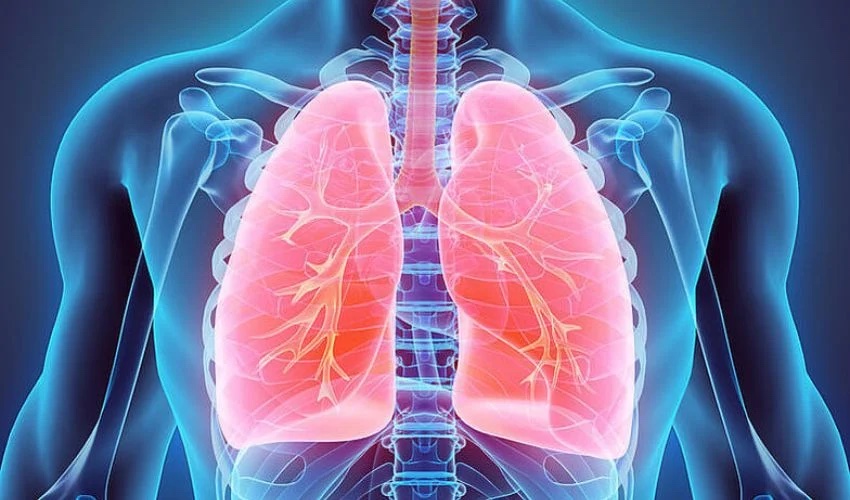
In a collaboration between United Therapeutics and 3D Systems, researchers have succeeded in developing a complex 3D-printed human lung scaffold. The lung scaffold was unveiled at the LIFE ITSELF conference in San Diego and is considered to be the most complex object ever created using additive manufacturing. The lung scaffolds, which have already been animal tested, are planned to be made in the future with the patient’s own stem cells.
Lately, you’ve probably heard a lot about the various applications of bioprinting. This new form of 3D printing using living cells is becoming increasingly important in medicine. For example, a surgeon in the USA has recently successfully transplanted an ear implant made from human cells. Most famously, it is expected to be able to create fully functional organs for human beings. Though this is not yet possible, steps like this lung scaffold chose the immense advancements which have already happened thanks to 3D printing.
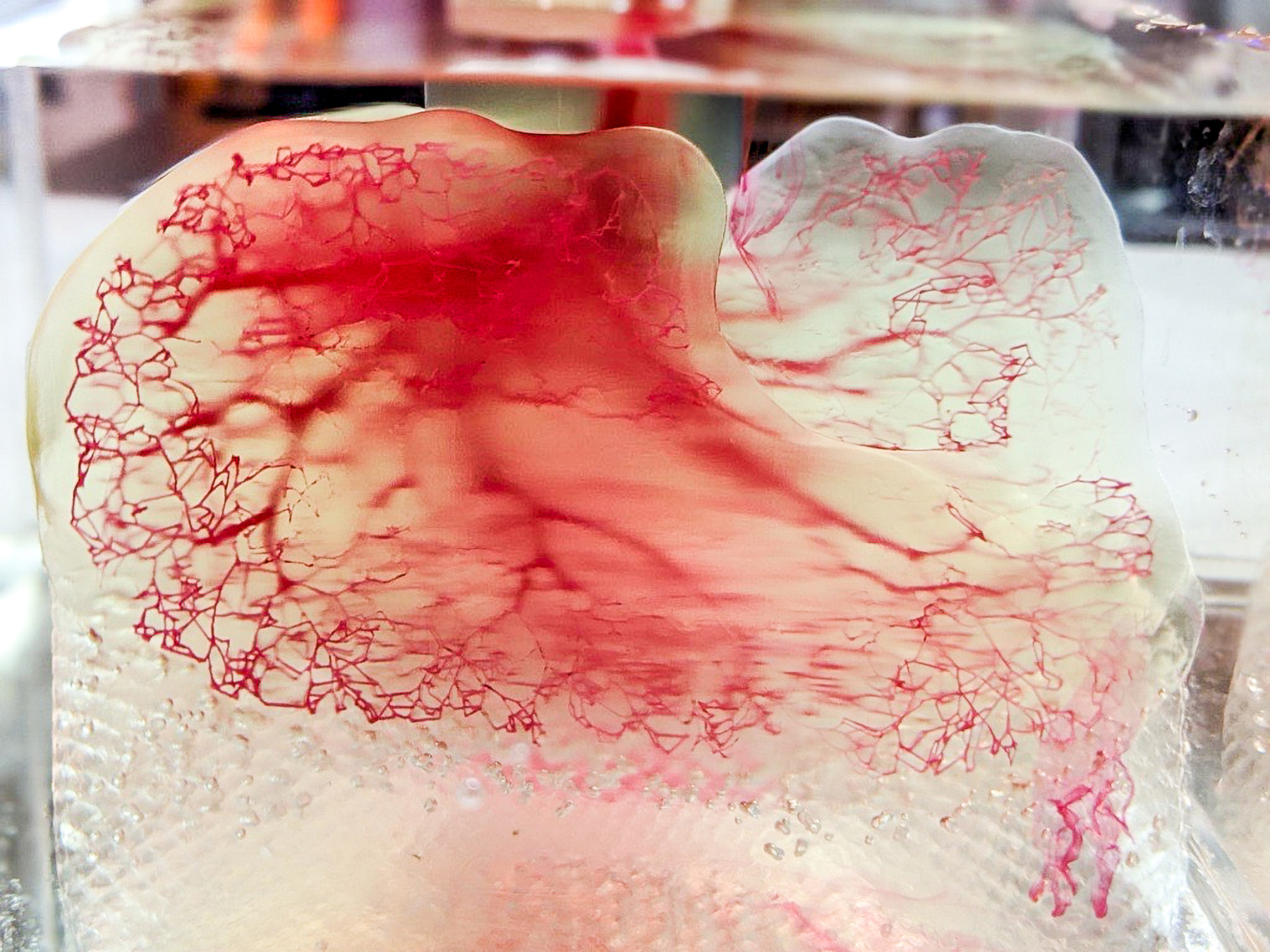
3D printed lung scaffold (photo credits: 3D Systems)
The Structure of the 3D Printed Lung Scaffold
The 3D printed lungs consist of a record 44 trillion individual parts (voxels), which are distributed over 4,000 kilometers (~2500 miles) of lung capillaries and 200 million alveoli. United Therapeutics scientists, therefore, plan to cellularize these 3D printed lung scaffolds with patients’ own stem cells. This method may make it possible to create compatible, transplantable human lungs in the future. By using each patient’s own stem cells, the bioprinted lungs would carry a significantly lower risk of rejection, thus not requiring immunosuppression which can be very dangerous for the patient. The newly developed advanced photopolymer-based bioprinting technology called Print to Perfusion could enable this type of donor organ to be manufactured in as little as three weeks.
More from the desk
Six other notes from the rest of the bench.
 NewsPorsche Consulting and Sakuu to Create 3D Printed Batteries TogetherOne of the first industries to use 3D printing was the automotive sector. Initially, the main application was prototyping, as the technology allows parts to be manufactured quickly, while the design can be easily changed. Though as we know that…
 PrintersRaise3D unveils its new E2 3D printer for EducationAs we approach the TCT Show in Birmingham, one of the leading 3D printing events in Europe, some players in the sector are taking the opportunity to announce new products, innovative applications, etc. This is the case of the American…
 PrintersBehind the scenes with professional 3D printer manufacturer dddropThe Netherlands is undoubtedly a dominant force within the European 3D printing industry. Companies such as Ultimaker, 3D Hubs, and ColorFabb have expanded worldwide, showing the power of Dutch entrepreneurialism. However, during this Dutch 3D printing golden era one company&hell
 Applications3D printed rocket from Relativity will launch satellite into spaceRelativity, the first autonomous rocket factory and launch services platform for satellite constellations has announced that it will partner with mu Space to launch a satellite to space on Relativity’s Terran 1 rocket – the world’s first 3D printed rocket.…
 MaterialsLLNL Develops Novel, Fast-Curing Silicone Ink: A Game-Changer for Silicone 3D PrintingWhile 3D printing has been around for decades, silicone 3D printing technology is something relatively new. The material is compatible with photopolymerization and material extrusion, but there are relatively few manufacturers making silicone 3D printing solutions. That does not
  GuidesIGO3D on Promoting the Deployment of Additive Manufacturing in EuropeThe additive manufacturing market is rapidly evolving, offering significant benefits to companies of all sizes. It regularly offers innovations, whether in terms of 3D printers, software, materials or post-processing methods. It’s not always easy to keep up with these trend