News
Insect-like soft robots: is 3D printing changing robotics?
It should not come as a surprise that additive manufacturing is widely used in the field of robotics. 3D printing offers designers the freedom to add new functionalities to their creations. We have covered topics related to AM in robotics…
- 3 min read
- News
- Six more stories
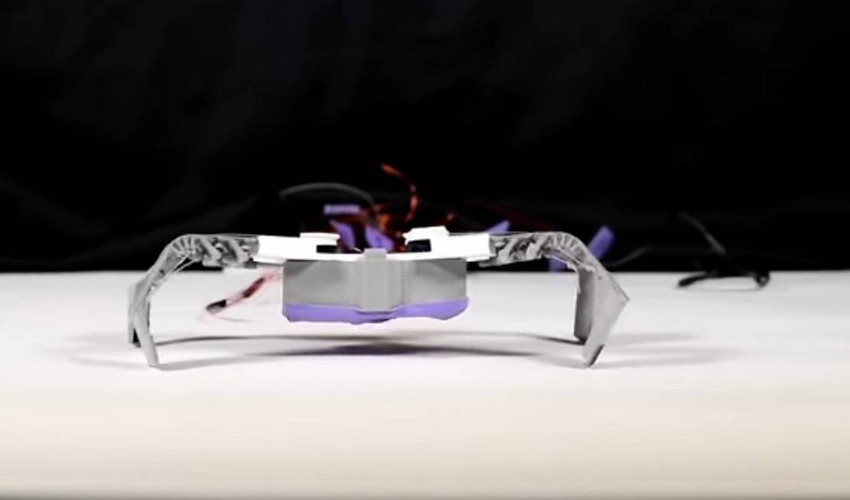
It should not come as a surprise that additive manufacturing is widely used in the field of robotics. 3D printing offers designers the freedom to add new functionalities to their creations. We have covered topics related to AM in robotics before, like the time when researchers created 3D printed sweating robot muscle at the University of Cornell. This time, the big news come from UC San Diego where researches have designed and successfully tested 3D printed insect-like soft robots. Soft robotics is actually a subfield of robotic which deals with the construction of robots from highly compliant materials, similar to those found in living organisms. Using FDM 3D printers, and standard filament materials such as ABS, the researchers created insect-like robots that were significantly cheaper as well as more accessible.
The innovation by engineers at the Jacobs School of Engineering at UC San Diego comes from rethinking the way soft robots are built: instead of figuring out how to add soft materials to a rigid robot body, the researchers did the reverse. They started with a soft body and added rigid features to key components. The structures were inspired by insect exoskeletons, or rather how they function, such exoskeletons are rigid in some places, but perfectly flexible in others.
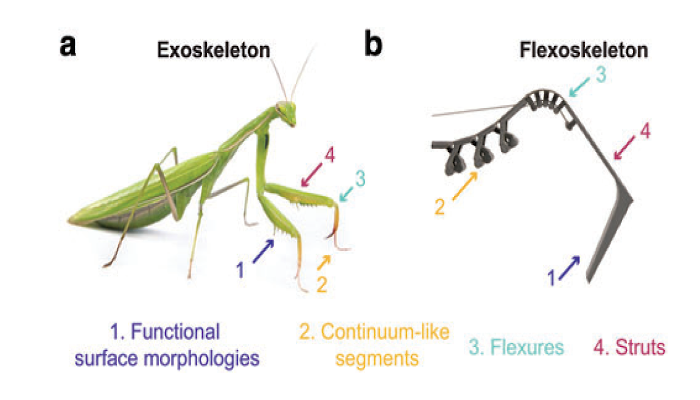
Credits: Soft Robotics
Additively manufacturing the insect-like robots
In standard FDM printing, a plastic filament such as ABS or PLA is extruded through a heated nozzle and deposited onto a flat print surface. The innovative flexoskeleton process uses Prusa i3 MK3S or the LulzBot Taz 6 FDM 3D printers, to deposit filament directly onto a heated thermoplastic base layer. This results in high bond strength between the deposited material and the flexible base, yielding improved resistance.
More from the desk
Six other notes from the rest of the bench.
 NewsNorth Korea could use 3D printing to manufacture weapons3D printing technologies are becoming more and more positioned as the future of multiple industries. In most cases, the contributions of these technologies will help improve our quality of life. But, like everything else in life, it also has its…
 ApplicationsA Futuristic Supercar Model Born From Generative DesignIt is not an actual 3D printed car that we are showing you today but rather a concept born from algorithms and generative design. The HV-001 is a hybrid supercar whose design has been designed to be 3D printed. Architect…
 NewsTop 5 Videos of the Week: submicron metal 3D printing…This week we found the top 5 videos about 3D printing and the way additive manufacturing is shaping our society. The technology has infiltrated many sectors, from medical to automotive! Check out our selection of the week to keep up with the innovations! This week we…
 NewsTop 5 Videos: FDM Technology ExplainedAnother week is over and like every Sunday, we have put together a top 5 list of videos related to additive manufacturing for you to enjoy! Our weekly top 5 starts off with a closer look at FDM technology, the…
 ApplicationsWake Forest Teams Win NASA Challenge with Functional 3D Printed Liver TissuesThe first and second place winners in NASA’s Vascular Tissue Challenge have created 3D printed lab-grown human liver tissues. The two teams of scientists, both from the Wake Forest Institute for Regenerative Medicine (WFIRM) in Winston-Salem, North Carolina were able&hellip
 NewsTOP 5 videos of the week: Formlabs, Concept Laser and more!A new selection of the best 3D printing videos of the week, just for you! Find our TOP 5 videos of the week below and tell us what your favorite video is in a comment or on our Facebook and Twitter page.…