Applications
3D Printed Ovules Provide Promising Results for Endometriosis Treatment
A recent study published in the European Journal of Pharmaceutical Sciences sheds light on an exciting approach to treating endometriosis with 3D printed ovules. The team employed additive manufacturing, a technique gaining popularity in the medical field, to address certain&hell
- 3 min read
- Applications
- Six more stories
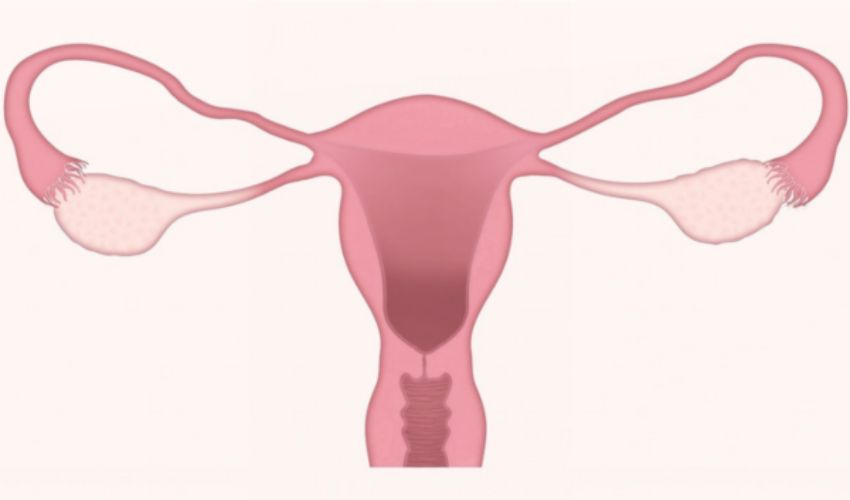
A recent study published in the European Journal of Pharmaceutical Sciences sheds light on an exciting approach to treating endometriosis with 3D printed ovules. The team employed additive manufacturing, a technique gaining popularity in the medical field, to address certain challenges faced in gynecology. Diseases specific to the female reproductive system, such as cancers, endometriosis, and uterine fibroids, often receive inadequate research attention. Consequently, women suffering from these conditions often lack effective treatment options or drug delivery systems. To improve treatment efficacy while minimizing side effects, it is crucial to develop drugs tailored to the vaginal mucosa environment, where they can exert their effects most effectively.
The researchers at the University of Bern employed 3D printing technology to create customized oocytes and suppositories. This approach holds promise in the medical field as it enables the production of gel-like and temperature-sensitive applications suitable for vaginal administration. The research group utilized extrusion technology to produce a 3D printed, semi-solid vaginal capsule containing a molecule called pirfenidone. Pirfenidone has demonstrated promising efficacy in treating pulmonary fibrosis and is highly sought after for endometriosis treatment, although it is not yet approved for this specific purpose. The additively manufactured suppository was left in place for several hours to ensure optimal action in the vaginal environment. Additionally, the researchers created vaginal capsules from standard substances to compare the results in their tests.
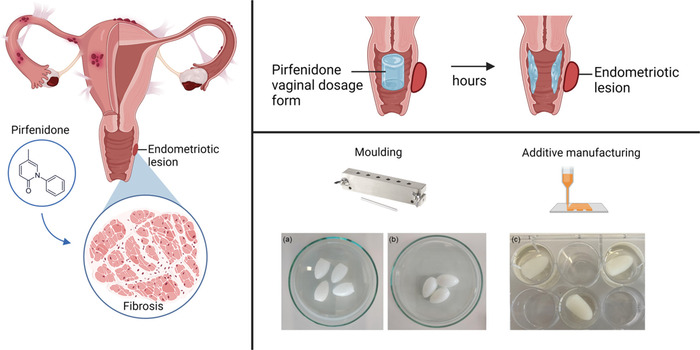
The researchers explored the potential of using Pirfenidone as a treatment for endometriosis in their study. They achieved this by implementing 3D printed ovules for the controlled release of the drug directly in the affected area (photo credits: Sarah Teworte, Simone Aleandri, Jessica Weber, Marianna Carone, Paola Luciani, University of Bern)
The 3D printed ovule exhibited controlled release during standard pharmaceutical tests and biorelevant evaluations. Ideally, a pirfenidone delivery system should have a delayed drug release, as the molecule requires 24 hours of exposure to the oocyte for its metabolic activity to reduce. The 3D printed ovule outperformed the control group, with only 90% of the drug released after 8 hours, while the other capsules released the drug fully within 3 hours.
More from the desk
Six other notes from the rest of the bench.
 ApplicationsSingapore Researchers Use AI and 3D Bioprinting to Personalize Gum Tissue GraftsA team from the National University of Singapore (NUS) has devised a method for creating customized gum grafts by combining 3D bioprinting and artificial intelligence (AI). The new technique, led by Assistant Professor Gopu Sriram from the Faculty of Dentistry,…
 Materials3D printed soft robots can fold like origamiSoft robotics is one of the subfields of robotics dealing with constructing robots from highly compliant materials, similar to those found in living organisms. This field looks at the way in which living organisms move and adapt to their surroundings…
 GuidesEvolve Additive Solutions on its STEP Technology for Agile ProductionAmong the well-known advantages of additive manufacturing is the digitization of production: the ability to quickly produce on-site and on-demand, with only the necessary material. This is also why AM is seen as a way to unlock Agile Manufacturing, i.e.…
 NewsTOP 5 videos of the week: Football, dresses and more!A new selection of the best 3D printing videos of the week, just for you! Find our TOP 5 videos of the week below and tell us what your favorite video is in a comment or on our Facebook and Twitter page. Don’t hesitate to…
 NewsA Metal Alloy That’s Easier to 3D Print Thanks to AIWashington State University researchers used artificial intelligence to 3D print a metal alloy more affordably and efficiently. The project shows how AI is beginning to change additive manufacturing workflows as the technology advances rapidly. The alloy was GRCop-42, a material&
 NewsOrbex unveiled largest 3D printed rocket engine in the worldThe British aerospace company Orbex regularly launches small, micro and nano satellites into accurate low Earth orbits. Until now, the company had not drawn much attention to its additive manufacturing activities or developments. However, they recently revealed that they have&hel