Applications
What benefits do 3D printed drones bring to our society?
A drone is an unmanned aerial vehicle (UAV), or in other words aircraft, without a human pilot on board. These days, getting a traditional drone can be a big investment if you do not need the advanced features they offer.…
- 3 min read
- Applications
- Six more stories
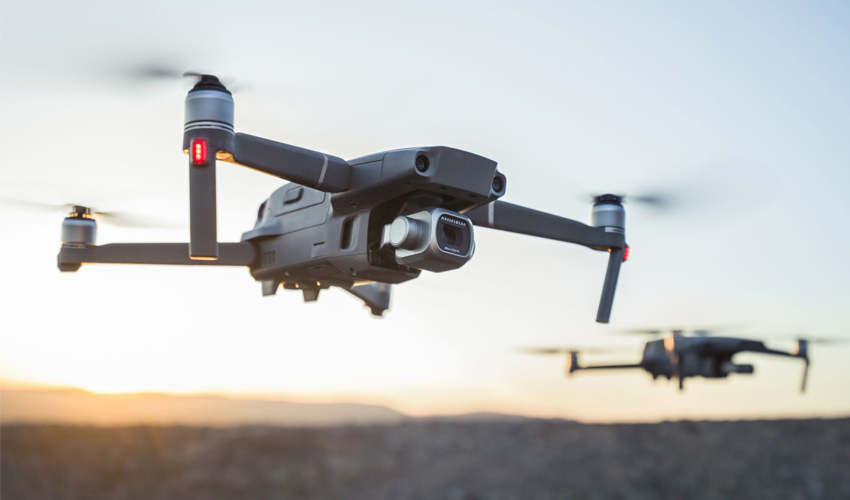
A drone is an unmanned aerial vehicle (UAV), or in other words aircraft, without a human pilot on board. These days, getting a traditional drone can be a big investment if you do not need the advanced features they offer. The additive manufacturing industry has made great progress, meaning that any user with a 3D printer is able to create their own custom drone. Therefore, the benefits of 3D printing technologies make it suitable for developing such a vehicle. It’s true that drones are appealing to multiple industries because they operate with various degrees of autonomy: either under remote control by a human operator or autonomously by onboard computers.
The good thing about using additive manufacturing to create drones is that almost every part of the assembly can be 3D printed, with the exception of the electronic components. These include the propellers, the frame, the antenna mounts, the prop protectors, the battery housing or even the landing gear. But 3D printing is not limited to hobbyists or makers. Some commercial companies, such as Blue Robotics, also use this technology for the development of their drones. In addition to the main parts, other accessories such as mounts, boosters or cases for storing the drones can also be created.
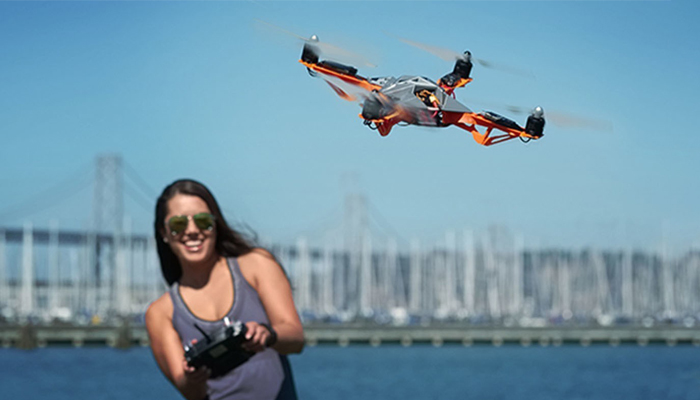
The benefits of using 3D printing for drones
As we know, this technology provides numerous advantages when creating prototypes or functional models. The team at Svarmi, a company dedicated to custom built drones and remote sensing data for scientific and industrial purposes, has begun using 3D printed drones in its research activities. In fact, in an interview with Sculpteo, they stated: “With 3D printing, we were able to save 40% of time in the product design and development process. The total weight of the drone was also reduced by a factor of 20%.” This means that thanks to AM, parts can be manufactured at high speed, tested and modified if necessary. In addition to this, there is no doubt that the additive manufacturing process allows production costs to be reduced, unlike traditional production methods. These benefits have enabled 3D printed drones to move from being considered gadgets to being professional devices that can be adopted in multiple areas. So what are the areas of applications where we can find additively manufactured drones?
More from the desk
Six other notes from the rest of the bench.
 NewsThe 3D Printed Carrot Aiming to Combat Food InsecurityImagine carrots growing in a laboratory under a microscope, then taking shape in three dimensions thanks to technological innovation. This is precisely what two Qatari students, Mohammad Fadhel Annan and Lujain Al-Mansoori, have achieved. They have developed a 3D printer…
 ApplicationsSwedish researchers may have found a way to 3D bioprint human cartilage tissue3D bioprinting is beginning to come into a world of its own with companies, researchers and startups alike, looking for the latest innovations and developments to help transform the health world as we know it. Adding to this list of innovators…
 ApplicationsProject Chaos: when an ultracar meets 3D printingSpyros Panopoulos is a Greek racing car enthusiast who has given his name to his company: he recently unveiled the new project he has been working on for the past two years. Project Chaos is a ultracar with very high…
 NewsStay Up to Date With our Exclusive Formnext Page!Formnext – Where ideas take shape. With this iconic slogan, organizer Mesago presents what is probably the most important event of the year for additive manufacturing. This year, more than 500 exhibitors from the world of additive manufacturing are expected…
 ApplicationsCombining Blockchain and 3D printing to make aircraft partsThe company Moog Inc. designs, manufactures and integrates precision aerospace control parts and systems for four segments: aircraft controls, space & defense controls, industrial controls, and components. Just like many players in the aerospace industry, the company has gras
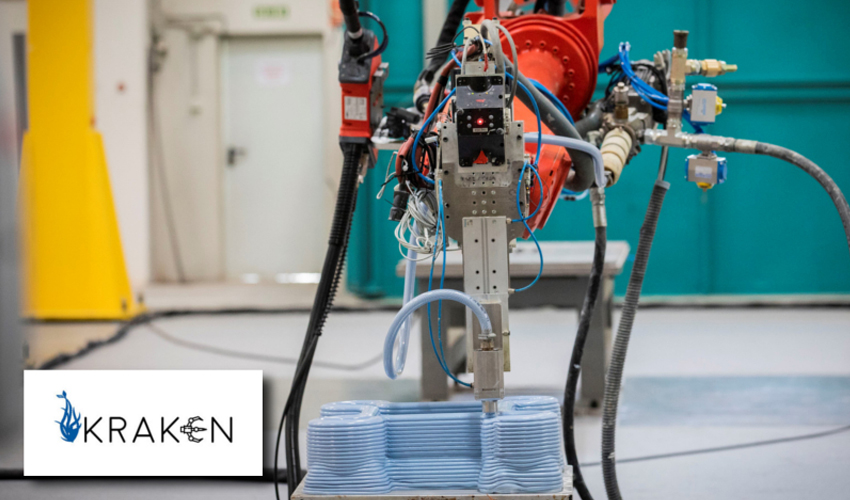 PrintersKRAKEN, an all-in-one manufacturing machine to disrupt productionA few months ago we followed the development of the KRAKEN project, a system that combines both 3D printing technologies, robotics, and subtractive technologies. Thanks to its robotic arm, the system is able to 3D print surfaces of 20 square…