Applications
ReJI Bioprinting Technology Accelerates Drug Development to Help Fight Cancer and Arthritis
Bioprinting has been used for medical purposes since around 2000. But, it has its limitations, particularly when it comes to drug development, where costs remain high. However now, thanks to financial support from Versus Arthritis, researchers at Newcastle University have…
- 3 min read
- Applications
- Six more stories
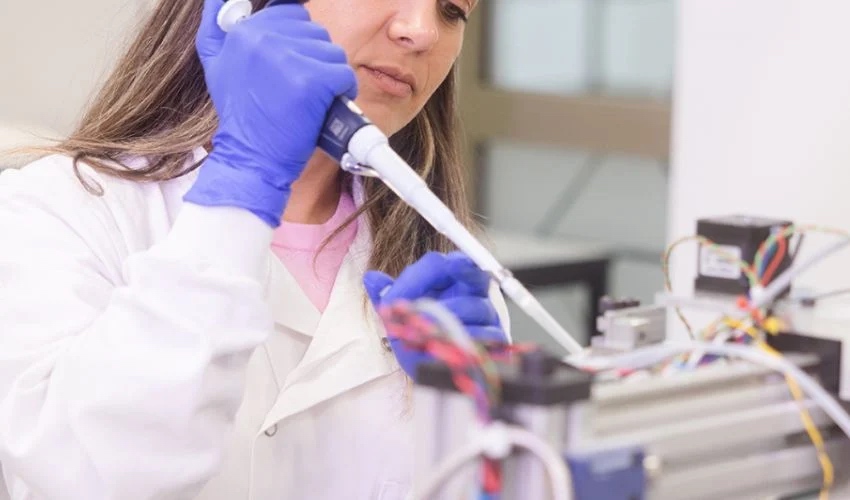
Bioprinting has been used for medical purposes since around 2000. But, it has its limitations, particularly when it comes to drug development, where costs remain high. However now, thanks to financial support from Versus Arthritis, researchers at Newcastle University have developed a new method of 3D bioprinting gels containing cells, named ReJI, which could pave the way for advances in the development of treatments for cancer, heart disease and arthritis.
This process, which has capable of faithfully reproducing human tissue, has been patented in the USA and Europe. In addition, under the leadership of Professor Kenny Dalgarno, the team founded the startup Jetbio to attract investment for the worldwide deployment of the ReJI printer in laboratories.
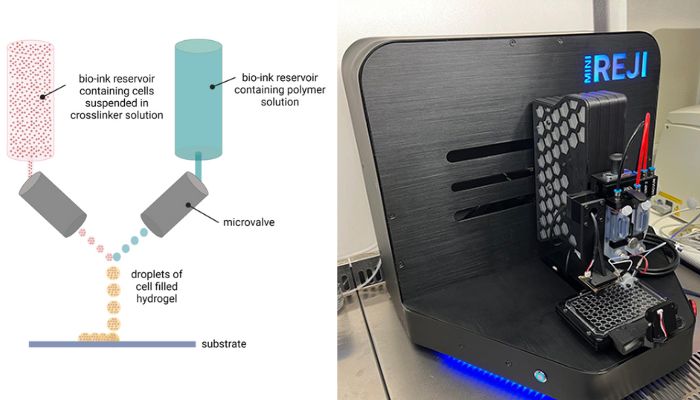
Left: 3D printing technology and right: the ReJI printer
But how exactly does the printing process work? Called Reactive Jet Impingement, the technology based on a bioprinting process in which two liquids are sprayed against each other. One contains a cross-linking solution with suspended cells, while the other is a polymer solution. Mixing the two in air forms a cell-enriched hydrogel, which can then be 3D printed on almost any surface. This process is far faster than conventional technologies, and achieves ten times the cell density. What’s more, the resulting tissues resemble human tissue samples.
More from the desk
Six other notes from the rest of the bench.
 NewsGanit Goldstein on her vision of 3D printing for fashionGanit Goldstein is a 3D designer working on how to merge additive manufacturing technologies with fashion to bring new possibilities to the industry. Her aim is to work with new technologies to provide custom-made items that fit the wearer perfectly.…
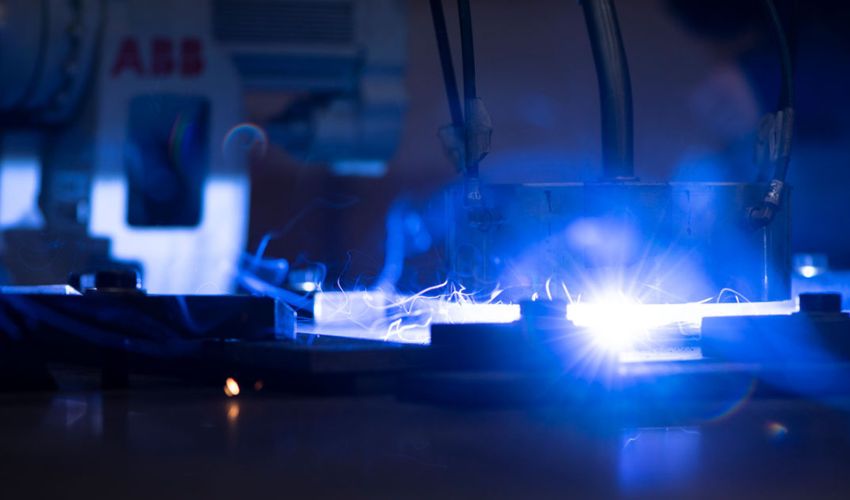 ApplicationsWith AML3D, the US Navy is Bringing Additive Manufacturing to SubmarinesThe defense sector, particularly in the U.S., has increasingly been adopting 3D printing for different applications. Moreover, though this is generally happening across all branches of the military, it is true that one of the areas where additive manufacturing is…
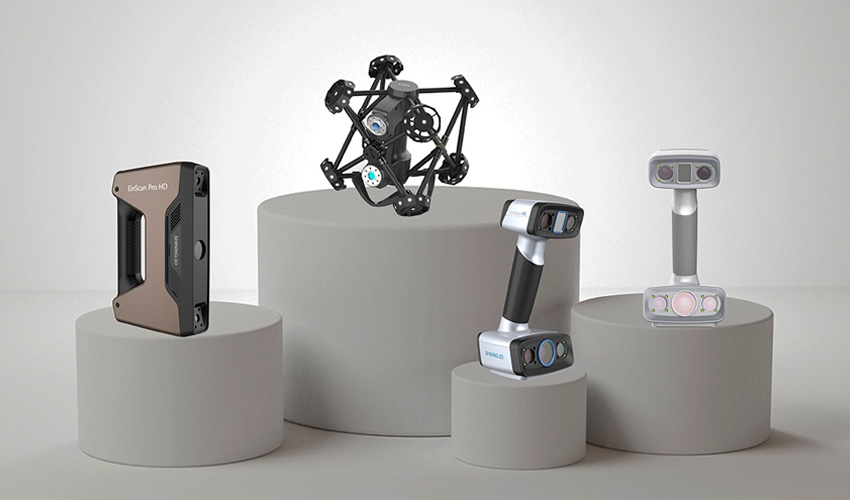 PrintersSHINING 3D Demonstrates the Capabilities of its 3D Scanners and Printers During Formnext 2022The 2022 edition of Formnext is taking place this week in Frankfurt. The international event dedicated to additive manufacturing will be taking place in 50,000 square meters with more than 730 exhibitors gathering. It is undoubtedly a unique opportunity for…
 ApplicationsZebro Robots to Use 3D Printing to Help Colonize MarsWhat may still sound like science fiction to some is actually becoming more and more likely in reality: the colonization of another planet. Various projects are actively working on the implementation of ideas that are supposed to bring about the…
 ApplicationsA Breakthrough for 3D Printed Heart Valves from Georgia Tech3D printed heart valves have been around for years. In fact, in 2023 the Cureus Journal of Medical Science published Trends and Challenges in the Development of 3D-Printed Heart Valves and Other Cardiac Implants: A Review of Current Advances, which…
 GuidesRyan T. Watkins Talks DfAM for Better Spacecraft Performance at AMUG 2025AMUG 2025 will be taking place soon on March 30 – April 3 in Chicago, Illinois. And one of the clear highlights is, as always, the keynote speeches, including one from Ryan T. Watkins, PhD, a research engineer at NASA…