
Revolutionizing Eye Care: The iFix Bio-Printing Pen and 3D Technology’s Role in Corneal Regeneration
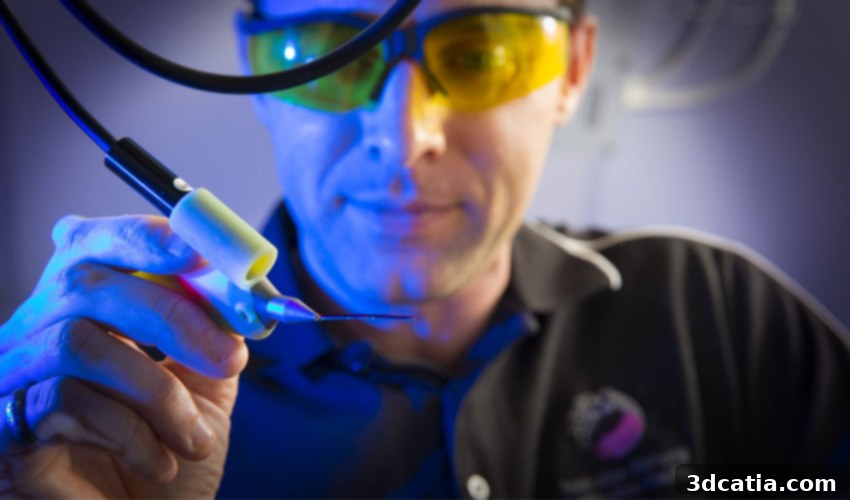
A groundbreaking innovation in ophthalmic medicine, the iFix bio-printing pen, promises to transform the way eye injuries are treated and offer new hope for patients suffering from corneal damage. Developed through a collaborative effort by a dedicated team of researchers from the University of Sydney and the University of Wollongong, iFix represents a significant leap forward in regenerative medicine. This pioneering device utilizes a specialized bio-ink to precisely bio-print a cellular structure, directly onto the eye, facilitating the natural healing and regeneration of damaged ocular tissues. The immense potential of this technological breakthrough has been recognized with substantial financial backing, as the project secured $1.1 million in funding from the NSW Medical Devices Fund, an essential step that will enable the team to accelerate its development and bring this life-changing solution to market.
The advent of iFix further solidifies the critical and expanding role of 3D printing technologies within the field of ophthalmology. Over recent years, additive manufacturing has consistently demonstrated its capacity to innovate and provide solutions for complex medical challenges, particularly in eye care. We’ve witnessed remarkable advancements, such as the development of 3D printed corneas, ingeniously crafted from materials like fish scales, which offer a promising alternative to traditional donor corneas by reducing rejection risks and addressing supply shortages. Furthermore, the ambitious endeavor to create whole 3D printed eyes has begun to materialize, initially as prosthetics but with long-term aspirations for functional biological replacements. Earlier this year, the scientific community was captivated by the creation of a prototype of a bionic eye, designed with the precision and customization afforded by 3D technologies, aiming to restore sight through advanced bio-electronic integration. These diverse applications underscore a pivotal moment where 3D printing is not just complementing but actively redefining the landscape of eye treatment, paving the way for unprecedented medical advances and future solutions that were once confined to the realm of science fiction.
The iFix Bio-Printing Pen: Precision, Regeneration, and a New Approach to Corneal Health
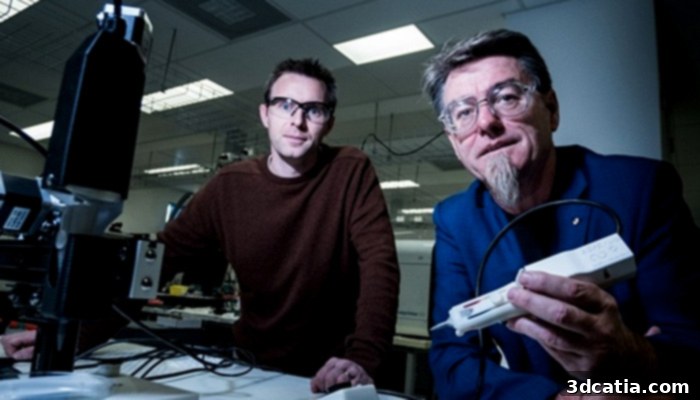
At the forefront of the iFix project is Professor Gerard Sutton, leading a distinguished team of scientists dedicated to revolutionizing corneal repair. Their pioneering creation, the iFix bio-pen, is specifically engineered to treat a range of ocular lesions and, critically, to heal corneal inflammation known as keratitis. Keratitis represents a significant and widespread global health challenge, serving as a leading cause of blindness and severe vision impairment in many developed countries. In Australia alone, the statistics are stark, with approximately 55,000 individuals hospitalized each year due to this debilitating condition. Current treatment options for keratitis often involve prolonged courses of medication, and in severe cases, corneal transplants, which are invasive and carry risks such as donor rejection and a lengthy recovery period. The introduction of iFix has the potential to dramatically alter this paradigm, offering a non-invasive, regenerative treatment that could benefit thousands of patients annually by mitigating pain, reducing recovery times, and ultimately preventing vision loss.
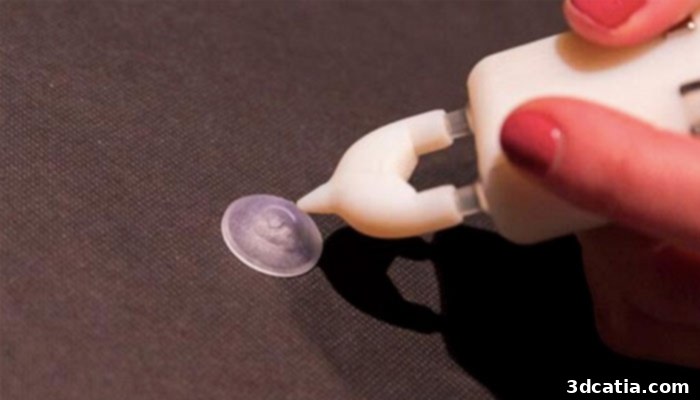
The fundamental principle behind the iFix bio-pen’s efficacy lies in its ability to bio-print a precise cellular structure directly onto the damaged surface of the eye. This innovative process involves a specialized bio-ink, which is carefully formulated to contain living cells, growth factors, and other biocompatible materials that mimic the natural corneal environment. Once deposited, this bio-printed scaffold acts as a regenerative template, stimulating the patient’s own corneal cells to proliferate, migrate, and reorganize themselves. This facilitates the natural regeneration of damaged corneal tissue, effectively repairing the injury and restoring structural integrity. Crucially, this method also helps to create a robust biological barrier against further damage and infection, providing enhanced protection for the delicate ocular surface. Early demonstrations by the researchers have already shown that the iFix pen is capable of significantly minimizing patient discomfort during treatment and dramatically shortening the overall recovery period, marking a substantial improvement over existing therapeutic approaches.
From Innovation Challenge to Clinical Trials: The Future of iFix
The journey of the iFix pen from an innovative concept to a tangible medical device has been marked by significant milestones. The substantial $1.1 million grant received this year from the NSW Medical Devices Fund follows a pivotal victory in the previous year’s “Innovation Challenge: The Big Idea.” That initial triumph secured $45,000 in research funding, providing the essential capital to further develop and refine the iFix concept. This initial validation and subsequent, much larger grant are critical for transitioning the technology from laboratory research to widespread clinical application. With this bolstered financial support, Professor Sutton and his team are now poised to propel their groundbreaking work even further, with ambitious plans to commence commercialization and make the iFix pen available to the broader medical community in the foreseeable future. Professor Sutton encapsulates this visionary outlook, stating: “The iFix pen is part of a general bioengineering project for the cornea and, with the financial support received, we hope to be able to develop in the next five to ten years a 3D biological engineering of the cornea.” This statement highlights a long-term goal of not just repairing but potentially fully recreating corneal tissue using advanced 3D bio-engineering techniques, signifying a profound paradigm shift in ocular medicine.
The development process for any medical device, especially one involving bio-printing and direct application to the human body, necessitates rigorous testing and validation. The iFix team has already commenced vital preliminary tests on animals with various forms of eye damage, carefully monitoring the efficacy, safety, and regenerative capabilities of the bio-printed structures. These preclinical studies are crucial for gathering comprehensive data and demonstrating the pen’s potential before moving to human trials. With promising results emerging from the animal studies, the researchers are now eagerly awaiting the opportunity to transition their solution to human patients. This next phase will involve carefully designed clinical trials to assess the iFix pen’s performance in real-world scenarios, ensuring both its safety and effectiveness for a diverse range of corneal injuries and conditions. If successful, this progression will pave the way for regulatory approvals, ultimately making this innovative regenerative treatment accessible to millions suffering from debilitating eye conditions, thereby significantly improving quality of life and preventing blindness on a global scale. The long-term implications extend beyond keratitis, potentially offering solutions for other corneal diseases, traumatic injuries, and even vision correction, truly heralding a new era for regenerative ophthalmology.
What are your thoughts on the revolutionary iFix pen and its potential to transform eye care? We invite you to share your insights and opinions in a comment below or join the conversation on our Facebook and Twitter pages! And to stay informed about all the latest advancements and breaking news in 3D printing and medical innovation, don’t forget to sign up for our free weekly Newsletter, delivered straight to your inbox!