
Unlocking Ancient Worlds: How Harvard Semitic Museum Embraces 3D Technology for Preservation and Discovery
In an increasingly digital age, the convergence of advanced technology and ancient history offers unprecedented opportunities for exploration, preservation, and education. Our recent deep dive into the application of 3D technology in historical restoration led us to the esteemed Harvard Semitic Museum, a beacon of Near Eastern archaeological research and cultural heritage. During our investigation, we gathered an immense wealth of captivating insights from the museum staff. Unfortunately, the sheer volume and fascinating detail of this information meant that not all of it could be accommodated within our original feature story. Recognizing the profound value and unique perspective offered by these discussions, we decided to present this compelling interview as a standalone piece, dedicated to showcasing how one of the world’s leading archaeological institutions is leveraging cutting-edge 3D solutions.
For this enlightening conversation, we had the distinct privilege of speaking with three pivotal figures at the museum: Professor Peter Der Manuelian, the Faculty Director; Dr. Joseph A. Greene, the Deputy Director and Curator; and Dr. Adam Aja, the Assistant Curator of Collection. Their collective expertise spans archaeology, history, and curatorial practice, offering a comprehensive view of the museum’s innovative work. The following responses represent a thoughtful collation of their individual and shared perspectives, providing a rich narrative of the transformative impact of 3D technologies on their vital mission.
The Transformative Power of 3D Technologies in Archaeology and Museum Curation
How have you, as archaeologists, historians, and curators, as well as the museum itself, benefited from 3D technologies?
Modern digital 3D visualization techniques have revolutionized our capacity to engage with the past, making possible the full-scale virtual reconstruction of ancient architectural and archaeological remains. Many of these sites and structures survive today only as damaged, partially preserved ruins, or in some cases, are completely lost to time. Through advanced digital animation, coupled with precise color and lighting effects, we can meticulously illustrate how these significant sites and monuments evolved through different epochs – from their initial construction and vibrant ancient use, through periods of change, to their eventual abandonment and subsequent destruction. This capability offers scholars and the public an immersive, dynamic understanding that static images or written descriptions simply cannot provide.
Beyond grand architectural reconstructions, digital 3D recording of archaeological surface traces, meticulously excavated ruins, and relict landscapes has proven to be exponentially more efficient and precise than traditional manual drawing methods. The painstaking process of using tape measures, pencils, graph paper, or tracing over old-style aerial photographs is now largely superseded by sophisticated 3D scanning. This digital approach not only accelerates documentation but also captures nuances and details that might be missed by the human eye or simplified by manual rendering. Furthermore, the digital 3D imaging of individual objects provides an unparalleled means for recording, replicating, examining, and transmitting these invaluable artifacts for a multitude of purposes, including advanced academic study, innovative teaching methodologies, engaging exhibition displays, and secure digital archiving.
For artifacts that are inherently delicate or fragile, the creation of high-fidelity 3D virtual images is a game-changer. It makes it possible to virtually manipulate, rotate, and examine these precious objects from every conceivable angle without the inherent risk associated with physical handling. This is crucial for conservation efforts. Moreover, the presentation of 3D images of museum objects at interactive video kiosks within museum galleries, or as tangible modern replicas created directly from digital files through 3D printing, fundamentally transforms the visitor experience. It offers a dynamic and accessible way for museum visitors to interact with objects that would otherwise remain untouchable and static within protective display cases. Crucially, interaction with these virtual museum objects is no longer confined within the physical walls of the gallery; it is now readily available to anyone with an internet connection, democratizing access to cultural heritage on a global scale.
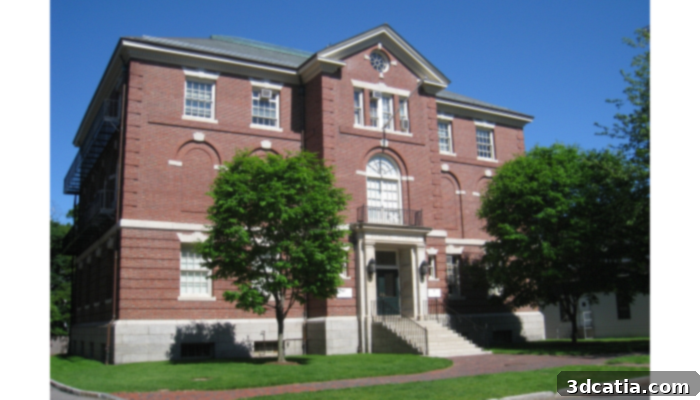
The Harvard Semitic Museum
Specific Applications and Technologies at the Harvard Semitic Museum
How have 3D technologies impacted your work specifically? What kind of scanning technology/3D-printing technology do you use?
Our team at the Harvard Semitic Museum has extensively leveraged computer-aided drafting (CAD) for the intricate visualization of reconstructed objects. A prime example is the celebrated Hetepheres chair, a project that demonstrates the remarkable ability of digital tools to bring ancient artifacts back to life. Beyond individual objects, we’ve applied these techniques to reconstruct entire archaeological sites, such as the vast Old Kingdom necropolis at Giza, which, of course, includes the iconic Pyramids. For smaller, more manageable objects, we have successfully experimented with low-cost, accessible tabletop scanning solutions, and proudly shared the resulting 3D models with the wider public on platforms like Sketchfab, fostering open access to our collections. Furthermore, in an innovative “General Education” course on ancient Egypt offered at Harvard, we integrated a unique 3D virtual curation final project assignment, which allowed students to actively engage with digital artifacts and curatorial principles, a fascinating initiative described here.
Another compelling case study involves the meticulous restoration of a glazed terra cotta lion sculpture. This sculpture, originally excavated by the Museum in the early 1930s at the ancient site of Nuzi (modern-day Iraq), was missing its head and a significant portion of its body. To accomplish this delicate restoration, we first took multiple high-resolution digital photographs of an intact mate of the Nuzi lion sculpture, housed at the University of Pennsylvania Museum. Employing sophisticated mathematical algorithms, these photographs were then assembled into a comprehensive 3D image. This digital model served as the blueprint for creating the missing components, allowing us to physically reconstruct the lion while maintaining historical accuracy and material integrity.
It is important to emphasize that while some of these projects might conceivably have been attempted without the aid of digital 3D scanning technologies, each would have been monumentally more time-consuming, prohibitively expensive, and in some critical instances, outright destructive. A perfect illustration of this is the study of bird mummies. The ability to scan these delicate wrapped artifacts allows us to “see” inside them without ever disturbing their fragile wrappings. Physically unwrapping them, a traditional method of examination, would have inevitably destroyed these invaluable historical objects, erasing their unique preserved state forever. 3D technologies provide a non-invasive pathway to knowledge, ensuring both scientific discovery and meticulous preservation.
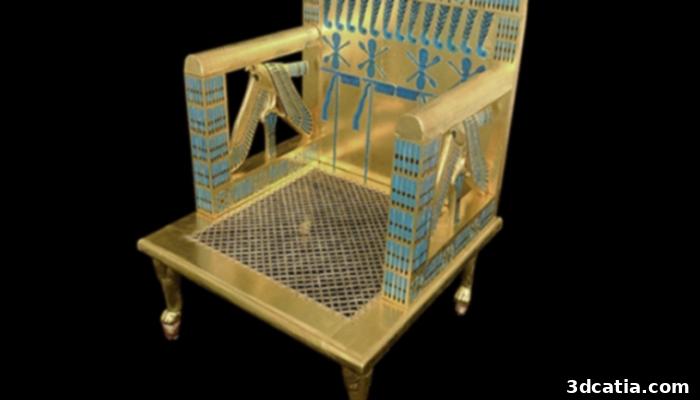
The rebuilt Hetepheres Chair
What specific equipment and/or machines do you use?
- **Table-top scanner: NextEngine 3D Scanner.** Utilized for capturing detailed 3D models of smaller artifacts, offering an accessible and efficient solution for object documentation.
- **MicroCT Scanner: Nikon Metrology XTH 225 ST.** Employed for non-invasive internal examination of objects, such as the bird mummies, providing unparalleled detail of internal structures without physical intervention.
- **Nuzi Lion Restoration: Nikon Digital SLR cameras and LearningSites, Inc. proprietary image creation software.** A combination of high-resolution photographic capture and specialized photogrammetry software was used to reconstruct the missing elements of the Nuzi lion sculpture.
- **Louvre Scanning Project: Breuckmann structured light scanner.** This advanced scanner was specifically used for capturing precise geometric data of large, monumental artifacts, such as the two colossal Mesopotamian statues from the Louvre Museum, requiring high accuracy over expansive surfaces.
- **Dream Stele AR Project: Possible use of a Project Tango smartphone (anticipated end of 2017).** Exploring the potential of augmented reality (AR) for interactive exhibits, allowing visitors to overlay digital information onto physical artifacts.
- **Hetepheres chair fabrication: ShopBot Tools Inc. CNC router.** A crucial piece of equipment for the physical reconstruction of the Hetepheres chair, enabling the precise carving of wooden components based on digital designs.
Do you have any partners for your projects and research? Who are they? What projects were they a part of?
Collaboration is a cornerstone of advanced archaeological and museum work. Our projects often involve interdisciplinary partnerships that bring together diverse expertise and resources, enabling us to tackle complex challenges and push the boundaries of research and conservation. These collaborations are essential for maximizing the impact and reach of our digital heritage initiatives.
- **Harvard Department of Earth and Planetary Sciences:** Collaborated on the expansive **Giza 3D** project, contributing geological and topographical expertise to create highly accurate digital models of the ancient landscape and structures.
- **Louvre Museum and Harvard Peabody Museum:** Instrumental in the intricate **scanning of Mesopotamian colossi**, a project that involved capturing detailed 3D data of monumental sculptures to aid in their study and preservation.
- **Harvard Museum of Comparative Zoology:** Partnered on the groundbreaking **bird mummies scanning** project, providing zoological expertise for the identification and analysis of the mummified bird species, leveraging the non-invasive capabilities of MicroCT scanning.
- **Smithsonian Museum of Natural History:** Assisted with the crucial **identification of the scanned bird mummies**, offering specialized knowledge in ornithology to accurately classify the avian remains revealed by the 3D imaging.
- **Harvard Ceramic Program:** Played a vital role in the meticulous **Hetepheres chair re-creation**, contributing expertise in ceramic techniques for fabricating the faience inlay tiles, ensuring historical authenticity.
- **LearningSites, Inc., Williamstown, MA:** A key partner in the complex **Nuzi lion restoration** project, providing specialized software and expertise in photogrammetry and 3D reconstruction from digital photographs.
- **Catholic University of Leuven, Belgium:** Collaborated on the **Dream Stele analogue resin cast**, working on creating physical replicas of ancient texts and artifacts for study and exhibition.
- **Archimedes Digital, Cambridge, MA:** Partnered on the innovative **Dream Stele AR** (Augmented Reality) project, developing interactive digital overlays for ancient artifacts to enhance visitor engagement and educational outreach.
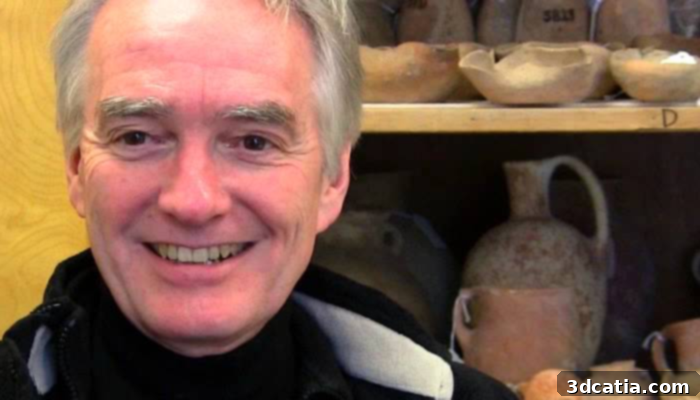
Dr. Joseph Greene of Harvard Semitic Museum with some artefacts
Revisiting and Re-evaluating History with 3D Technology
Have you used 3D technology to go back over any previous work you have done? Maybe to find something you may have missed?
Absolutely. One of the most compelling advantages of 3D technology is its capacity to revisit and re-evaluate existing collections and previously analyzed data with fresh eyes and enhanced capabilities. The comprehensive scanning of the bird mummies serves as an exemplary illustration. This process allowed us to “see” inside the mummy wrappings with an unprecedented level of detail, sufficient for a specialist to accurately identify the species of birds mummified without causing any damage. Historically, achieving such identification would have necessitated the physical removal of the wrappings, a process that, while informative, would invariably have led to the destruction or significant alteration of the object. By employing 3D scanning, we were able to significantly expand our knowledge and understanding of these ancient artifacts while ensuring their complete preservation. This non-destructive approach represents a profound ethical and scientific advancement in museum practice and archaeological research.
Similarly, the fragmented terra cotta lion sculpture from Nuzi, which we successfully reassembled using advanced 3D technology, offers another excellent example. These fragments had been meticulously excavated by the Museum in Iraq during the 1930s and subsequently stored in the Museum’s reserves for decades. While they were always available for scholarly research, their fragmented state rendered them largely unviable as engaging exhibit objects for the public. Their virtual reassembly, however, has fundamentally changed this. It now makes it possible to present museum visitors with a compelling visualization of how the magnificent lion sculpture might have appeared when it was intact, some 3,400 years ago, offering a tangible connection to an ancient world. The Giza 3D project stands as yet another outstanding instance of applying sophisticated digital 3D technology to previously collected and analyzed analogue data. This allows us to integrate historical findings with modern digital representations, enriching our understanding and presentation of one of the world’s most iconic archaeological sites.
In what ways do you think 3D scanning/printing can give you a different perspective when comparing it to typical ways you would study a work of art or an artifact?
The Giza 3D project, as mentioned, provides a robust framework for understanding scale and context, but the Hetepheres chair project uniquely exemplifies how 3D technology can fundamentally alter our perspective and approach to artifact study and reconstruction. What made the creation of the Hetepheres chair so extraordinary was that we operated in what we affectionately call the “opposite direction” from typical archaeological reconstruction. Instead of scanning an existing artifact to create a digital model, we began with a digital model of an object that had not physically existed since approximately 2500 BC, and then worked towards creating a tangible, real-world physical object.
The chair’s original existence was known only through thousands of tiny, fragmented pieces discovered in 1925, with all original wooden components having completely deteriorated and vanished over millennia. It was only through exceptionally meticulous archaeological records – detailed drawings, measurements, and contextual notes from the original excavation – that a preliminary line drawing reconstruction of the chair’s original appearance was made possible. From this crucial historical documentation, our team then painstakingly created a detailed digital 3D model. This digital model served as the blueprint. It was after achieving this accurate digital representation that we made the ambitious decision to use a CNC router to physically carve a real, full-scale chair from actual cedar wood, mirroring the materials believed to have been used in antiquity. We also recreated and baked actual faience inlay tiles, replicating the ancient craftsmanship, and meticulously purchased sheet gold to complete the gilding of the object, ensuring an authentic finish. This entire project, a remarkable blend of archaeological detective work, digital innovation, and traditional craftsmanship, will soon be published, offering invaluable insights into ancient Egyptian furniture design and the power of multidisciplinary reconstruction. This project demonstrates how 3D technology not only aids in documenting and preserving but can also facilitate a profound re-engagement with lost heritage, offering new pathways to understanding ancient design principles, construction techniques, and aesthetic values in a way that traditional methods alone could not achieve.
Stay informed about the latest advancements in additive manufacturing and digital heritage by signing up for our free weekly Newsletter here, delivering the freshest 3D printing news straight to your inbox!