
3D Printing’s Pivotal Role in Tackling Global Ventilator Shortages During Health Crises
At the onset of recent global health crises, most notably the COVID-19 pandemic, the critical importance of medical ventilators became starkly evident. These sophisticated pieces of equipment are meticulously designed to assist or completely take over the breathing function for patients who are unable to breathe adequately on their own. Modern ventilators typically consist of a precision pump machine connected to a specialized tube, which trained healthcare professionals carefully insert into the patient’s windpipe to ensure controlled airflow. This intervention is crucial for maintaining proper oxygen levels and removing carbon dioxide from the body, particularly in severe cases of respiratory distress.
The rapid and widespread transmission of viruses like SARS-CoV-2 placed an unprecedented and severe strain on healthcare systems across the globe. For individuals who develop critical illness, such as acute respiratory distress syndrome (ARDS) linked to COVID-19, compromised lung function often necessitates intensive care, with ventilators serving as a life-saving measure against complete respiratory failure. The sudden, overwhelming surge in demand for these vital devices quickly exposed significant vulnerabilities and shortages in medical supply chains worldwide. In the United States alone, initial estimates suggested an availability of approximately 170,000 ventilators. However, projections from respected organizations like the American Hospital Association painted a grim picture, indicating that the number of COVID-19 patients requiring intensive treatment could escalate to an alarming 960,000. This stark disparity underscored a potential catastrophic gap between the existing supply and the anticipated demand, highlighting a grave concern for public health authorities.
While robust public health measures aimed at slowing the virus’s spread were paramount in flattening the curve and preventing healthcare systems from collapsing under simultaneous pressure, the practical challenges of containment proved far greater than initially anticipated. Consequently, the urgent imperative to significantly ramp up the production of ventilators became undeniable. Traditional manufacturing pathways, often characterized by lengthy lead times, complex global supply chains, and high tooling costs, struggled to respond with the necessary speed and agility. This critical situation prompted a pivotal question across industrial sectors and medical communities: could innovative and decentralized manufacturing approaches, specifically the rapid production of 3D printed medical equipment, be scaled up effectively to meet this unprecedented demand and, ultimately, save countless lives?
The Additive Manufacturing Community Mobilizes for Healthcare
In response to this global humanitarian crisis, the 3D printing community demonstrated remarkable agility and solidarity, swiftly mobilizing to offer innovative solutions to the medical sector. The shortage wasn’t limited solely to ventilators; a severe lack of essential personal protective equipment (PPE) such as masks, face shields, and protective gear also plagued many hospitals, placing medical professionals at significant and unacceptable risk. While the rapid fabrication of items like goggles or basic masks proved relatively straightforward for additive manufacturing, the design and production of a fully functional and medically approved ventilator presented a far greater technical and regulatory challenge. Despite these complexities, the community rose to the occasion, showcasing the unique strengths of 3D printing in a crisis.
Pioneering Emergency Ventilators: The Spanish Initiative
A notable early success in this endeavor came from Spain, where a collaborative effort led to the development and medical approval of the first 3D printed emergency ventilator. This groundbreaking device was specifically designed to provide crucial support to hospitals and intensive care units grappling with the overwhelming influx of patients during the health crisis. The initiative was spearheaded by the Leitat Technology Centre, which played a pivotal role in designing and refining the ventilator. As explained by the Leitat team, their creation was conceived as an “emergency ventilator, for an emergency situation,” meticulously designed using advanced 3D technologies and integrating readily available, standard market components to simplify assembly and accelerate production. This hybrid approach allowed for extremely rapid manufacturing, with the capacity to produce approximately 100 units per day initially, with aspirations for even greater output in the immediate future. This swift response highlighted the potential of additive manufacturing to bridge critical supply gaps in times of extreme urgency.
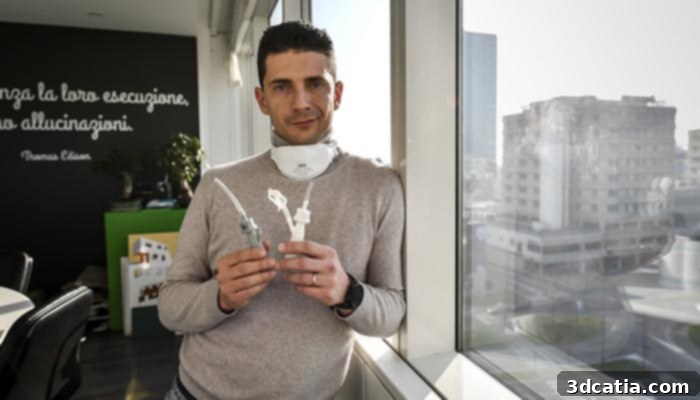
Cristian Fracassi, CEO of the Italian company Isinnova that created the 3D printed valves
Scaling Up 3D Printed Medical Equipment Production: A Global Imperative
The inherent flexibility and rapid prototyping capabilities of 3D printing technologies emerged as their main strength during the crisis. Companies, designers, and makers were able to move from concept to physical product in a matter of hours or days, an impossible feat for conventional manufacturing processes that require extensive tooling and longer lead times. This agility was crucial for producing urgently needed equipment. However, the true challenge lay not just in producing individual items, but in scaling up production to meet industrial-level demands. The ability to quickly iterate designs and produce small batches for testing is a hallmark of additive manufacturing, but transitioning to mass production requires different strategies and considerable investment.
The Italian Valve Crisis: A Race Against Time
A compelling example of this rapid deployment and the subsequent scaling challenge unfolded in Italy, one of the earliest and hardest-hit regions during the pandemic. A few pioneering companies quickly mobilized to 3D print critical valves for respiratory intensive care units. These small but crucial valves serve as key components, connecting ventilators to oxygen masks and ensuring proper gas exchange for patients. The situation in Italian hospitals was desperate, with doctors facing agonizing choices due to equipment shortages. Cristian Fracassi, CEO of Isinnova, the Italian design company that courageously created the digital files for these life-saving valves, articulated the essence of their mission: “If we acted quickly, it’s only because with 3D printers, you can quickly test a small production that would be impossible on an industrial scale. We just want one thing to remain from this story: the community, consisting of a hospital, a newspaper, and a team of professionals, ran a race against time and saved lives. That is all.” This powerful statement underscores the spirit of innovation, collaboration, and sheer determination that characterized the 3D printing community’s response. The rapid design, testing, and production of these valves directly impacted patient outcomes, demonstrating the tangible difference additive manufacturing could make in a crisis.
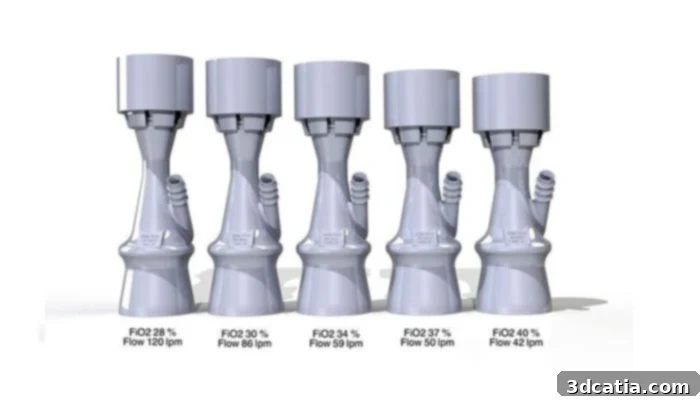
The open-source model of the valves, available on GrabCAD
UK’s Mass Production: Photocentric’s Breakthrough
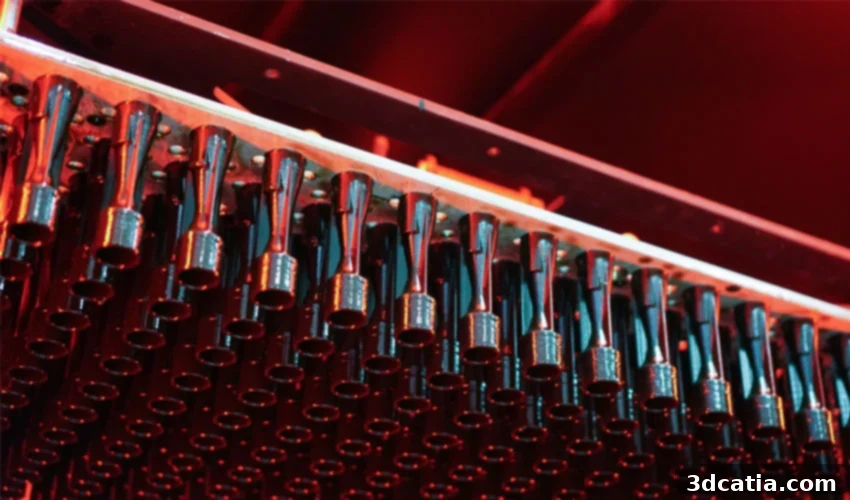
Further demonstrating the scalability of additive manufacturing, UK-based Photocentric, a prominent manufacturer of LCD 3D printers, made a significant breakthrough. They revealed impressive results from an overnight test conducted on three of their large-format machines, successfully printing over 600 essential valves. This initial test quickly led to a remarkable scaling of their operations. The company announced its capacity to produce an astonishing 40,000 printed valves within a single week, operating its 3D printers 24 hours a day, five days a week. This immense output capacity immediately positioned them to reach out to local hospitals and health providers facing critical shortages. Photocentric leveraged an open-source model of the valve, readily available on platforms like GrabCAD, emphasizing the power of collaborative design and accessibility. Utilizing their advanced SLA (Stereolithography) machines, they optimized the printing process by arranging the valves vertically and as densely as possible on the build platform, cleverly eliminating the need for support structures – a crucial factor in accelerating post-processing and overall production efficiency.
Ensuring Patient Safety: The Rigors of Medical Approval
While the speed and volume of 3D printing were undeniably vital in the emergency response, the ultimate deployment of these medical devices hinges entirely on rigorous medical approval. Patient safety and efficacy are paramount, especially for components that interact directly with the human body. Photocentric, understanding this critical requirement, provided comprehensive details about their materials and processes. They explained that “All of our hard polymers will pass cytotoxicity and skin sensitisation tests if processed correctly.” This statement highlights their commitment to biological compatibility and safety. They further clarified the distinction between their materials and common alternatives: “The majority of SLA prototype resins in the world are made from oxetane based cationic resins and will not pass those tests because they are highly hydroscopic, whereas our chemistry will.” This technical detail is crucial, as hydroscopic materials can absorb water, potentially compromising structural integrity and biological safety over time. Photocentric emphasized that their polymers are chemically similar to those used in dental amalgams, which are long-established and safely used internally within the human body for extended periods. They asserted that if their materials are fully reacted through their free radical process, they are capable of achieving Class 1 medical device approval. They stated unequivocally that “Medical approval would be part of our declared manufacturing procedure,” underscoring their systematic approach to regulatory compliance and patient safety.
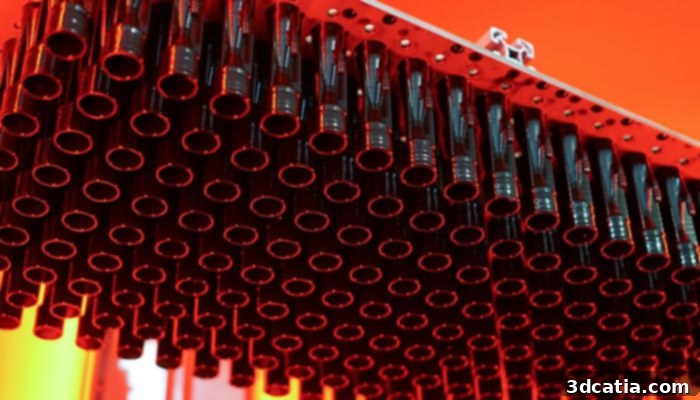
Photocentric managed to print over 600 valves on its machines
The Future of 3D Printing in Medical Emergencies and Beyond
In the days and months following these initial rapid responses, the deployment and effectiveness of these 3D printed devices were closely monitored, providing invaluable data and insights for local hospitals and healthcare systems worldwide. The pandemic acted as a crucible, accelerating the acceptance and integration of additive manufacturing into mainstream medical supply chains. The agility, adaptability, and localized production capabilities demonstrated by the 3D printing community showcased a powerful paradigm shift in how essential medical equipment can be sourced and produced during emergencies. This experience has laid a robust foundation for future innovations and preparedness.
Beyond crisis response, the lessons learned are shaping the long-term role of 3D printing in healthcare. It has solidified its position as a critical technology for rapid prototyping, on-demand manufacturing of custom medical devices, personalized prosthetics, surgical guides, and even bioprinting of tissues and organs. The ability to quickly design, test, and iterate complex medical components provides an unprecedented advantage over traditional methods, promising a more resilient and responsive healthcare ecosystem. This transformative potential for distributed manufacturing ensures that future health challenges can be met with greater speed, customization, and local autonomy, ultimately leading to better patient outcomes and a more robust global healthcare infrastructure.
For more in-depth information about these initiatives and Photocentric’s contributions, you can find further details HERE. We encourage you to share your thoughts on this incredible initiative and the broader impact of 3D printing in healthcare. Let us know your opinions in a comment below, or join the conversation on our official Facebook and Twitter pages! Don’t forget to sign up for our free weekly Newsletter to receive all the latest news and developments in the world of 3D printing directly in your inbox!