
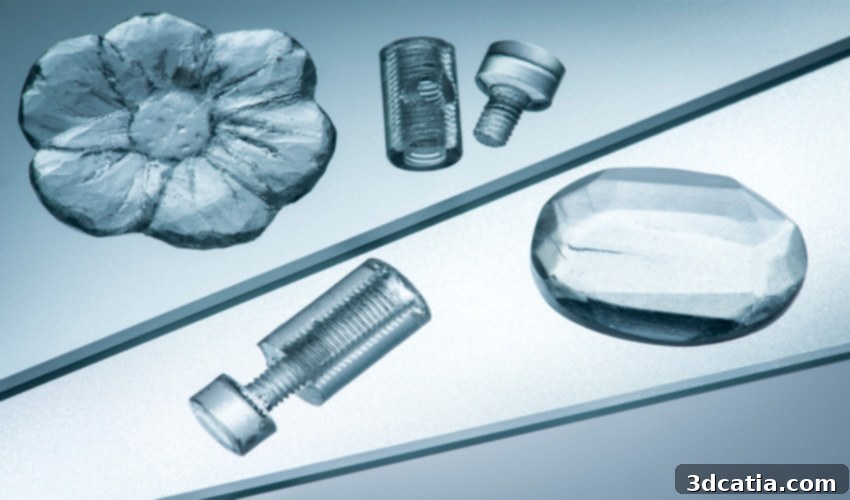
Revolutionizing Manufacturing: Glassomer’s Breakthrough in 3D Glass Printing Technology
In the rapidly evolving landscape of additive manufacturing, the ability to 3D print glass has long been a pursuit of researchers and innovators worldwide. While institutions like MIT have explored 3D glass printing techniques, a pioneering German startup named Glassomer has successfully developed and patented its own groundbreaking technology for shaping glass. Based in Freiburg, Germany, this visionary company has not only advanced the science of 3D glass printing but also brought it to market, earning its distinction as our featured 3D startup of the month. To delve deeper into their innovative projects and understand the future of glass within the 3D printing sector, we had the privilege of speaking with Frederik Kotz, co-founder and Chief Scientist of Glassomer. His insights shed light on the intricacies of their material science and manufacturing processes, promising a new era for intricate and high-performance glass components.
Glassomer’s Genesis: A New Paradigm for Glass Shaping
Frederik Kotz introduces Glassomer as a startup that has developed and patented a truly revolutionary process for shaping glass. Traditionally, glass is an incredibly challenging material to form due to its extremely high melting temperatures. This inherent property makes it notoriously difficult to work with using conventional methods such as casting molds, intricate machining, or precise microfabrication techniques. These traditional approaches often limit the complexity of achievable geometries and can be prohibitively expensive for custom designs. Recognizing this fundamental hurdle, Glassomer’s team embarked on developing a special class of materials they aptly named “Glassomers.” These proprietary materials are engineered to behave much like plastics at ambient temperatures, offering unparalleled ease of processing. Liquid Glassomers can be selectively hardened through exposure to heat or light, enabling sophisticated additive manufacturing techniques like stereolithography. Furthermore, solid Glassomers can be precisely manipulated using standard industrial processes such as carving, drilling, milling, or embossing, allowing for post-processing and fine-tuning before final transformation. The true innovation culminates during a subsequent heating phase in a conventional oven, where these “Glassomers” are transformed into pure, high-quality quartz glass, retaining the exact shape formed in the initial processing step. The core Glassomer technology originated and was meticulously refined within the NeptunLab, their esteemed working group at the University of Freiburg. The initial publications detailing this novel approach garnered immediate and widespread interest from diverse industries, leading to an influx of requests for specialized glass components that were previously impossible to manufacture through conventional means. This overwhelming demand and clear market need ignited the team’s ambition: to transform their groundbreaking technology into a viable, market-ready product, thereby democratizing access to complex glass structures through advanced additive manufacturing and other novel shaping methods.
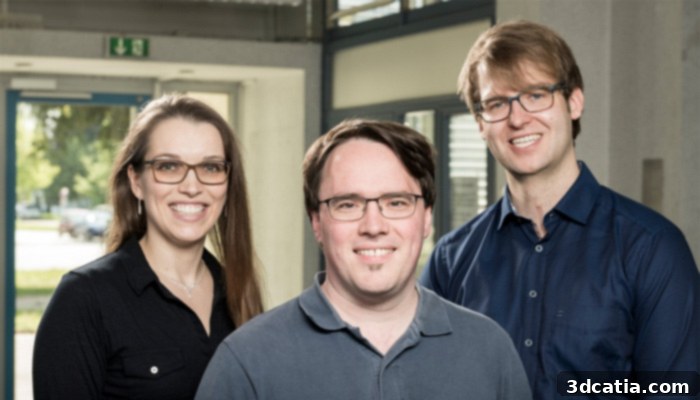
The dedicated Glassomer Team, driving innovation in additive glass manufacturing | Credits: Glassomer
Unveiling the “Glassomer” Nanocomposite: Advanced Material Science Explained
At the heart of Glassomer’s innovation lies its unique nanocomposite material, also known simply as “Glassomer.” This advanced material is meticulously formulated, comprising a very high proportion of ultra-fine glass powder intimately mixed with a specialized polymer binder. It is this clever combination that grants the material its remarkable properties and enables its unprecedented processability. Due to the presence and properties of the binder, Glassomer materials exhibit behaviors akin to plastics, allowing them to be processed using techniques traditionally reserved for polymers. This means designers and engineers can approach complex geometries and intricate structures with the same freedom and flexibility they would apply to plastic components, significantly expanding design possibilities for glass. The true transformation occurs after the initial shaping or printing process. Once the desired “green part” component is formed, it undergoes a crucial thermal post-processing step in a controlled furnace environment. During this precise heating, the plastic binder is systematically removed through a process called pyrolysis, and simultaneously, the finely dispersed glass powder particles fuse together. This pivotal process, known as “sintering,” results in a fully dense, transparent, and solid glass component. A key advantage of Glassomer’s sintering method is that it does not require the extremely high temperatures associated with melting raw glass (typically above 2000 °C). Instead, sintering occurs at much lower, more manageable temperatures. Consequently, the glass components experience minimal or no deformation, maintaining their precise geometries, structural integrity, and high resolution throughout the conversion from a polymer-like state to pure glass. The final sintered glass components are chemically and physically indistinguishable from commercial quartz glass, offering the same exceptional optical, thermal, and chemical performance characteristics but with previously unachievable design freedom enabled by this unique additive manufacturing approach.
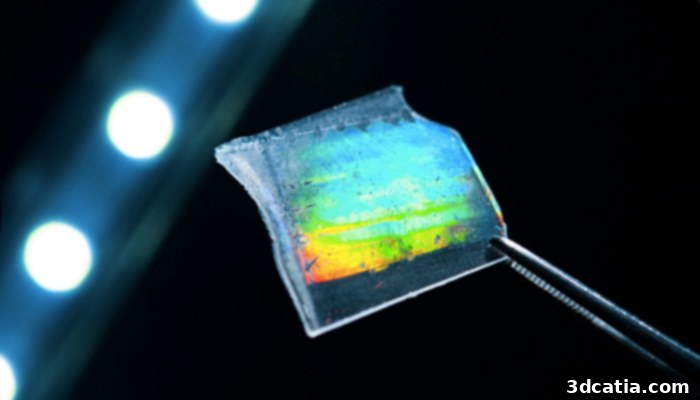
An intricately 3D printed glass piece, showcasing Glassomer’s capabilities for complex designs | Credits: Glassomer
Seamless Integration with Existing 3D Printing Workflows
One of the most compelling aspects of Glassomer’s technology is its seamless integration into existing 3D printing workflows, particularly those employing stereolithography (SLA). The polymer binder within the Glassomer nanocomposite closely resembles a conventional 3D printing resin; it is liquid and photo-hardenable, meaning it cures upon exposure to specific wavelengths of light. This crucial characteristic means that Glassomer materials can be processed directly in readily available commercial stereolithography printers without requiring significant modifications to the hardware, software, or the printing process itself. This compatibility lowers the barrier to entry for businesses and researchers looking to adopt glass 3D printing, enabling them to leverage their existing investment in SLA technology and expertise. During the printing phase, the liquid Glassomer material is selectively cured layer by layer using UV light, precisely building up the desired three-dimensional form with exceptional precision and detail. The operator simply follows the standard SLA printing protocols, making the transition from polymer printing to glass printing remarkably straightforward. However, the true innovation then unfolds in the post-printing stage. Once the “green part” (the printed component before glass conversion) is produced, it is carefully transferred to a specialized oven. Here, under carefully controlled thermal conditions, the polymer binder is systematically pyrolyzed and removed, while simultaneously, the glass particles sinter together, resulting in a dense, transparent, and pure quartz glass component. This elegant two-step process – plastic-like printing followed by controlled glass conversion – bridges the gap between the design flexibility and accessibility of polymer additive manufacturing and the superior material properties of glass, making complex and customized glass components more accessible and manufacturable than ever before.
Diverse Applications Across High-Tech Industries
The potential applications for Glassomer’s 3D printed glass technology are vast and span across numerous high-tech sectors, opening doors to previously unattainable designs and functionalities for a wide range of products. One prominent area benefiting from this innovation is the manufacturing of highly integrated microfluidic chemical reactors. These miniature devices, crucial for drug discovery, chemical synthesis, environmental monitoring, and medical diagnostics, require incredibly intricate internal channels, precise fluidic pathways, and complex geometries that are exceedingly difficult or impossible to achieve with traditional glass fabrication methods. Glassomer’s technology allows for the creation of complex 3D microchannels, sophisticated mixing chambers, and integrated optical elements, enabling more efficient reactions, advanced lab-on-a-chip systems, and highly customized biochemical analysis platforms. Similarly, the production of compact and customized optics is another key application. From specialized lenses, prisms, and mirrors to optical waveguides, diffractive optical elements, and advanced sensors, the ability to 3D print glass enables the creation of complex optical components precisely tailored to specific performance requirements, significantly miniaturizing devices and enhancing their functionality in telecommunications, imaging, and sensing. Beyond these scientific and engineering applications, Glassomer receives significant interest and inquiries from the medical technology industry, where biocompatibility, inertness, sterilizability, and precision are paramount. Glass components for implants, diagnostic tools, micro-robotics, and lab equipment can benefit immensely from additive manufacturing’s design freedom, enabling novel device architectures and improved patient outcomes. The automotive sector also sees immense potential for creating advanced sensors (e.g., LiDAR components), specialized lighting components, head-up displays, and aesthetic interior elements with intricate glass structures, pushing the boundaries of vehicle design and functionality. Furthermore, the jewelry industries are exploring how 3D printed glass can lead to unique, complex, and highly personalized designs that are impossible to craft through conventional glass blowing, cutting, or molding techniques, offering new avenues for artistic expression and luxury goods. The versatility and precision of Glassomer’s method promise to revolutionize product development and manufacturing across these critical industries, delivering unparalleled precision, geometric complexity, and superior material performance in glass components.
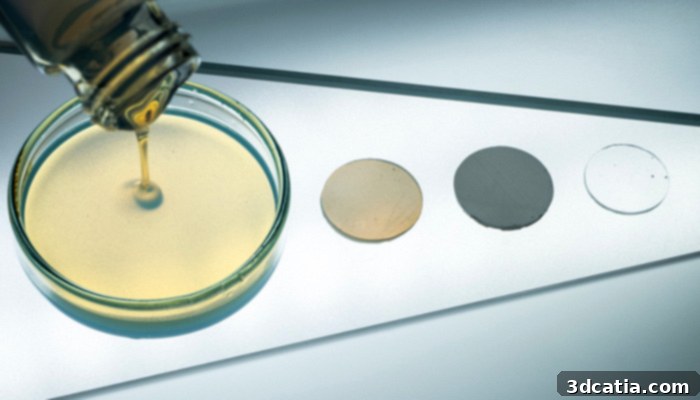
Close-up of a high-precision Glassomer component, demonstrating intricate detail and complex geometry | Credits: Glassomer
Navigating the Hurdles: Challenges and Glassomer’s Innovative Solutions in 3D Glass Printing
The journey of 3D printing with glass, especially to achieve high-quality, functional components with demanding specifications, presents a unique set of challenges that Glassomer has ingeniously addressed through dedicated research and development. Broadly, the initial printing challenges associated with their approach largely mirror those encountered in conventional stereolithography (SLA) using polymer resins. These include critical considerations such as effectively removing excess liquid resin from printed parts without damaging delicate features, ensuring complete and uniform curing of the material to maintain structural integrity, and meticulously rinsing fine structures to achieve clean surfaces without causing damage or altering the geometry. Optimizing printing parameters for achieving the highest possible resolution, feature fidelity, and surface finish also remains a key area of focus for any SLA process. In these respects, the process for Glassomer materials does not fundamentally differ from traditional printing with standard polymer resins, allowing users to leverage established SLA expertise and equipment. However, the most significant and distinctive challenge arises during the subsequent thermal conversion to pure glass in the furnace. The primary objective here is to completely and cleanly remove the polymer binder from the interior of the component without inducing stress, cracks, bubbles, or catastrophic structural failure – essentially, preventing the component from “blowing up” due to internal gas pressure as the binder decomposes. To overcome this formidable hurdle, Glassomer’s scientists have developed a sophisticated and proprietary solution: they have incorporated additional, carefully selected substances into the binder formulation. These precisely engineered additives are designed to facilitate the controlled and staged escape of the binder material in multiple, incremental steps during the heating process. This ingenious multi-step pyrolysis ensures that the binder decomposes and evacuates gradually and uniformly, allowing the glass particles to sinter into a solid, defect-free structure while meticulously preserving the intricate geometry, dimensional accuracy, and surface quality of the printed part. This mastery of binder removal and controlled sintering is crucial to the success and reliability of Glassomer’s end-to-end glass additive manufacturing process, distinguishing their approach in the field.
The Indisputable Advantages of 3D Printing with Glass
Glass, as a material, holds an indispensable position in modern society, permeating nearly every aspect of our daily lives and underpinning countless advanced technologies. From the backbone of the internet and the screens of our smartphones to advanced micro-optics in cameras and scientific instruments, its unique properties are foundational to countless applications. Glass boasts entirely different, and often superior, properties compared to common plastics, making 3D printing with glass a truly transformative capability for a myriad of industries. Key advantages include exceptional optical transparency across broad spectral ranges (from UV to IR), high thermal stability allowing operation at elevated temperatures, remarkable chemical resistance to most acids and bases, superior hardness and scratch resistance, and long-term dimensional stability and durability. Unlike many plastics, glass components do not yellow or degrade under UV light over time, nor do they leach chemicals, making them ideal for sensitive applications in medical devices or chemical reactors. Furthermore, glass is fully recyclable, aligning perfectly with growing environmental sustainability goals and circular economy principles. In line with broader technological trends towards miniaturization and increased functionality, there is a clear and pressing demand for increasingly smaller, more complex, and multi-functional structures in glass. Traditionally, forming intricate glass components has relied on subtractive methods such as etching, grinding, or machining. While effective for certain geometries, these methods impose significant limitations on the geometric freedom, internal complexity, and achievable feature sizes of shapes that can be produced, often leading to high costs and design compromises. This is precisely where 3D printing, and particularly micro 3D printing with Glassomer technology, introduces a paradigm shift. By enabling the creation of virtually any complex geometry layer by layer, additive manufacturing unlocks entirely new forms and functionalities for glass components. This unprecedented geometric freedom allows for the integration of multiple functions into single parts, the creation of optimized internal structures (e.g., for heat exchange or fluid flow), and the production of highly customized designs previously deemed impossible or prohibitively expensive. This capability is set to open up entirely new fields of application for glass, ranging from advanced micro-electromechanical systems (MEMS) and biosensors to next-generation telecommunications components, high-performance lenses, and specialized consumer products, solidifying glass’s role at the forefront of innovation and advanced manufacturing.
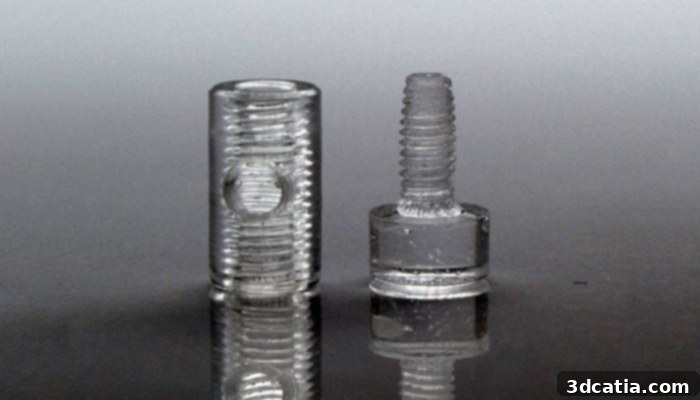
Incredibly intricate micro 3D printed glass structure, highlighting precision and fine feature resolution | Credits: Glassomer
Glassomer’s Vision for the Future of Glass Manufacturing
Looking ahead, Glassomer is driven by an ambitious vision for the future of glass production, aiming to establish its technology as a cornerstone for advanced glass manufacturing. The company is actively seeking suitable industry partners who share their commitment to innovation and recognize the immense potential of advanced glass additive manufacturing. These strategic partnerships are crucial not only for scaling the technology and expanding its market reach but also for integrating it into diverse industrial ecosystems, allowing for specialized applications and wider adoption. Glassomer is keen to collaborate with leaders in sectors such as optics, microfluidics, medical technology, and automotive to co-develop custom solutions and push the boundaries of glass component design and functionality. In the long term, Glassomer aims to establish a robust, medium-sized manufacturing and development department. This strategic expansion will serve a dual purpose: not only will it be dedicated to the continuous development and refinement of their patented glass 3D printing technology, improving material properties, process efficiency, and expanding the range of achievable geometries, but it will also enable the in-house manufacturing of specialized glass products. This integrated approach ensures that Glassomer remains at the forefront of both research and development (R&D) and high-quality production, providing bespoke solutions and driving the adoption of 3D printed glass across various sectors. By fostering strong collaborations and building unparalleled internal capabilities, Glassomer intends to solidify its position as a global leader in the next generation of glass manufacturing, transforming formerly conceptual designs into tangible reality and fundamentally changing how we design, produce, and utilize high-performance glass components in the modern world. Their vision promises to unlock new frontiers for innovation, efficiency, and sustainability in an indispensable material.
Glassomer’s innovative approach to 3D glass printing represents a significant leap forward in additive manufacturing, pushing the boundaries of what’s possible with one of humanity’s oldest and most versatile materials. Their patented “Glassomer” nanocomposite and meticulous post-processing offer a pathway to creating complex, high-performance glass components with unprecedented design freedom and precision. We are excited to witness the profound impact this technology will have across industries ranging from advanced microfluidics and precision optics to critical medical devices and sophisticated automotive components. What are your thoughts on this month’s featured 3D startup? How do you envision the future of 3D printed glass, and what applications do you believe will benefit most from this groundbreaking technology? We encourage you to share your insights in a comment below or join the conversation on our Facebook and Twitter pages. For all the latest news, innovations, and exclusive interviews in the dynamic world of 3D printing, don’t forget to sign up for our free weekly Newsletter, delivered directly to your inbox!