
Gartner Hype Cycle 2019: Unveiling the Future of 3D Printing, 4D Printing, and Transformative Medical Innovations
Each year, the esteemed Gartner Institute meticulously analyzes the landscape of emerging technologies, publishing its highly anticipated annual predictions. These reports serve as a vital compass for industries worldwide, highlighting pivotal trends that are poised to reshape future manufacturing processes and product development. In late 2018, Gartner released its comprehensive Hype Cycle report, offering profound insights into the projected evolution of 3D printing and its related innovations for 2019 and beyond.
This pivotal document not only charts the trajectory of established additive manufacturing techniques but also introduces groundbreaking concepts like 4D printing and forecasts significant advancements within the medical and industrial sectors. For businesses and innovators seeking to stay ahead in the rapidly evolving technological arena, understanding these predictions is not merely beneficial; it is essential for strategic planning and investment in the digital manufacturing revolution.
Decoding the Gartner Hype Cycle: A Framework for Technology Adoption
Before delving into the specific predictions for 3D printing, it’s crucial to first grasp the methodology behind the Gartner Hype Cycle. This iconic graphical representation helps organizations understand the maturity and adoption of new technologies and how they are likely to evolve over time. It delineates five distinct phases that a technology typically traverses from its inception to widespread productivity.
The first phase, the **Innovation Trigger**, marks the initial breakthrough or product launch that sparks significant interest. This is when a technology is born, often in research labs or through pioneering startups, generating initial proof-of-concept demonstrations. Following this is the **Peak of Inflated Expectations**, a period characterized by burgeoning public and media enthusiasm, often fueled by sensationalized media coverage and overzealous marketing. During this phase, expectations for the technology often far outstrip its current capabilities, leading to unrealistic hopes about its immediate impact and broad applicability.
As the initial hype fades and the practical challenges of implementation become apparent, technologies inevitably enter the **Trough of Disillusionment**. This is a critical stage where initial failures, performance issues, or a lack of mainstream adoption cause public interest to wane and investments to dry up. Many promising technologies never emerge from this trough. However, those that do gradually ascend the **Slope of Enlightenment**. In this phase, a deeper understanding of the technology’s true capabilities, limitations, and practical applications begins to form. Iterative improvements, second and third-generation products, and clearer use cases emerge, allowing businesses to understand how the technology can genuinely benefit them.
Finally, a technology reaches the **Plateau of Productivity**. At this stage, the technology’s benefits are widely demonstrated and accepted. It becomes mainstream, with a clear understanding of its applicability, market value, and operational viability. Investment in the technology continues to grow steadily, driven by proven ROI and widespread adoption. Understanding where a technology sits on this cycle is invaluable for businesses to make informed decisions about when to invest, when to adopt, and when to strategically plan for its future integration.
Gartner Hype Cycle 2019: Key Predictions for Additive Manufacturing
The 2019 Gartner Hype Cycle report for 3D printing underscored several critical trends and predictions, highlighting areas of rapid growth, emerging potential, and future challenges. These insights offer a roadmap for stakeholders in the additive manufacturing ecosystem, from manufacturers and researchers to investors and end-users.
4D Printing: The Next Dimension in Additive Manufacturing
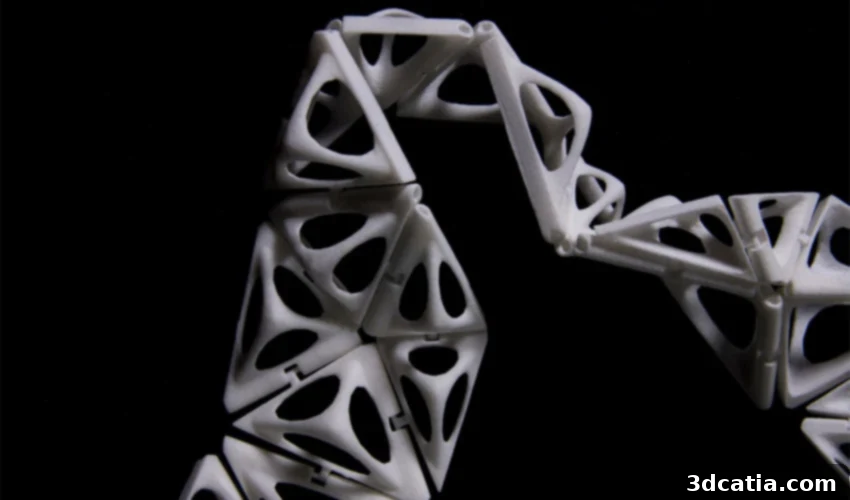
While 3D printing continues its robust expansion and integration into various industries, a more advanced concept, 4D printing, made its debut on the Gartner Hype Cycle in 2019, positioned firmly within the “Innovation Trigger” phase. 4D printing represents a revolutionary leap beyond traditional additive manufacturing by incorporating smart materials that enable objects to change shape, properties, or functions over time in response to external stimuli such as heat, light, water, or electricity. This potential for dynamic capabilities opens up an entirely new paradigm for product design and functionality.
Currently, 4D printing is primarily the focus of intensive research and development efforts across leading universities and pioneering companies. Industry giants like Airbus are exploring its potential for aerospace applications, envisioning self-assembling components or morphing aircraft structures. Software leader Autodesk, known for its design tools, is heavily involved in the simulation and design aspects crucial for creating these responsive objects. HP and Stratasys, established players in the 3D printing space, are also investing significant resources into developing materials and processes that can bring 4D printing to fruition. These efforts are concentrated on understanding material science, programming material responses, and developing advanced fabrication techniques.
However, 4D printing faces substantial hurdles before it can achieve widespread adoption. These include complex computer modeling challenges to accurately predict material behavior, significant scientific breakthroughs required in smart material development, and intricate engineering challenges in designing and producing objects with predictable dynamic responses. Gartner predicts that 4D printing is still approximately ten years away from reaching its “Plateau of Productivity,” indicating a long developmental roadmap. Despite these challenges, the immense potential of 4D printing is attracting significant investor interest. The report forecasted that by 2023, startup companies dedicated to commercializing 4D printing technologies would attract an impressive $300 million in venture capital. This level of investment underscores the market’s belief in its long-term transformative power, particularly for applications requiring adaptive structures, self-repairing systems, or advanced robotics.
Transforming Healthcare: 3D Printing in the Medical Sector
Throughout 2018, the medical sector demonstrated a remarkable and accelerating adoption of additive manufacturing, a trend predicted by Gartner to intensify significantly. The report projected that by 2023, a substantial 25% of all medical devices in developed markets would incorporate 3D printing technology. This prediction highlights a fundamental shift towards personalized medicine and advanced surgical solutions enabled by additive manufacturing.
This extensive integration encompasses several critical areas. Firstly, 3D printing is rapidly becoming indispensable for pre-surgical planning. Surgeons can create patient-specific anatomical models from CT or MRI scans, allowing them to visualize complex cases, practice intricate procedures, and identify potential complications before entering the operating room. This significantly improves surgical outcomes, reduces operating times, and enhances patient safety. Secondly, the use of 3D printing for joint replacement, custom surgical implants, and advanced prosthetics is expanding dramatically. The ability to produce bespoke implants that perfectly match a patient’s anatomy offers unparalleled fit, comfort, and functionality, leading to better long-term results and reduced recovery times. Custom prosthetics, particularly for children, can be rapidly designed, produced, and iterated, providing cost-effective and highly personalized solutions that improve quality of life.
However, this rapid advancement is not without its challenges. The medical application of 3D printing is very likely to encounter significant obstacles, including complex ethical debates surrounding human augmentation and data privacy, as well as stringent regulatory hurdles. Regulatory bodies globally are grappling with establishing clear guidelines for the approval and use of 3D-printed medical devices, materials, and processes, ensuring patient safety and efficacy. Standardization, material validation, and quality control are paramount concerns that need to be addressed comprehensively.
Furthermore, the report presented an even more ambitious prediction within the medical field: by 2023, 3D printing utilizing biosynthetics and living cells is expected to drive a multibillion-dollar market for prosthetic organs, organ ‘patches,’ and even full organ replacements. This exciting frontier, often referred to as bioprinting, holds the promise of revolutionizing regenerative medicine. By precisely depositing layers of biocompatible materials and living cells, researchers aim to create functional tissues and organs. While still in its nascent stages, the potential to address the critical shortage of donor organs, repair damaged tissues, and develop personalized drug testing platforms is immense. This projection underscores the profound, life-changing impact that advanced additive manufacturing is poised to have on human health and longevity, attracting massive investment and research efforts.
The Rise of Metal 3D Printing in Industrial Applications
Metal 3D printing, a segment of additive manufacturing known for its high-performance capabilities, was firmly on the rise in 2019 and continues its ascent. This technology enables the creation of complex, lightweight, and incredibly durable metal parts directly from digital designs, offering unparalleled design freedom and material efficiency. It leverages processes like Powder Bed Fusion (e.g., SLM, EBM) and Directed Energy Deposition (DED) to build objects layer by layer, opening new possibilities for industries that demand robust components.
Gartner’s report predicted that by 2020, 3D printed metals and alloys would become a critical and integral element in supply chains, particularly for replacement parts across commercial, military, and even some consumer markets. This highlights a shift from purely prototyping applications to end-use production. In the commercial sector, industries such as aerospace and automotive are increasingly adopting metal 3D printing for components that require high strength-to-weight ratios, complex internal geometries for cooling, or rapid customization. This includes turbine blades, engine parts, and specialized brackets.
For military applications, metal additive manufacturing offers unprecedented advantages in on-demand manufacturing of critical spare parts for aging equipment or rapid prototyping of new defense systems, significantly enhancing operational readiness and reducing logistical burdens. Even in certain high-end consumer markets, like custom jewelry, luxury goods, or specialized sporting equipment, metal 3D printing allows for intricate designs and personalized products that were previously impossible or cost-prohibitive to manufacture. The ability to produce parts closer to the point of need, reduce lead times, minimize inventory, and create lighter, more efficient components positions metal 3D printing as a cornerstone of advanced manufacturing and a transformative force for global supply chains.
Navigating the Future: Key Takeaways and Continued Innovation
The Gartner Hype Cycle for 2019 provided a compelling snapshot of the additive manufacturing landscape, emphasizing that 3D printing is far from a static technology. It showcased a dynamic field continually pushing boundaries, from the nascent but highly promising stages of 4D printing to the rapidly expanding and life-saving applications within the medical sector, and the industrial maturation of metal 3D printing.
These predictions underscore the imperative for businesses and researchers to not only stay informed but to actively engage with these evolving technologies. Understanding the Hype Cycle offers a valuable framework for strategic investment, risk management, and harnessing the true potential of additive manufacturing. As technologies mature, their impact on efficiency, customization, and innovation across diverse industries will only continue to grow, solidifying 3D printing’s role as a cornerstone of future global economic and technological development.
You can find more detailed information and additional insights about the Gartner Hype Cycle for 3D Printing by visiting the official Gartner blog directly HERE.
We invite you to share your thoughts and perspectives on these exciting predictions! Let us know what you think about this article and the future of additive manufacturing in a comment below. You can also join the conversation on our Facebook and Twitter pages. Don’t forget to sign up for our free weekly Newsletter to receive all the latest news and updates in 3D printing delivered straight to your inbox!