
Diving Deep: How 3D Printing is Revolutionizing Water Sports and Aquatic Innovation
As summer unfolds, bringing with it the allure of sun-drenched coasts and the excitement of the 2024 Olympic Games, our attention naturally drifts to the exhilarating world of water sports. From the rhythmic glide of a surfboard across a wave to the silent propulsion of a kayak, aquatic activities captivate and challenge enthusiasts worldwide. In this dynamic landscape, 3D printing, also known as additive manufacturing, is emerging as a powerful force, fundamentally transforming how equipment is designed, produced, and optimized. This innovative technology offers a multitude of advantages, including significantly reduced manufacturing times, unparalleled customization possibilities for accessories, and substantial improvements in overall performance. Moreover, a crucial benefit in today’s environmentally conscious world is its capacity to mitigate the ecological footprint associated with these sports. This article will explore various pioneering projects that exemplify the synergy between 3D printing and water sports, showcasing a compelling glimpse into the future of aquatic adventure and sustainable innovation. While this compilation is by no means exhaustive, it highlights the remarkable progress and potential of additive manufacturing in enhancing our experiences on the water. Enjoy your summer, and prepare to be inspired by these cutting-edge developments!
Innovating Surfing: Catching the Wave of 3D Printing for Enhanced Performance and Sustainability
Surfing, one of the most iconic and beloved water sports, is undergoing a significant transformation thanks to the advancements in 3D printing. This technology allows for the creation of surfboards and accessories that are not only tailored to individual needs but also push the boundaries of environmental responsibility. Below, we delve into several groundbreaking initiatives that are redefining the surfing experience.
WYVE: Custom-Engineered Surfboards for Optimal Ride
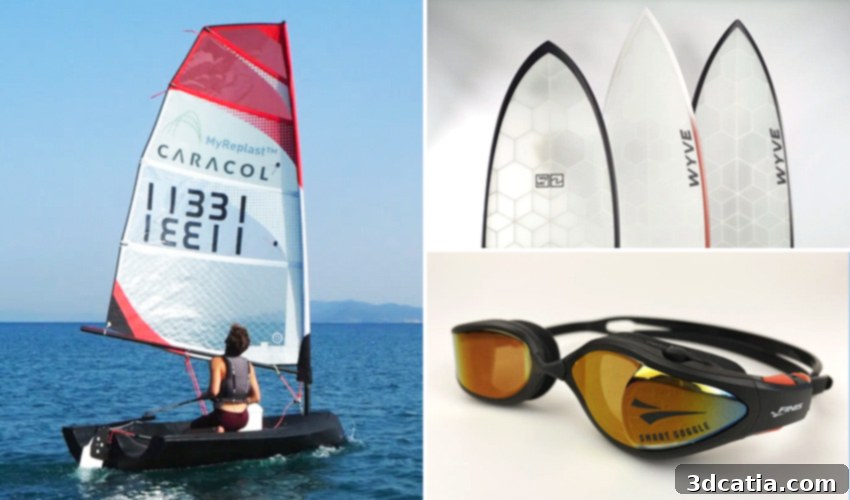
Founded in 2019 by two engineers and avid surfers, WYVE is a pioneering French start-up dedicated to leveraging additive manufacturing for the design and production of high-performance surfboards. Their innovative approach centers on using material extrusion to create the core of each surfboard. A key feature of their design is the incorporation of a sophisticated lattice structure within the core, which allows for precise manipulation of the board’s mechanical parameters. This means that WYVE can meticulously adjust variables such as vibration, weight, and torsional stiffness by altering the thickness and density of the 3D print. Such intricate customization enables them to produce tailor-made products perfectly suited to a surfer’s skill level, preferred riding style, and the specific conditions in which the board will be used. This level of personalized engineering truly highlights the immense value that additive manufacturing brings to sports equipment. Today, WYVE offers a diverse range of board models, delivering their custom creations to surfers in approximately ten countries, consistently pushing the envelope of personalized surfing gear.
YUYO: Pioneering Sustainable Surfing with 3D Printed Bio-Composite Boards
YUYO, an innovative company based in the south of France, is at the forefront of sustainable surfing, claiming to have developed the first truly eco-friendly 3D-printed surfboards. Their mission addresses the inherent paradox faced by surfers: a deep love for the ocean often coupled with equipment manufacturing processes that harm marine environments. YUYO resolves this by offering boards that are not only high-performing but also deeply respectful of the environment and our precious oceans. They achieve this remarkable feat by combining large-format 3D printing with cutting-edge bio-composite materials. YUYO manufactures its boards using natural or recycled materials, notably creating their 3D printing filament entirely from collected plastic waste. Beyond recycled plastics, they integrate natural basalt fiber and a biosourced resin derived from linseed oil, further minimizing environmental impact. This additive manufacturing approach allows YUYO to produce customized boards on demand, fostering a responsible consumption model that actively contributes to the preservation of aquatic ecosystems. Their commitment to environmental stewardship through advanced manufacturing truly sets a new standard for the surf industry.
Paradoxal Surfboards: Green Algae Waste to High-Performance Boards
Paradoxal Surfboards represents another innovative French company pushing the boundaries of sustainable design in the surf industry. This company is committed to creating, manufacturing, and marketing 3D-printed surfboards by ingeniously utilizing ocean waste, specifically green algae, as a viable alternative to traditional petroleum-based materials. Paradoxal Surfboards is deeply dedicated to eco-design principles and the exploration of novel bio-sourced materials to drastically reduce the environmental impact of surfboard production. Their expertise spans three critical areas: sustainable materials sourcing, the advanced design and development of 3D-printed surfboards, and the broader creation of water sports equipment from marine waste. Thanks to the versatility of 3D printing, Paradoxal Surfboards is able to offer truly unique, aesthetically striking translucent surfboards, distinguished by an intricate honeycomb internal structure. This structure not only contributes to the board’s lightweight properties but also enhances its performance characteristics, all while championing a more ecological approach to surfing.
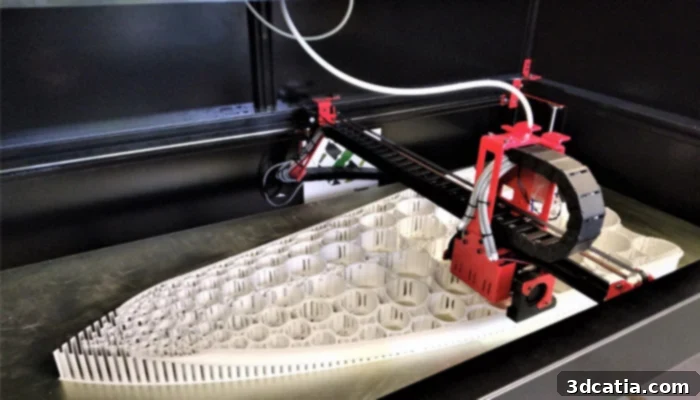
Paradoxal Surfboards rely on green algae waste for their innovative 3D printed designs.
3D Printed Surfboard Fins: Biomimicry for Enhanced Aquatic Performance
At the University of Wollongong in Australia, a dedicated multidisciplinary team is focused on significantly enhancing the surfing experience for athletes through cutting-edge technology. The Surf Flex Lab project brings together the specialized expertise of surfers and engineers, uniting their understanding of both the sport and advanced technology to develop innovative solutions for water sports equipment. This project employs rigorous scientific methodologies and utilizes advanced manufacturing techniques to improve crucial surfing components. The primary focus of their extensive research lies in optimizing the design of both fins and boards. A prime example of their groundbreaking work is the development of 3D printed fins, which offer a high-performance, cost-effective alternative to the traditional, often expensive, injection molding manufacturing process. For their revolutionary fin design, the team drew inspiration from the natural world, specifically the hydrodynamic efficiency of humpback whale fins. This biomimetic design has consistently demonstrated superior performance characteristics compared to conventional fins. Furthermore, the adaptability of 3D printing allows these fins to be meticulously customized to the individual needs of each surfer, as well as to specific swell conditions, enabling a truly personalized and optimized surfing experience. For those passionate about surfing and the scientific principles that underpin it, the team’s latest scientific publications are freely accessible, offering deep insights into their innovative research and findings.
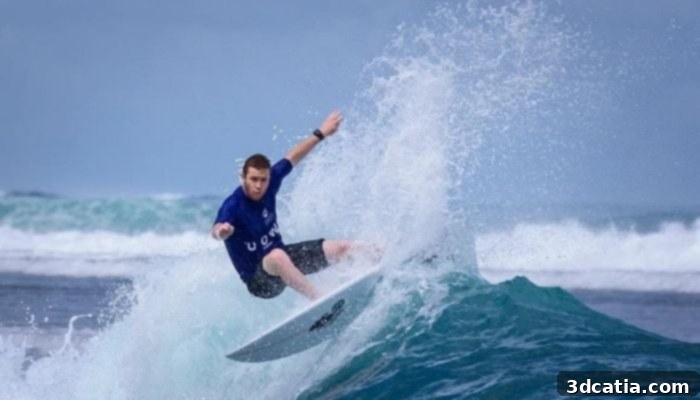
Photo Credits: Surf Flex Lab, showcasing their innovative 3D printed fins.
Blueprint Surf: Localized and Eco-Friendly Surfboard Manufacturing
In an era marked by pressing ecological concerns for our oceans, it comes as no surprise that those who cherish marine environments are actively seeking ways to protect them. Surfers, intimately connected to the sea, are leading many of these efforts, as evidenced by the innovative companies featured in this list. From Portland, Maine, the founders of Blueprint Surf are embracing 3D printing to create surfboards that are not only high-performing but also significantly more eco-friendly, allowing surfers to enjoy their passion guilt-free. The company employs large-scale polymer additive manufacturing, specifically utilizing PETG, to construct a robust 3D printed internal frame for their surfboards. This intricate frame is then meticulously wrapped in a soft composite skin, creating a durable yet responsive board perfectly suited for surfing. Blueprint Surf’s ambitious vision extends beyond individual board production; they aspire to green the entire surfboard industry. Their strategy involves preventing the extensive export of large quantities of surfboard foam, traditionally sourced from Southeast Asia. Instead, they aim to establish networks of 3D printers in various surf regions globally, enabling customers to acquire their custom-made, environmentally conscious surfboards locally. This localized manufacturing model significantly reduces transportation emissions and waste, contributing to a more sustainable future for surfing.
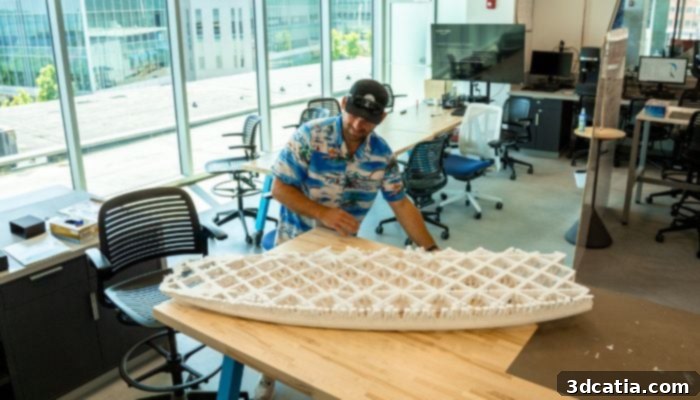
The 3D printed frame of a Blueprint Surf surfboard, alongside co-founder Luke Diehl, highlighting the innovative manufacturing process. (Photo credits: Blueprint Surf)
Swellcycle: High-Performance Surfboards from Recycled Materials
Based in the vibrant surfing hub of Santa Cruz, California, Swellcycle is a pioneering company specializing in the production of sustainable surfboards through the innovative integration of 3D printing and recycled materials. Their core mission is to equip surfers with high-performance boards while simultaneously making a substantial contribution to reducing environmental pollution. To achieve this, Swellcycle meticulously sources and utilizes various recycled plastics, including PETG obtained from discarded hospital equipment, remnants from old surfboards, and other end-of-life or unrepairable plastic products. These recycled plastics are then combined with bio-based resins to create the specialized filaments used in the FDM 3D printing process for Swellcycle surfboards. This ingenious approach transforms waste into valuable, functional products, embodying a perfect example of both environmental friendliness and the principles of a circular economy. Swellcycle’s commitment to sustainability demonstrates how advanced manufacturing can lead the way in developing products that are not only exceptional in quality but also deeply responsible towards our planet.
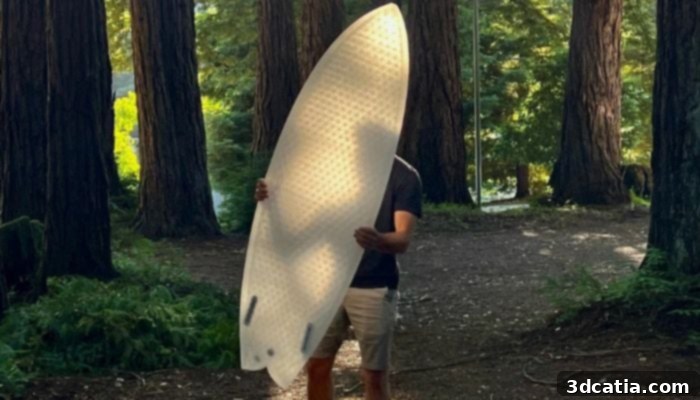
Photo Credits: Swellcycle, showcasing their innovative use of recycled materials for surfboards.
Expanding Horizons: 3D Printing Beyond Surfing for Kayaks, Paddleboards, and Jet Skis
The transformative power of 3D printing extends far beyond surfboards, impacting a wide array of water sports equipment from kayaks and paddleboards to high-tech jet skis and sailing components. This section explores how additive manufacturing is enabling unprecedented innovation, customization, and sustainable practices across diverse aquatic activities, proving its versatility and profound impact on the future of water sports.
The Värmdö Kayak: A Fusion of 3D Printing and Machining from Recycled Materials
The Värmdö, a remarkable full-size kayak, stands as a testament to the innovative potential of combining additive manufacturing with traditional machining techniques. This ambitious project, spearheaded by RISE Research Institutes of Sweden in collaboration with ADAXIS, aimed to demonstrate the feasibility of creating large-format watercraft from recycled materials. The core objective was to seamlessly integrate machining with large-format 3D printing, specifically targeting the production of a life-size kayak using sustainable resources. To execute this complex endeavor, ADAXIS’s AdaOne software played a crucial role, generating precise tool paths essential for both the initial 3D printing phase and the subsequent machining operations. The research team utilized a high-performance pellet extruder, ingeniously attached to the end of an ABB IRB6700 robotic arm, to construct the kayak’s intricate design with remarkable precision and scale. Following the additive process, traditional machining was employed to refine the structure, opening hatches, drilling necessary holes, and meticulously milling the bottom of the hull to ensure optimal hydrodynamic performance. This groundbreaking project not only successfully produced a functional kayak but also opened numerous avenues for further research and development in water sports. It highlighted significant potential in areas such as the advanced utilization of recycled materials in large-scale applications and the complex challenge of 3D printing on non-flat, geometrically intricate surfaces, paving the way for future innovations in aquatic equipment.
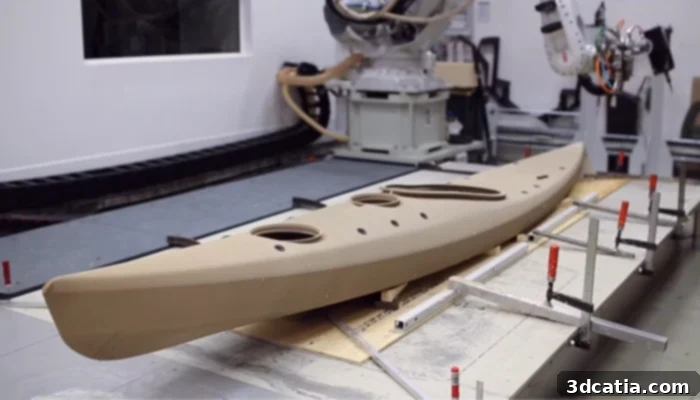
Photo Credits: Adaxis, showcasing the innovative Värmdö 3D printed and machined kayak.
AMAZEA Water Scooter: Seamless Design and Waterproofing with Large-Format 3D Printing
Offering an exhilarating adventure experience both above and below the water, the AMAZEA scooters developed by the German company JAMADE represent a triumph of large-format 3D printing. These innovative water scooters were meticulously designed and manufactured using a BigRep industrial-scale 3D printer. For their production, JAMADE opted for Pro HT, a specialized material developed by BigRep, chosen for its exceptional temperature resistance and minimal shrinkage characteristics, which are crucial for demanding aquatic applications. A remarkable 75% of the scooter’s components are created through additive manufacturing, enabling AMAZEA to achieve a perfectly waterproof design. By manufacturing a significant portion of the scooter as a single, integrated part, the company gained unparalleled freedom from the restrictive nature of traditional assembly processes, which often come with inherent risks of leakage and compromised structural integrity. This approach not only ensures superior waterproofing but also streamlines production, demonstrating how large-format 3D printing can revolutionize complex product manufacturing in water sports, leading to more reliable and performance-driven equipment.
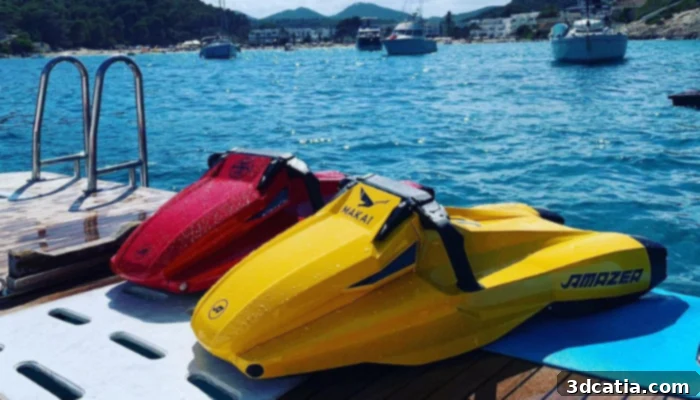
AMAZEA water scooter manufactured as one part on a large-format 3D printer, ensuring optimal waterproofing and design freedom. (Photo Credit: AMAZEA)
Caracol: A Rapidly 3D Printed, Sustainable Sailboat
In a remarkable display of advanced manufacturing capabilities, Caracol, in collaboration with NextChem, has successfully produced a full-sized sailboat using their proprietary 3D printing technology. The Beluga sailboat is particularly notable for its exceptionally rapid production timeline: it was manufactured in a single, continuous print operation over just 40 hours. This impressive feat was made possible by Caracol’s sophisticated robotic system and its unique Large Format Additive Manufacturing (LFAM) technology. The algorithms developed by Caracol are instrumental in this process, allowing the robot system’s extrusion head to align at various angles. This capability enables the printing of complex geometries, including significant overhangs and intricate hollow structures, which are typically challenging with conventional 3D printing methods. The material chosen for the Beluga was polypropylene reinforced with 30% glass fiber, a combination that yields a very lightweight yet robust sailboat. Furthermore, the commitment to sustainability is evident as the MyReplastTM material used is derived from recycled sources, positioning the Beluga as an environmentally friendly vessel. Through its 3D-printed sailboat, Caracol is not only demonstrating the power of its technology but also actively championing and supporting the principles of the circular economy within the marine industry.
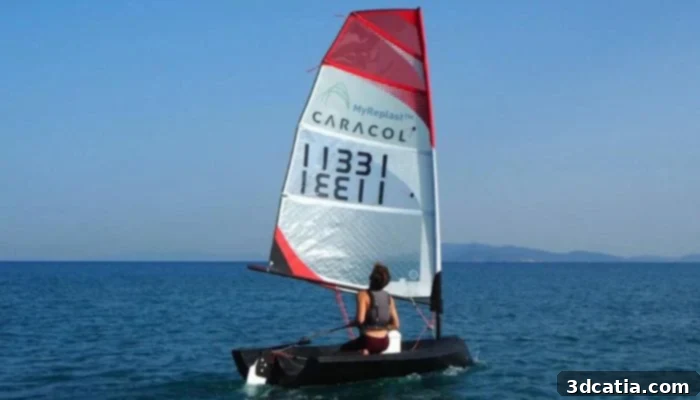
Photo Credits: Caracol, showcasing their innovative 3D printed Beluga sailboat.
Creaform Supports the American Magic Team: Precision Metrology for Competitive Sailing
The New York Yacht Club’s American Magic team, a formidable competitor in the prestigious 36th America’s Cup, has partnered with Creaform, a global leader in 3D metrology, to gain a crucial edge in their pursuit of sailing excellence. Throughout this high-stakes project, the American Magic team was equipped with state-of-the-art metrology technology, designed to optimize every aspect of their cutting-edge foiling monohull yachts. This comprehensive suite of tools included metrology-grade 3D scanners, advanced optical coordinate systems for precise photogrammetry, and sophisticated scan-to-CAD and inspection software solutions. These technologies have been instrumental in significantly accelerating the development and refinement of key boat components, allowing for rapid iterations and precise adjustments. The ability to quickly and accurately scan complex surfaces with Creaform’s scanners saved the boat builders countless hours of labor, a critical advantage in the fast-paced world of competitive sailing. This efficiency directly enabled the team to implement continuous adjustments and optimizations across various parts of the boat, ultimately having a profound positive impact on boat speed and performance. Generally, this advanced metrology technology allows for the seamless transfer of human-designed shapes into digital models, where they can be modified, analyzed, and then accurately fed into other manufacturing tools. With Creaform’s support, the American Magic team and their vessel were optimally prepared for the intense competition, significantly enhancing their chances of securing victory in the America’s Cup.
FINIS: Rapid Prototyping Diving Goggles with SLA 3D Printing
FINIS, Inc., a California-based company renowned for developing advanced products for swimmers, has embraced additive manufacturing to innovate its product line, particularly focusing on diving goggles. Initially, the FINIS team explored FDM (Fused Deposition Modeling) 3D printing for prototyping but quickly identified the need for more isotropic parts—components with consistent mechanical properties in all directions. This realization led them to transition to SLA (Stereolithography) printing, a technology perfectly suited for producing high-resolution, functionally robust prototypes. For their SLA needs, FINIS utilizes the Form 3+ printer from Formlabs, a machine highly regarded for its wide array of available materials and precision. Specifically, they employ Silicone 40A resin, a 100% silicone material capable of producing flexible, soft, and remarkably durable parts. A significant advantage for FINIS is the accelerated development cycle: new design ideas for parts can be directly implemented, printed within a single day, and then immediately tested in a pool environment. This rapid iteration capability allows for quick design modifications, printing, and on-the-spot evaluation. The transition to Silicone 40A resin profoundly improved the quality and functionality of their prototypes, with the 3D-printed goggles consistently performing exceptionally well in pool tests due to their soft feel and excellent sealing properties. By deeply integrating 3D printing into their development cycle, FINIS has not only refined their designs and streamlined testing but also ensured the continuous production of superior swimming products, setting a new standard for innovation in competitive and recreational swimming gear.
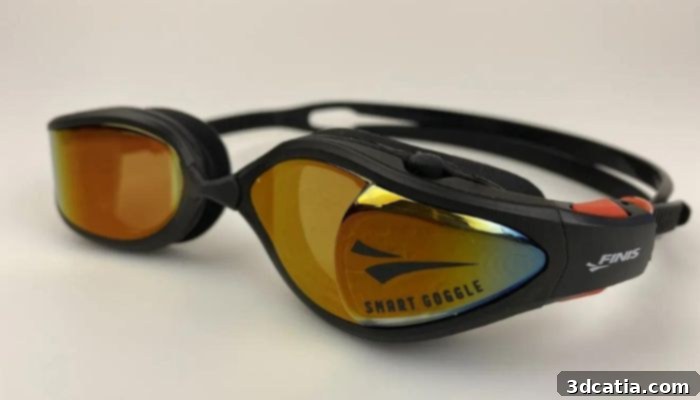
Photo Credits: FINIS, showcasing their advanced 3D printed diving goggle prototypes.
The ‘Made in Spain’ Electric Propeller: Powering Water Sports with 3D Printing
The company Pantur has forged a strategic collaboration with the innovative startup Electric Sea (eSea) to develop a cutting-edge portable electric propeller, designed for seamless adaptability across a wide range of boats and aquatic equipment. This groundbreaking product can be effortlessly integrated into surfboards, paddle surfboards, and kayaks, offering versatile propulsion solutions. The ‘Made in Spain’ electric propeller stands out for its exceptional lightness, impressive autonomy, and user-friendly operation, providing crucial technical assistance and an added layer of safety, especially in challenging adverse sea conditions. A pivotal aspect of this project’s success has been the extensive utilization of 3D printing for the design and manufacturing of the motor housing, specifically engineered for the demanding environment of water sports. This advanced manufacturing process has enabled the rapid creation of multiple prototypes and molds, significantly reducing both development costs and overall production times. Furthermore, 3D printing ensured that the propeller housing possessed the exact qualities required for marine use: superior quality, robust strength, and remarkable lightness. For the optimization of this electric propeller, 3D printing has proven to be an invaluable tool, positioning it as an ideal option for both sports enthusiasts seeking enhanced performance and rescue teams requiring reliable, portable propulsion in critical situations.
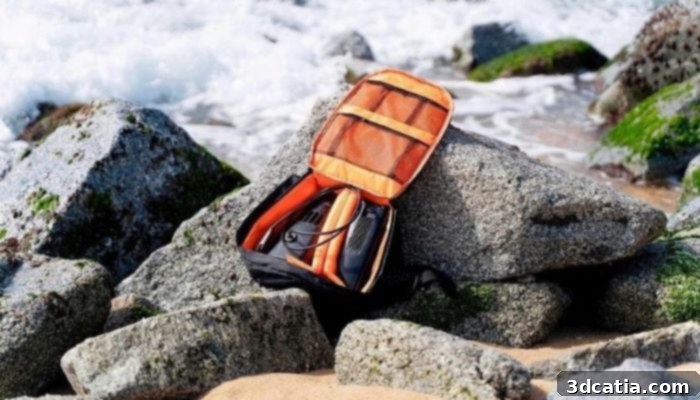
Photo Credits: Interempresas, featuring the innovative 3D printed electric propeller.
The integration of 3D printing into water sports equipment is truly ushering in a new era of innovation, customization, and sustainability. From personalized surfboards crafted from recycled materials to rapidly prototyped diving goggles and even large-scale components like kayaks and sailboats, additive manufacturing is proving to be a transformative force. It offers unparalleled advantages in design freedom, material efficiency, and localized production, ultimately enhancing athlete performance while significantly reducing environmental impact. These pioneering projects demonstrate that 3D printing is not just a manufacturing method, but a catalyst for a more efficient, personalized, and ecologically responsible future for all water sports enthusiasts.
What are your thoughts on these revolutionary 3D printing applications in watersports? We invite you to share your insights in a comment below or join the conversation on our Facebook and Twitter pages. Don’t miss out on the latest advancements and news in the world of additive manufacturing – be sure to sign up for our free weekly newsletter, delivered straight to your inbox!