
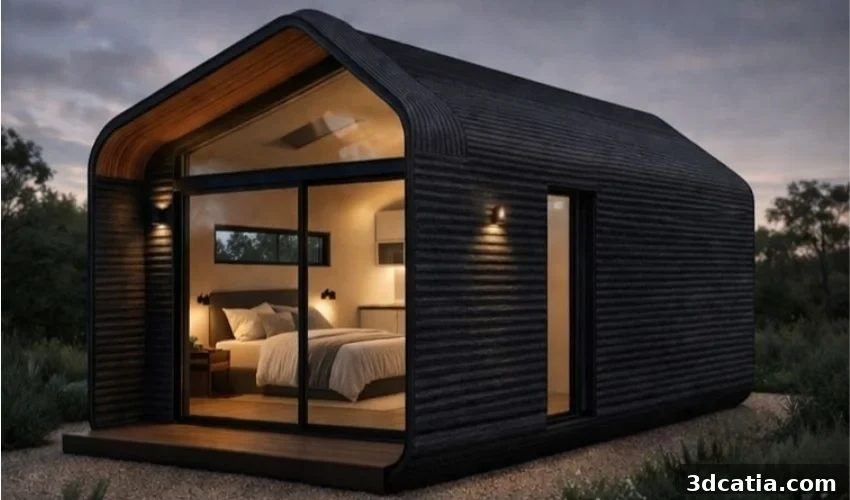
A house made from plastic might sound surprising, especially as societies aim to reduce single-use plastics. In this case, however, the material is recycled plastic repurposed for construction. Australian company Hyperion Systems is leading a project that could change how small homes are produced and delivered.
Hyperion Systems says this will be the first 3D-printed plastic house in the Southern Hemisphere. The company specializes in robotic additive manufacturing for industrial applications and is now moving into the construction sector through a collaboration with Little Castles Small Homes.
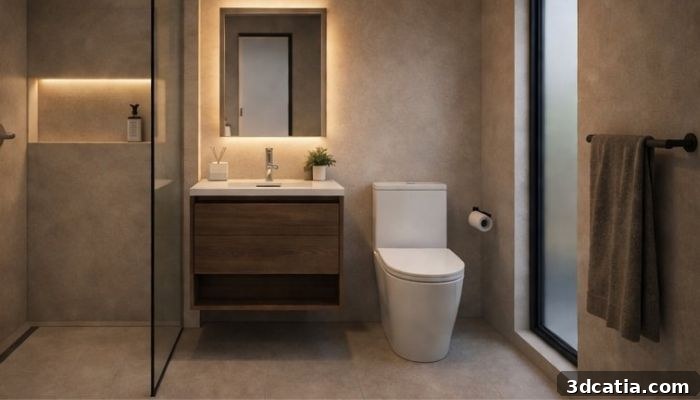
The studio will feature a bathroom and an open-plan living area with a kitchen.
Hyperion Systems designed these compact homes to be 3D-printed from recycled polymer feedstock. The company reports the primary structure can be printed in as little as 48 hours. After printing, the shell is transported to Little Castles Small Homes for finishing — installing windows, doors, interior fit-out and services to create a complete tiny house.
The finished home is planned to measure around 28 square meters and include an open-plan living area with a kitchen plus a bathroom. Josh Wigley, CEO of Hyperion Systems, summarizes the approach:
We will use recycled polymers as our primary raw material and, thanks to the intellectual property we have developed in-house, we will be able to 3D-print the main structure of a tiny house in approximately 48 hours. Because it is made from recycled polymers, the structure will be termite-resistant and offer beneficial thermal properties.
Hyperion Systems envisions this project as a stepping stone to larger-scale applications of additive manufacturing in construction. The company suggests that 3D printing could reduce build times, streamline the supply chain and enable new ways of organizing labor and production in the housing sector.
Questions remain about long-term durability and performance for homes printed from recycled plastic. Little Castles Small Homes emphasizes that the builds comply with Australian construction standards, with particular attention to insulation, ventilation and long-term performance. As the program progresses, monitoring real-world performance will be important to validate claims about thermal behavior, pest resistance and lifecycle impacts.
This initiative highlights several potential benefits: using waste plastic as a material stream, accelerating construction schedules, and offering an alternative approach to small-house manufacturing. At the same time, it raises important considerations around sustainability, maintenance, recyclability at end of life and regulatory approval for wider adoption.
What do you think of 3D-printed homes made from recycled plastic? Share your thoughts in the comments. If you follow developments in 3D printing and construction innovation, keep an eye on Hyperion Systems and Little Castles as they move from prototype to finished products.
*All Photo Credits: Little Castles Small Homes
