
3D Bioprinted Cornea Transplant: A Leap Towards Ending Corneal Blindness – Interview with Precise Bio CEO
In a groundbreaking achievement that signals a new era in regenerative medicine, Rambam Health Care Campus in Haifa, Israel, successfully completed the world’s first fully 3D bioprinted corneal implant transplantation in October 2025. This innovative implant, entirely lab-created from living human cells, was developed by Precise Bio. The Precise Bio platform can expand a single donor cornea into up to 300 transparent, layered corneal structures. These structures are meticulously designed to replicate the function of a healthy human cornea, eliminating the need for additional donor tissue. The pioneering procedure, performed at the Rambam Eye Institute as part of a Phase 1 clinical trial, remarkably restored vision in a patient who was legally blind in the treated eye. This landmark achievement is a momentous step toward addressing the critical global shortage of donor corneas, offering renewed hope to the millions worldwide affected by corneal blindness and visual impairment.
To delve deeper into the technology behind this groundbreaking transplant and to better understand its implications for the future of corneal disease treatment, we spoke with Aryeh Batt, CEO and Co-Founder of Precise Bio. In this exclusive interview, Mr. Batt shares insights into the development process, the challenges overcome, and the exciting future of Precise Bio’s innovative bioprinting technology.
The Genesis of Precise Bio: A Vision for Regenerative Medicine

CEO and Co-Founder Aryeh Batt
3DN: Could you introduce yourself and share what led you into 3D printing and co-founding Precise Bio?
Aryeh Batt: My background is in physics, specifically electro-optics. I’ve held various positions in the Israeli hi-tech industry, from R&D to executive management, leading multi-disciplinary products from development through sales and marketing. I developed a unique 3D printing technology capable of ‘printing’ human cells with high viability. This allows us to structure human tissue and organs composed of human cells and natural materials, mimicking the functionality and structure of native human tissue. When I realized the revolutionary impact this technology could have on healthcare, I decided to establish Precise Bio. I partnered with Dr. Anthony Atala, the director of the Wake Forest Institute of Regenerative Medicine (WFIRM), a leading pioneer in tissue engineering, and Prof. Shay Soker, also from WFIRM, a renowned molecular biologist and scientist in the field.
Precise Bio’s Mission: Revolutionizing Transplantation and Therapeutic Solutions
3DN: What is Precise Bio’s mission?
Aryeh Batt: Precise Bio envisions a future where patients no longer face long waits for life-saving transplants. Our mission is to solve critical unmet therapeutic needs using Precise Bio’s natural, hyper-accurate bio-fabrication technology. We fabricate natural tissues for transplantation, specifically addressing situations where there’s a shortage of donor tissue or a clear therapeutic need. Replacing damaged tissue with a bio-fabricated tissue offers a solution to currently unmet medical needs.
The Technology and Materials Behind Precise Bio’s Bio-Fabrication
3DN: Could you tell us about the technologies and materials Precise Bio utilizes?
Aryeh Batt: Precise Bio operates on a multi-disciplinary technology platform. We integrate cell biology, biomaterials, bioengineering, and various engineering disciplines, including software, mechanics, physics, and electronics. This integrated platform enables the bio-fabrication of clinically viable tissues. Our core directive is to fabricate tissues and organs from human cells and natural materials. The source of the cells varies depending on the specific tissue. In some cases, we use primary cells; in others, we use stem cells, iPSCs (induced pluripotent stem cells), or hESCs (human embryonic stem cells). The collagen we use in our tissues is human-derived, GMP-grade collagen, ensuring the highest quality and safety standards.
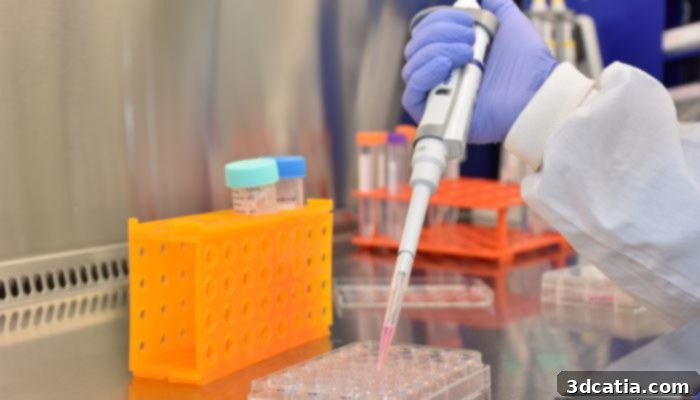
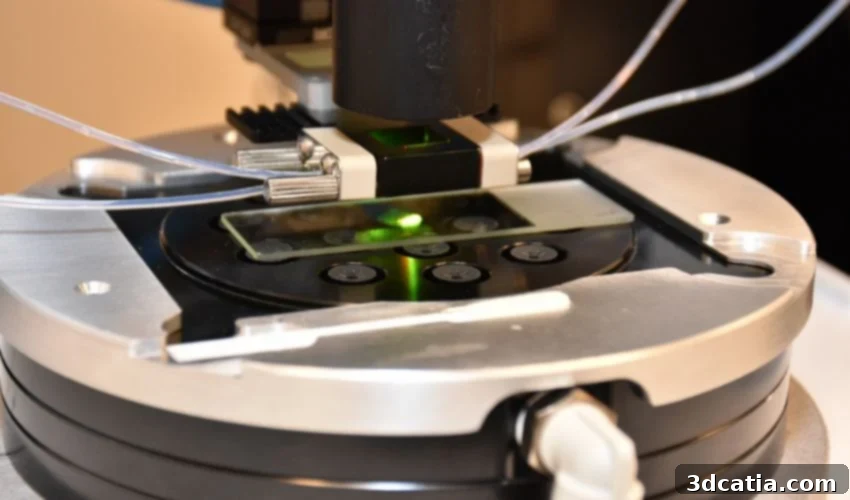
Precise Bio’s technology allows them to generate complex tissues in a highly reproducible manner.
The 3D Printed Human Cornea Transplant: A Detailed Look at the Process
3DN: Precise Bio recently made headlines for the first 3D printed human cornea transplant. Can you tell us about that process?
Aryeh Batt: The journey of bringing a 3D bioprinted tissue or organ to the clinic begins with the tissue’s development. The main components are the cell biology and the ECM (extracellular matrix), the structural material specific to the tissue or organ. The process starts in the lab with development and in vitro testing. It then progresses to the preclinical stage, involving in vivo testing, followed by the phases of clinical development: human transplant and study. Beyond the tissue development itself, we also focus on the production processes, rigorous quality control measures, and the regulatory pathway. To get the specific tissue, along with its delivery device, into the hands of clinicians, all these processes must be meticulously synchronized, combined, and approved by the relevant regulatory authorities.
Overcoming Challenges in 3D Bioprinting: A Focus on Quality and Regulatory Compliance
3DN: What are some of the challenges you faced in producing this cornea, and how did you overcome them?
Aryeh Batt: One of the most significant challenges in tissue development is establishing a cGMP (current Good Manufacturing Practice) production line that is fully quality-controlled and approved by regulatory authorities. There’s a substantial gap between simply engineering and manufacturing a tissue in the lab, perhaps publishing an article, and producing a clinically worthy tissue that is approved for clinical use. Bridging this gap requires more than just time and money. It demands a different mindset and the ability to leverage a qualified supply chain that can be commercialized and approved by regulatory bodies. We have dedicated significant resources to building this infrastructure and expertise.
Precise Bio’s Unique Approach: Beyond Bioprinting
3DN: What makes Precise Bio’s technology different from other bioprinting companies?
Aryeh Batt: Precise is more than just a bioprinting company. While we possess a unique printing technology that enables SCR (Single Cell Resolution), allowing us to mimic the precise anatomical structure of human tissue, this is merely the manufacturing tool. The true uniqueness of Precise Bio lies in the combination of a multi-disciplinary platform that integrates cell biology, bio-materials, engineering disciplines, rigorous quality control (QC), comprehensive quality assurance (QA), regulatory affairs (RA), and clinical directives. This holistic approach sets us apart.
The Future of Precise Bio: Expanding into New Therapeutic Areas
3DN: Looking ahead, what are the long-term goals or areas of innovation you’re most excited about for Precise Bio?
Aryeh Batt: Precise has started with our first product in the clinic, the cornea. This will be followed by additional ophthalmic tissues. However, we are also actively exploring applications in other fields such as cardiology, orthopedics, nephrology, and more. Our technology platform enables the development and fabrication of life-saving tissues and organs. This is the ‘holy grail’ of regenerative medicine and tissue engineering, and we are committed to pushing the boundaries of what’s possible.
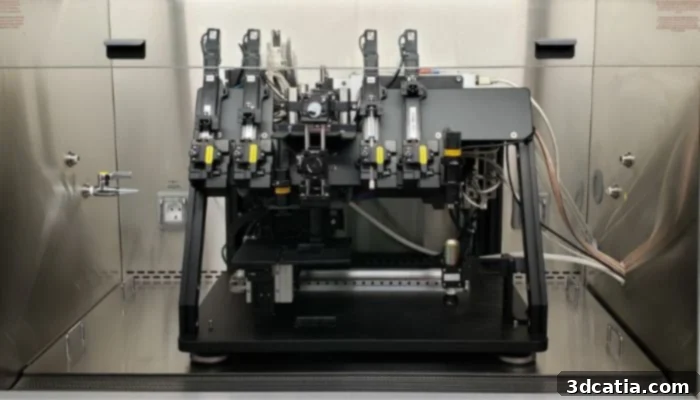
Precise Bio uses a 4D printing platform that enable bio-fabrication of tissues.
A New Era of Healthcare: On-Demand Natural Spare Parts
3DN: Any final thoughts for our readers?
Aryeh Batt: Precise is fundamentally changing healthcare as we know it. The concept of natural spare parts, fabricated and supplied on demand, is no longer science fiction but a demonstrated reality, as evidenced by the first cornea transplant performed several weeks ago. We are excited to continue pioneering new solutions that improve patient outcomes and transform the future of medicine.
What are your thoughts on Precise Bio’s groundbreaking work? Share your comments below or join the conversation on our LinkedIn or Facebook pages! Stay up-to-date with the latest 3D printing news by subscribing to our free weekly Newsletter. Explore our videos on our YouTube channel. For more news on medical and dental 3D printing, visit our dedicated page HERE.
*All Photo Credits: Precise Bio