
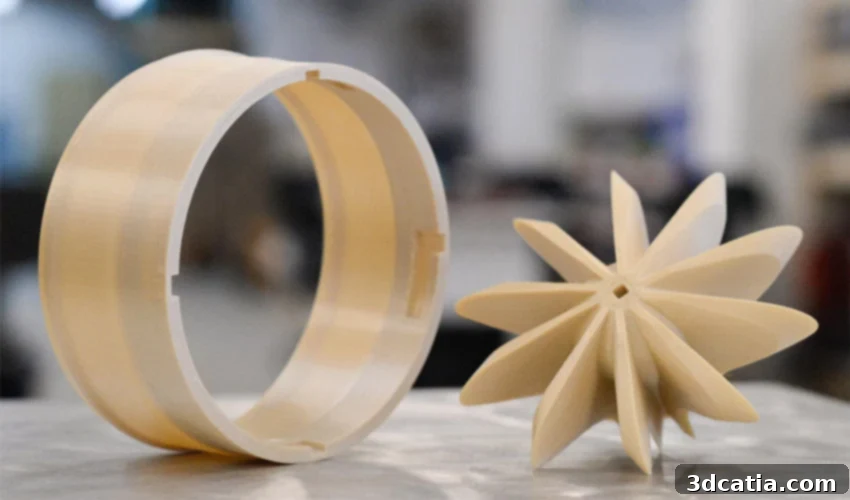
Expert Guide to 3D Printing High-Performance Thermoplastics: PEEK, PEKK, PEI, and ULTEM for Advanced Applications
The landscape of additive manufacturing has been dramatically reshaped in recent years by a significant surge in research and development dedicated to high-performance materials, particularly within the polymer sector. This evolution has introduced a new generation of advanced thermoplastics, widely recognized by their acronyms: PEEK (Polyether Ether Ketone), PEKK (Polyether Ketone Ketone), and PEI (Polyetherimide), often known by the brand name ULTEM. Beyond these established players, innovative materials like PPSU (Polyphenylsulfone) and PVDF (Polyvinylidene Fluoride) are also emerging, capturing the keen interest of manufacturers across various industries. These materials are highly valued for their superior mechanical properties, which far surpass those of conventional plastics. Furthermore, some of these exceptional polymers can be reinforced with strong additives such as carbon fiber or glass, endowing them with even more remarkable characteristics like enhanced stiffness, strength, and thermal stability. While the advantages of these high-performance materials are undeniably vast and transformative, it is equally important to acknowledge that their successful 3D printing requires adherence to stringent and demanding processing criteria. This is why we are pleased to present this expert guide, offering invaluable insights into this specialized family of materials. We will delve into their unique characteristics, explore the methodologies for effectively utilizing them in additive manufacturing processes, and identify the key applications where they deliver unparalleled performance. To bring you the most authoritative and practical advice, we’ve engaged three leading experts from the industry, whose collective knowledge provides an exclusive perspective. This article specifically focuses on the application of these materials using Fused Deposition Modeling (FDM) technologies, though it’s worth noting that high-performance polymers are also frequently processed with Selective Laser Sintering (SLS) technologies. For a deeper dive, we encourage you to consult our previous comprehensive guide on these advanced thermoplastic polymers, available HERE.
Meet Our High-Performance 3D Printing Experts
To provide you with the most accurate and actionable insights into the complex world of high-performance 3D printing materials, we’ve gathered perspectives from three distinguished experts at the forefront of additive manufacturing innovation. Each brings a unique blend of academic rigor, industrial application, and practical experience.
Our first esteemed expert is Dr. Abraham Avalos, who serves as the Head Scientist of the 3D printing research department at AON3D. AON3D is a pioneering Canadian manufacturer renowned for its advanced high-performance 3D printers, specifically designed to handle the most demanding engineering materials. Dr. Avalos’s academic journey began with a Ph.D. focusing on polymer synthesis for biosensing applications, providing him with a profound foundational understanding of polymer science. He then transitioned his expertise to the realm of additive manufacturing, specializing in the fused deposition modeling of PEEK and Carbon Fiber-reinforced PEEK (CF-PEEK), thereby gaining extensive practical knowledge in this critical segment of the industry.
Next, we introduce Nicolas Morand, the RDI & Industrialisation Manager at ARMOR’s Kimya division. Nicolas’s crucial mission involves the meticulous design and production of their diverse range of 3D printing materials, a portfolio that prominently features high-performance polymers. His role is pivotal in bridging the gap between material innovation and industrial readiness, ensuring that Kimya’s offerings meet the stringent demands of advanced manufacturing applications.
Finally, our third expert is Bernd Rauch, the Managing Partner of Rauch CNC Manufaktur. Rauch CNC Manufaktur stands as one of Europe’s premier 3D printing service providers, specifically specializing in high-performance plastics. Bernd Rauch has been an active and influential participant in the additive manufacturing sector since 2010, witnessing and contributing to its rapid evolution. He is responsible for the strategic establishment and comprehensive management of the company’s AM (Additive Manufacturing) division. His expertise extends beyond FDM, encompassing the Selective Laser Sintering (SLS) process, and he possesses unique experience with the innovative “ThermoMelt” process, a technology based on an original patent from AIRBUS, which Rauch AM has the privilege of operating as an in-house pilot user. This diverse background allows him to offer a holistic view of high-performance polymer processing.
-

- Dr. Abraham Avalos
-
- Nicolas Morand

-
- Bernd Rauch

The Unrivaled Benefits of High-Performance 3D Printing Materials for Industry
High-performance 3D printing materials, particularly those within the PAEK family (including PEEK and PEKK) and the PEI family (ULTEM), offer an array of formidable advantages that are revolutionizing industrial applications. These benefits can be broadly categorized into three critical areas: exceptional thermal properties, superior mechanical characteristics, and a robust resistance to a diverse range of environmental factors, including aggressive solvents and acids.
Our three experts unanimously emphasize that thermal resistance stands out as one of the most compelling benefits of these advanced thermoplastics. Dr. Avalos elaborates, “For professionals and engineers considering the integration of high-performance thermoplastics into their manufacturing processes, the ability to withstand extreme temperature conditions is a paramount concern. PEEK, for instance, exhibits an impressive continuous service temperature rating exceeding 240°C, and remarkably, it maintains its stiffness and structural integrity up to 170°C. This exceptional thermal resilience extends to other properties as well. For example, some high-performance thermoplastics are autoclavable, a feature that is absolutely essential for numerous critical applications within the biomedical field, where sterilization at high temperatures is non-negotiable.” This characteristic is not only crucial for medical devices but also holds significant appeal for industries like automotive, as Nicolas Morand highlights: “The automotive sector, in particular, finds these materials incredibly attractive because they offer an optimal combination of hardness, long-term durability, and outstanding thermal resistance, making them ideal for under-the-hood components or parts exposed to high operating temperatures.”
Beyond thermal stability, high-performance materials are celebrated for their exceptional mechanical properties. Nicolas further explains, “The PAEK family, encompassing PEEK and PEKK, possesses a multitude of highly desirable mechanical properties, such as remarkable rigidity and high strength-to-weight ratios. These attributes enable the production of incredibly lightweight parts when compared to their traditionally machined metal counterparts. In some specific applications, a weight reduction of approximately 40% can be achieved without compromising structural integrity or performance.” This reduction in weight has a profound and direct impact on operational costs, particularly for sectors such as aeronautics and aerospace. By significantly reducing the weight of components within an aircraft, for instance, the overall fuel consumption of the vehicle can be substantially lowered, leading to considerable economic and environmental benefits over its operational lifespan.
Furthermore, these advanced materials exhibit extraordinary resistance to various environmental stressors. Dr. Avalos provides more detailed insight: “High-performance thermoplastics are engineered to endure demanding operating conditions that necessitate robust resistance to a wide array of chemicals, high-energy radiation, and hydrolysis. PEEK and PEKK, specifically, demonstrate resistance to a broad spectrum of chemicals, strong solvents, and various forms of radiation, including beta, gamma, and x-rays. Many grades of ULTEM, another prominent high-performance polymer, offer particular chemical resistance properties that are highly beneficial in the stringent environments of the aerospace and automotive industries, protecting components from fuels, hydraulic fluids, and corrosive agents. It’s also important to note that ULTEM is significantly less expensive than other high-performance thermoplastics, offering a cost-effective solution for applications where its specific properties align with requirements.”
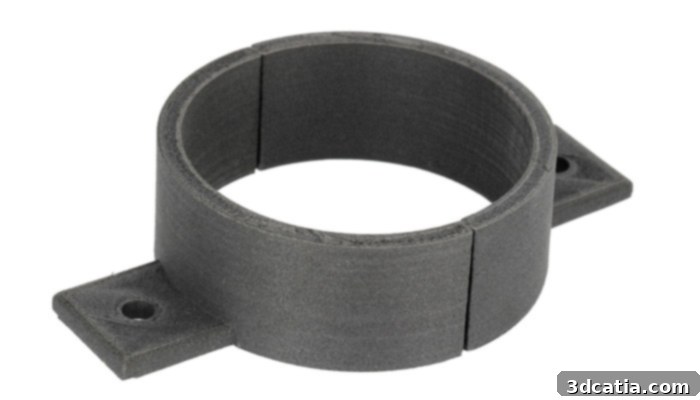
A 3D printed piece with Carbon PEKK from Kimya | Credits: Kimya
In a broader perspective, Bernd Rauch aptly comments that “High temperature and/or high-performance plastics are unequivocally opening up entirely new fields of application for additive manufacturing. These applications were simply not feasible with earlier rapid prototyping materials like conventional nylon or ABS, which lacked the necessary thermal or mechanical integrity. The advent of high-performance plastics is thus poised to enable a significant expansion into series production applications, moving additive manufacturing beyond prototyping and into mainstream manufacturing of end-use parts. This shift fundamentally alters the capabilities and economic viability of 3D printing across industries.”
Critical Parameters for Successfully 3D Printing High-Performance Materials
Effectively 3D printing high-performance materials like PEEK, PEKK, and PEI requires meticulous control over several key temperature environments. These critical zones include the extrusion temperature, the printing plate (or bed) temperature, and, crucially, the temperature of the enclosed printing chamber. Achieving the optimal balance across these three parameters is fundamental to producing high-quality, structurally sound parts.
Dr. Avalos meticulously explains the role of each: “The extruder or nozzle temperature is finely tuned to ensure strong and consistent layer welding, which is vital for the mechanical integrity of the final part. If the nozzle temperature is set too high, it can lead to various printing defects such as part deformation, excessive filament oozing, or even thermal degradation of the polymer. Conversely, if the nozzle temperature is too low, the inter-layer welding becomes significantly weakened, resulting in poor adhesion between layers and potentially compromising the overall strength of the print. Additionally, a low nozzle temperature can increase the polymer viscosity, making it difficult to print fine features accurately.”
Regarding the bed temperature, he adds, “The bed temperature profoundly influences the adhesion of the first printed layer to the build surface, a crucial step for preventing warping and ensuring dimensional accuracy. This temperature is typically set slightly above or at the glass transition temperature (Tg) of the material to ensure proper stick. However, excessive bed temperatures can cause the first layer to adhere too strongly to the bed, making part removal extremely challenging, often leading to damage to both the part and the bed surface. Conversely, if the bed is too cold, the initial layer may not bond adequately, causing the part to warp, delaminate, or even detach and shift midway through a print run, leading to complete print failure.”
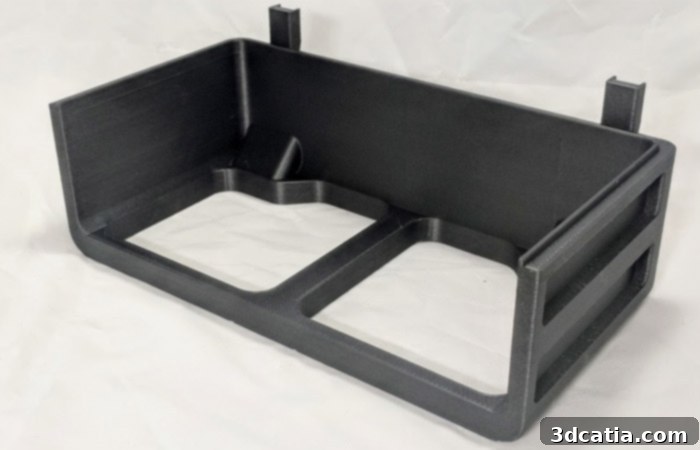
3D printed piece with the AON3D M2 machine | Credits: AON3D
Finally, the heated printing chamber temperature is perhaps the most critical for high-performance polymers. “The heated chamber’s primary function is to maintain a consistently warm environment around the printed part, which is essential to minimize thermal shock and control the cooling rate of the material as it transitions from a molten to a solid state. This controlled cooling environment significantly reduces the generation of residual stress within the part. When residual stresses are not properly controlled, they can lead to severe defects such as cracking, unsightly warping, and significant deformation, ultimately compromising the part’s functionality and aesthetic. The chamber temperature is typically kept slightly below the glass transition temperature of the material to promote gradual cooling and reduce internal stresses.” Dr. Avalos further warns, “More generally, there are particular risks associated with printing semi-crystalline materials, such as PEEK and PEKK. Since these materials tend to form crystals in environments hotter than their glass transition temperature, this uncontrolled crystallization process will first lead to volumetric shrinkage, then induce warping, and finally cause the part to detach prematurely from the build plate, often before the print is even completed. Therefore, precise temperature management in the chamber is non-negotiable for these materials.”
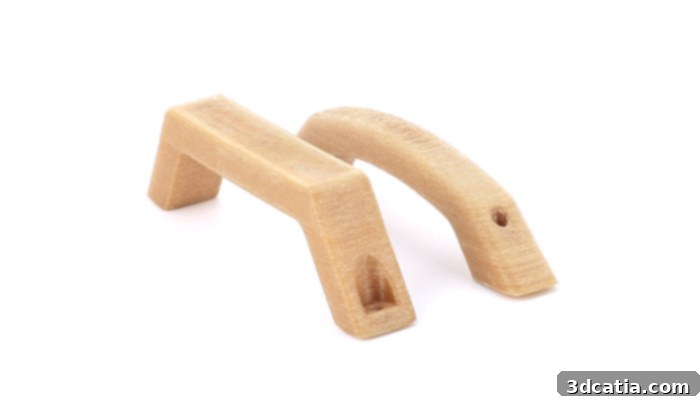
Door handle 3D printed with Kimya’s PEI | Credits: Kimya
Navigating Material Selection: Which High-Performance Polymer is Best?
With a deeper understanding of PEEK, PEKK, and PEI, it’s natural to wonder which material is best suited for a given application. Our three experts offer practical advice and their impressions to guide your selection. While the ultimate choice is heavily dependent on the specific requirements of the final application, it is generally acknowledged that some of these high-performance thermoplastics present fewer printing challenges than others.
Nicolas Morand provides valuable insight into the usability aspect: “PAEKs, including PEEK and PEKK, remain quite expensive materials, and historically, there have been relatively few compatible FDM printers available on the market, although we are now witnessing a steady increase in their development. These materials can feel quite challenging to work with for those new to high-performance printing, and it is crucial to be well aware of this learning curve. However, from our experience, I would generally assert that PEKK tends to be somewhat easier to print than PEEK. Similarly, PEI often proves to be more manageable to handle and process compared to PEEK. This ease of use can be a significant factor for manufacturers looking to integrate these materials without extensive investment in specialized training or equipment adjustments.”
Bernd Rauch emphatically confirms that the selection of the correct material is entirely contingent upon the specific application’s demands. “There is no single ‘special’ application or a universally best material. Instead, one must meticulously evaluate which material possesses the ideal combination of properties for the respective application. This principle also extends to the choice of additive manufacturing technology itself. I am frequently asked which process—FDM, SLS, or others—is the best. Here, too, one must state quite clearly: it unequivocally depends on the application. Each process has its particular strengths and weaknesses, its own set of advantages and limitations. This is precisely why we maintain an open mind and are always exploring new processes and material combinations. I would like to offer the readers a crucial piece of advice: components made of high-performance plastics are several times more expensive than what you might be accustomed to for rapid prototyping with inexpensive materials like nylon or ABS. Therefore, the potential for savings and the overall economic considerations change dramatically. For an initial rough test or feasibility study, we often adhere to this guiding principle: everything that can be conventionally produced efficiently by milling, injection molding, or other mechanical processing methods should, for cost-effectiveness and proven reliability, generally still be produced in that way. Additive manufacturing with high-performance plastics excels where conventional methods struggle with complexity, weight reduction, or unique geometries.”
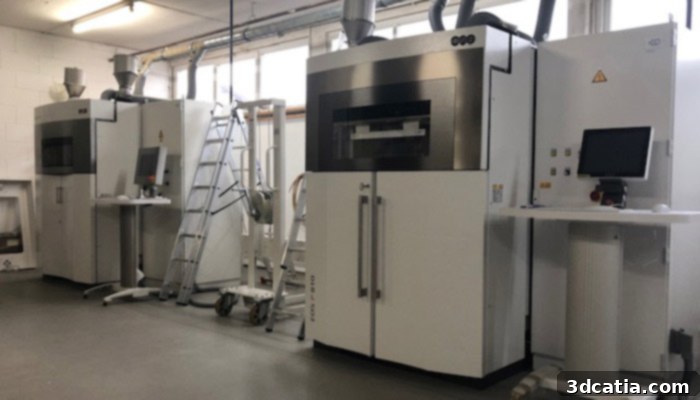
Production unit of RAUCH with the two SLS machines from EOS (P810 in the foreground and P800 in the background)| Credits: Rauch
Specifically, ULTEM (PEI) is often highlighted for its suitability in the aerospace and automotive industries. This is largely attributed to its excellent chemical resistance to many of the fluids commonly used in these demanding sectors, including various alcohols and weak acids. While ULTEM typically offers a lower continuous operating temperature compared to PEEK or PEKK, its significantly lower cost makes it an attractive and practical alternative for applications where its thermal limits are sufficient, providing a strong balance of performance and economic viability.
Finally, Dr. Abraham Avalos concludes with essential advice for anyone embarking on high-performance 3D printing: “It is absolutely imperative to ensure that the industrial 3D printer you select is demonstrably capable of providing the precise type and level of thermal control necessary to consistently obtain high-quality parts with these advanced materials. Do not rely solely on the machine’s technical data sheet; instead, go beyond superficial specifications. Cultivate a strong, trusting relationship with the printer manufacturer, especially one that possesses deep expertise in materials science. Their intimate knowledge of how these complex polymers behave under various processing conditions will be invaluable. Such a partnership will significantly enhance your chances of obtaining the best possible results for your specific application, mitigating risks and optimizing print outcomes.”
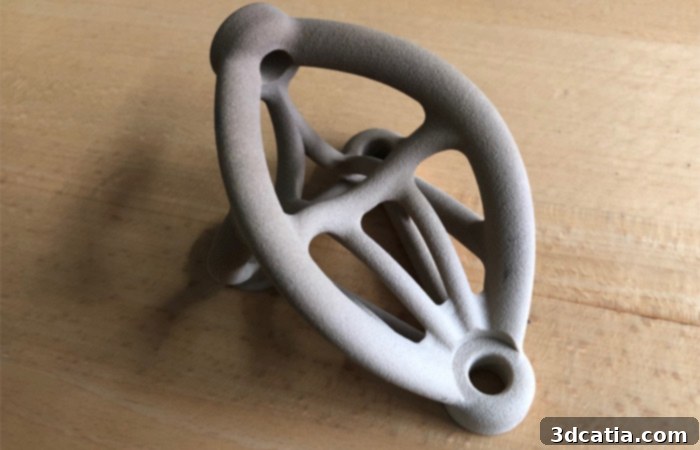
SLS component made of PEEK. The design shows why additive manufacturing is interesting for this | Credits: Rauch
For more detailed information and to explore their innovative solutions, please visit the websites of our expert contributors: AON3D, Kimya (ARMOR), and Rauch AM.
We hope this expert guide has been valuable in navigating the complexities of high-performance 3D printing materials. Your feedback is important to us! Please share your thoughts in a comment below, or engage with us on our Facebook and Twitter pages. To stay current with all the latest advancements and news in the dynamic world of 3D printing, don’t forget to sign up for our free weekly Newsletter, delivered directly to your inbox!