
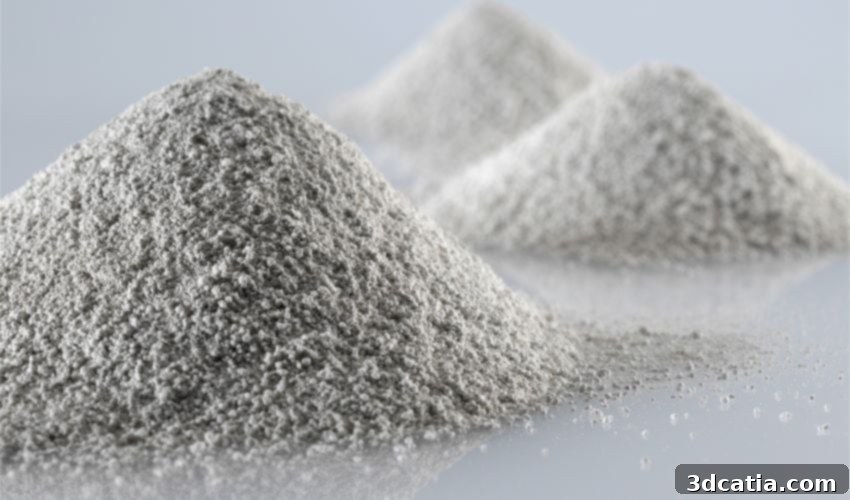
3D Printing with Silicon Nitride: Unlocking Extreme Performance and Durability
Additive manufacturing, widely known as 3D printing, is celebrated for its incredible compatibility with a vast array of materials. From versatile polymers and robust metals to specialized concrete and even food pastes, this technology continuously pushes the boundaries of what’s possible. An increasingly prominent area of application is in the processing of ceramics, particularly high-performance technical ceramics. Ceramic 3D printing offers a myriad of advantages across diverse industrial sectors, enabling the creation of intricate, high-precision components with tailored properties. While well-known technical ceramics like zirconia and alumina have been staples in the market, another advanced material is rapidly emerging into the spotlight: silicon nitride. This non-oxide ceramic boasts exceptionally interesting thermomechanical properties, making it a compelling choice for demanding applications. This comprehensive article will explore the unique characteristics of silicon nitride in depth, detail its various 3D printing methodologies, highlight its benefits, and showcase its broad range of industrial applications, solidifying its place as a key material in advanced additive manufacturing.
The Exceptional Properties of Silicon Nitride (Si₃N₄) for Additive Manufacturing
Silicon nitride (Si₃N₄) is an advanced technical ceramic produced by heating silicon powder in a nitrogen atmosphere at elevated temperatures. The resulting material is consistently ranked among the hardest and most durable technical ceramics available, distinguished by a unique combination of properties that enable it to perform reliably in extreme environments where other materials would quickly fail. Understanding these inherent properties is crucial to appreciating its value in 3D printing:
- Superior Hardness and Wear Resistance: Silicon nitride exhibits extremely high hardness, often surpassed only by diamond and boron nitride among engineering materials. This translates into unparalleled wear resistance, making it an ideal choice for components subjected to continuous friction, abrasion, or erosion. This property ensures extended operational lifespans and reduced maintenance in critical applications.
- Outstanding Thermal Shock Resistance: A hallmark of its performance, silicon nitride possesses excellent resistance to thermal shock. It can endure rapid and extreme changes in temperature – from very high heating to rapid cooling – without cracking, degrading, or experiencing catastrophic failure. This characteristic makes it exceptionally valuable for applications involving intense thermal cycling, such as furnace components, brazing and welding fixtures, and high-efficiency heat exchangers.
- High Strength and Fracture Toughness: Despite its inherent hardness, silicon nitride maintains remarkable strength and fracture toughness, particularly at elevated temperatures. Unlike many ceramics, it retains its mechanical integrity and resistance to propagation of cracks even under significant stress and high-temperature operational conditions, providing reliable performance in structural applications.
- Excellent Corrosion Resistance: Silicon nitride demonstrates exceptional resistance to chemical corrosion from a wide range of aggressive substances, including various acids, alkalis, and molten metals. This property guarantees its longevity and performance in harsh chemical processing environments, making it highly suitable for components like pumps, valves, and chemical reactor parts.
- Low Density and Lightweight: With a relatively low density compared to many metals and other engineering ceramics, silicon nitride components contribute significantly to weight reduction. This is a crucial advantage in sectors like aerospace and automotive, where lower component mass directly translates to improved fuel efficiency, enhanced performance, and increased payload capacity.
- High-Temperature Stability: Silicon nitride retains its strength, hardness, and structural integrity at very high temperatures, often exceeding 1200°C. This makes it a preferred material for high-temperature structural components and applications that require stable performance in extremely hot environments.
These combined properties distinguish silicon nitride as a material uniquely suited for demanding applications, often outperforming traditional metals and even other advanced ceramics. Its ability to maintain robust performance under severe mechanical, thermal, and chemical stress is a primary driver for its increasing adoption in cutting-edge industries, particularly when paired with the design freedom of 3D printing.
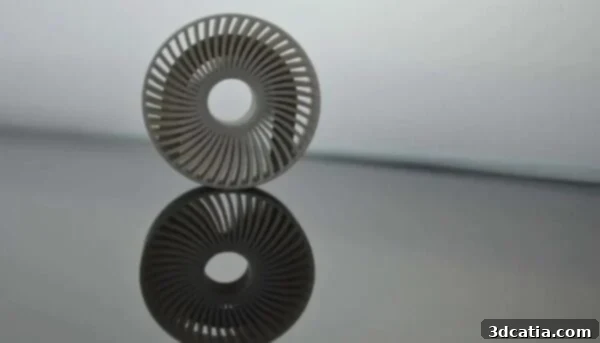
3D-printed heat exchanger made with silicon nitride (Credit: 3DCeram)
3D Printing Processes for Silicon Nitride: Methods and Considerations
The unique properties of silicon nitride are further amplified when combined with the design flexibility offered by 3D printing. Like most technical ceramics, silicon nitride can be processed through various additive manufacturing methods, each with its own advantages and specific requirements. This versatility allows for the creation of highly complex, customized, and optimized parts that are difficult or impossible to produce with conventional techniques. The primary additive manufacturing technologies currently employed for silicon nitride include material extrusion, stereolithography, and, to a limited extent, binder jetting.
Material Extrusion: Pellet and Filament-Based 3D Printing
Material extrusion, often recognized as Fused Filament Fabrication (FFF) or Fused Deposition Modeling (FDM) in its polymer form, involves heating and extruding a material through a nozzle to build an object layer by layer. For ceramics like silicon nitride, this process typically utilizes a feedstock composed of fine ceramic powder mixed with a polymer binder. Two main forms of feedstock are employed:
- Pellet-based 3D Printing: Industrial-grade pellet-based 3D printers are increasingly favored for ceramic applications. Pellets, which are small granular forms of the ceramic-polymer composite, offer several distinct advantages. They are often more cost-effective for large-scale production, allow for higher ceramic loading, and support a wider range of ceramic compositions. This method facilitates higher material throughput, leading to faster build times for larger industrial parts, making it a viable option for robust silicon nitride components.
- Filament Usage: While less common for high-performance ceramics like silicon nitride due to the challenges of manufacturing a flexible filament with high ceramic content, some specialized manufacturers do offer ceramic filaments. These filaments typically embed silicon nitride powder within a thermoplastic matrix. For instance, some commercial offerings report an organic content of approximately 21.5%. After printing, these “green” parts require extensive post-processing, including debinding (removing the polymer binder) and sintering (densifying the ceramic powder), to achieve the final, fully dense silicon nitride component.
The main challenge with material extrusion for ceramics often lies in achieving uniform density and preventing defects during the debinding and sintering stages due to the significant volume of binder that needs to be removed.
Stereolithography (SLA/DLP): High Precision with Ceramic Resins
Stereolithography (SLA) and Digital Light Processing (DLP) are highly effective additive manufacturing techniques for silicon nitride, particularly when demanding high detail, exceptional precision, and superior final density. In these processes, silicon nitride is integrated into a photosensitive resin – a ceramic slurry consisting of fine silicon nitride particles uniformly suspended within a photopolymer. A UV light source then selectively cures successive layers of this resin, solidifying the ceramic-filled polymer in the desired pattern. The key benefits of using SLA/DLP for silicon nitride include:
- Unmatched Detail and Precision: SLA/DLP technologies are celebrated for their ability to produce parts with extremely fine features, intricate geometries, and remarkably smooth surface finishes. This precision is critical for functional components in high-tech industries.
- Achieving High Density: Parts fabricated via SLA/DLP typically achieve high green densities, which are crucial for subsequent sintering processes. This leads to higher final densities and significantly enhanced mechanical and thermal properties of the resulting ceramic component.
- Enabling Complex Geometries: The layer-by-layer additive nature of these processes allows for the creation of highly complex internal channels, lattices, and lightweight structures that are simply unachievable with traditional ceramic manufacturing techniques.
Despite the advantages in printing, the post-processing phase for SLA/DLP ceramic parts is extensive and critical to achieving a fully dense, high-performance ceramic. This multi-stage process typically includes:
- Cleaning: After printing, any excess uncured resin must be meticulously removed from the “green” part to ensure purity and prevent defects.
- Debinding: The polymeric binder, which initially held the ceramic particles together, is then slowly and carefully removed through a controlled thermal process. This step is delicate, as rapid heating can cause internal stresses or cracking if the binder evaporates too quickly.
- Sintering/Densification: The debound part is subsequently subjected to very high temperatures (typically over 1700°C for silicon nitride) in specialized furnaces. During this phase, the ceramic particles fuse together, densifying the material and causing the part to shrink to its final dimensions. This step is paramount in imparting the desired mechanical strength, hardness, and thermal properties to the silicon nitride component.
Pioneering manufacturers in ceramic 3D printing, such as the French company 3DCeram, with its deep expertise in ceramic stereolithography, and Lithoz, an Austrian innovator known for its CeraFab systems, are at the forefront of industrializing 3D printed technical ceramics, including silicon nitride. Their continuous advancements are expanding the boundaries of what is achievable with this remarkable material.
Binder Jetting for Silicon Nitride Components: Emerging Potential
While currently less common for silicon nitride compared to material extrusion or stereolithography, Binder Jetting holds significant promise and is an active area of research for producing parts from this high-performance ceramic. In the binder jetting process, a liquid binding agent is selectively jetted onto a bed of silicon nitride powder, layer by layer, to build a “green” part. This method is particularly advantageous for its potential to produce relatively large parts quickly and cost-effectively, without the need for complex support structures, as the surrounding unfused powder naturally supports the printed object.
However, for technical ceramics like silicon nitride, binder jetting often faces challenges in achieving final densities and mechanical properties that are fully comparable to parts produced by SLA or traditional pressing and sintering methods. The post-processing for binder-jetted ceramic parts typically involves extensive debinding and a high-temperature sintering stage. These steps, if not meticulously controlled, can lead to considerable part shrinkage, warpage, or residual porosity. Despite these complexities, ongoing research and development efforts are focused on optimizing binder formulations, powder characteristics, and sintering parameters. The aim is to unlock the full potential of binder jetting for complex silicon nitride components, especially for applications where intricate geometries and a balance of mechanical performance and cost-effectiveness are key considerations. Its ability to scale up production and handle larger component sizes could make it a game-changer in the future.
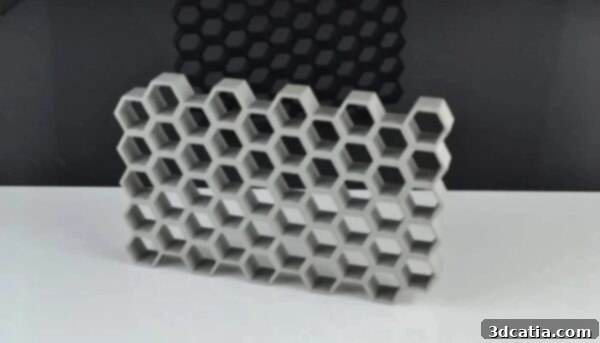
Credit: 3DCeram
Applications of 3D Printed Silicon Nitride: Revolutionizing Diverse Industries
The extraordinary combination of high-temperature resistance, exceptional wear resistance, superior strength, and chemical inertness makes 3D printed silicon nitride an invaluable material across numerous demanding industries. The added capability of additive manufacturing to create complex, optimized geometries further enhances its utility, allowing for design innovations that were previously impossible to achieve with conventional ceramic processing methods.
Automotive Sector
In the automotive industry, silicon nitride’s unique properties are being extensively leveraged to design and produce high-performance engine parts and other critical components. Its low density contributes significantly to weight reduction, leading to improved fuel efficiency and enhanced overall vehicle performance. Specific applications include:
- Engine Components: Silicon nitride is ideal for parts exposed to extreme temperatures and wear within engines, such as turbocharger rotors, glow plugs, valves, and cam followers. These components benefit from its high-temperature strength, excellent wear resistance, and low thermal expansion coefficient.
- Bearings: Ceramic bearings manufactured from silicon nitride offer superior performance in high-speed, high-temperature, and corrosive environments compared to traditional steel bearings. They provide reduced friction, extended lifespan, and operate efficiently without lubrication in certain conditions.
- Brake Systems: While more niche, silicon nitride can be explored for specialized brake components in high-performance or racing vehicles due to its outstanding thermal stability and wear characteristics.
- Sealing Systems: Its resistance to wear and aggressive chemicals makes it an excellent choice for seals in challenging automotive environments, improving reliability and durability.
Aerospace and Defense Industry
The aerospace and defense industry represents a prime application area for 3D printed silicon nitride, where the demands for hardness, lightness, and exceptional thermal resistance are absolutely paramount. Components in this sector must withstand extreme temperatures, high mechanical stresses, and corrosive atmospheres. Key applications include:
- Turbine Components: Silicon nitride’s high-temperature strength and thermal shock resistance make it perfect for parts within jet engines and gas turbines, such as vanes, shrouds, and combustor liners. Its use can lead to significant improvements in engine efficiency and durability.
- Heat Exchangers: The material’s excellent thermal conductivity combined with its resistance to thermal shock makes it an ideal candidate for creating compact, highly efficient heat exchange systems for aircraft and spacecraft.
- Nozzles and Thrust Vectoring Components: Its superior high-temperature resistance and wear resistance are crucial for components exposed to the intense heat and erosion of hot exhaust gases.
- Lightweight Structural Components: Weight reduction is a constant priority in aerospace. Silicon nitride’s low density combined with its high strength and stiffness offers substantial advantages for developing lighter, yet stronger, structural elements.
Industrial and Chemical Processing
Silicon nitride’s unparalleled resistance to wear, corrosion, and various chemicals makes it exceptionally valuable across a wide range of industrial and chemical processing applications. Components fabricated from this advanced ceramic can operate reliably and for extended periods in aggressive environments where metallic parts would rapidly degrade.
- Pumps and Valves: Due to its exceptional resistance to abrasive slurries, corrosive liquids, and gases, silicon nitride is widely used in pump seals, valve seats, impellers, and other fluid handling components. This significantly extends their service life in chemical, pharmaceutical, and wastewater treatment plants.
- Wear Parts: Components such as cutting tools, grinding media, bearings, and nozzles greatly benefit from its extreme hardness and wear resistance, leading to longer operational life, reduced downtime, and lower maintenance costs.
- Molten Metal Handling: Its stability at high temperatures and non-wetting properties with many molten metals make it an excellent material for crucibles, ladles, and casting components in metallurgical processes.
Semiconductor Industry
In the highly sensitive semiconductor industry, material purity, resistance to plasma etching, and stability at high temperatures are critical. Silicon nitride is increasingly utilized for various components within semiconductor manufacturing equipment, including:
- Process Chambers and Fixtures: High-purity silicon nitride components are essential for creating contamination-free environments during delicate wafer processing steps, ensuring product quality and yield.
- Plasma Etch Components: Its robust resistance to aggressive plasma environments ensures the longevity, stability, and integrity of critical parts within plasma reactors, minimizing particle generation and chemical reactions.
The Future Outlook for Silicon Nitride in 3D Printing
The integration of silicon nitride with advanced 3D printing technologies marks a pivotal advancement in high-performance manufacturing. While certain challenges persist – such as optimizing processing parameters to achieve even higher densities, mitigating shrinkage during sintering, and reducing overall production costs – continuous research and development efforts are rapidly addressing these hurdles. The capability to produce geometrically complex, custom-designed, and high-performance silicon nitride parts on demand is opening up unprecedented possibilities for innovation across multiple industrial sectors.
As additive manufacturing technologies continue to mature, become more efficient, and gain wider accessibility, the adoption of advanced ceramics like silicon nitride is projected to experience substantial growth. This expansion will undoubtedly lead to the development of even more efficient, durable, and lightweight components, thereby driving profound advancements in critical fields ranging from energy production and defense systems to biomedical devices and sophisticated consumer electronics. The future of silicon nitride in 3D printing is bright, promising a new era of material-driven innovation.
Do you currently use silicon nitride in 3D printing applications? We invite you to share your experiences and insights in a comment below or connect with us on our LinkedIn or Facebook pages! Furthermore, ensure you don’t miss out on the latest advancements in additive manufacturing by signing up for our free weekly Newsletter, delivered straight to your inbox. You can also discover a wealth of educational and insightful content on our YouTube channel.
Cover Photo Credit: Höganäs Germany GmbH