
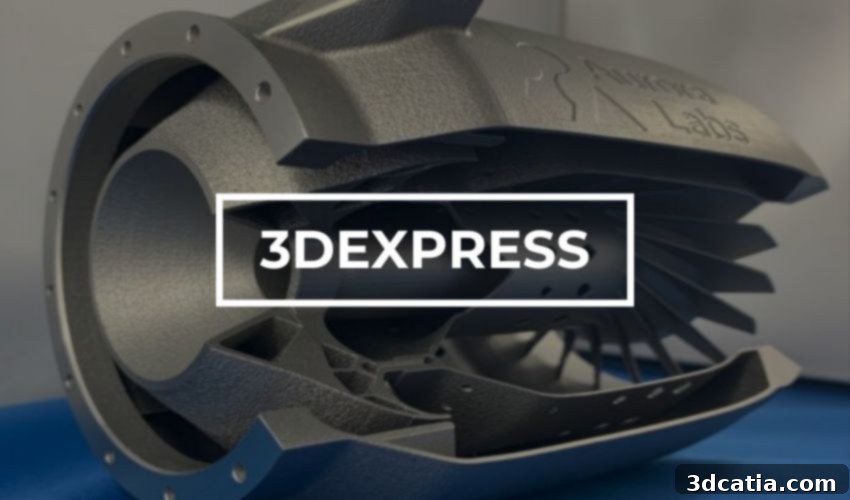
Weekly 3D Printing Innovations: Aurora Labs’ Turbines, Nikon’s DED, Sintavia’s Expansion, Anycubic’s New Lineup, and Materialise’s Material Portfolio Growth
The world of 3D printing has once again proven its dynamic and innovative spirit this past week, with several groundbreaking developments across the industry. From revolutionary aerospace components to advanced industrial repair systems, and from significant manufacturing expansions to exciting consumer product launches, additive manufacturing continues to push the boundaries of what’s possible. This edition of our 3DExpress roundup brings you the most impactful news, highlighting key advancements from leading companies like Aurora Labs, Nikon, Sintavia, Anycubic, and Materialise. Prepare to dive into the latest trends and technological marvels that are shaping the future of manufacturing. We’ll explore a lighter, more efficient metal turbine, a sophisticated metal 3D printer and scanner combo, a massive expansion in aerospace additive manufacturing, new FDM and resin machines designed for enhanced user experience, and a broader material selection for diverse applications. Happy reading, and enjoy your weekend as we unpack these remarkable innovations!
Aurora Labs Pioneers Lighter, More Efficient 3D-Printed Metal Turbines
Aurora Labs, an Australian powerhouse in industrial technology and development based in Canning Vale, has made significant strides in metal 3D printing. The company recently announced the successful creation of a metal 3D-printed engine, with a particular highlight on a new, high-performance turbine designed for unparalleled lightness. This 200N-class gas turbine engine is slated for launch next month and promises to revolutionize lightweight propulsion systems across various markets, including aerospace, defense, and specialized industrial applications. According to Aurora Labs, the entire process—from initial design and advanced 3D printing to rigorous testing—has been a resounding success.
What truly sets this project apart is its innovative design philosophy. The primary objective was to drastically reduce the turbine’s weight without compromising performance or structural integrity. To achieve this, Aurora Labs’ engineering teams focused on consolidating parts and eliminating complex assembly steps wherever feasible. A notable achievement demonstrates this approach: for one critical section of the engine, the company managed to integrate 18 separate parts into a single, unified 3D-printed component. This remarkable consolidation resulted in an impressive 20% weight reduction for that specific section. Such advancements in part count reduction not only lead to lighter components but also simplify supply chains, reduce manufacturing complexity, and potentially lower overall production costs. The ability to create intricate geometries and internal structures through additive manufacturing allows for optimized designs that are impossible with traditional manufacturing methods, opening new avenues for efficiency and performance in turbine technology. This breakthrough underscores the transformative potential of metal 3D printing in producing highly optimized, lightweight parts essential for the next generation of propulsion systems.
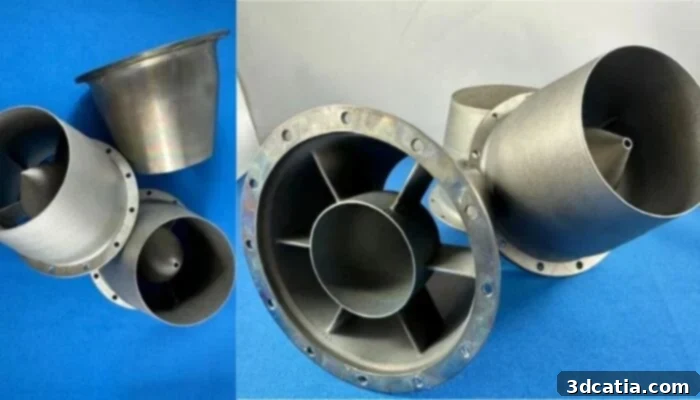
Photo Credits: Aurora Labs
Nikon Introduces Advanced Metal DED 3D Printer for Industrial Repairs
Known globally for its precision optics and imaging technology, Nikon has now expanded its industrial portfolio with the launch of a sophisticated metalworking machine, the Lasermeister LM300A. This innovative solution is based on Directed Energy Deposition (DED) technology, a powerful additive manufacturing process ideal for repairing, cladding, and producing large-scale metal parts. Designed specifically for demanding industrial applications, the LM300A is complemented by a new, equally advanced 3D scanner, the Lasermeister SB100. This integrated system forms a comprehensive, closed-loop solution for automated metal part repair and manufacturing.
The core objective of this combined system is to enable quick and highly efficient repair of critical components such as turbine blades, molds, and various other industrial parts. The process is remarkably streamlined: a damaged component is first placed inside the Lasermeister SB100 3D scanning solution. The scanner meticulously analyzes the part, precisely measuring its dimensions and identifying the damaged areas. This data is then used to automatically generate a detailed repair path for the 3D printer. Subsequently, this precise repair data is transmitted to the DED machine, the Lasermeister LM300A, which meticulously deposits new metal material layer by layer to reconstruct the damaged section. Once the DED printing process is complete, the part is returned to the 3D scanner for a final inspection and validation of the repair’s quality and accuracy. This highly automated, integrated workflow promises to significantly enhance efficiency, minimize the risk of human error, and ensure consistent, high-quality repairs.
The Lasermeister LM300A boasts compatibility with a range of high-performance metal alloys, making it versatile for diverse industrial needs. Supported materials include SUS316L stainless steel, commonly used for its corrosion resistance; nickel-based alloys such as Ni625 and Ni718, critical for high-temperature and high-stress applications in aerospace and energy; titanium (Ti64/Ti-6Al-4V), favored for its excellent strength-to-weight ratio in aerospace and medical sectors; and high-speed steel (SKH51/M2/HS6-5-2), essential for tooling and cutting applications. Nikon’s entry into this segment with such a robust and automated solution is poised to make a substantial impact on maintenance, repair, and overhaul (MRO) operations across various heavy industries, offering a cost-effective and precise alternative to replacing expensive components.
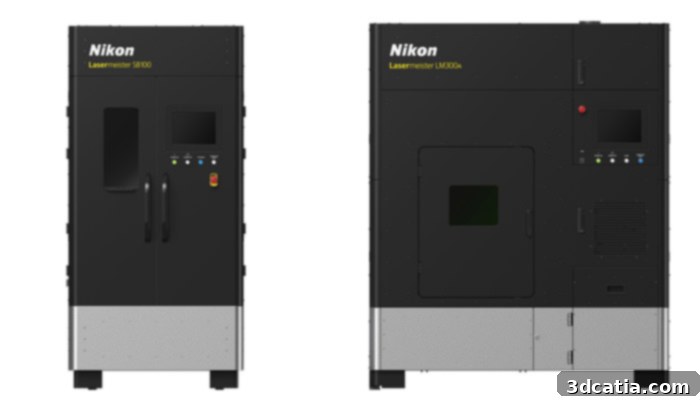
On the left, the 3D scanner; on the right, the DED 3D printer (photo credits: Nikon)
Sintavia Announces Major $25 Million Hollywood Expansion to Meet Soaring Demand
Sintavia LLC, recognized as the world’s first all-digital aerospace component manufacturer, has revealed a significant expansion of its facilities and equipment, marking its largest growth initiative since 2019. This substantial $25 million investment, which is anticipated to be fully completed by the fourth quarter of 2024, is centered in Hollywood, Florida. The expansion strategically addresses the burgeoning demand from critical programs supported by the U.S. Department of Defense, reinforcing Sintavia’s pivotal role in national defense supply chains.
The expansion plan is comprehensive, designed to bolster every facet of Sintavia’s advanced manufacturing capabilities. Key elements include the acquisition of additional advanced manufacturing space, notably through a long-term lease on an extra 25,000 square feet adjacent to its existing headquarters. This new space will be dedicated to increasing capacity for advanced printing, post-processing operations, and rigorous materials testing. Furthermore, the investment will facilitate the acquisition of several large-format printers, crucial for producing bigger, more complex aerospace components. Complementing these printers will be new large-format post-processing equipment, essential for achieving the exacting specifications required for aerospace applications, along with expanded component testing capabilities to ensure utmost reliability and performance. As indicated in an image caption, this expansion includes the purchase of a second SLM NXG XII 600, a state-of-the-art metal 3D printer known for its productivity and large build volume, signifying Sintavia’s commitment to cutting-edge technology.
Beyond sheer capacity increase, a major strategic focus of this expansion will be the continued design and development of high-performance thermodynamic components. Specifically, Sintavia will intensify its efforts on aerospace heat exchangers – critical components for thermal management in advanced aircraft and spacecraft. Additive manufacturing offers unique advantages in creating these highly complex, geometrically optimized structures that improve efficiency and reduce weight, directly impacting fuel economy and mission capability. By investing in these areas, Sintavia is not only meeting current demand but also positioning itself at the forefront of innovation for future aerospace and defense technologies. This expansion solidifies Sintavia’s commitment to advancing additive manufacturing capabilities for the most demanding applications, ensuring high-quality, reliable, and advanced components for its defense and aerospace partners.
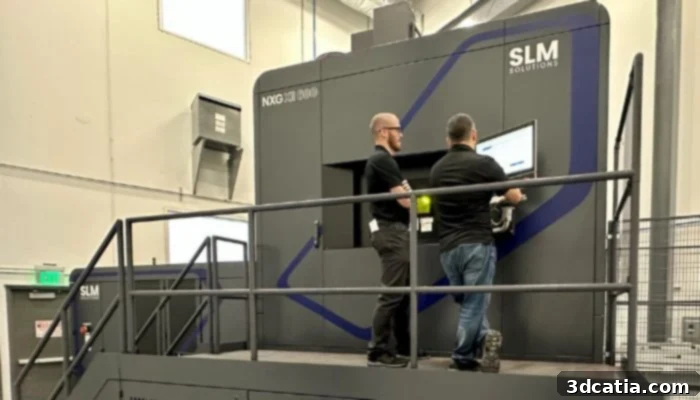
The expansion includes the purchase of a second SLM NXG XII 600 (photo credits: Sintavia)
Anycubic Teases Next-Generation 3D Printers for Enhanced Creativity
Anycubic, the well-known Chinese manufacturer celebrated for its accessible and user-friendly 3D printers, is once again poised to disrupt the market with an exciting roadmap of new product launches. This week, the company unveiled plans for several highly anticipated machines, catering to both FDM and resin 3D printing enthusiasts and professionals. These upcoming products underscore Anycubic’s commitment to pushing technological boundaries while maintaining its core philosophy of making 3D printing more intuitive and powerful for everyone.
Leading the charge in the FDM category is the long-awaited Kobra 3 Combo. This machine is set to redefine FDM printing with its impressive speed of 600 mm/s, significantly accelerating project completion times. A standout feature of the Kobra 3 Combo is its multi-color capability, allowing users to print with up to 8 colors simultaneously. This opens up vast possibilities for intricate and visually stunning models, from artistic creations to functional prototypes requiring color differentiation. Furthermore, the solution is touted to possess smart filament recognition capabilities, enabling it to distinguish between different filaments and colors, thereby simplifying material management and reducing operational errors. This intelligent feature is a game-changer for multi-material and multi-color printing, making advanced projects more approachable for a wider audience.
In addition to its FDM advancements, Anycubic is also enhancing its Photon resin machine range with the introduction of the Photon Mono M7 Pro and M7. The Pro version, in particular, is designed to elevate the resin printing experience with an integrated “smart assistant” capable of understanding and optimizing all stages of the printing process. This intelligent automation could encompass features like automatic leveling, resin temperature control, print monitoring, and even smart resin management, streamlining workflows and improving print success rates. OuYang Lu, the visionary founder of Anycubic, eloquently summarized the company’s ambition: “Our goal is to elevate our users’ entire 3D printing journey with the latest technological trends, optimal functionalities, and premium quality. In 2024, we plan to introduce a comprehensive lineup of products designed to inspire individuals in every household to unleash their creativity.” This statement reflects a clear focus on user experience and accessibility, aiming to empower a broader demographic to explore the endless possibilities of 3D printing with advanced, yet intuitive, tools.
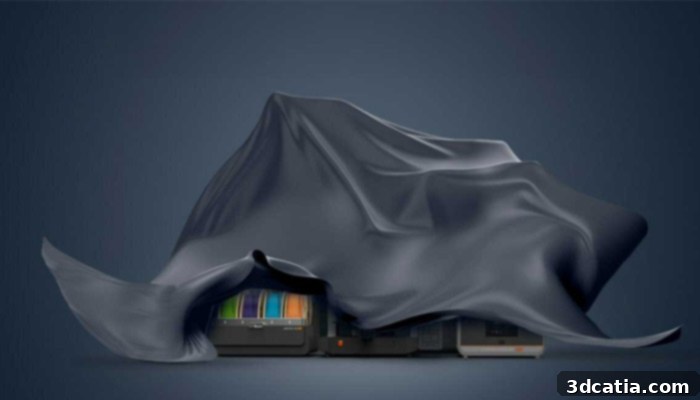
Anycubic to unveil its solutions shortly (photo credits: Anycubic)
Materialise Expands Its Diverse 3D Printing Material Portfolio
Materialise, a global leader in 3D printing software and services based in Belgium, announced a significant expansion of its material portfolio this week, adding three new advanced materials designed to meet the evolving and diverse needs of its customers. This strategic addition underscores Materialise’s commitment to providing a comprehensive range of options for professionals seeking high-quality, application-specific 3D printing solutions. With these new offerings, Materialise now boasts a robust selection of 38 distinct materials, ensuring that a wide spectrum of industrial and professional requirements can be effectively addressed.
The newly introduced materials cater to popular 3D printing technologies. For Multi Jet Fusion (MJF) technology, Materialise has added PA12S and PA11 powders. PA12S offers enhanced surface aesthetics and mechanical properties, making it suitable for applications requiring both strength and visual appeal. PA11, derived from renewable resources, is celebrated for its superior ductility, impact resistance, and chemical resistance, making it an excellent choice for functional parts that need to withstand harsh environments. Additionally, for Fused Deposition Modeling (FDM) technology, Materialise has introduced a carbon fiber-reinforced polyamide filament (PA-CF). This material is known for its exceptional stiffness, strength-to-weight ratio, and thermal stability, ideal for producing robust functional prototypes, tooling, and end-use parts in demanding industrial sectors such as automotive and aerospace. The availability of such specialized materials allows designers and engineers to push the boundaries of their projects, choosing the optimal material for specific performance requirements.
Pieter Vos, Marketing and Product Manager at Materialise, highlighted the strategic importance of this expansion: “Our decision to incorporate PA 11, PA 12S, and PA-CF materials into our portfolio reflects our commitment to meeting the evolving needs of our customers and empowering them to explore new possibilities and unlock the full potential of industrial 3D printing. We constantly evaluate emerging materials and technologies. The new HP PA 12S is a strong addition, and we are proud to be an early adopter.” This statement emphasizes Materialise’s proactive approach to material innovation, continuously assessing new developments to ensure their customers have access to the best available options. By expanding its material offerings, Materialise not only enhances its service capabilities but also facilitates greater innovation and broader adoption of additive manufacturing across various industries, enabling customers to create more durable, functional, and aesthetically pleasing parts than ever before.
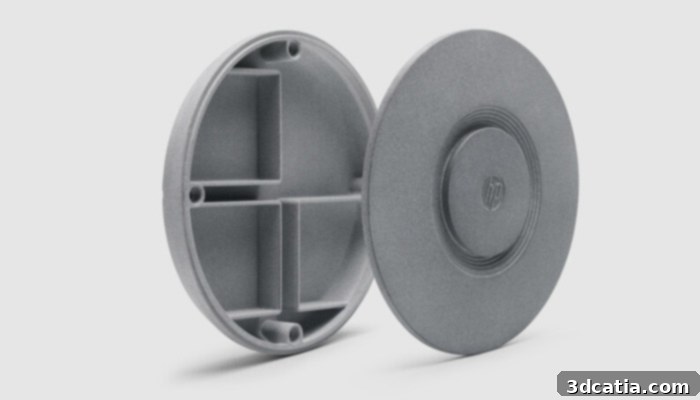
Parts 3D printed with PA12S (photo credits: Materialise)
This week’s roundup clearly demonstrates the relentless pace of innovation within the 3D printing industry. From the groundbreaking lightweight turbines by Aurora Labs that promise to redefine propulsion systems, to Nikon’s precision DED printer and scanner transforming industrial repair, the advancements are truly remarkable. Sintavia’s significant expansion highlights the growing industrialization and critical role of additive manufacturing in demanding sectors like aerospace and defense. Meanwhile, Anycubic continues to democratize advanced 3D printing with its exciting new Kobra 3 Combo and Photon Mono M7 series, focusing on enhanced user experience and creative possibilities. Finally, Materialise’s expanded material portfolio showcases the increasing demand for specialized, high-performance materials, enabling diverse applications across various industries.
What are your thoughts on Aurora Labs’ innovative 3D-printed turbine or Nikon’s integrated DED repair system? How do you think these developments will impact their respective industries? We invite you to share your insights in a comment below or engage with us on our LinkedIn, Facebook, and Twitter pages! Don’t forget to sign up for our free weekly newsletter here to receive the latest 3D printing news directly in your inbox. For more in-depth content and visual demonstrations, you can also find all our videos on our YouTube channel. Stay connected and stay informed with the ever-evolving world of additive manufacturing!