
FDA Pioneers 3D Printing Software for Personalized Breast Phantoms, Revolutionizing Cancer Detection
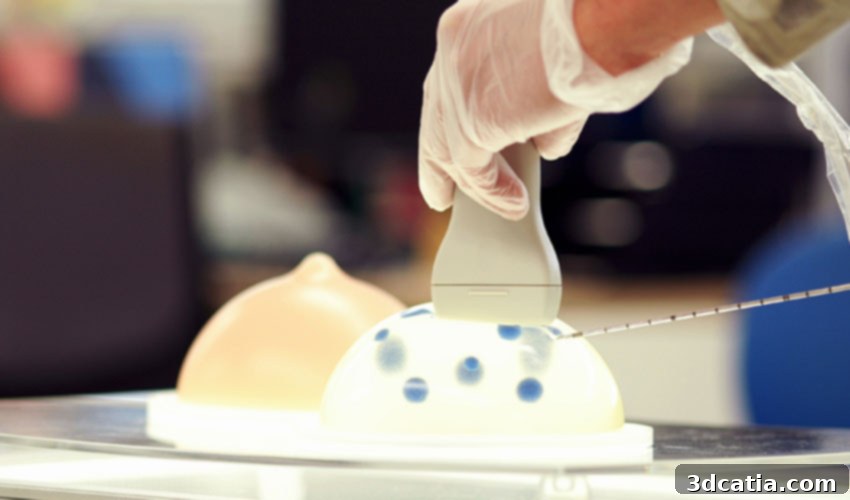
Early and accurate detection remains the cornerstone of successful breast cancer treatment. In a significant leap forward for medical imaging and oncology, a pioneering team of researchers from the Food and Drug Administration (FDA) in Maryland, United States, has announced the successful development of an innovative 3D printing software tool. This groundbreaking software is specifically designed to facilitate the creation of highly realistic, patient-specific 3D printed breast phantoms. These advanced models, meticulously adapted to the unique morphology and tissue characteristics of individual patients, hold immense promise for dramatically improving the detection, diagnosis, and ultimately, the treatment outcomes of breast cancer by providing more accurate and reliable testing environments for mammography devices.
The statistics unequivocally underscore the critical importance of early diagnosis. According to data from Cancer Research UK, over 90% of women diagnosed with breast cancer at an early stage survive the disease for at least five years. This impressive survival rate is, in part, attributed to the rigorous testing and calibration of mammography devices using breast phantoms. Traditionally, these phantoms, which are artificial models replicating breast tissue, have been essential tools for evaluating and ensuring the accuracy of screening equipment without exposing actual patients to unnecessary radiation. However, conventional phantoms often suffer from a lack of patient-specific anatomical variability, presenting a significant limitation in their ability to fully simulate the diverse range of human breast tissue compositions and pathologies. Thanks to the rapid advancements in 3D printing technologies, American researchers are now at the forefront of creating tailor-made solutions that are far more adapted to the specific and intricate morphology of each patient. This innovative approach aligns with other notable developments in the field, such as the 3D printed mammary prostheses developed by the South African company iMedTech Group, and the world’s smallest and most accurate 3D printed biopsy robot created by researchers in the Netherlands, designed to enhance the precision of breast cancer detection and intervention.
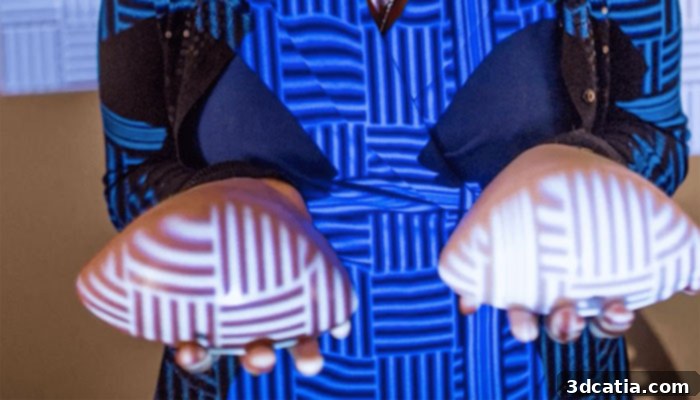
Example of 3D printed prostheses and medical models.
3D Printed Models: A New Era for Breast Cancer Diagnosis
At the heart of this FDA innovation lies a sophisticated, open-source software platform. US researchers report that this software possesses the remarkable capability to generate digital blueprints for 3D printed phantoms that can faithfully replicate the vast anatomical variability found in actual human breasts. This includes a spectrum of critical details such as varying tissue densities, complex heterogeneous structures, subtle architectural distortions often indicative of pathology, and even the precise representation of both benign and malignant lesions. Each of these details is absolutely crucial when striving for the highest possible accuracy in diagnosing breast cancer. By creating phantoms that mirror the intricate complexity of real breast tissue, this technology provides an unparalleled testing ground for mammography devices, leading to more reliable equipment calibration and, consequently, more trustworthy diagnostic images.
Andreu Badal, a distinguished physicist at the FDA, highlighted a key challenge with existing phantoms: while they serve a vital role in enabling device testing without exposing patients to unnecessary mammograms, they frequently fail to accurately represent the true shape and internal composition of a patient’s breast. This limitation can hinder the full optimization of imaging techniques for individual cases. To overcome this critical obstacle, Badal and his team meticulously developed the open-source software, aptly named “mammo-replicator.” This groundbreaking software functions by taking standard 2D mammograms and intelligently converting them into highly precise 3D virtual models of the breast. Once these detailed 3D virtual models are created, they can then be physically fabricated using advanced additive manufacturing techniques, resulting in what are now known as 3D printed breast phantoms. This innovative workflow ensures that each phantom is a faithful, individualized replica, vastly improving the relevance and accuracy of device testing and calibration.
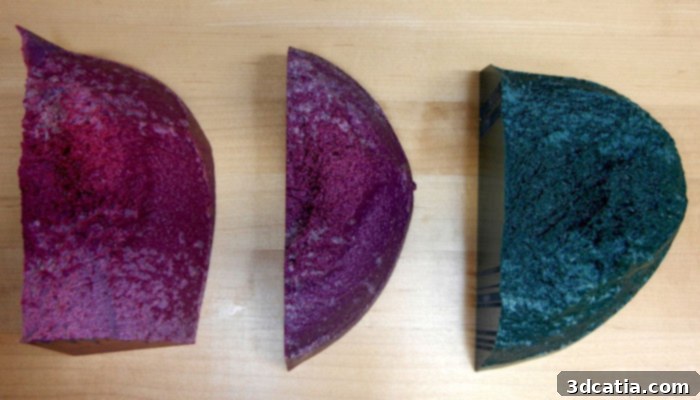
3D printed breast models used for advanced medical imaging (photo credits: Andreu Badal)
The practical application of this research involved utilizing a sophisticated Stratasys Objet260 Connex3 printer, known for its multi-material capabilities, to bring these virtual models to life. The research team successfully printed one of the three mammary phantoms in approximately 10 hours. This relatively efficient printing time underscores the feasibility of producing these complex models for wider adoption. Crucially, subsequent mammograms performed using these newly developed 3D printed phantoms yielded results that were remarkably similar to those obtained with conventional methods, but with a significant advantage: they offered a demonstrably better texture and more accurate representation of the glandular and adipose tissues found within the breast. This improved textural realism is paramount because the varying densities and structural complexities of different tissue types play a vital role in how abnormalities, such as tumors, appear on mammographic images. By more faithfully replicating these nuanced characteristics, the 3D printed phantoms allow for a more precise calibration of mammography machines, leading to enhanced sensitivity and specificity in detecting subtle changes. The outcomes of this research are therefore exceptionally encouraging, paving the way for significantly improved diagnosis and treatment strategies for breast cancer patients. Detailed findings and methodologies can be explored further in the peer-reviewed publication available in the Journal of Medical Imaging, providing a comprehensive scientific basis for these advancements.
The potential impact of these 3D printed breast phantoms extends far beyond mere device testing. They represent a fundamental shift towards personalized medicine in the field of oncology. Imagine a future where radiologists can train on phantoms that perfectly mimic the specific anatomical challenges of their individual patients, honing their diagnostic skills on highly realistic models. This technology can also accelerate the development and validation of next-generation mammography equipment, allowing manufacturers to fine-tune their devices against a vast library of patient-specific models before clinical trials. Furthermore, the open-source nature of the mammo-replicator software fosters collaboration and innovation within the global scientific community, enabling researchers worldwide to access, adapt, and improve upon this foundational tool. This approach could significantly reduce barriers to entry for advanced medical imaging research, ultimately democratizing access to cutting-edge diagnostic tools and techniques.
In conclusion, the FDA’s development of this innovative 3D printing software for personalized breast phantoms marks a pivotal moment in the fight against breast cancer. By offering unprecedented anatomical realism and patient-specific customization, these models promise to enhance the accuracy of mammography devices, refine diagnostic processes, and ultimately contribute to earlier detection and more effective treatment plans. This breakthrough exemplifies the transformative power of additive manufacturing in healthcare, moving us closer to a future where medical diagnostics are truly tailored to the individual. What are your thoughts on these revolutionary 3D printed breast phantoms? Do you believe they will significantly improve our ability to diagnose breast cancer more effectively? We encourage you to share your insights and engage in the discussion by leaving a comment below or joining our conversations on our Facebook and Twitter pages! For all the latest news, innovations, and insights in the world of 3D printing, remember to sign up for our free weekly Newsletter, delivered straight to your inbox.