
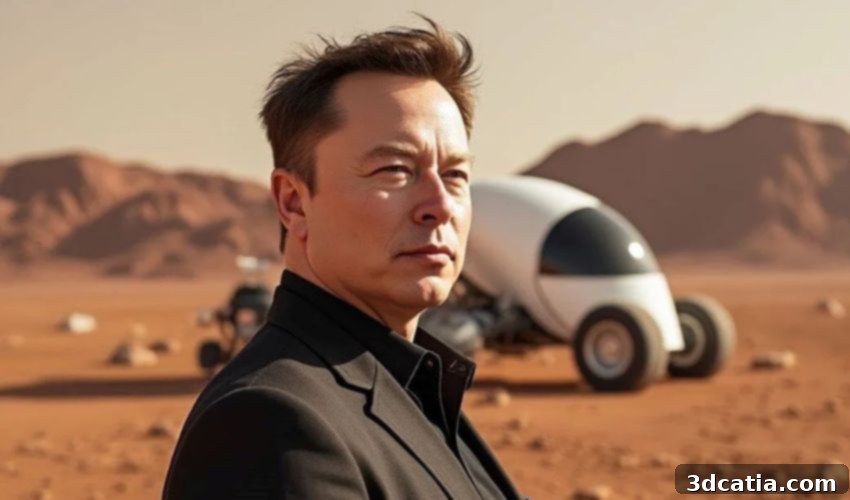
Unveiling Elon MARS: A Bold Vision for Martian Colonization, 3D-Printed Wombs, and Bioengineering Feats
Is humanity on the brink of an unprecedented leap into the cosmos, establishing a permanent foothold on the Red Planet? This is not a scene from the latest blockbuster science fiction epic, but rather the audacious vision unveiled by Elon Musk, the renowned U.S. entrepreneur and tech magnate. On March 31, Musk, alongside a consortium of four other pioneering companies – most notably bioink manufacturer Bio Poisson Ravil – revealed an ambitious 25-year program designed to facilitate humanity’s arrival and long-term settlement on Mars. This groundbreaking initiative, appropriately dubbed “Elon MARS,” signals a pivotal moment in the history of space exploration and bioengineering, pushing the boundaries of what was once considered purely theoretical.
The comprehensive Elon MARS program, detailed across 12 strategic points at the SpaceX Starbase, outlines an intricate roadmap for interplanetary colonization. Beyond conventional aspects such as rigorous athletic training for future Martian colonists and the development of sustainable living and agricultural infrastructure in the harsh extraterrestrial environment, the program introduces a truly revolutionary concept: the utilization of advanced 3D printing technologies to fabricate artificial wombs. These sophisticated bio-engineered gestation units are specifically designed to support and nurture the growth of human embryos even under the challenging conditions of microgravity, a significant hurdle for human reproduction in space. The astonishing news, initially confirmed by Elon Musk himself on X (formerly Twitter), was further corroborated and reported by Bio Poisson Ravil, sparking a global conversation about the future of human expansion beyond Earth.
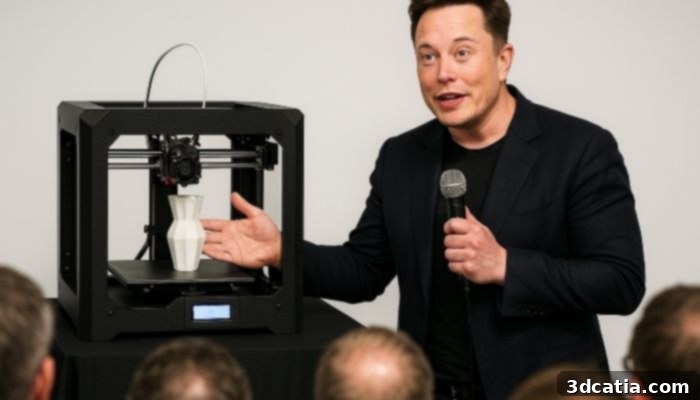
Elon Musk has been a vocal proponent of additive manufacturing’s benefits across his various ventures for several years.
The Architects of Martian Destiny: Key Players in the Elon MARS Program
The Elon MARS program stands as a testament to collaborative innovation, bringing together diverse expertise to address the multifaceted challenges of human survival and permanent occupation in the vastness of space. Five highly specialized companies have formally joined this monumental project, each assigned a critical and distinct role in the ambitious colonization of Mars:
- SpaceX: As the pioneering force behind reusable rocket technology, SpaceX is tasked with the monumental responsibility of designing, building, and launching the next generation of interstellar spacecraft. These vessels must not only be capable of transporting millions of tons of cargo and a million humans to Mars but also ensure their safe return and sustain life throughout the arduous journey.
- Neuralink: A leader in brain-computer interface technology, Neuralink’s role is to develop advanced monitoring and communication systems for the future colonists. These interfaces are envisioned to provide real-time health diagnostics, enhance cognitive functions, facilitate seamless interaction with Martian infrastructure, and potentially even offer new forms of human-machine symbiosis in the extreme Martian environment.
- Matui Kinisesi: This Japanese company, renowned for its specialization in neonatal incubators and life support systems, will be instrumental in creating the sophisticated tools and controlled environments necessary to safeguard the delicate artificial wombs. Their expertise will ensure optimal conditions for embryonic development, mimicking biological processes with precision in an alien setting.
- Gestation Rights: Recognizing the profound ethical and legal complexities inherent in bio-engineered reproduction, Gestation Rights is a newly formed entity dedicated solely to navigating these uncharted waters. Their mission is to establish the legal frameworks, bioethical guidelines, and societal protocols that will govern the use of artificial wombs and human reproduction in space, addressing concerns about genetic selection, parental rights, and the very definition of life beyond Earth.
- Bio Poisson Ravil: At the heart of the bioengineering aspect of the program, Bio Poisson Ravil will be the primary provider of cutting-edge biomaterials and advanced bioprinters. Their core contribution is the development and production of the artificial wombs themselves, leveraging their expertise in biofabrication to create organs capable of sustaining life in microgravity.
Elon Musk, with characteristic confidence, reiterated the program’s long-term vision on X, stating, “Within 20 years, one million people will be on Mars.” This bold declaration encapsulates the sheer scale and transformative ambition of the Elon MARS initiative.
Womb Zero: Engineering Life for the Red Planet with 3D Bioprinting
The concept of “Womb Zero,” the 3D-printed uterus, represents one of the most revolutionary elements within the Elon MARS program. The detailed plan for its creation, from initial design to its first successful gestation, is meticulously scheduled for completion by 2036. This ambitious timeline underscores the rapid pace of innovation envisioned by the project.
The intricate process commences with the advanced design and digital modeling of Womb Zero – the foundational artificial womb within which human embryos are intended to develop. A dedicated team of bio-scientists and engineers at Bio Poisson Ravil is meticulously crafting a highly detailed digital blueprint of this organ. Their goal is to faithfully reproduce the complex biological structure of the human uterus, including the intricate network of blood vessels, the various layers of the uterine wall, and the essential endometrial lining, all crucial for supporting pregnancy. This digital model will serve as the precise template for the subsequent bioprinting phase, ensuring biological accuracy and functionality.
Following the meticulous definition of the digital model, the project transitions to the critical bioprinting phase. Bio Poisson Ravil will supply advanced bioinks, specially formulated from a blend of human stem cells and other biocompatible materials. These bioinks are engineered to exhibit exceptional resilience and stability, capable of withstanding the extreme environmental conditions prevalent in space, including microgravity and radiation exposure. Utilizing the company’s proprietary BPA G8 3D bioprinter, these specialized bioinks will be deposited layer by microscopic layer, precisely recreating the intricate cellular and structural architecture of the uterine environment. This layer-by-layer additive manufacturing process allows for unparalleled precision in replicating natural biological forms.
Upon the successful bioprinting of Womb Zero, the next phase involves the careful collection and selection of human gametes. Sperm and oocytes will be harvested from a rigorously selected sample of U.S. citizens, chosen based on what Musk deems “ideal” genetic characteristics. These stringent criteria include a high degree of antibiotic resistance, a superior intelligence quotient (IQ), and documented hereditary longevity significantly above the national average. Once the most suitable sperm and oocytes are identified and selected, Womb Zero will undergo a precise process of intrauterine insemination. Subsequently, the bioprinted uterus, now containing the developing embryo, will be meticulously housed within the specialized incubators developed by the Japanese company Matui Kinisesi. This controlled environment will facilitate continuous observation and testing of its gestation capabilities, ensuring the artificial womb can effectively support fetal development.
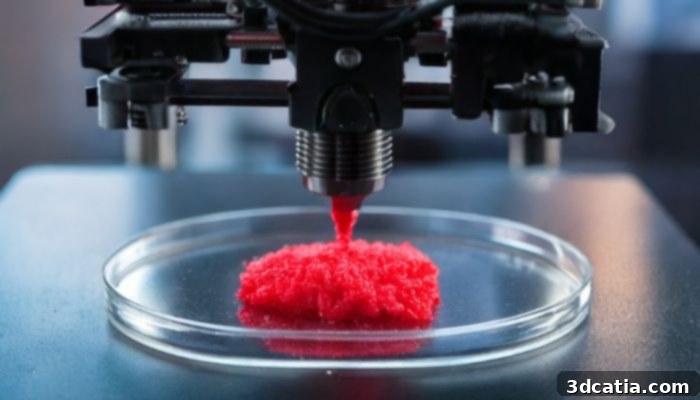
A representative image illustrating the expected extrusion process for Womb Zero via Bio Poisson Ravil’s proprietary bioprinter, the BPA G8.
Throughout the gestational period, Womb Zero will be subjected to continuous and rigorous biological testing. This involves detailed monitoring of every stage of fetal development, employing advanced sensor arrays and diagnostic tools to track growth, health, and viability. Dr. Richard Codrobiu, a lead researcher at Bio Poisson Ravil, articulates the profound implications of this breakthrough: “If this technology proves successful, artificial wombs could fundamentally transform human reproduction on Mars. It would significantly reduce the inherent risks associated with natural pregnancy in harsh space conditions and, crucially, ensure the continuity and expansion of the human species beyond our home planet.”
Ethical Horizons and Societal Debates: The Profound Importance of the Project
While undeniably ambitious and brimming with scientific promise, the Elon MARS project, particularly its bioengineering aspects, immediately raises a multitude of complex ethical and legal issues. These profound questions demand thorough consideration and resolution long before any actual approval or implementation can proceed. Firstly, the foundational premise rests on SpaceX’s ability to develop and deploy spacecraft capable of reaching Mars reliably and safely within the program’s proposed 25-year timeline. The Elon MARS program optimistically plans to launch its first crewed spacecraft no earlier than 2040. Beyond meeting NASA’s stringent safety protocols and technical requirements for deep-space exploration, these missions must guarantee survivable conditions for the initial Martian colonists, minimizing risks associated with radiation exposure, microgravity, and the psychological stresses of interplanetary travel.
A far more contentious and immediate issue revolves around the profound ethical implications of creating 3D-printed wombs and engaging in genetic selection. This aspect of the project has already ignited fervent criticism from various groups. Notably, the anti-abortion association “We Fight for the Right of Life” has swiftly launched a petition drive advocating for the outright abolition of the project, citing concerns over the sanctity of life and potential eugenics. The debate extends beyond reproductive rights to fundamental questions about human dignity, the definition of personhood, and the potential for a “designer baby” future. What legal status would individuals born from artificial wombs in space possess? Who would be considered their parents, especially if genetic material is selected based on predetermined criteria? The establishment of new legal and bioethical frameworks for off-world reproduction will be a formidable challenge.
In response to this fierce criticism, Elon Musk offered a counter-narrative during a recording of Joe Rogan’s widely popular podcast. He asserted that the true existential threat is not Womb Zero or the technology it represents, but rather the alarming global decline in birth rates. Musk passionately argues that this demographic trend is “the root of the weakness of modern Western civilization,” suggesting that humanity’s future, both on Earth and beyond, hinges on proactive measures to ensure population growth. This perspective frames the artificial womb technology not merely as a tool for Martian colonization but as a potential solution to a broader societal crisis. As the debate rages on, all eyes remain fixed on SpaceX’s X profile, awaiting further developments and clarifications regarding the revolutionary Elon MARS program. For those seeking a deeper dive into the playful nature behind these announcements, you can learn more HERE.
At 3Dnatives, we are big fans of April Fools’ Day! So this detailed article was just a little joke for the occasion, designed to spark imagination and discussion about the incredible possibilities of future technologies. As far as we currently know, Elon Musk is not actively pursuing the use of bioprinting to establish a human colony on Mars. While the science fiction elements are compelling, this particular narrative is purely imaginative.
What are your thoughts on the concepts explored in this “Elon MARS” vision? Let us know your opinions and engage in the conversation by leaving a comment below or joining us on our LinkedIn, Facebook, and Twitter pages! Don’t forget to sign up for our free weekly Newsletter here, to receive the latest genuine 3D printing news straight to your inbox! You can also find all our videos on our YouTube channel.
*All photos and images featured in this article were generated using advanced artificial intelligence tools to visualize this imaginative scenario.