
Unlocking the Potential: Top 5 Must-Watch 3D Printing Videos for Industry Insights and Innovation
Welcome back to our curated selection of the most compelling and insightful videos from the dynamic world of 3D printing! As additive manufacturing continues to push the boundaries of what’s possible, staying informed about the latest advancements, applications, and challenges is crucial. From high-octane automotive engineering to the complex ethical debates surrounding new technologies, and invaluable technical tips, this edition of our Top 5 Videos offers a comprehensive glimpse into the diverse landscape of the 3D printing industry. We’ve hand-picked content that not only showcases groundbreaking innovations but also addresses critical discussions and practical skills for enthusiasts and professionals alike. Prepare to dive deep into how 3D printing is revolutionizing various sectors, shaping our future, and offering solutions to previously intractable problems. So, settle in, and get ready for an engaging journey through the cutting-edge applications and essential discussions defining additive manufacturing today. Happy watching!
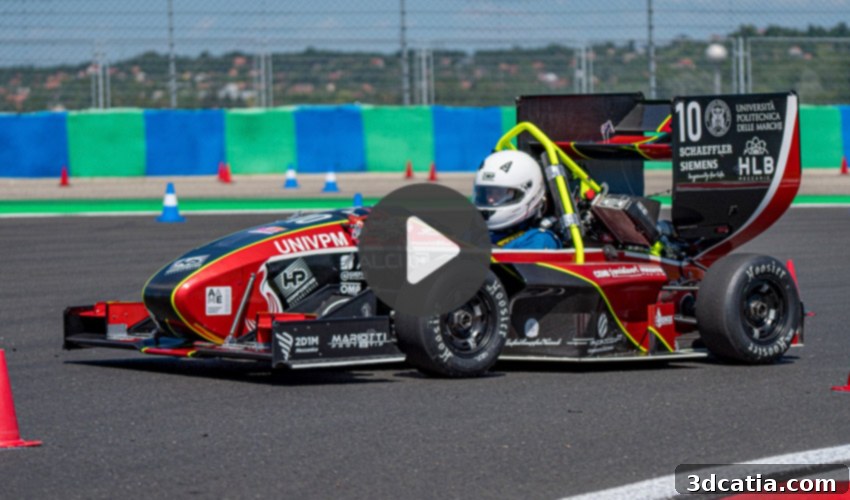
Top 1: Kilometro Rosso and Polimarche Racing: Accelerating Formula SAE with 3D Printing
The world of motorsports constantly seeks an edge, where even minor enhancements can translate into significant performance gains. This pursuit of perfection has found a powerful ally in 3D printing, especially within competitive arenas like Formula SAE. We kick off our list with an exclusive interview featuring Kilometro Rosso, a leading innovation district in Italy, and Polimarche Racing, an ambitious student team competing in Formula SAE. This partnership exemplifies how cutting-edge additive manufacturing technologies are revolutionizing the design and production of automotive components.
In this compelling discussion, Giuseppe De Marco and Tiziano Bicchieri delve into the transformative impact of additive manufacturing on race car design. They highlight how 3D printing empowers engineers and designers to create parts that are not only significantly lighter but also stronger and structurally optimized for superior performance. Traditional manufacturing methods often impose constraints on design complexity, limiting the ability to achieve ideal aerodynamic profiles or internal lattice structures for enhanced rigidity. 3D printing, however, liberates designers from these limitations, enabling the production of highly complex geometries previously deemed impossible. This flexibility allows for rapid iteration and prototyping, crucial for the fast-paced development cycles inherent in motorsports. The ability to quickly test and refine designs translates directly into a more competitive vehicle, demonstrating the immense potential of AM to impact the overall competitiveness and success of teams in events like Formula SAE. Discover how this innovative collaboration is setting new benchmarks for automotive engineering.
Top 2: The Alarming Rise of 3D Printed Ghost Guns and Australia’s Response
While 3D printing offers incredible benefits for innovation and creation, it also presents significant challenges, particularly in the realm of safety and legality. Our second video confronts a pressing issue: the alarming prevalence of 3D printed “ghost guns” in Australia. A ghost gun is defined as a firearm manufactured without a serial number or registration, making it untraceable by law enforcement. The ability to print these weapons at home using readily available 3D printers poses a grave threat to public safety and presents a formidable challenge for authorities worldwide.
This news report from ABC offers a deep dive into the growing crisis. It reveals how these unregulated weapons, often indistinguishable from legitimate firearms in terms of lethal capability despite sometimes resembling brightly colored toys, are circulating illegally. The relative ease of access to 3D printer schematics and materials online has democratized gun manufacturing in an incredibly dangerous way. The video explores the technical aspects of how these ghost guns are created, from downloading digital blueprints to the actual printing process. More critically, it sheds light on the strategies Australian authorities are employing to combat this escalating problem. This includes enhanced intelligence gathering, interdiction efforts, and legislative measures aimed at restricting access to the necessary components and blueprints. This segment underscores the urgent need for a global conversation on regulating the 3D printing of firearms and highlights the ongoing struggle between technological advancement and public safety.
Top 3: Brose’s Innovation Hub: Leveraging SLA and SLS Technology for Automotive Production
In the competitive global automotive industry, efficiency, quality, and innovation are paramount. Brose, a leading international automotive supplier boasting an impressive annual turnover of approximately €7.9 billion, exemplifies how embracing additive manufacturing can provide a significant competitive edge. With one in three new vehicles rolling off assembly lines worldwide featuring at least one Brose-manufactured component, the company’s commitment to cutting-edge production methods is undeniable. Our third featured video, courtesy of Formlabs, showcases how Brose integrates advanced additive manufacturing technologies into its extensive operations.
Brose leverages both Selective Laser Sintering (SLS) and Stereolithography (SLA) 3D printing technologies to ensure unparalleled quality and optimize its production processes. The video details their application of the Fuse Series SLS 3D printer for producing robust, high-performance end-use automotive parts. SLS technology is particularly suited for creating durable, functional components with complex geometries, ideal for the demanding environment of modern vehicles. This allows Brose to rapidly prototype new designs, test components rigorously, and even produce customized parts on demand, reducing lead times and material waste. Complementing this, Brose utilizes the Form 4L large-format SLA 3D printer for manufacturing aids, jigs, fixtures, and precise prototypes. SLA excels at producing parts with exceptionally smooth surfaces and fine details, making it perfect for tooling that requires high precision or for visual prototypes that accurately represent final product aesthetics. By strategically employing both SLS and SLA, Brose not only accelerates product development cycles but also enhances the overall efficiency and adaptability of its global manufacturing footprint. This segment provides a fascinating look into how a global leader in automotive supply harnesses additive manufacturing to maintain its position at the forefront of innovation.
Top 4: Bringing History to Life: A 3D Printed Model of the Lusitania Disaster
Beyond industrial applications and functional parts, 3D printing serves as an extraordinary medium for art, education, and historical preservation. Our fourth video beautifully illustrates this potential, showcasing the creation of a stunningly accurate 3D printed model depicting the moment the RMS Lusitania was struck. This project goes beyond mere replica creation; it transforms a pivotal historical event into a tangible, immersive experience.
Watch as an Anycubic creator meticulously assembles an incredibly detailed version of the Lusitania ship, frozen in a dramatic moment in history. The precision and detail achievable with modern 3D printers allow for the reconstruction of complex structures and scenes with remarkable fidelity. This initiative underscores the immense potential of 3D printing as a powerful educational tool. Imagine students not just reading about historical events, but interacting with precise, three-dimensional representations that help them visualize and understand the past more profoundly. Such models can be used in classrooms, museums, or private collections to offer a unique perspective on historical moments, enhancing engagement and learning. This video serves as inspiring proof of 3D printing’s capacity to bridge the gap between abstract historical narratives and concrete, educational artifacts. It invites us to ponder: what other historical moments could be brought to life and understood anew through the power of 3D printing?
Top 5: Mastering Your Prints: Bambu Lab’s Essential Tips for Optimizing Supports
For the rapidly growing community of Bambu Lab 3D printer users, our final video offers invaluable practical advice to enhance your printing success. Bambu Lab has made a significant impact on the consumer 3D printing market with its innovative and user-friendly machines, and mastering their advanced features can elevate your printing results considerably. This tutorial focuses on a critical aspect of FDM 3D printing: optimizing support structures.
Support structures are indispensable for printing models with overhangs, bridges, or complex geometries, preventing collapses and ensuring structural integrity during the printing process. However, poorly optimized supports can lead to messy prints, excessive material waste, difficult post-processing, and even print failures. This video from Bambu Lab provides expert tips and delves into advanced techniques within Bambu Studio, their proprietary slicing software, to fine-tune your support settings. You’ll learn how to effectively manage support placement, density, interface settings, and even explore different support types like tree supports, which can significantly reduce material consumption and simplify removal. Whether you’re struggling with unsightly scars on your prints or spending too much time on post-processing, these insights will empower you to achieve cleaner, more efficient, and ultimately more successful prints. Dive in to discover what you can create when your supports are perfectly optimized!
This diverse collection of videos truly highlights the vast and ever-evolving landscape of 3D printing. From pushing the boundaries of engineering in motorsports and grappling with the ethical implications of emerging technologies, to transforming historical education and refining the craft of desktop printing, additive manufacturing continues to prove its immense versatility and impact. What are your thoughts on these groundbreaking applications, or perhaps the challenges posed by the technology? We’d love to hear your insights! Let us know in a comment below or connect with us on our LinkedIn, Facebook, and Twitter pages! Don’t forget to sign up for our free weekly Newsletter here, ensuring you receive the latest 3D printing news straight to your inbox. You can also find all our compelling videos and more on our dedicated YouTube channel. Stay tuned for more innovations and discussions in the world of additive manufacturing!