
The Future of 3D Printing: Storing Digital Blueprints Directly in DNA for Self-Replicating Objects
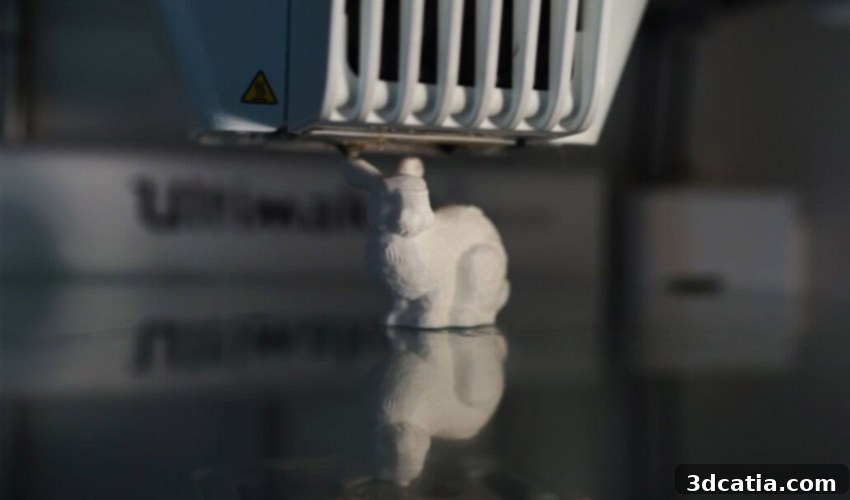
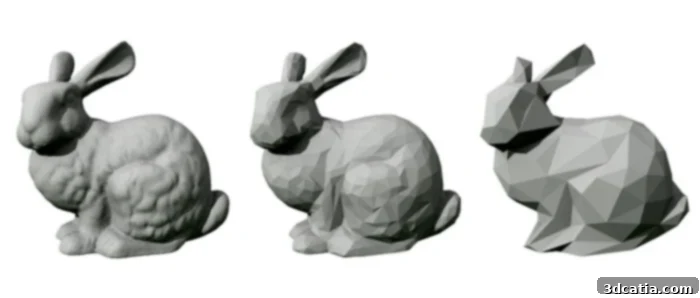
Imagine a world where objects carry their own complete manufacturing instructions embedded within their very structure, eliminating the need for external digital files. This groundbreaking concept is no longer science fiction, thanks to innovative research from ETH Zurich and Erlich Lab, an Israeli DNA storage company. These pioneers have successfully 3D printed a Stanford rabbit, incorporating all the necessary instructions for its subsequent reproduction directly into the material itself. This revolutionary approach moves beyond traditional CAD files, STL formats, or other conventional digital blueprints, proposing a paradigm shift in how we store, access, and replicate physical objects.
The fabricated rabbit is a testament to this incredible feat, housing approximately 45 kilobytes of information detailing its creation. This vital data is meticulously incorporated into microscopic glass beads, which are then integrated into the plastic polymer used for printing. This ingenious method not only ensures the physical presence of data within the object but also promises unparalleled longevity and resilience for digital information. While 3D printing has already transformed our ability to create objects on demand and remotely, relying heavily on accessible 3D files, this new research takes the concept of embedded information to an entirely new dimension. By storing all the data within the object itself, the team at ETH Zurich and Erlich Lab are paving the way for truly self-contained manufacturing processes.
The Imperative for Advanced Data Storage: Why DNA?
Current methods of digital data storage, while highly advanced, face inherent challenges, particularly concerning longevity and accessibility. Digital files like CAD and STL formats require specific software, operating systems, and hardware to remain usable over time. Obsolescence is a constant threat; a file created today might be unreadable in 50 years due to changes in technology. Hard drives can fail, cloud servers are susceptible to cyber threats, and even physical archival methods like tape backups have finite lifespans and require environmental controls. Furthermore, the sheer volume of data generated globally demands more compact and durable storage solutions.
Enter DNA – nature’s most efficient and durable information storage medium. DNA boasts an astounding data density, capable of storing vast amounts of information in an incredibly small space. A single gram of DNA can theoretically store all of the world’s data. Beyond its density, DNA offers remarkable stability and longevity, particularly when protected. The genetic code has preserved biological information for millions of years, far outstripping the lifespan of any human-made digital storage device. This natural resilience makes DNA an ideal candidate for archiving critical data, especially for instructions that need to survive for centuries or millennia, such as those for cultural artifacts, essential infrastructure components, or medical devices.
Integrating the Rabbit’s DNA: A Deep Dive into the Process
Encoding Instructions into Life’s Code
The fundamental innovation lies in translating digital 3D printing instructions into a biological language. Researchers harnessed the four nitrogenous bases of DNA – adenine (A), cytosine (C), thymine (T), and guanine (G) – to encode the precise data needed for 3D printing the Stanford rabbit. Each base can represent a specific bit or combination of bits, allowing the complex geometric and material specifications of the object to be written into a synthetic DNA sequence. This process effectively converts the digital blueprint of the rabbit into a genetic blueprint, a truly remarkable interdisciplinary feat combining computer science, materials engineering, and biotechnology. Once the digital data is converted, the corresponding DNA sequence can be chemically synthesized, creating a tangible molecule that carries the manufacturing code.
Safeguarding the Genetic Blueprint: Microscopic Glass Beads
While DNA is incredibly information-dense and durable in its natural cellular environment, isolated synthetic DNA is remarkably fragile. It can degrade rapidly when exposed to environmental factors like heat, moisture, or UV radiation. To counteract this vulnerability, the ETH Zurich and Erlich Lab researchers devised an ingenious protection mechanism. They encapsulated the synthetic DNA sequences within microscopic glass beads, essentially creating tiny, robust, self-contained capsules for the genetic information. These glass beads act as miniature fortresses, shielding the precious DNA from external degradation. Subsequently, these DNA-carrying glass beads were homogeneously incorporated into the plastic polymer material designated for the 3D printing process. This integration ensures that every part of the printed object contains the complete set of instructions, making the object itself a durable data carrier.
The 3D Printing Experiment: Bringing the Rabbit to Life
From Code to Form: The Additive Manufacturing Process
With the DNA-infused plastic prepared, the additive manufacturing process could commence. The researchers utilized an Ultimaker machine, a common and reliable FDM (Fused Deposition Modeling) 3D printer, to construct the Stanford rabbit. During printing, the plastic filament containing the embedded glass beads (and thus the DNA instructions) was extruded layer by layer, solidifying into the desired three-dimensional shape. The key here is that the printing process itself did not harm the encapsulated DNA, demonstrating the robustness of the glass bead protection method. The resulting physical rabbit was not just an object; it was a living archive, carrying its own blueprint within its very material composition.
Decoding and Replication: The Proof of Concept
Retrieving the Hidden Information
Once the rabbit was fully printed, the crucial test began: could the embedded information be reliably retrieved and used for reproduction? The research team meticulously cut a small piece from the rabbit’s ear, taking care to isolate the microscopic glass beads containing the DNA. They then employed a DNA sequencing machine, a standard tool in biotechnology, to decrypt the sequence of adenine, cytosine, thymine, and guanine bases. This process efficiently read the encoded data, converting the biological sequence back into a digital stream of information.
Transforming DNA Back into a 3D Model
The sequenced DNA data, now in digital format, was then translated back into instructions recognizable by a 3D printer. Effectively, the DNA sequence became the new STL file! This successful conversion demonstrated a complete and reversible cycle: digital data to DNA, DNA embedded in object, DNA extracted from object, and DNA sequenced back to digital data. The researchers proudly stated, “Our results show that data can be perfectly and quickly recovered from the 3D object by consuming a minute amount of material using a portable sequencer.” This entire operation, from extraction to re-translation, was repeated four times, each yielding identical results. This robust proof of concept conclusively demonstrated that there was no degradation of the embedded information, and critically, it confirmed the feasibility of duplicating a part without needing its original digital 3D file, only a piece of the object itself.
Long-term Viability: A Glimpse into the Future
While the current experiment proved short-term integrity, a fascinating question arises: what about long-term data preservation? The researchers ponder replicating these steps ten years later to definitively assess whether time itself poses an obstacle to this remarkable progress. The inherent stability of DNA, coupled with the protective glass encapsulation, suggests that the information could remain intact for centuries, potentially millennia, far outlasting any current digital storage medium. This opens up unprecedented possibilities for archival manufacturing, ensuring that valuable designs and objects can be reproduced even if all traditional digital records are lost or corrupted.
Revolutionary Applications and Future Implications
Beyond Rabbits: Unlocking Diverse Industries
The implications of this research are incredibly broad, with potential applications spanning numerous industries, many of which the researchers themselves are still exploring. Imagine critical replacement parts for aerospace components that carry their own manufacturing instructions, ensuring they can be reproduced even decades after the original designs might be lost or become obsolete. In the medical field, custom prosthetics or implants could embed their design specifications, allowing for precise replication or modification throughout a patient’s lifetime. Art and cultural heritage could be revolutionized; precious sculptures or artifacts could carry their exact digital blueprints within their material, ensuring their accurate preservation and reproduction for future generations, resistant to physical damage or digital degradation.
Consider architecture, where building components could contain instructions for their repair or replacement, streamlining maintenance and reducing waste. In consumer goods, bespoke items could come with their full lifecycle data, enabling recycling or remanufacturing with unprecedented accuracy. This technology could also transform supply chain management, allowing for decentralized, on-demand manufacturing where only the physical object is needed to initiate production, drastically reducing reliance on centralized databases and potentially shortening lead times.
Enhanced Security and Confidentiality
One particularly intriguing application is the ability to discreetly hide information within an object. This could involve confidential data that requires protection without the complexities of advanced cryptographic systems or the need for external storage. A physical key or device could contain encrypted intellectual property, only accessible through its intrinsic genetic code. This bio-inspired steganography offers a unique layer of security, making it extremely difficult for unauthorized parties to even detect, let alone access, the hidden information.
A Paradigm Shift in Manufacturing
This DNA-based data storage heralds a potential paradigm shift in manufacturing. It empowers a future where objects are not just inert physical forms but intelligent entities carrying their own genetic code for reproduction. This moves us closer to true self-replicating manufacturing systems, reducing waste from obsolete digital archives, enhancing material circularity, and fostering unprecedented levels of object autonomy. It envisions a world where a physical object is its own immutable, universally readable instruction manual, accessible across time and technological shifts.
Challenges and the Road Ahead
While the potential is vast, challenges remain. The current cost of DNA synthesis and sequencing is still relatively high, and the speed of encoding/decoding needs to improve for widespread commercial adoption. Scalability – embedding DNA in large, complex objects with varied materials – also requires further research. Ensuring the integrity of the DNA through various manufacturing processes and environmental exposures will be paramount. Nevertheless, the rapid advancements in biotechnology and additive manufacturing suggest that these hurdles are not insurmountable. Continuous innovation in these fields will undoubtedly pave the way for practical and affordable implementation of this technology.
This innovative research marks a significant milestone in the convergence of biology and engineering, blurring the lines between information and matter. It promises not just a new way to store data, but a fundamentally new way to conceive of objects and their relationship with information. The possibilities are truly wide, hinting at a future where “everything is labelled with small pieces of useful information.” We eagerly anticipate the evolution of this project and the incredible transformations it promises for manufacturing, data storage, and beyond. You can find the entire study details on Nature Biotechnology.
What do you think of this pioneering research? Let us know your thoughts in a comment below or on our Facebook and Twitter pages! Don’t miss out on the latest advancements in additive manufacturing – sign up for our free weekly Newsletter, delivering all the essential 3D printing news straight to your inbox!