
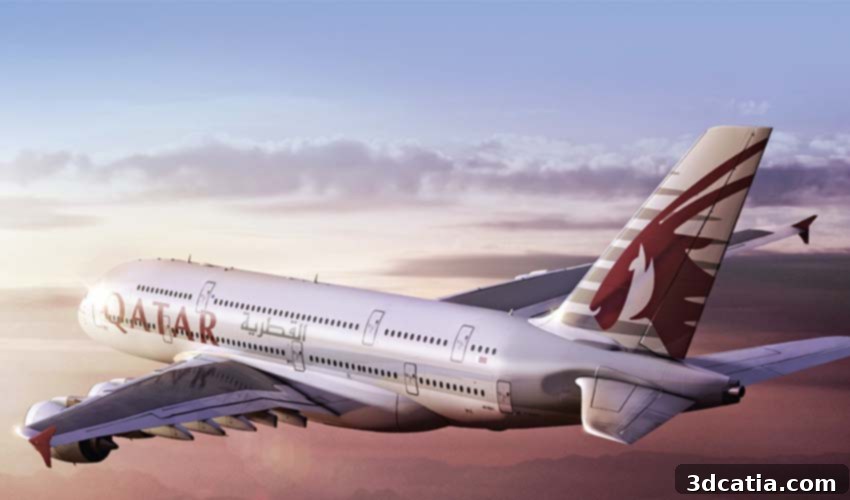
Revolutionizing Aerospace: Diehl Aviation and Airbus Unveil Largest 3D Printed Aircraft Part for Qatar Airways
In a landmark achievement for the aerospace industry, Diehl Aviation, a leading manufacturer specializing in cabin interiors and avionics, has collaborated with the global aviation giant Airbus to pioneer the development and integration of a 3D printed Curtain Comfort Header. This innovative component, a testament to the transformative power of additive manufacturing in aerospace, has been successfully installed on a Qatar Airways Airbus A350 XWB. What makes this particular development truly remarkable is Diehl Aviation’s claim that this module represents the largest fully 3D printed part ever incorporated into a passenger aircraft to date. Manufactured using advanced Fused Deposition Modeling (FDM) technology, the intricate module measures an impressive 1,140 x 720 x 240 mm. Its complex design functions as a sophisticated enclosure for the curtain rail system, and Qatar Airways proudly stands as the inaugural airline to leverage the benefits of this groundbreaking 3D printed innovation within its fleet.
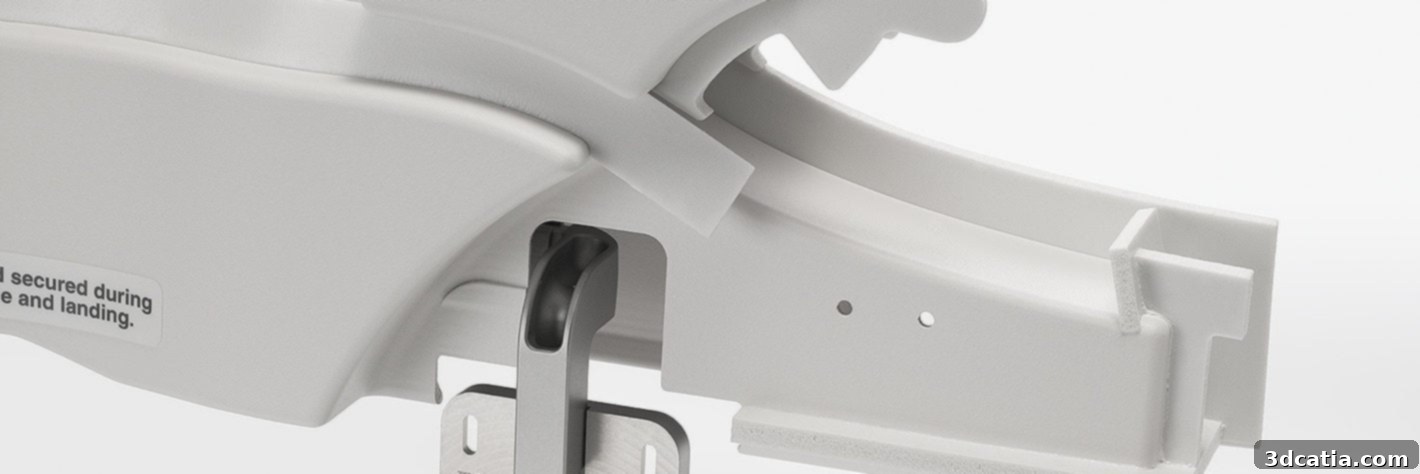
The 3D printed Curtain Comfort Header is reportedly the largest 3D printed part for a passenger aircraft | Credits: Diehl Aviation.
The Genesis of Innovation: Addressing Traditional Manufacturing Challenges
The decision to embrace 3D printing technologies for the production of the Curtain Comfort Header was driven by a compelling need to overcome long-standing inefficiencies and complexities inherent in traditional manufacturing methods. For years, the production of such interior components involved a laborious and often problematic process. This conventional approach relied heavily on forming the module from numerous distinct layers of laminated fiberglass. Each individual layer, designed to meet specific structural or aesthetic requirements, necessitated the creation of its own unique and often highly complex tooling. This not only added significant time and cost to the manufacturing cycle but also limited design flexibility and the ability to rapidly iterate improvements.
Beyond the foundational structure, integrating additional functionalities into these modules posed further challenges. The traditional method made it an arduous task to seamlessly incorporate elements such as cable channels for electrical wiring, clearly visible emergency escape route signage, or even specialized retaining clips required for secure attachment. These integrations typically involved separate manufacturing steps, additional assembly processes, and often resulted in heavier, multi-part assemblies. The inherent limitations of fiberglass lamination meant that designers often had to compromise on optimal functionality or aesthetics due to manufacturing constraints. This antiquated process was ripe for disruption, making it an ideal candidate for the transformative capabilities offered by additive manufacturing.
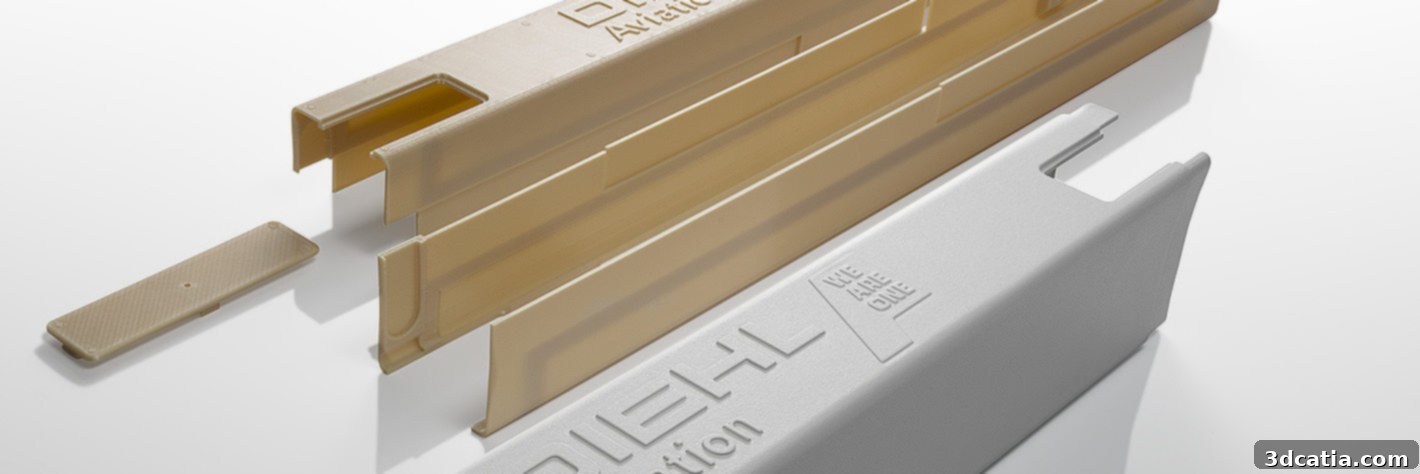
3D printed parts for the Curtain Comfort Header | Credits: Diehl Aviation
The Additive Manufacturing Advantage: FDM for Aerospace
In stark contrast to its predecessor, the 3D printed Curtain Comfort Header exemplifies the myriad advantages of additive manufacturing. This innovative module is ingeniously composed of up to 12 individual component parts, each precisely produced using FDM 3D printing technology. These discrete parts are then efficiently and easily assembled, significantly streamlining the overall production workflow. This paradigm shift has rendered many of the old, dedicated tools—previously considered absolutely indispensable for manufacturing these components—entirely redundant. The elimination of costly and time-consuming tooling is a major benefit, accelerating design cycles and reducing upfront investment.
The FDM process, which involves extruding thermoplastic material layer by layer to build a three-dimensional object, offers unparalleled design freedom. This allows engineers to consolidate multiple complex geometries into fewer, more integrated parts, leading to potential weight savings – a critical factor in aerospace. Furthermore, the 3D printed parts themselves require considerably less post-processing or rework compared to traditionally manufactured fiberglass components. This translates directly into reduced labor costs and faster production times. Crucially, in the operational life of an aircraft, the ease with which these FDM-produced parts can be removed for routine maintenance, repairs, or replacements is a significant advantage, minimizing aircraft downtime and improving operational efficiency.
Diehl Aviation’s selection of FDM technology highlights its growing maturity and reliability for demanding applications in the aerospace sector. FDM allows for the use of high-performance thermoplastic materials that meet stringent aviation safety and performance standards, including flame retardancy and mechanical strength. The ability to print complex internal structures, such as lightweight infills or integrated channels, further enhances the functionality and performance of the component without adding excessive weight. This project serves as a powerful demonstration that, much like in other diverse industrial sectors, 3D technologies consistently prove to have significant and tangible advantages over conventional manufacturing methods, driving innovation and efficiency across the board.
The Collaboration Behind the Breakthrough: Diehl Aviation and Airbus
The successful development and implementation of the 3D printed Curtain Comfort Header is a testament to the strong collaborative spirit between Diehl Aviation and Airbus. This partnership combines Diehl Aviation’s deep expertise in aircraft cabin design, engineering, and manufacturing with Airbus’s extensive experience in aircraft integration and certification. Such collaborations are vital for pushing the boundaries of what is possible in aerospace, particularly when introducing novel manufacturing processes like additive manufacturing. Working closely together, both companies ensured that the 3D printed component not only met the stringent performance, safety, and regulatory requirements of commercial aviation but also seamlessly integrated into the Airbus A350 XWB’s sophisticated cabin environment. This joint effort underscores a shared vision for leveraging advanced technologies to enhance aircraft design, passenger comfort, and operational efficiency.
Qatar Airways: Pioneering Airline Adopts 3D Printing
Qatar Airways’ decision to be the first airline to deploy the 3D printed Curtain Comfort Header on its A350 XWB fleet highlights the airline’s commitment to innovation and adopting cutting-edge technologies. For an airline, the benefits extend beyond just the manufacturing process. The ability to quickly replace damaged parts, potentially with on-demand manufacturing capabilities, can significantly reduce maintenance costs and aircraft ground time. The lighter weight, if achieved through optimized 3D printed designs, can contribute to fuel efficiency, a crucial factor for long-haul operations. Furthermore, the enhanced design flexibility offered by 3D printing could open doors for future cabin customizations, allowing airlines to tailor interior elements more precisely to their brand and passenger experience strategies. This move by Qatar Airways sets a precedent for other airlines to explore the practical advantages of integrating additive manufacturing into their operational and maintenance frameworks.
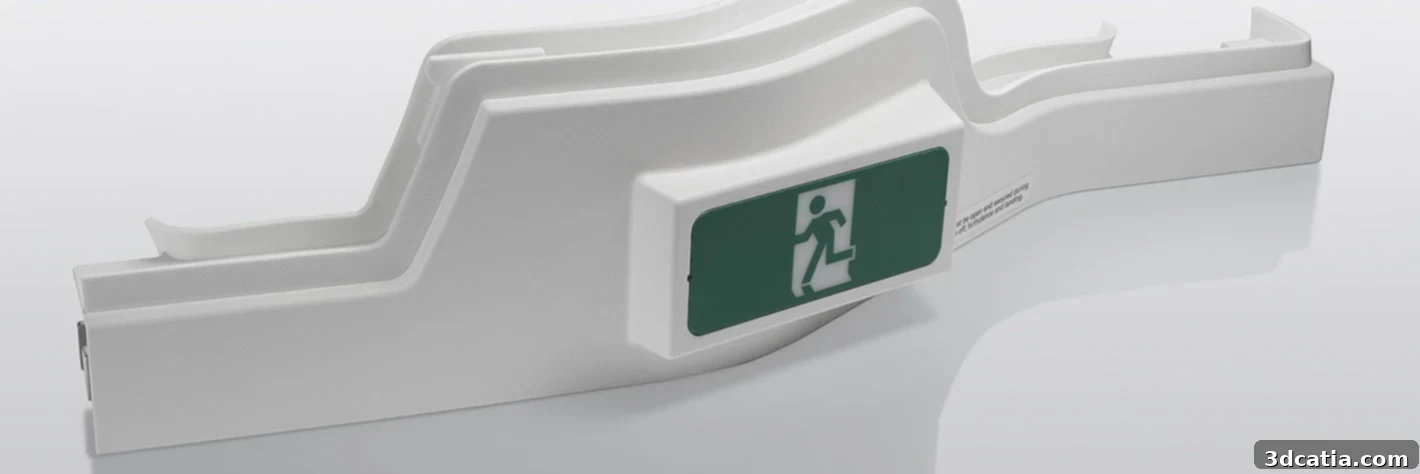
The 3D printed exterior of the Curtain Comfort Header | Credits: Diehl Aviation
The Broader Impact: 3D Printing’s Future in Aviation
The success of the 3D printed Curtain Comfort Header is more than just a single part; it represents a significant milestone in the broader adoption of additive manufacturing across the entire aerospace sector. This technology is rapidly transforming various aspects of aircraft production, from prototyping and tooling to the manufacturing of complex end-use components. The ability to produce highly intricate parts with optimized geometries, reduced weight, and integrated functionalities is a game-changer for aircraft design. It allows for the creation of components that are impossible or economically unfeasible to produce using traditional methods.
Moreover, additive manufacturing promises to revolutionize the aerospace supply chain. Parts can be produced on-demand, closer to the point of need, reducing the reliance on extensive physical inventories and complex global logistics. This is particularly beneficial for Maintenance, Repair, and Overhaul (MRO) operations, where quick access to spare parts is crucial. The potential for mass customization, creating tailored parts for specific aircraft or even individual passenger preferences, further expands the horizon of possibilities. As materials science advances and 3D printing processes become even more robust and cost-effective, we can expect to see an increasing number of structural and critical components being produced additively, pushing aircraft performance, sustainability, and passenger experience to new heights. The environmental benefits, such as reduced material waste and lighter aircraft leading to lower fuel consumption, also align perfectly with the industry’s sustainability goals.
Conclusion: A New Era for Aircraft Manufacturing
The introduction of the 3D printed Curtain Comfort Header by Diehl Aviation and Airbus, with Qatar Airways as its launch customer, marks a pivotal moment for the aerospace industry. This achievement not only demonstrates the tangible benefits of additive manufacturing in producing large, complex, and functional aircraft components but also paves the way for wider integration of 3D printing technologies in future aircraft designs. From overcoming traditional manufacturing bottlenecks to offering enhanced design flexibility, weight reduction, and streamlined maintenance, this innovative component embodies the future of aerospace production. It’s a clear indicator that the sky is truly the limit for what can be achieved through advanced manufacturing and strategic industry collaboration.
What are your thoughts on this significant leap forward in aerospace manufacturing? Let us know in a comment below or connect with us on our Facebook and Twitter pages! Don’t forget to sign up for our free weekly Newsletter, delivering all the latest news in 3D printing directly to your inbox!