
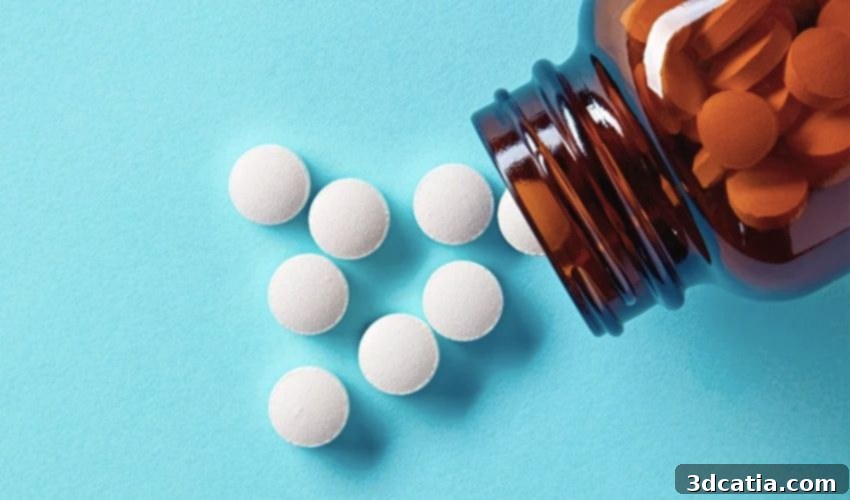
Deglumed Project: Revolutionizing Personalized Medicine with 3D Printing for Dysphagia Patients
The Deglumed project represents a groundbreaking initiative poised to redefine pharmaceutical innovation by spearheading a significant shift towards personalized medicine. At its core, this ambitious endeavor leverages a suite of cutting-edge technologies, most notably 3D printing, to engineer pharmaceutical products that are meticulously tailored to the unique physiological and therapeutic needs of individual patients. This bespoke approach aims to overcome long-standing challenges in drug delivery, particularly for individuals who experience difficulties in swallowing medication. By developing drugs that are easier to ingest and customized in terms of dosage, shape, and even taste, Deglumed seeks to dramatically improve treatment adherence and patient quality of life. The project is backed by vital funding from the Valencian Institute of Business Competitiveness (IVACE) and unites a powerful consortium of expert partners: Aimplas (the Technological Institute of Plastics), NUTRISPAIN, IT3D, and the esteemed laboratory of Centrum Pharmaceutical Specialties. This collaborative fusion of diverse expertise in materials science, nutrition, advanced manufacturing, and pharmacology is crucial for developing truly personalized drugs capable of addressing dysphagia and a myriad of other similar conditions requiring tailored pharmaceutical solutions.
Understanding Dysphagia: A Widespread Challenge in Medication Adherence
The medical condition known as dysphagia, characterized by difficulty or discomfort in swallowing, poses a substantial global health challenge, significantly impacting patient well-being and medication efficacy. In the United States alone, a staggering one in 25 adults grapples with dysphagia, making routine activities like eating, drinking, and taking medication a strenuous ordeal. Across Europe, the numbers are equally concerning, with approximately 30 million individuals affected. For those living with dysphagia, the act of moving food, liquids, or pills from the mouth to the stomach requires immense effort and an extended duration, often leading to discomfort, pain, and even aspiration risks. Beyond these broad statistics, compelling studies indicate a disproportionate prevalence among the elderly population; it is estimated that one in four individuals over the age of 70 experiences some degree of dysphagia. This makes the administration of daily medications particularly problematic for a demographic often requiring multiple prescriptions. Furthermore, dysphagia is a common and debilitating symptom in patients suffering from severe neurodegenerative pathologies, such as Alzheimer’s and Parkinson’s diseases. For these patients, the challenge of swallowing traditional solid medications can become an insurmountable barrier to effective treatment, leading to missed doses, reduced therapeutic outcomes, and a significant decline in their overall quality of life. This widespread and often overlooked issue underscores the urgent need for innovative pharmaceutical solutions like those being developed by the Deglumed project.
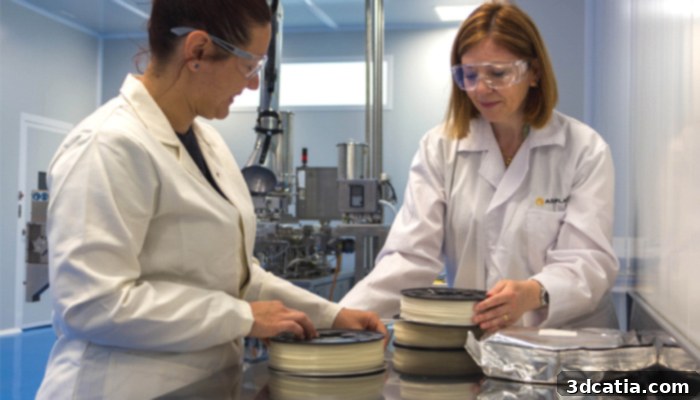
Aimplas, a key technological institute, is one of the pioneering companies actively participating in the innovative Deglumed project (Credits: Aimplas).
Additive Manufacturing at the Core: 3D Printing in Deglumed
The pharmaceutical landscape today is dominated by drugs manufactured in standardized solid forms, such as pills, capsules, and tablets. While cost-effective for mass production, these conventional formats often present considerable challenges for specific patient populations, particularly those with dysphagia. The physical act of swallowing a large, solid pill can be difficult, if not impossible, for many. Additionally, the palatability of medication is a critical, yet frequently overlooked, factor. Foul-tasting medicines can induce nausea, lead to gagging, or even cause patients to vomit, further compromising adherence and treatment efficacy. To address these critical issues and advance the paradigm of personalized, easy-to-ingest medicine, the Deglumed team has strategically channeled its efforts into the innovative design of both drugs and health supplements. Their approach involves a sophisticated synergy of several advanced technologies, with additive manufacturing playing a pivotal role. The primary objective is to create pharmaceutical dosage forms that are not only effective but also palatable and effortless to consume, thereby significantly improving patient experience and therapeutic outcomes.
One of the foundational technologies integrated into the Deglumed project is hot melt extrusion (HME). In the context of pharmaceutical manufacturing, HME is a highly versatile and efficient process employed to homogeneously mix active pharmaceutical ingredients (APIs) with various excipients, including bioactive polymers. This technique involves melting a polymer and compounding it with the drug, creating a solid dispersion that can enhance drug solubility, stability, and bioavailability. The HME method is instrumental in developing complex pharmaceutical formulations designed to achieve specific release profiles and patient-friendly characteristics. Through hot melt extrusion, the Deglumed team has successfully produced innovative films that are engineered to rapidly disintegrate upon contact with saliva in the mouth. These orally disintegrating films (ODFs) offer a revolutionary alternative to traditional pills, making medication intake significantly easier and more pleasant for dysphagia patients. Furthermore, HME is utilized to create a high-quality pharmaceutical filament, which serves as the crucial feedstock for Fused Deposition Modeling (FDM) 3D printing. This innovative approach allows for precise control over the drug’s physical properties and dosage. In addition to FDM, the project also explores the potential of pellet additive manufacturing, enabling direct printing with specialized systems capable of processing pharmaceutical-grade pellets. This dual approach maximizes flexibility and efficiency in drug production. Raquel Llorens, the primary researcher guiding the Deglumed project, enthusiastically highlights the profound advantages of this integrated technological strategy: “This advanced technology not only conserves energy but also dramatically enhances the reproducibility and bioavailability of the drug. 3D printing offers an unparalleled suite of benefits, including true personalization, the ability to print intricate, complex structures combining different materials within a single dosage form, substantial savings in raw materials, remarkable versatility in formulation, and the cost-effective production of short, customized series, among many other strategic advantages.” This emphasis on customization, efficiency, and patient-centric design truly sets Deglumed apart.
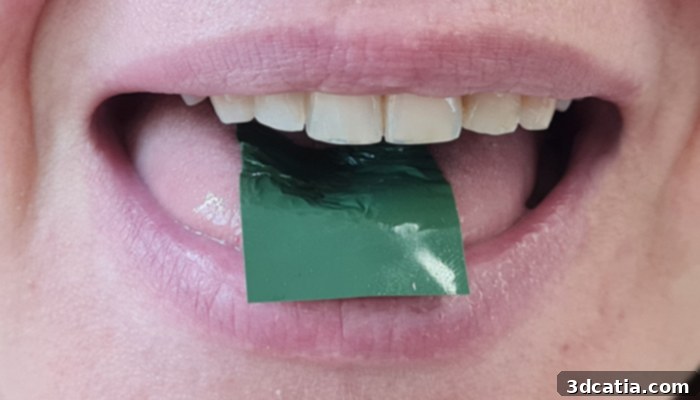
Illustrative concept of a personalized drug being developed through the Deglumed Project (Credits: Deglumed Project).
The Synergy of Technologies and Future Vision for Personalized Drug Delivery
The innovative combination of hot melt extrusion and advanced 3D printing technologies positions the Deglumed project at the forefront of pharmaceutical innovation. By leveraging these complementary techniques, Deglumed is uniquely equipped to tackle the multifaceted challenges associated with medications that are difficult to ingest, aiming to provide effective and patient-friendly solutions for a vast number of individuals globally. The project’s holistic approach ensures that drugs can be formulated with tailored release profiles, precise dosages, and even customized shapes and flavors that significantly enhance patient acceptance and adherence. This ability to create truly personalized medicines transcends mere convenience; it promises to elevate the efficacy of treatments, reduce instances of medication non-compliance, and ultimately improve the quality of life for patients, especially those suffering from chronic conditions or age-related swallowing disorders. The financial backbone of this pioneering research is robust, primarily provided by IVACE (Valencian Institute of Business Competitiveness) through the invaluable FEDER funds from the European Union. These grants are specifically allocated to technology centers within the Valencian Community to foster the development of cutting-edge Research & Development projects. Such strategic funding is critical for translating innovative concepts into tangible pharmaceutical solutions that have a real-world impact. The Deglumed project is not merely developing new drugs; it is laying the groundwork for a future where medicine is truly personalized, responsive to individual needs, and seamlessly integrated into a patient-centric healthcare model. This initiative represents a significant leap towards making healthcare more accessible, effective, and humane for all. For those interested in delving deeper into the specifics of this transformative project and its potential implications for the future of medicine, more comprehensive information can be found on the official project website HERE.
The implications of the Deglumed project extend far beyond addressing dysphagia, signaling a paradigm shift in how drugs are conceived, manufactured, and delivered. By proving the viability and advantages of 3D printed, personalized medications, the project opens doors for custom pharmaceutical solutions for a myriad of other conditions where standard dosage forms are suboptimal. This includes pediatric medicine, geriatric care, complex polypharmacy, and even oncology, where specific drug combinations and dosages are often critical. Imagine a future where a pharmacist can print a multi-drug pill tailored precisely to an individual’s genetic profile, metabolic rate, and daily schedule, ensuring optimal therapeutic effect with minimal side effects. The environmental benefits are also noteworthy; on-demand production of personalized medications can reduce waste associated with mass manufacturing and expiry of standardized drugs. This approach fosters a more sustainable and efficient pharmaceutical supply chain, moving away from a one-size-fits-all model to one that is truly individualized and precise. The Deglumed project’s success is a testament to the power of interdisciplinary collaboration and the transformative potential of advanced manufacturing technologies like 3D printing in healthcare.
What are your thoughts on the revolutionary Deglumed project and its mission to create personalized medication? We invite you to share your insights and comments below, or connect with us on our social media channels: find us on LinkedIn, Facebook, and Twitter! Don’t miss out on the latest advancements and news in the world of additive manufacturing by signing up for our free weekly Newsletter here – delivered straight to your inbox! Additionally, you can explore all our engaging video content and interviews on our dedicated YouTube channel.