

The Ultimate Guide to Metal 3D Printing Materials: Properties, Applications, and Innovations
Metal 3D printing, a groundbreaking subset of advanced manufacturing, is rapidly transforming industrial production across diverse sectors. With its unparalleled ability to create complex geometries and functional parts directly from digital designs, it stands as one of the fastest-growing technologies today. A recent report by Grand View Research underscored this monumental growth, valuing the global metal additive manufacturing market at an impressive $6.36 billion in 2022. Projections indicate an astounding compound annual growth rate (CAGR) of 24.2% through 2030, a testament to its increasing adoption and technological advancements. This remarkable expansion is, in large part, driven by the ever-widening array of compatible materials. Whether employing powder-bed fusion (PBF), directed energy deposition (DED), electron beam melting (EBM), or metal extrusion systems, the material possibilities for these 3D printers are virtually limitless. Selecting the right metal is paramount for any application, as each material offers unique properties that dictate its suitability for specific industrial demands. In this comprehensive guide, we delve into the most commonly utilized metals in 3D printing, exploring their characteristics, typical applications, and the advantages they bring to modern manufacturing.
Aluminum and its Alloys: The Lightweight Powerhouses
Aluminum stands out in the world of additive manufacturing for its exceptional combination of lightness and strength. This makes it an ideal choice for industries where weight reduction is critical, such as aerospace, high-performance automotive (e.g., race cars, bespoke parts), and bicycle manufacturing. Beyond its favorable strength-to-weight ratio, aluminum also boasts excellent corrosion resistance, extending the lifespan of parts even in harsh environments. While pure aluminum is less common in 3D printing due to its relatively lower strength and sensitivity to high temperatures compared to steels, its alloys are incredibly versatile. These alloys typically incorporate elements like silicon and magnesium, which significantly enhance their physical and mechanical properties.
Key Aluminum Alloys in 3D Printing
Among the most prominent aluminum alloys, AlSi10Mg is a prime example, widely offered by leading manufacturers like German company EOS in powder form for processes such as Selective Laser Melting (SLM). This specific alloy provides a superior balance of strength, ductility, and thermal conductivity, making it suitable for functional prototypes and end-use parts with complex internal structures, such as heat exchangers or intricate brackets. The addition of silicon (Si) improves the material’s castability and reduces shrinkage during solidification, while magnesium (Mg) enhances its strength through precipitation hardening. Parts manufactured with AlSi10Mg exhibit high tensile strength, good fatigue resistance, and excellent weldability, further broadening their application scope from lightweight structural components to intricate hydraulic manifolds. Aluminum alloys truly shine where high strength-to-weight ratios are critical, offering a pathway to lighter, more fuel-efficient designs and improved performance across various mechanical systems.
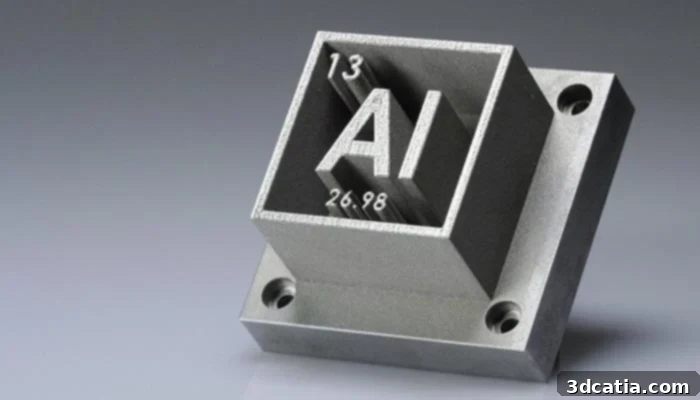
Photo Credits: Laboratoires HRL, LLC
Steel: The Foundation of Industrial Additive Manufacturing
Steel, a cornerstone of traditional industry, naturally became one of the first metals to be adapted for additive manufacturing. Its widespread availability, cost-effectiveness, and versatile properties make it indispensable across countless applications, from heavy machinery to consumer goods. In the realm of 3D printing, steel is primarily categorized into two main types: stainless steel and tool steel, each offering distinct advantages and applications.
Stainless Steel: Durability and Aesthetics
Stainless steel is ubiquitous in everyday life, mechanical engineering, and medical applications due to its excellent metallic properties and characteristic polished, shiny surface. It is known for its exceptional corrosion resistance, high tensile strength, good formability, and impact resistance. Manufacturers like EOS, ProMetal (now Desktop Metal), and Desktop Metal itself offer a range of stainless steel options for 3D printing. Popular grades include 316L, which is highly prized for its biocompatibility and resistance to harsh chemical environments, making it ideal for medical implants, surgical instruments, and food processing equipment. Another common grade is 17-4 PH, a precipitation-hardening stainless steel known for its high strength, hardness, and corrosion resistance, suitable for industrial components requiring superior mechanical properties. Additive manufacturing with stainless steel allows for the creation of intricate, durable parts for various industries, including customized fixtures, tooling, and functional prototypes. Interestingly, stainless steel can also serve as a base material for producing parts with the appearance of bronze or gold. This is achieved through a binder jetting process where stainless steel powder layers are infiltrated or coated with bronze injection glue, followed by a sintering step. This technique is particularly useful for artistic or decorative items where the aesthetic finish is as important as the underlying mechanical properties.
Tool Steel: Precision for Molds and Tools
Tool steels are engineered for hardness, wear resistance, and the ability to maintain their properties at elevated temperatures, making them critical for manufacturing tools, dies, and molds. EOS, for instance, has developed Tool Steel MS1, an alloy that exhibits properties similar to conventional H13 tool steel. Its strength and resistance to fracture are paramount in applications where tools are subjected to extreme forces and repetitive cycles. The significant advantage of 3D printing with tool steel lies in the ability to create highly complex internal geometries, such as conformal cooling channels within injection molds. These channels can precisely follow the contours of the mold cavity, leading to vastly improved cooling efficiency, reduced cycle times, and enhanced part quality compared to conventionally manufactured molds with straight-drilled cooling lines. This capability revolutionizes toolmaking, enabling the production of more efficient and durable manufacturing equipment.
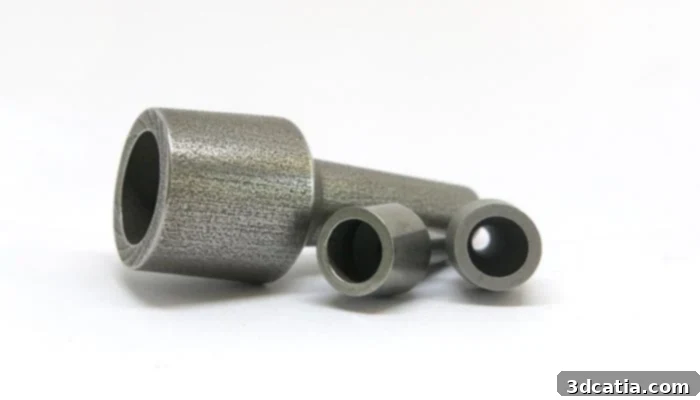
3D-printed part made with stainless steel.
Copper and Copper Alloys: Conductive Innovations
Copper is another metal perfectly suited for the advanced capabilities of additive manufacturing, particularly where electrical and thermal performance are critical. Its intrinsic properties include exceptionally high electrical and thermal conductivity, making it invaluable for applications requiring efficient heat dissipation or current flow. Additionally, copper’s ductility (its ability to undergo plastic deformation without breaking) and malleability (its capacity for compression deformation) allow for the creation of intricate and precise components. Copper is available in both filament and powder forms, supporting various 3D printing technologies from FDM-based metal extrusion to powder bed fusion.
Applications of Copper in Additive Manufacturing
The unique characteristics of copper make it an ideal material for thermal management and electrical engineering. This includes the production of high-performance inductors, electrodes for welding or spark erosion, efficient heat exchangers with complex internal geometries, and electrical contacts. Its excellent thermal conductivity is harnessed in custom cooling solutions for electronics, while its electrical conductivity is crucial for power transmission components. Furthermore, copper and its alloys find use in tooling and toolmaking, where rapid heat transfer is beneficial. Common copper alloys like CuNi2SiCr, CuCrZr, and CuCP leverage the base metal’s properties while adding strength or improving machinability. For example, CuCrZr alloys are known for their enhanced strength and heat resistance, making them suitable for resistance welding electrodes and high-stress electrical components. Despite its advantages, copper’s high reflectivity can pose challenges for laser-based 3D printing processes, requiring specific machine parameters or binder jetting techniques. However, ongoing advancements continue to optimize copper 3D printing, unlocking new possibilities for highly efficient and compact designs in critical sectors.
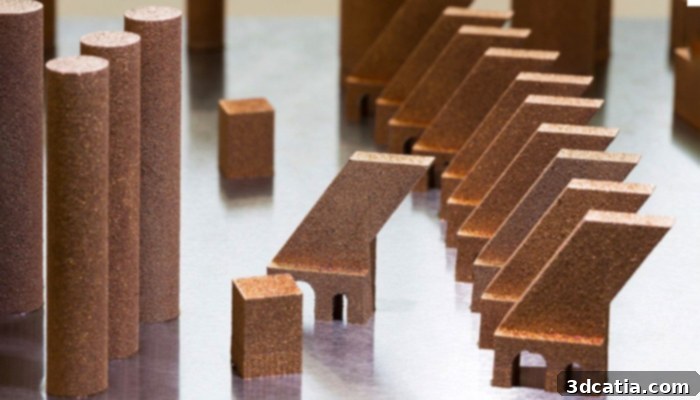
Photo Credits: Beamler
Gallium: The Future of Soft and Flexible Electronics
Gallium, while still largely confined to research and development, represents a fascinating frontier in metal 3D printing, particularly when alloyed with other low-melting-point metals. A notable example is an alloy containing 25% indium, which exhibits truly unique properties. This alloy melts at an incredibly low temperature, around 30°C (just above room temperature), allowing for novel printing methodologies. Researchers are experimenting with printing objects ranging from small, self-supporting metal bubbles to flexible metal wires, primarily for assembling advanced electronic components. The distinctive feature of this gallium-indium alloy is its ability to harden rapidly in air, forming a solid, thin outer shell, while its interior remains liquid. This property allows for the creation of flexible structures that can be manipulated and reformed even after printing, opening up possibilities for soft robotics, stretchable electronics, and microfluidic devices where traditional rigid metals are unsuitable. Despite its immense potential for groundbreaking applications, the high cost of gallium remains the primary obstacle to its widespread commercialization and integration into mainstream 3D printing workflows. Continued research aims to overcome these cost barriers and explore new alloy compositions to harness gallium’s extraordinary characteristics for future innovations.
Titanium and Titanium Alloys: Unmatched Performance in Critical Applications
Titanium is a highly coveted material in the medical, aerospace, and high-performance automotive industries, lauded for its exceptional properties. It offers an unparalleled combination of high strength-to-weight ratio, superior corrosion resistance, and remarkable biocompatibility. These attributes make it the material of choice for demanding applications where reliability and performance are paramount. Titanium is available in both powder and filament forms, compatible with various additive manufacturing processes like SLM, EBM, and DED.
Grades and Applications of Titanium
All grades of titanium exhibit extreme corrosion resistance, excellent ductility, and good weldability. Commercial Pure Titanium (CP-Ti) comes in four grades, with Grade 1 being the softest and most ductile, offering superior formability, while Grade 4 is the strongest of the unalloyed grades. In medical applications, titanium’s biocompatibility is crucial for implants, prosthetics, and surgical instruments, as it integrates well with bone and human tissue without adverse reactions. For aerospace, its high strength-to-weight ratio translates into lighter aircraft components, leading to improved fuel efficiency and performance. In automotive, it’s used for high-performance engine parts and exhaust systems due to its heat and corrosion resistance. 3D printing greatly facilitates the manufacture of complex titanium parts, allowing for highly customized designs, optimized topologies, and reduced material waste compared to traditional subtractive methods. This also mitigates the impurities often introduced during the welding phases of conventional titanium manufacturing. However, a significant drawback remains its high cost, which can be up to 50 times that of steel, making material efficiency and design optimization through 3D printing even more critical.
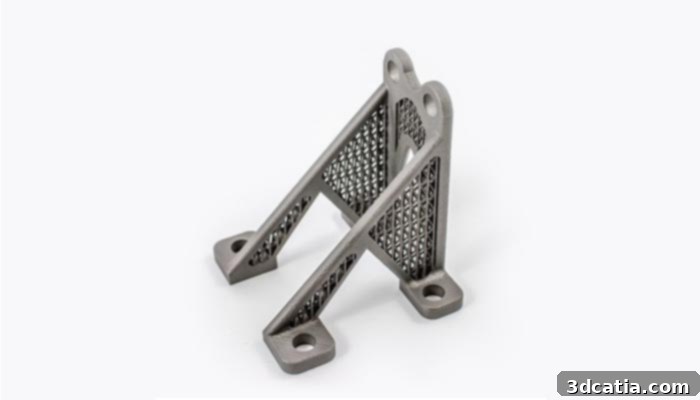
3D-printed titanium part for the aerospace industry
Titanium Alloys: The Pinnacle of Performance
Similar to aluminum, titanium alloys exhibit significantly enhanced mechanical properties and chemical behavior compared to pure titanium. The Ti6Al4V alloy (comprising 6% aluminum and 4% vanadium) is by far the most widely used, dominating approximately 56% of the total titanium market. Its popularity stems from an exceptional balance of mechanical strength, ductility, fatigue strength, and fracture toughness, making it incredibly versatile. These alloys are extensively used in additive manufacturing to produce a vast range of industrial components, including lightweight sheet metal parts, fasteners, rings, discs, and pressure vessels. In aerospace, Ti6Al4V is crucial for structural components, turbine blades, and landing gear parts. For the medical sector, specific grades of Ti6Al4V (e.g., ELI – Extra Low Interstitials) are used for surgical implants, dental components, and custom prosthetics, benefiting from its biocompatibility and robust mechanical properties. High-performance automotive engines also leverage titanium alloys for parts such as gearboxes, connecting rods, and exhaust components, where reducing reciprocating mass and increasing durability are key performance drivers. Additive manufacturing unlocks the full potential of titanium alloys by enabling the creation of intricate, lightweight structures with optimized material distribution, pushing the boundaries of design and engineering in critical applications.
Cobalt-Chrome: Biocompatibility and High-Temperature Strength
Cobalt alloys, particularly cobalt-chromium (CoCrMo) alloys, are highly valued in additive manufacturing for their superior quality compared to parts produced by traditional methods like lost-wax casting. These alloys are compatible with advanced 3D printing techniques such as Electron Beam Melting (EBM) and Direct Metal Laser Sintering (DMLS), which allow for precise control over microstructure and material density.
Medical and Industrial Applications
Like titanium alloys, cobalt-chromium alloys are extensively used in medicine for the manufacture of various prostheses in both orthopedics and dentistry. Their excellent biocompatibility, coupled with high rigidity, a smooth and wear-resistant surface, and exceptional corrosion resistance, makes them ideal for hip and knee implants, dental crowns, bridges, and partial dentures. The CoCrMo alloy (e.g., ASTM F75) is specifically engineered for these demanding medical applications, offering long-term reliability within the human body. Beyond medicine, these alloys also find critical applications in the automotive and aerospace industries, particularly where components are exposed to extremely high temperatures and mechanical stresses. Highly heat-resistant cobalt-chromium-molybdenum alloys are used for turbine components in jet engines, exhaust systems, and other high-temperature structural parts. Manufacturers like EOS offer specific cobalt-chromium alloys such as MP1 and SP2, designed to withstand temperatures exceeding 600°C. GE Additive’s Arcam company also markets ASTM F75, which is widely utilized for tool and mold production, benefiting from its hardness and wear resistance to create durable manufacturing equipment. The ability of 3D printing to create complex geometries with internal cooling channels further enhances the performance and lifespan of these high-temperature components.
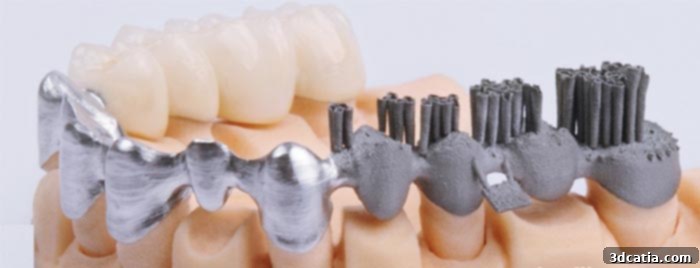
3D-printed dental implants (photo credits: EOS)
Nickel-Based Superalloys: Extreme Environment Performance
Nickel is an incredibly versatile and robust material for additive manufacturing, available in both powder and filament forms. Its true potential is unleashed when alloyed with other metals to create superalloys, which are renowned for their exceptional performance in extreme conditions. Nickel-chromium superalloys, such as the widely used Inconel 718 and Inconel 625, are engineered to enable the manufacture of incredibly strong, heat-resistant, and corrosion-resistant metal parts.
Applications in Demanding Industries
These superalloys are predominantly utilized in the aerospace, automotive, and petrochemical industries, where components are consistently subjected to high stresses, elevated temperatures, and corrosive environments. In aerospace, Inconel 718 is a staple for jet engine components, turbine blades, and exhaust systems due to its excellent high-temperature strength and creep resistance. Inconel 625, with its superior resistance to a wider range of corrosive media and good fabricability, is often employed in chemical processing equipment, marine applications, and heat exchangers. The mechanical properties of nickel-based alloys in additive manufacturing are significantly enhanced by their precise elemental composition, with substantial amounts of nickel, chromium, and molybdenum contributing to their unique characteristics. Additive manufacturing processes like DMLS or EBM allow for the creation of intricate internal cooling channels and optimized lattice structures within these superalloy parts, which are impossible to achieve with traditional manufacturing. This capability is critical for improving the efficiency and lifespan of components exposed to extreme thermal and mechanical loads, further solidifying nickel-based superalloys as indispensable materials for high-performance applications.
Precious Metals: Luxury and Art in Additive Manufacturing
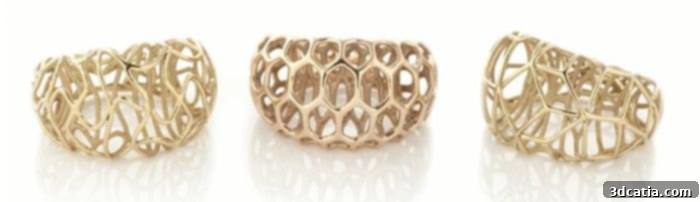
While the primary focus of industrial metal 3D printing often lies in high-performance engineering alloys, additive manufacturing also offers innovative methods for working with precious metals like gold, silver, and platinum. This capability is particularly transformative for the jewelry, luxury goods, and artistic sectors, where intricate designs and customization are paramount.
Techniques for Precious Metal 3D Printing
One common approach for producing precious metal objects involves an indirect method, often leveraging technologies like binder jetting followed by lost-wax casting. In this process, a sacrificial pattern is 3D printed, typically from a polymer or wax-like material, which is then used to create a ceramic mold. The precious metal (e.g., gold, silver, platinum) is then cast into this mold, and the ceramic is broken away, leaving the metal part. This lost-wax casting technique, enhanced by 3D printing for the pattern creation, allows for incredibly complex and delicate designs that would be challenging or impossible with traditional handcrafting. The final product often requires meticulous hand-finishing, especially for silver parts, to achieve a perfect surface polish and aesthetic. For gold, various alloys can be used to achieve different shades, such as pink, white, or yellow gold, expanding the creative possibilities for jewelers. While direct 3D printing of precious metal powders (using processes like SLM) is emerging, it is less common due to the high cost of the raw materials and the specific challenges associated with processing these noble metals. A critical consideration for both indirect and direct methods is ensuring minimum wall thicknesses, typically ranging from 0.8mm to 1mm, to guarantee the structural integrity of the delicate designs. Additive manufacturing truly democratizes intricate design for precious metals, enabling designers to push creative boundaries while maintaining high levels of precision and customization.
In conclusion, the landscape of metal 3D printing materials is constantly evolving, offering an incredible range of choices for engineers and designers. From the lightweight strength of aluminum and titanium to the robust durability of steel and the extreme performance of nickel-based superalloys, each metal brings unique advantages to the table. The ability to precisely control material properties and internal structures through additive manufacturing is revolutionizing industries, enabling the creation of parts with previously unattainable complexities and functionalities. Furthermore, ongoing research into modifying the atomic structure of metals during 3D printing promises even faster and more uniform solidification, potentially resulting in stiffer, stronger, and more resilient components. As these technologies continue to advance, the potential for innovation in advanced manufacturing remains limitless. To dive deeper into the various metal 3D printing technologies and their intricacies, we encourage you to explore our comprehensive guide HERE.
What are your thoughts on the diverse metals used in additive manufacturing? Share your insights in a comment below or connect with us on ourLinkedIn,Facebook, andTwitter pages! Don’t forget to sign up for our free weeklyNewsletter here, bringing the latest 3D printing news straight to your inbox! You can also find all our engaging videos on ourYouTube channel.
*Cover Photo Credits: Sigma Additive Solutions