
SOLIDWORKS: The Comprehensive Guide to 3D CAD Software for Innovative Design and Manufacturing
In the dynamic landscape of industrial sectors and product design, SOLIDWORKS stands out as an indispensable Computer-Aided Design (CAD) solution, trusted by millions globally. Since its inception in the mid-1990s, this powerful software has continuously evolved, becoming a cornerstone for engineers, designers, and manufacturers worldwide. Current estimates suggest an impressive active user base of approximately 9.3 million professionals across more than 80 countries, underscoring its widespread adoption and influence. At its core, SOLIDWORKS is built upon parametric modeling principles, which allow users to create sophisticated 3D models and intricate assemblies with unparalleled precision and flexibility. Beyond traditional manufacturing, SOLIDWORKS has seamlessly integrated into the realm of additive manufacturing, empowering engineers to effortlessly save their designs in the ubiquitous STL format – the essential file type required for 3D models to be processed and interpreted by 3D printing software, facilitating the transition from virtual design to physical prototype or product.
The journey of SOLIDWORKS began in 1993, spearheaded by John Hirschtick, a visionary engineer renowned for his past association with the legendary MIT Blackjack Team. Hirschtick assembled a talented team of engineers with a revolutionary goal: to develop the first truly accessible and affordable 3D modeling solution available on personal computers. At that time, the market was largely dominated by software like AutoCAD, which, despite its popularity since its release in 1982 (not 1989 as stated in original, common misconception but 1982 is correct for initial release), primarily focused on the creation and editing of 2D geometry. This limitation meant that complex three-dimensional visualization and manipulation were often cumbersome or required prohibitively expensive, specialized workstations. SOLIDWORKS emerged as a game-changer, democratizing 3D modeling and bringing its transformative capabilities to a much broader audience. For countless engineers and designers, this shift marked a profound turning point, fundamentally altering their approach to design and significantly accelerating the process of bringing innovative creations to life from concept to reality.
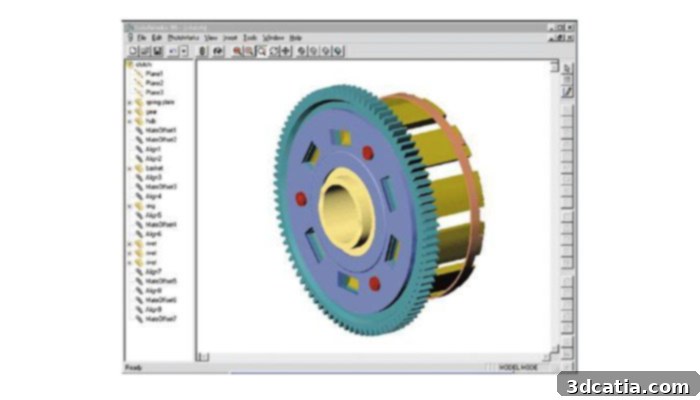
An early interface of the SOLIDWORKS software, demonstrating its pioneering 3D modeling capabilities.
The innovative nature and user-friendly interface of SOLIDWORKS quickly propelled it to immense popularity within the engineering and design communities. Recognizing its immense potential and strategic value, Dassault Systèmes, a global leader in 3D design software, 3D Digital Mock Up and Product Lifecycle Management (PLM) solutions, acquired SOLIDWORKS in 1997 for a substantial $320 million in stock. At the time of this pivotal acquisition, Dassault Systèmes was primarily renowned for its advanced CATIA solution. CATIA (Computer Aided Three-Dimensional Interactive Application) is a comprehensive product lifecycle management (PLM) suite that masterfully integrates design, engineering, and manufacturing features, extensively used in highly demanding industries such as automotive, aerospace, and aeronautics. Conceptually, SOLIDWORKS was positioned as a more accessible and user-friendly counterpart to CATIA, often regarded as a “lighter” version, tailored for a broader range of users and small-to-medium enterprises while still offering robust 3D design capabilities.
Main Features and Core Strengths of SOLIDWORKS
As previously highlighted, SOLIDWORKS is a sophisticated CAD software built upon the powerful foundation of parametric design. Parametric design is a revolutionary modeling paradigm that fundamentally clarifies and strengthens the relationship between a designer’s intent and the resulting design response. One of the most compelling characteristics of parametric models is their inherent intelligence: attributes that are interlinked will automatically update and reflect changes across the entire model when a single attribute is modified. This dynamic and associative nature is invaluable for projects with stringent manufacturing requirements, iterative design processes, and complex assemblies where changes are frequent and precision is paramount. SOLIDWORKS enables the creation of highly detailed and robust 3D models for high-performance parts and intricate assemblies, widely utilized in critical sectors such as aerospace & defense, automotive, medical devices, and consumer electronics, where design integrity directly impacts product functionality and safety.
To illustrate its distinct advantage, consider popular CAD solutions like Autodesk’s AutoCAD. While AutoCAD is a venerable and widely used software, it is primarily a 2D CAD solution, expertly catering to the needs of architects, home builders, and civil engineers for drafting and documentation. Although AutoCAD does offer capabilities for creating basic 3D surface and solid modeling, these functionalities are not its primary focus, nor are they as intuitive or powerful as working within a dedicated parametric modeling environment like SOLIDWORKS. The ease with which users can define parameters, build complex geometries, and manage design changes through a feature-based history tree is a key differentiating benefit of SOLIDWORKS, making it superior for true 3D product development.
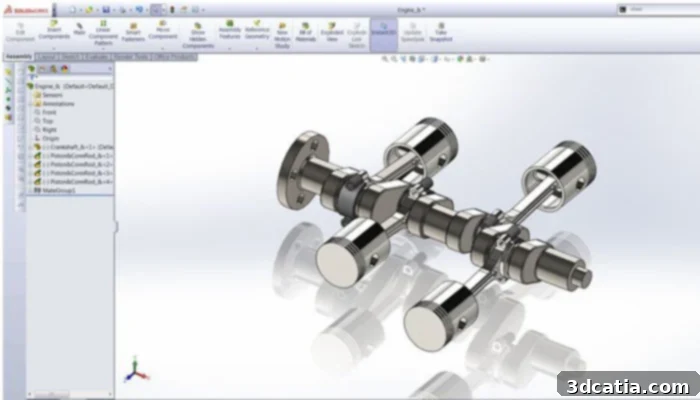
SOLIDWORKS excels in modeling both individual parts and complex assemblies, as demonstrated by this intricate design.
Beyond its core 3D modeling prowess, SOLIDWORKS offers a comprehensive suite of integrated tools meticulously tailored for diverse industrial applications. These include robust simulation capabilities for analyzing product performance under various conditions, advanced rendering tools for creating stunning photo-realistic visualizations, and powerful CAM (Computer-Aided Manufacturing) functionalities for streamlining production. With SOLIDWORKS, designers and engineers can effortlessly craft intricate solid models, precisely manipulate complex surfaces, visualize detailed wireframe models, and seamlessly generate fully associative 2D drawings directly from their 3D solid models. This ability to move fluidly between different design representations and manufacturing preparation tools positions SOLIDWORKS as an all-encompassing solution throughout the product development lifecycle.
Notable Enhancements: The 2022 Update and Beyond
The continuous evolution of SOLIDWORKS is marked by regular updates that introduce significant enhancements, boosting productivity and expanding capabilities. The 2022 update, for instance, brought forth a myriad of improvements designed to optimize performance and streamline workflows. A key focus was on assembly performance and efficiency, where the update drastically reduced time constraints associated with opening, saving, and rebuilding larger assemblies. This means engineers can now handle even the most complex designs with greater fluidity and responsiveness. Furthermore, the introduction of an enhanced Documentation mode allows users to open SOLIDWORKS drawings more rapidly, irrespective of the version they were created in or whether they were previously saved in this specialized mode, significantly saving valuable time during review and collaboration phases.
Other noteworthy improvements in the 2022 release and subsequent updates include the ability to execute multiple tasks concurrently, dramatically improving design efficiency. For example, users can now create drawings on both sides of joint lines simultaneously or perform geometric symmetry operations on two planes concurrently, eliminating the tedious need for duplicate operations. This parallel processing capability is a boon for designing symmetrical components or structures. The updates also brought substantial enhancements to model import functionalities, ensuring better compatibility and data fidelity when importing files from other CAD systems. Display performance has also been significantly improved, leading to a smoother and more responsive user experience, particularly when navigating and manipulating very large or graphically intensive models. Many of these competitive edge enhancements are further bolstered by the integration with Dassault Systèmes’ extensive 3DEXPERIENCE platform, which offers cloud-based collaboration, advanced simulation, and product lifecycle management tools, effectively extending SOLIDWORKS capabilities into a truly connected design and manufacturing ecosystem. These are just a few examples of the ongoing commitment to making SOLIDWORKS an even more powerful and efficient design tool. For a comprehensive deep dive into the latest software updates and features, the video below provides an excellent overview, and a detailed PDF document is also available for in-depth exploration.
SOLIDWORKS Standard: The Foundation of 3D Design
SOLIDWORKS Standard provides a robust and intuitive foundation for engineers and designers to embark on their 3D modeling journeys. This core version empowers users to create sophisticated parametric parts, build complex assemblies, and generate precise product drawings. Its capabilities extend to crafting intricate surfaces, developing functional flat sheet metal models, and designing structural weldments with ease. A cornerstone of SOLIDWORKS Standard is its intelligent parametric design function, which ensures that all models are automatically updated in real-time as design changes are made, maintaining consistency and reducing errors. Conceptual design is another crucial capability embedded within the software, allowing for early-stage design exploration. Users can quickly create design sections, apply motors and forces to components, and perform basic motion studies to verify mechanism performance and validate design intent before committing to detailed development. This foundational package includes essential tools for part and assembly modeling, 2D drawing creation, sheet metal design, weldments, and basic simulation capabilities, making it an excellent starting point for product development.
SOLIDWORKS Professional: Enhancing Productivity and Visualization
Building upon the solid capabilities of SOLIDWORKS Standard, SOLIDWORKS Professional is designed to significantly boost design productivity and enhance the overall product development experience. This tier introduces a suite of advanced tools that streamline workflows and provide deeper insights. Key features include integrated file management tools, such as SOLIDWORKS PDM Standard, which helps organize design data, control revisions, and manage product structures, preventing costly errors and improving collaboration. Users gain access to advanced photo-realistic rendering capabilities, notably through PhotoView 360, allowing them to create stunning, high-quality images and animations of their designs for marketing and presentations. The software also offers automated cost estimation tools, enabling designers to understand manufacturing costs in real-time as they design, fostering cost-effective product development. Design checking functionalities help ensure designs meet specified standards and manufacturing requirements, while a comprehensive part library (SOLIDWORKS Toolbox) provides a vast collection of standard components, saving significant design time and ensuring consistency.
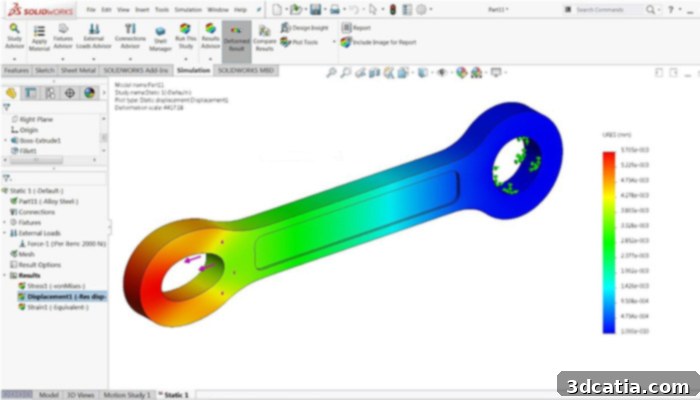
The software offers powerful simulation tools to analyze product performance and validate designs.
SOLIDWORKS Premium: Advanced Simulation and Design Validation
SOLIDWORKS Premium represents the pinnacle of the SOLIDWORKS desktop offering, integrating powerful simulation and design validation tools that elevate it beyond basic design and drafting. This top-tier package encompasses all the features of SOLIDWORKS Professional and adds sophisticated capabilities essential for advanced engineering challenges. Premium users benefit from powerful finite element analysis (FEA) tools, allowing for in-depth stress analysis, fatigue analysis, and motion studies to predict how parts and assemblies will behave under real-world conditions, minimizing the need for physical prototypes. It also includes reverse engineering tools like ScanTo3D, which enables the import and manipulation of mesh and point cloud data obtained from 3D scanners. From this raw data, engineers can then accurately create editable surfaces and solid models, greatly accelerating the design process for existing parts or artistic forms. Furthermore, SOLIDWORKS Premium provides advanced wire and pipe routing functionality, critical for designing complex electrical harnesses, tubing, and piping systems within an assembly, ensuring proper fit, form, and function in tight spaces. These robust features make SOLIDWORKS Premium an ideal solution for industries requiring rigorous design validation and comprehensive product development.
Seamless Integration with 3D Printing and Additive Manufacturing
As previously noted, SOLIDWORKS is uniquely positioned to serve the rapidly expanding field of additive manufacturing technologies, primarily due to its ability to export 3D models as STL files. This Standard Tessellation Language (STL) format is the industry standard for transforming digital 3D model data into instructions (G-code) that a 3D printer can understand and execute. However, SOLIDWORKS’ suitability for additive manufacturing projects extends far beyond simple file export. Designing for additive manufacturing introduces a unique set of design considerations that differ significantly from traditional subtractive manufacturing. Engineers must account for potential issues such as distortions, warping, internal stresses, and even part breakage, all of which can arise due to the layer-by-layer building process and thermal gradients inherent in 3D printing. This necessitates meticulous adjustment and optimization of the 3D model to ensure print success and desired performance.
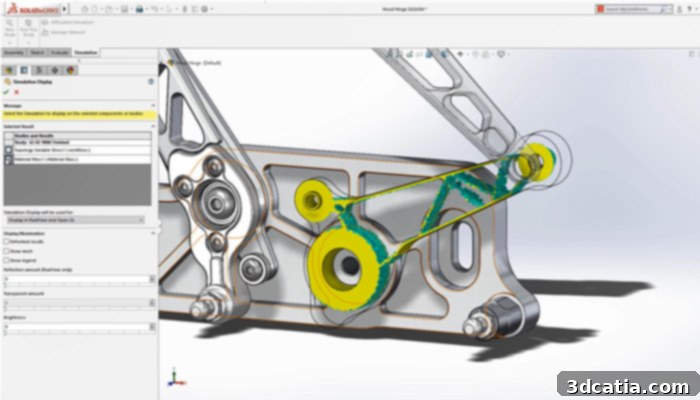
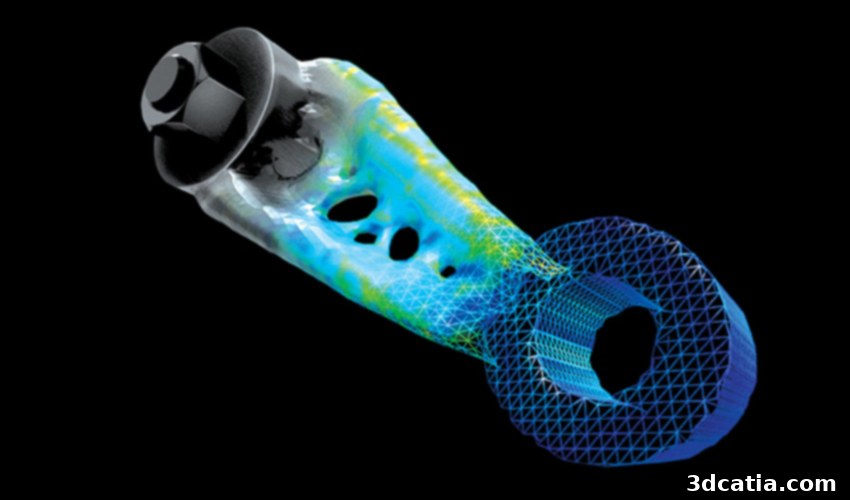
Topology Optimization, a powerful generative design technique for lightweighting and performance, is fully supported in SOLIDWORKS.
Recognizing these specialized requirements, SOLIDWORKS has proactively integrated advanced tools specifically designed to address the nuances of AM techniques. These include sophisticated features for generating optimal support structures, which are crucial for overhangs and complex geometries in 3D prints. The software also offers tools for analyzing and predicting potential distortions that can arise during the printing process, allowing designers to make compensatory adjustments to the model before printing, thereby minimizing print failures. These features are immensely important, especially when working with high-performance or expensive materials such as specialized polymers or metals, where a failed print can lead to significant material waste and substantial financial costs. Furthermore, the inherent design freedom offered by 3D printing technologies allows for the application of advanced generative design techniques within SOLIDWORKS, such as topology optimization. This revolutionary approach enables engineers to automatically generate optimized part geometries based on specified loads and constraints, resulting in lightweight, high-performance parts with minimal material consumption and often organic, intricate forms impossible to achieve with traditional manufacturing. You can find more comprehensive information on SOLIDWORKS’ capabilities for 3D printing and the future of additive manufacturing HERE.
Do you rely on SOLIDWORKS for your design and engineering projects? We’d love to hear about your experiences! Let us know in a comment below or connect with us on our LinkedIn, Facebook, and Twitter pages! Don’t forget to sign up for our free weekly newsletter here, for the latest 3D printing news straight to your inbox! You can also find all our engaging videos on our YouTube channel.