

Revolutionizing Healthcare: Copper3D’s 3D Printed Antimicrobial Device to Combat HIV Transmission in Breastfeeding
In a groundbreaking development poised to transform global health outcomes, Chilean manufacturer Copper3D has introduced an innovative device that leverages the power of advanced 3D printing technology to tackle a critical challenge: the transmission of HIV during breastfeeding. This pioneering invention takes the form of a meticulously designed 3D printed breast pump nozzle, fabricated from a revolutionary antimicrobial material. The young startup, already recognized for its significant contributions to medical additive manufacturing, is the originator of a unique filament known as PLACTIVE. This material imbues various common polymers, such as PLA and TPU, with potent antimicrobial properties through the strategic incorporation of copper nanoparticles. Should this small yet powerful device prove successful in its mission to significantly reduce or even eliminate HIV transmission through breast milk, its global impact could be monumental. This is especially pertinent given the sobering statistics: in 2017 alone, more than 430,000 children worldwide were affected by AIDS, resulting in a tragic 130,000 deaths. A substantial portion of these infections can be attributed to mother-to-child transmission, often occurring during breastfeeding in regions where access to alternatives or effective preventative measures is limited. Copper3D’s ingenious solution offers a crucial beacon of hope in this persistent global health crisis, demonstrating the transformative potential of 3D printing in the medical field.
Additive Manufacturing: A Catalyst for Medical Innovation and Global Health Solutions
The capabilities of additive manufacturing are increasingly being recognized as a powerful force for good in the medical sector. This technology is rapidly evolving beyond its initial applications in prototyping, becoming an indispensable tool in hospitals and research institutions worldwide. We are witnessing its deployment to solve complex surgical challenges, enabling the creation of patient-specific implants and intricate surgical guides that enhance precision and patient outcomes. Surgeons are undergoing highly effective training using detailed 3D printed anatomical models, allowing for risk-free practice of complex procedures and better preparation. Crucially, 3D printing is also instrumental in developing innovative solutions to combat very serious epidemics and diseases, a mission perfectly aligned with the genesis of Copper3D. The inherent flexibility, precision, and customization afforded by additive manufacturing make it an ideal choice for developing highly specialized medical devices, particularly in areas where traditional manufacturing methods are either impractical, too slow, or prohibitively expensive. From personalized prosthetics to advanced drug delivery systems, 3D printing is fundamentally reshaping how medical solutions are conceived, designed, and deployed.
The Genesis of Copper3D’s Antimicrobial Breakthrough: From Prosthetics to Public Health
Copper3D was founded with a clear vision: to leverage advanced manufacturing techniques for significant medical impact. The company’s journey began with the three visionary founders initially focusing their expertise on addressing the needs of amputees. Through their work, they uncovered a prevalent and often debilitating issue: approximately 40% of individuals who wore a prosthesis suffered from dermal disorders and infections. These issues were frequently attributed to the accumulation of bacteria within the medical devices themselves. This critical observation spurred their foundational innovation: the development of an intrinsically antibacterial material. Their solution involved creating a unique polymer infused with copper nanoparticles. This specialized material possesses the remarkable capability to eliminate a wide spectrum of dangerous viruses, bacteria, and fungi, all while maintaining complete safety for human contact. Following the successful acquisition of a patent for their pioneering antimicrobial technology, the founders turned their attention to an even broader and more widespread global health challenge: the Human Immunodeficiency Virus (HIV). This strategic pivot underscores their unwavering commitment to applying cutting-edge material science to address some of the world’s most urgent and pervasive health crises, demonstrating the versatile applications of their PLACTIVE filament technology.

UNAIDS estimates that there were 26,000 children between the ages of 0 and 14 with AIDS in 2018.
Targeting HIV Transmission During Breastfeeding: A Critical Global Health Challenge
The global burden of pediatric AIDS remains severely concentrated in specific geographical regions, with a staggering 90% of all children affected by AIDS residing in Africa. Tragically, many of these vulnerable children succumb to the disease at an alarmingly early age, often due to a critical lack of access to the life-saving care and antiretroviral treatments that are more readily available in other parts of the world. A primary and profoundly challenging route of infection for these infants is mother-to-child transmission, frequently occurring through breastfeeding. The statistics from leading health organizations paint a stark picture: UNAIDS estimated that in 2018, approximately 26,000 children between the ages of 0 and 14 were living with AIDS, with a significant number of new infections directly linked to the cessation of maternal HIV treatment and ongoing breastfeeding in at-risk populations. This represents a profound and complex global health challenge, underscoring the urgent and desperate need for innovative preventative measures that are both effective and accessible. It is in direct response to this immense public health imperative that the innovative startup Copper3D has meticulously designed its groundbreaking 3D printed breast pump nozzle. This medical device, crafted with their proprietary antibacterial and antiviral material, aims to provide a practical, non-invasive, and accessible solution to protect infants from HIV during the crucial period of breastfeeding, offering a vital layer of protection in communities where safe alternatives may not be readily available.
The Scientific Foundation: How Copper Inactivates the HIV Virus
Delving deeper into the scientific mechanisms underpinning this remarkable innovation, Dr. Claudio Soto, Copper3D’s esteemed Medical Director, provided valuable insights into the core principle of their technology. He elaborated, “The initial idea is based on a few available studies that establish that copper-based additives and filters can inactivate the HIV virus in a breast milk solution. They act specifically against protease (essential for viral replication) where copper ions non-specifically degrade the phospholipid plasma membrane of the virus and denature its nucleic acids.” This explanation highlights a sophisticated dual mechanism of action: the copper nanoparticles not only target crucial viral enzymes vital for replication, such as protease, but also physically compromise the very structural integrity of the virus by degrading its protective membrane and denaturing its genetic material. This multi-pronged attack is key to its efficacy. However, Dr. Soto also candidly acknowledged that several critical questions remain subject to ongoing rigorous research and validation. These include vital considerations such as optimal toxicity levels to ensure infant safety, potential nutritional degradation of breast milk, the precise time required for complete and consistent viral inactivation, and the most effective physical configuration (size and form) of these copper-infused filters within a device.
Armed with this foundational scientific understanding and a clear perspective on the remaining challenges, Copper3D embarked on a meticulous two-pronged research and development strategy. The first line of inquiry focused on experimentally validating the viral inactivation efficiency of their proprietary Copper3D PLACTIVE material itself. This involved exposing samples of HIV-infected breast milk directly to the material in controlled laboratory settings. The second, equally crucial objective, was to transition from material validation to practical application: designing an innovative object—specifically, the breast pump nozzle—that would serve as an effective mother-child interface. This device was engineered to be optimally designed to maximize the viral inactivation of HIV in contaminated breast milk as it passes through. This holistic approach ensures that both the underlying material science and the functional device design are synergistically optimized for real-world efficacy and safety, bringing a potential solution closer to those who need it most.
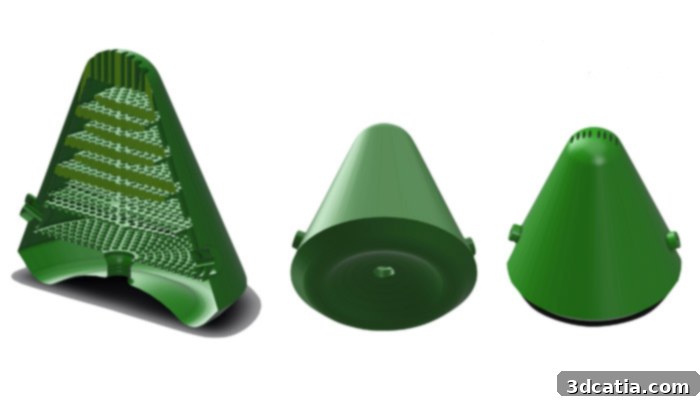
Copper3D is currently patent pending for its innovative technology. | Credits: Copper3D
Promising Research Findings and the Path Forward for the Antimicrobial Device
To thoroughly evaluate and validate these two critical research axes, Copper3D initiated a series of controlled experiments. They leveraged their additive manufacturing capabilities to 3D print several small containers or “cans” using their advanced copper-based PLACTIVE material. By carefully exposing only contaminated breast milk samples to the surfaces of these specialized containers, researchers observed profoundly encouraging preliminary results: a significant reduction in viral replication of up to 58.6% was achieved in a remarkably short timeframe of just 15 seconds. This compelling initial data strongly validated the team’s confidence in the inherent antiviral properties of their material and unequivocally reinforced their strategic decision to proceed with the advanced design and development of their now patent-pending medical device – the breast pump nozzle. The underlying hypothesis is clear and logical: by ingeniously increasing the effective contact surface area between the contaminated milk and the antimicrobial material within the internal architecture of the device, the viral inactivation rate is not only expected to be substantially higher but also potentially even faster. This critical optimization in the device’s design aims to maximize the efficacy observed in preliminary tests, bringing the solution closer to a real-world, life-saving application for countless infants.
Dr. Claudio Soto expressed considerable optimism regarding the broader implications and future potential of their groundbreaking work. He stated, “This new knowledge will enable the development of a whole new range of active medical devices and applications with incredible capabilities to interact with the environment, eliminate dangerous bacteria and viruses, and protect patients and users worldwide.” This powerful statement underscores the potential for Copper3D’s antimicrobial technology to extend far beyond HIV prevention, opening doors for a new generation of smart medical tools that can actively combat a wide array of pathogens in various healthcare settings. The critical second and final phase of this extensive study, which will further validate the breast pump nozzle’s efficacy, safety, and long-term viability in a more comprehensive and simulated clinical setting, is anticipated to be completed in the second quarter of 2020. The successful conclusion of this phase is paramount for obtaining the necessary regulatory approvals and ultimately bringing this transformative solution to the global communities that so desperately need it.
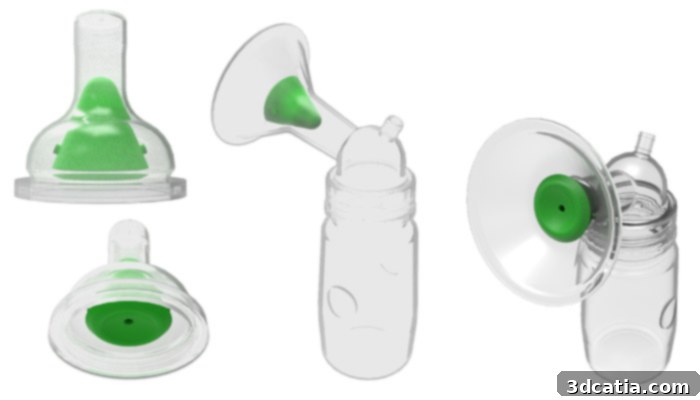
Credits: Copper3D
A Future of Hope: Reducing the Global Burden of AIDS and Beyond
The entire medical community, along with global health organizations and advocates, eagerly awaits the conclusive results of this pivotal second phase of Copper3D’s research. There is profound hope and anticipation that its findings will be unequivocally conclusive, thereby paving the way for the widespread production and deployment of this pioneering medical device. Such a breakthrough could lead to a significant and measurable reduction in the number of individuals newly affected by AIDS worldwide, particularly offering a vital lifeline to vulnerable populations and disadvantaged countries where access to advanced medical interventions and alternatives to breastfeeding are often severely limited. Copper3D’s unwavering commitment to harnessing the precision and customization of 3D printing, combined with innovative advanced material science, for the betterment of public health stands as a powerful example of how cutting-edge innovation can directly address some of the most critical humanitarian challenges facing our planet today.
This initiative highlights the growing importance of interdisciplinary approaches, seamlessly combining sophisticated biomaterials with advanced manufacturing techniques, to create solutions that were once confined to the realm of imagination. If proven successful and scalable, this innovative breast pump nozzle has the potential to become a standard tool in global efforts to prevent mother-to-child HIV transmission, significantly improving child health outcomes and thereby reducing the global burden of AIDS for future generations. Furthermore, the implications of Copper3D’s PLACTIVE material extend well beyond HIV; it demonstrates a viable and exciting pathway for utilizing antimicrobial 3D printed devices to combat a wide range of infectious diseases, offering personalized, effective, and accessible solutions precisely where they are needed most. This represents a paradigm shift in how we approach infectious disease prevention and patient protection, promising a healthier future through smart, additive manufacturing.
In the interim, for those interested in delving deeper into Copper3D’s groundbreaking work and exploring their diverse portfolio of antimicrobial innovations and medical solutions, more comprehensive information is readily available on their official website. Their ongoing research and development efforts continue to push the boundaries of what is possible in advanced material science, medical device manufacturing, and global public health.
What are your thoughts on this remarkable initiative and the immense potential of 3D printing to effectively address pressing global health crises? We genuinely encourage you to share your valuable perspectives and engage with our vibrant community by leaving a thoughtful comment below. You can also join the broader conversation and connect with us on our social media platforms, including our official Facebook and Twitter pages! Furthermore, to ensure you never miss out on the very latest advancements, crucial updates, and breaking news in the exciting world of additive manufacturing, we invite you to sign up for our free weekly Newsletter, delivering all the essential information straight to your inbox!