
3D Bioprinting Revolutionizes COVID-19 Vaccine and Drug Testing with CLECELL’s Advanced Epithelium Models
The global landscape dramatically shifted with the onset of the COVID-19 pandemic, initiating an unprecedented race to develop effective vaccines and treatments. In response to this critical need, the additive manufacturing industry, particularly 3D printing companies, swiftly mobilized, launching numerous initiatives to support healthcare professionals and patients. From rapidly producing essential personal protective equipment like masks to engineering crucial medical devices such as ventilators, 3D printing demonstrated its agility and adaptability in crisis. Amidst these efforts, a more profound scientific challenge emerged: accelerating the often protracted process of vaccine and drug testing. Traditional testing methodologies, while proven, are inherently time-consuming and labor-intensive, often requiring extensive animal trials and clinical studies that can span months or even years. Recognizing these limitations, CLECELL, a pioneering bioprinting company based in Korea, stepped forward with an innovative solution. Leveraging cutting-edge additive manufacturing technologies, CLECELL is developing a novel framework for vaccine and drug efficacy testing, promising to dramatically shorten development timelines and enhance research precision.
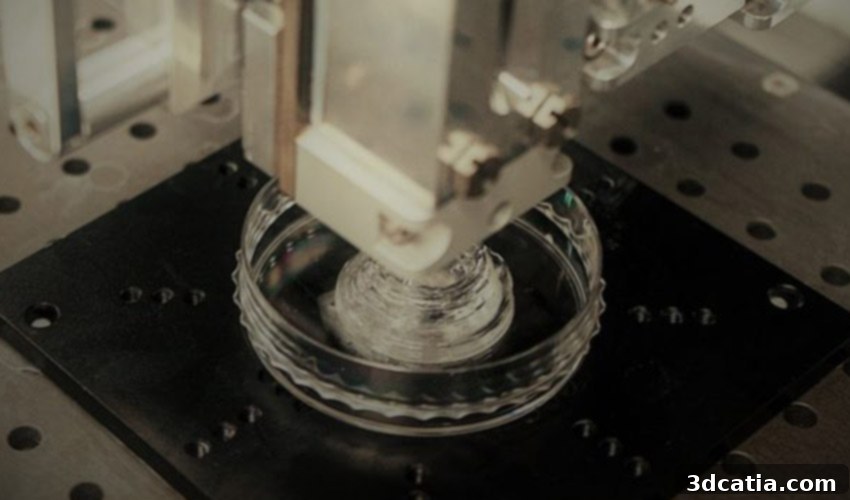
Founded in 2017, CLECELL has rapidly established itself at the forefront of bio-fabrication, with a dedicated focus on the research and development of artificial tissues. Their mission centers on creating advanced biomimetic models that more accurately replicate human physiology, thereby providing superior platforms for medical research. Earlier this year, the company achieved a significant milestone by successfully creating a sophisticated respiratory epithelium model. This groundbreaking achievement was realized using their proprietary 3D bioprinter, the U-FAB, complemented by other advanced bioprinting technologies. Epithelium, one of the four fundamental tissue types in the human body, forms protective linings on external and internal surfaces. It covers the outer surfaces of organs and blood vessels and lines the inner surfaces of various cavities within internal organs, playing crucial roles in protection, secretion, absorption, and sensation. What makes CLECELL’s bioprinted respiratory epithelium model particularly remarkable is its immense potential as a highly accurate testbed for the SARS-CoV-2 virus, the causative agent of the COVID-19 illness. Beyond its immediate application for COVID-19, this model is also expected to facilitate extensive research into the infection mechanisms and pathology of numerous other viruses and respiratory diseases, offering an invaluable tool for global virology and drug discovery efforts.
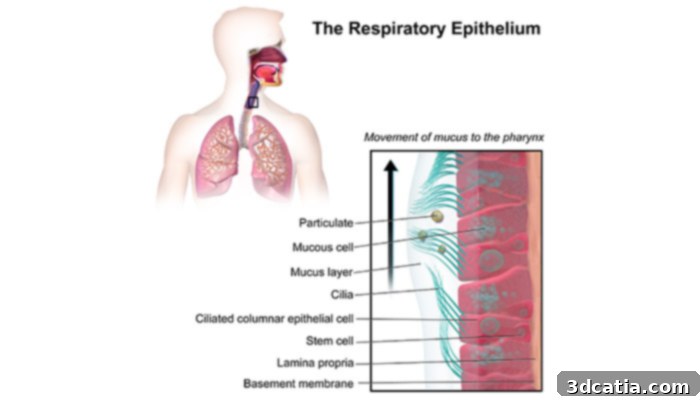
Image via CLECELL: A glimpse into the sophisticated bioprinting technology enabling next-generation virus research.
A Bioprinted Testbed for Accelerated COVID-19 Vaccine and Drug Development
The scientific community’s urgent pursuit of effective solutions for the COVID-19 pandemic led to a critical examination of existing research methodologies. In this context, CLECELL’s respiratory epithelium model for in vitro testing garnered significant attention from leading research institutions worldwide. Notably, a team of distinguished researchers at Harvard University’s Medical School recognized the profound potential of this innovative platform. In early April, CLECELL received a formal letter of correspondence from Dr. Choi-Fong Cho, an esteemed assistant professor of neurosurgery at Harvard Medical School, expressing keen interest in their bioprinted respiratory epithelium model. Dr. Cho’s research team was specifically focused on understanding the intricate effects of SARS-CoV-2 on the vascular structure and identifying the precise infection routes utilized by the virus to infiltrate human systems. The ability to create an in vitro testing platform that meticulously mimics human lung tissue, made possible by CLECELL’s advanced bioprinting technology, presented an opportunity to accelerate their critical investigations into the virus’s pathogenicity and potential therapeutic targets. This collaboration underscores the increasing recognition of bioprinting as a vital tool for biomedical research, offering an unprecedented level of control and biological relevance compared to traditional cell cultures or animal models.
The devastating toll of the COVID-19 pandemic, marked by an alarmingly high number of casualties, spurred a frenetic and urgent interest in finding a swift and effective cure. Medical experts and scientists globally began seeking alternate research methods that could bypass the inherent limitations and time constraints of contemporary and traditional vaccine development processes, which often require many months, if not years, to yield results. This intensified quest for speed and efficiency highlighted the transformative potential of advanced technologies like bioprinting. Recognizing this pressing global need, CLECELL has outlined ambitious plans to collaborate with researchers and pharmaceutical companies worldwide. Their goal is to offer their sophisticated bioprinted tissue models as invaluable testbeds for comprehensive virus research and the accelerated development of cures. Beyond simply studying virus infection, CLECELL’s platforms are designed to facilitate deeper investigations into crucial aspects such as drug delivery mechanisms, potential toxicity of new compounds, and the complex biological pathways of inflammation. By providing more physiologically relevant human tissue models, CLECELL aims to significantly reduce reliance on animal testing, lower development costs, and ultimately bring life-saving treatments to market faster, redefining the paradigm of preclinical research.
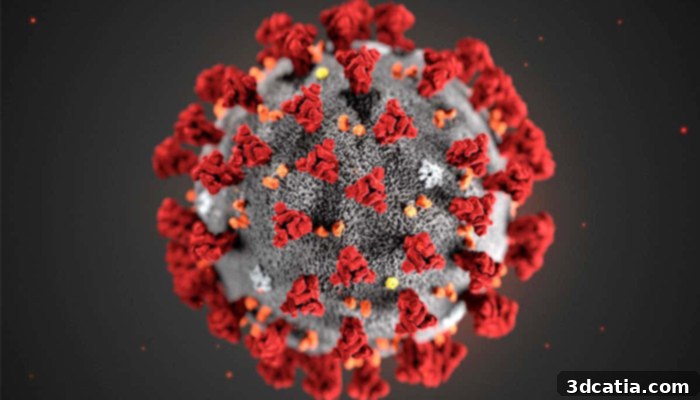
CLECELL’s bioprinted models allow for detailed research into SARS-CoV-2’s effect on vascular structure and infection pathways.
CLECELL’s commitment to advancing bioprinting technology extends beyond their U-FAB bioprinter, which has gained prominence for its role in creating the respiratory epithelium model. The company boasts a comprehensive portfolio of bioprinting platforms, each meticulously designed for specific applications in artificial tissue engineering and regenerative medicine. These include the U-Printer, dedicated to the broader development of artificial tissues and organs, and U-Skin, a specialized system engineered for reconstructing artificial human skin models. The U-Skin platform, for instance, holds immense promise for dermatological research, cosmetic product testing, and developing innovative solutions for burn victims or skin graft procedures. While the U-FAB solution’s full viability in significantly accelerating vaccine testing is still being evaluated and refined, initial feedback from the scientific community has been overwhelmingly positive. “The creation of precise artificial respiratory models through 3D bioprinting technology offers a potential alternative that could transform how we approach vaccine and drug development,” commented Young-Jae Cho, a distinguished professor at the Department of Pulmonology at Seoul National University Bundang Hospital, regarding CLECELL’s groundbreaking platform. This expert endorsement highlights the scientific community’s optimism about the transformative potential of bioprinting. The ability to simulate human physiological responses with unprecedented accuracy in a controlled laboratory environment represents a monumental leap forward for medical research. For more in-depth information about CLECELL’s innovative technologies and their ongoing research initiatives, you can visit their official website HERE.
The integration of 3D bioprinting into preclinical testing paradigms promises to usher in a new era of medical discovery. By creating more physiologically relevant models, CLECELL is not only addressing the immediate challenges of pandemics like COVID-19 but also laying the groundwork for more efficient, ethical, and effective drug discovery and development across a multitude of diseases. This innovative approach holds the key to faster breakthroughs, reducing the time from lab bench to patient bedside, and ultimately improving global health outcomes. The precision, control, and biological fidelity offered by bioprinted tissues enable researchers to gain deeper insights into disease mechanisms, test novel therapeutics with greater accuracy, and personalize medicine to an extent previously unimaginable. As the technology continues to mature, its impact on vaccine development, regenerative medicine, toxicology screening, and personalized drug testing is set to grow exponentially, cementing its role as an indispensable tool in the biomedical arsenal of the 21st century.
What are your thoughts on CLECELL’s cutting-edge bioprinting technology and its potential to revolutionize vaccine and drug testing? We invite you to share your insights and opinions in the comment section below, or engage with us on our social media channels, including our Facebook and Twitter pages! Your perspectives contribute to a vital dialogue about the future of medical innovation.