
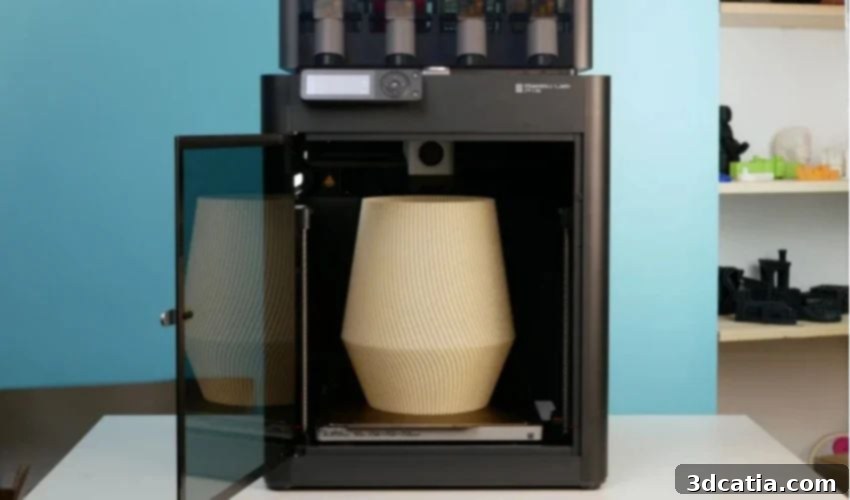
Bambu Lab Firmware Update Ignites Community Uproar: Balancing Security with Open-Source Ethos in 3D Printing
Since its inception, Bambu Lab has rapidly ascended to prominence within the competitive 3D printing market. Their success has largely been attributed to innovative products like the P1S, which have garnered widespread acclaim for their exceptional speed, unwavering reliability, and user-friendly operation. These qualities quickly established Bambu Lab as a disruptor, attracting a vast and enthusiastic user base eager for high-performance, accessible 3D printing technology. However, a recent series of firmware updates to these popular devices has triggered a significant and passionate backlash from their dedicated user community, highlighting a growing tension between manufacturer control and user autonomy in the evolving world of additive manufacturing.
Just last week, Bambu Lab formally announced and deployed an update to its printer firmware, a move that was met with anything but unanimous approval. Instead, it ignited a fervent debate that continues to ripple through the global 3D printing community. While the manufacturer staunchly asserts that these changes are vital for bolstering device security and safeguarding user data, a substantial segment of its user base perceives these modifications as a direct affront to the foundational principles of openness and freedom that have characterized the 3D printing ecosystem since its pioneering days. This perceived shift away from a collaborative, open-source model towards a more closed, controlled environment has sparked widespread concern regarding the future of user control and innovation within the Bambu Lab ecosystem.

Bambu Lab notified users of the firmware update via an official blog post, outlining the rationale behind the changes (Photo credit: Bambu Lab).
Navigating New Restrictions: Cloud Reliance and Local Access
The recent firmware update introduced by Bambu Lab has fundamentally altered how users interact with their 3D printers. A significant change mandates the use of a cloud-based application for initial device configuration and, in many cases, ongoing management. This heightened reliance on cloud connectivity has drawn sharp criticism from the broader maker community, a group historically devoted to the ethos of complete control over their tools and projects. For many, the necessity of a cloud intermediary runs contrary to the spirit of self-sufficiency and direct engagement that defines the 3D printing hobby.
Further compounding these concerns, the update also implemented new restrictions on direct local access to printers. While Bambu Lab did introduce a “developer mode” feature in an attempt to mollify community outcry, even this option still necessitates an initial connection and initialization via the cloud application. This requirement means that users cannot entirely escape the cloud dependency, even when aiming for a more independent, local operation. The community sees this as a fundamental shift, moving from direct local control to a system where manufacturer-controlled servers play an integral, often mandatory, role in the printer’s functionality. This paradigm shift raises questions about long-term usability, especially for users in environments with unreliable internet access or those simply preferring offline operation for privacy or security reasons.
Bambu Lab’s Stance: Security as the Driving Force
Bambu Lab has unequivocally stated that the new measures integrated into its firmware were meticulously designed to address what it describes as critical and escalating security vulnerabilities. The company revealed startling statistics, reporting up to 30 million unauthorized requests to its servers daily. These requests, it claims, were frequently accompanied by sophisticated and targeted cyberattacks, including Distributed Denial of Service (DDoS) attacks, aimed at disrupting services and potentially compromising user data. To proactively counter these relentless threats and fortify its infrastructure, the new firmware now incorporates robust authorization and authentication mechanisms across several pivotal printer functions. These crucial controls are designed to secure:
- Printer-Account Linking: The secure process of associating and dissociating 3D printers with individual user accounts, preventing unauthorized control.
- Remote Print Monitoring: Protected access to live video feeds, enabling users to securely monitor their ongoing print jobs from anywhere.
- Firmware Updates: Ensuring that only authenticated and verified firmware updates can be installed, safeguarding against malicious software injections.
- Print Job Initiation: Securely launching print jobs, whether through the cloud infrastructure for remote access or via local area network (LAN) mode for internal network operations.
- Critical Parameter Control: Regulating essential printer settings, including temperature controls for hotends and print beds, calibration routines, and precise printer movement commands, all protected against unauthorized manipulation.
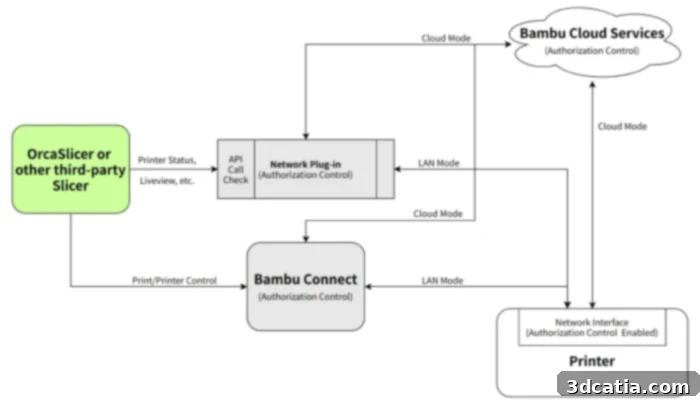
Bambu Lab provided a detailed graphic explaining the new workflow and security protocols implemented after the firmware update (Photo credit: Bambu Lab).
Beyond these access controls, the comprehensive security enhancements also encompass the implementation of end-to-end encryption protocols and rigorous code signing. These measures are pivotal in guaranteeing the utmost integrity and authenticity of all software updates, ensuring that only trusted and unaltered code runs on the devices. However, despite these seemingly robust technical justifications, these explanations have proven insufficient to quell the widespread apprehension among a community deeply rooted in the principles of autonomy, open-source development, and unfettered access to their tools. The historical attachment to these values within the 3D printing space means that even well-intentioned security updates can be viewed with skepticism if they impinge on perceived user freedoms.
Community Backlash: Innovation Versus Control
The immediate aftermath of the firmware update saw an explosion of critical commentary across various platforms, including online forums, dedicated user groups, and social media channels specifically tailored to 3D printing and, more particularly, to Bambu Lab products. Users’ primary concerns coalesced around four distinct, yet interconnected, issues, reflecting a deep-seated apprehension about the company’s strategic direction and its implications for the future of 3D printing.
1. A Departure from Open-Source Principles
The very foundation of modern 3D printing, exemplified by seminal initiatives like the RepRap project, has been built upon a philosophy of radical openness, collaborative sharing, and community-driven innovation. This ethos encouraged manufacturers, software developers, and individual users to collectively contribute to and benefit from open ecosystems, fostering rapid technological advancement. By introducing mandatory authorization mechanisms and imposing restrictions on the use of certain network protocols and local access, Bambu Lab is perceived by many as moving decisively away from these core tenets. This shift is seen as a betrayal of the collaborative spirit that has long defined the industry, potentially stifling the organic innovation that thrives in open environments and going against fundamental market values held dear by enthusiasts.
2. Limited Compatibility with Third-Party Software
The new security architecture includes restrictions that impact operations executed through third-party software. This development has triggered considerable anxiety among a significant portion of the user base who rely heavily on alternative slicers and specialized control solutions, such as the highly popular Orca Slicer or accessories like the Panda Touch. These tools often provide advanced functionalities, customized workflows, or enhanced user experiences not natively available in Bambu Lab’s proprietary software. While Bambu Lab has issued statements affirming its commitment to working with third-party developers to ensure ongoing compatibility, these assurances have largely failed to alleviate the simmering tensions. Users fear that the new restrictions could lead to diminished functionality, increased workflow complexities, or even outright incompatibility, effectively forcing them into a more confined software ecosystem.
3. Privacy and Remote Control Concerns
A profound level of distrust has emerged among some users, fueled by fears that the new cloud-dependent functionalities could introduce unforeseen risks related to personal data collection and remote corporate oversight. The mere idea that a printer could potentially be controlled or even disabled remotely by the company, even under the seemingly benign pretext of a necessary security update, generates significant apprehension. This concern extends to how user data—from print histories to operational telemetry—might be collected, stored, and utilized, especially without granular user consent or transparent privacy policies. For many, the increasing connectivity comes at the cost of personal digital sovereignty.
4. The Specter of a Closed Ecosystem
Concerns surrounding “vendor lock-in” have become a recurrent and potent theme in the ongoing debate. With this latest update, Bambu Lab faces accusations of deliberately promoting the exclusive use of its own proprietary products and services, thereby intentionally limiting interoperability with hardware and software from other manufacturers. Such a strategy, if true, could create a closed ecosystem where users are effectively trapped within a single brand’s offerings, facing difficulties when attempting to integrate third-party components or transition to competing platforms. This not only restricts user choice but also has broader implications for competition and innovation within the rapidly evolving 3D printing market.
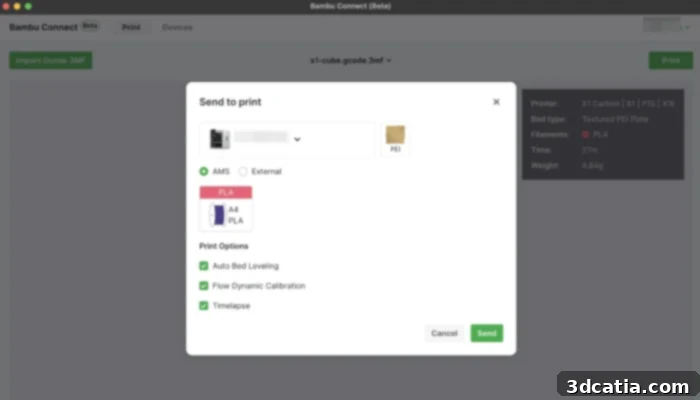
Bambu Lab Connect offers a centralized platform to initiate prints and effectively manage a farm of 3D printers, emphasizing cloud integration. (Photo credit: Bambu Lab)
Bambu Lab’s Response: An Attempt to Appease, But Does It Convince?
In response to the undeniable wave of criticism and widespread user dissatisfaction, Bambu Lab has made concerted efforts to de-escalate tensions by introducing several adjustments and announcing future changes to its operational strategy:
- Introduction of Developer Mode: Acknowledging the strong desire among some users to retain a higher degree of system openness and direct control, the company has pledged to implement a dedicated “developer mode.” This mode is intended to facilitate the continued use of older, more open network protocols, such as MQTT, which are crucial for advanced users integrating their printers with custom scripts or third-party automation tools. This aims to provide a pathway for users who value deep customization and integration.
- Clarification on LAN Mode: Bambu Lab has reiterated and clarified the continued availability of its “LAN mode.” The company emphasizes that this mode operates entirely offline, requiring neither an active internet connection nor a user account to initiate prints. This feature remains a viable option for users who prioritize privacy, seek to minimize cloud dependency, or operate in environments with limited internet access. However, the initial cloud connection requirement for setup still remains a point of contention for many.
- Denial of Rumors: The company has vehemently denied several pervasive rumors circulating within the community. Specifically, Bambu Lab has firmly rejected accusations that it possesses the capability or intention to remotely disable user printers. Furthermore, it has actively refuted allegations that it is imposing restrictions on the use of third-party filaments, a practice common with some proprietary systems and deeply unpopular among users who value material freedom.
Despite these deliberate efforts to address concerns and the undeniable popularity of Bambu Lab’s printer lineup, a significant segment of the user community remains profoundly skeptical. This skepticism is largely fueled by a critical clause found within Bambu Lab’s terms of use, which suggests that a printer could potentially prevent new prints until its firmware is updated. This implies a scenario where a printer might be rendered effectively unusable without adhering to mandatory updates, creating a dependency that many find unsettling. This inherent ambiguity in the terms continues to fuel apprehension, fostering a climate of mistrust regarding the true extent of user autonomy and long-term device control. The fear of “bricking” a device or losing functionality due to mandatory updates is a powerful deterrent for users accustomed to more open and permissive hardware ecosystems.
This ongoing controversy carries significant weight and could potentially prompt disaffected users to explore alternative 3D printer manufacturers. Competitors such as Creality, Anycubic, and Elegoo, known for their array of accessible and often more open-source friendly, low-cost printers, stand to gain. Additionally, Prusa Research, a company renowned for its steadfast commitment to open-source principles and community engagement, could emerge as an even more attractive option for users seeking robust, customizable, and truly autonomous 3D printing solutions.

Users openly express their dissatisfaction and debate the implications of the firmware update on Bambu Lab’s official Reddit page.
A Pivotal Moment for the 3D Printing Industry?
This contentious conflict between Bambu Lab and its user base profoundly illuminates a growing and increasingly critical tension within the broader 3D printing industry. It underscores the challenging quest for a delicate equilibrium between fostering technological innovation, maintaining corporate control over proprietary products, and safeguarding the fundamental freedoms and autonomy valued by users. As 3D printers become exponentially more connected, sophisticated, and integrated into complex networks, the inherent risks associated with cyberattacks, data breaches, and system vulnerabilities are undoubtedly on the rise. However, this raises a crucial, industry-defining question: Must the security solutions proposed and implemented by manufacturers inevitably come at the cost of restricting user freedom, customization capabilities, and the open-source spirit that has fueled the industry’s growth?
This situation bears an uncanny resemblance to another landmark controversy that shook the 3D printing world: the strategic shift undertaken by MakerBot. After pioneering the consumer open-source 3D printing movement, MakerBot made a controversial decision in 2012 to close off its ecosystem, transitioning away from its original open-source roots. This dramatic strategic about-turn sparked intense indignation and a profound sense of betrayal within the vibrant maker community, significantly eroding trust in the brand. While MakerBot’s decision was ostensibly aimed at better protecting its intellectual property and ensuring a more controlled, consistent user experience, it simultaneously marked a critical turning point in how the brand was perceived, tarnishing its legacy as a champion of the open-source movement.
In an industry where breakthrough innovation and rapid technological advancement often depend on open collaboration, shared knowledge, and community-driven development, Bambu Lab’s recent decisions may serve as a potent lesson, or even a stark warning, for other manufacturers grappling with similar dilemmas. The long-term implications of these strategic choices remain to be seen. Only time will tell whether Bambu Lab can successfully strengthen its security posture without irrevocably alienating its passionate and influential community, or if these actions will mark the unfortunate beginning of a lasting erosion of confidence in a brand that once promised boundless possibilities. The industry watches keenly, aware that the outcome could shape future trends in device ownership and user rights.

Bambu Lab’s anticipated developer mode aims to restore previously available functions and reduce reliance on cloud infrastructure, offering a compromise to advanced users.
For the immediate future, the 3D printing community remains vigilant, keenly awaiting tangible actions and concrete gestures from Bambu Lab that can genuinely restore trust and demonstrate a renewed commitment to user autonomy. Otherwise, a critical question lingers in the minds of many enthusiasts and industry observers: could the company’s current trajectory jeopardize its dominant position in an increasingly crowded and fiercely competitive market, potentially paving the way for rivals who champion greater openness?
What are your thoughts on Bambu Lab’s new firmware update and its implications for the 3D printing community? Share your perspective in a comment below or engage with us on our LinkedIn, Facebook, and Twitter pages! Don’t forget to sign up for our free weekly Newsletter here, ensuring you receive the very latest 3D printing news directly to your inbox every week! You can also find all our insightful videos and compelling content on our YouTube channel.