

Port Macquarie Students Champion Innovation: Crafting a Life-Changing 3D-Printed Prosthetic Hand
In a truly remarkable demonstration of ingenuity, compassion, and collaborative spirit, students from The Nature School in Port Macquarie, Australia, have harnessed the cutting-edge power of 3D printing technology to create a custom-fitted, functional prosthetic hand for their classmate, Lois Agnello. This inspiring project, which began with a simple, yet profound, question and blossomed into an international initiative, stands as a testament to the transformative potential of applied science and the profound impact young innovators can have on their communities and the world at large. By leveraging an open-source design generously provided by the Australian charity Free 3D Hands, these dedicated students embarked on an intensive, months-long journey of learning, hands-on experimentation, and meticulous refinement, ultimately delivering a personalized solution that not only exceeded all initial expectations but also ignited a deeper passion for technological altruism.
The genesis of this extraordinary undertaking lay with Lois Agnello herself. Born with only a partial left hand, Lois approached her science and technology teacher, Lloyd Godson, with a hopeful inquiry: could she, with the collective support and expertise of her classmates, construct a prosthetic device of her own? This pivotal question served as the catalyst for an unforgettable educational adventure, one that would deeply engage an entire class, seamlessly transforming abstract technological concepts into tangible, life-enhancing realities. Mr. Godson immediately recognized the immense educational opportunity this presented. He skillfully guided his students not merely through the mechanical intricacies of 3D printing, but also through the fundamental principles of design thinking, iterative problem-solving, and the ethical considerations inherent in applying advanced technology for human benefit.
Harnessing Open-Source Design and the Power of Community Collaboration
The project truly gained momentum and took flight with the strategic adoption of an open-source design from Free 3D Hands. This acclaimed charitable organization is widely recognized for its dedication to making accessible 3D printing solutions available to individuals with limb differences. This invaluable resource provided the students with a professional, tested blueprint, allowing them to channel their energy and creativity primarily into the practical challenges of fabrication and customization, rather than having to design a complex device entirely from scratch. For many of the students involved, this project marked their very first encounter with the fascinating world of 3D printing. Consequently, they faced and embraced a steep learning curve, quickly delving into the intricate details of printer operation, mastering specialized software, and understanding the nuanced properties of various printing materials, such as different types of filaments and their applications. Teacher Lloyd Godson aptly characterized this initial phase as a period of significant intellectual growth that simultaneously ignited their inherent creativity and fostered an unbreakable sense of teamwork and shared purpose amongst the students.
The unwavering commitment demonstrated by the students throughout this process was truly remarkable. Over three intensive months, they dedicated countless lunchtime sessions to the project, sacrificing personal time to further their collective goal. These were far from casual gatherings; they evolved into rigorous, hands-on workshops where students meticulously tested different filaments, experimented with various printing parameters, and continuously refined their techniques. They troubleshooted common issues such as optimizing layer adhesion, adjusting print speed, and ensuring structural integrity. The entire process was inherently iterative, demanding immense patience, exacting precision, and persistent problem-solving. Crucially, each failed print was not viewed as a setback, but rather as an invaluable opportunity for learning and refinement, guiding them ever closer to their ultimate objective. This immersive, hands-on experience provided an unparalleled education in rapid prototyping and iterative design, highly sought-after skills that are indispensable in modern engineering, product development, and technological innovation fields.
From Initial Prototype to Life-Changing Functionality
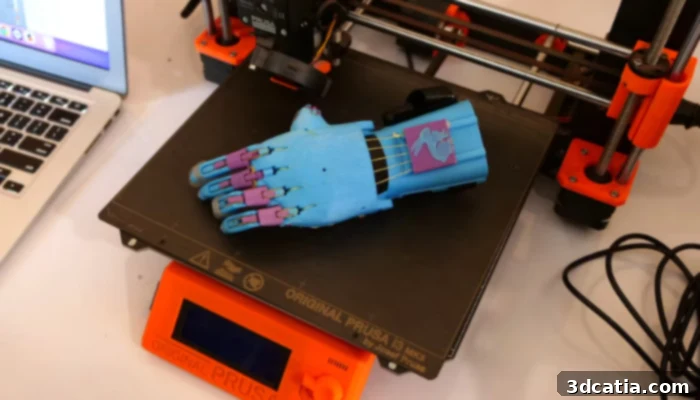
The culmination of these dedicated efforts was the successful printing of the first functional prototype of the prosthetic hand. This momentous occasion was met with palpable anticipation, especially from Lois herself. The innovative design ingeniously leveraged upper-arm movement, allowing Lois to intuitively control the prosthetic’s grip through her natural arm motions, creating a seamless and user-friendly experience. The moment of truth arrived as Lois tried on the hand, and to the delight of everyone involved, the device performed beyond all initial expectations, successfully enabling Lois to pick up and manipulate various objects. Her immediate reaction perfectly encapsulated the pure joy, surprise, and profound impact of the achievement: “I was like, oh my god this is crazy,” she exclaimed, visibly moved. “I didn’t even know if it would work.” This powerful emotional response underscored the immediate, tangible difference their hard work had made in their classmate’s life, serving as an incredibly potent motivator for the entire student team and reinforcing the real-world value of their project.
Continuous Improvement Through Dedicated Collaboration
Remarkably, the project did not conclude with the successful completion of the initial prototype. Driven by their initial success and an unwavering desire to achieve even greater functionality, comfort, and aesthetic appeal, the students enthusiastically continued their collaboration with Free 3D Hands. This ongoing partnership proved absolutely instrumental in continually refining the design, incorporating crucial user feedback directly from Lois to ensure maximum usability and comfort. To date, they have meticulously printed no fewer than three more versions of the prosthetic, with each successive iteration building upon the strengths of the last. These advanced versions have introduced enhanced ergonomics, significantly improved dexterity, and increased overall durability, making the hand even more practical for everyday use. Mat Bowtell, the visionary founder of Free 3D Hands, expressed immense admiration and commendation for the students’ unwavering enthusiasm and their proactive, invaluable involvement in brainstorming innovative new design features. Their dedication powerfully highlights the effectiveness of community-driven innovation and the profound synergy that can be achieved when experienced non-profit organizations collaborate with eager, talented young minds.
The group’s commitment to excellence and continuous improvement remains steadfast. Their overarching goal is to continually enhance the prosthetic, striving to make it even more functional, comfortable, and seamlessly integrated into Lois’s daily activities. This iterative approach to design and manufacturing is a fundamental cornerstone of modern product development and engineering, demonstrating that true innovation is rarely a one-off event, but rather a dynamic, continuous cycle of conceptualization, improvement, rigorous testing, and thoughtful adaptation. The students are not merely replicating an existing design; they are actively contributing to its ongoing evolution, pushing the very boundaries of what is possible with accessible 3D printed prosthetics, and inspiring future advancements in the field.
A Broader Vision: Printing for a Greater Good and Expanding Impact
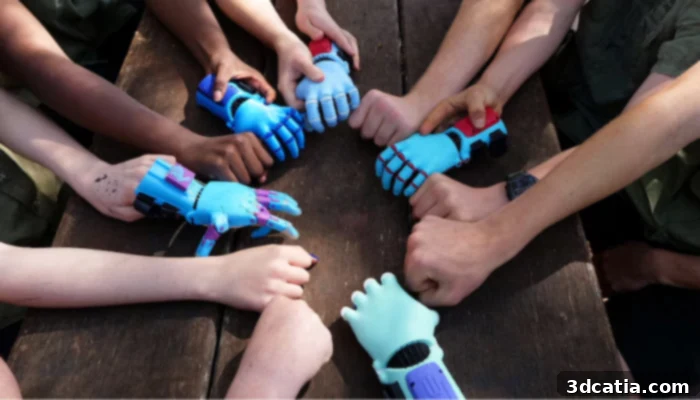
What initially began as a deeply personal project to address a specific need for a single classmate has rapidly expanded into a much larger, far more ambitious humanitarian mission. Inspired by their initial success and the profound positive change they brought to Lois’s life, Lois and her classmates now harbor expansive plans to print additional assistive hands for other children in need within their wider community and beyond. They intend to continue utilizing readily available open-source models and the valuable resources available at their school, effectively transforming their classroom into a dynamic hub for community-driven technological aid and innovation. This significant shift from a localized, personal project to a broader, altruistic initiative powerfully underscores the profound sense of social responsibility and compassionate altruism that has been carefully cultivated and nurtured within this exceptional student group.
The students’ own sentiments eloquently reflect this expanded vision and newfound purpose. Wren McDowell, one of the actively involved students, articulated the immense satisfaction derived from this impactful endeavor: “It makes me feel pretty good, because we are designing loads of different styles,” he shared, highlighting the creative aspect of their work. Classmate Joel Banwell echoed this sentiment, adding that witnessing Lois actively and joyfully using her 3D-printed hand provided an immense and ongoing motivation to further refine future designs and continuously explore new possibilities for functionality and comfort. This collective desire to make a tangible difference, fueled by direct experience and concrete results, serves as a powerful testament to the transformative educational impact of project-based learning and the innate compassion and capabilities of young people when they are given the appropriate tools, guidance, and opportunity to effect meaningful change.
Global Recognition and Inspiring Future Innovators
The pioneering efforts and inspiring achievements of these dedicated Port Macquarie students have not gone unnoticed on the world stage. Their remarkable accomplishment and the compelling story behind it have deservedly earned them international acclaim and recognition. The team has been selected for the prestigious honor of representing Australia at the renowned “Be the Change Youth Summit” in Tokyo later this year. This influential global platform will provide Lois Agnello with an unparalleled and invaluable opportunity to share her personal journey and the collective triumph of her classmates with an attentive audience of young innovators, aspiring leaders, and change-makers from across the globe. Her story is a powerful, resonant narrative of resilience, dedicated collaboration, and the practical, life-altering application of cutting-edge technology for profound social good.
At the upcoming summit, Lois harbors a profound hope to ignite a similar spark of innovation and empathy in others, inspiring young people worldwide to embark on their own impactful projects to create 3D-printed assistive devices and solutions within their respective local communities. As Lois articulates with hopeful anticipation, imagining the ripple effect of her presentation, “Other kids will be like, whoa, that’s cool, can I try that?” Her visionary outlook extends far beyond the physical confines of her school, aiming to foster and cultivate a global network of young makers, creators, and compassionate problem-solvers who are empowered to leverage readily available technology to effectively address real-world challenges. This commendable initiative perfectly embodies the core spirit and mission of the Be the Change Summit, empowering youth to become active agents of positive transformation through innovative, accessible solutions.
Beyond the Hand: Life Lessons in STEM, Empathy, and Global Citizenship
Beyond the immediate and impressive achievement of creating a functional 3D-printed prosthetic hand, this transformative project at The Nature School offers profound and invaluable lessons in the broader scope of modern education. It stands as a shining, exemplary model of highly effective STEM (Science, Technology, Engineering, and Mathematics) education in dynamic action. Through their direct involvement, students gained invaluable practical experience in engineering design principles, material science, digital fabrication techniques, and crucial project management skills – competencies that are not only highly relevant but also critically important in today’s rapidly evolving 21st-century workforce. However, the project’s profound impact extends far beyond mere technical proficiency alone.
This extensive endeavor meticulously cultivated essential soft skills, including enhanced teamwork, clear and effective communication, incisive critical thinking, and unwavering perseverance in the face of complex challenges and setbacks. Perhaps most importantly, this project fostered a deep, authentic sense of empathy and profound social responsibility among the students. By directly addressing a classmate’s personal need and witnessing the positive outcome of their efforts, the students gained an intrinsic understanding of the profound human impact of their work, thereby transforming abstract academic concepts into tangible, meaningful contributions to an individual’s life. This kind of authentic, project-based learning not only makes academic subjects significantly more engaging and relatable but also instills a powerful sense of purpose and empowers students to confidently see themselves as capable problem-solvers and compassionate global citizens who can genuinely make a difference. The Nature School’s pioneering initiative provides a powerful, replicable blueprint for how educational institutions worldwide can effectively integrate advanced technologies like 3D printing with real-world applications to inspire and cultivate a new generation of innovators dedicated to making a tangible, positive difference in the lives of others.
What are your thoughts on this inspiring student-led innovation and its global implications? We warmly invite you to share your comments and perspectives below or engage with us on our LinkedIn or Facebook pages! Furthermore, don’t miss out on the latest advancements and groundbreaking developments in additive manufacturing by signing up for our free weekly Newsletter to receive breaking 3D printing news directly to your inbox. You can also explore all our insightful videos and in-depth analyses on our dedicated YouTube channel. For those keen on more news, research, and cutting-edge developments in medical and dental 3D printing, please visit our comprehensive dedicated section HERE.
*All Photo Credits: The Australian Broadcasting Corporation