
Revolutionizing Healthcare: Arcomedlab’s Record-Breaking 3D Printed Cranial Implants and the Future of Personalized Medicine
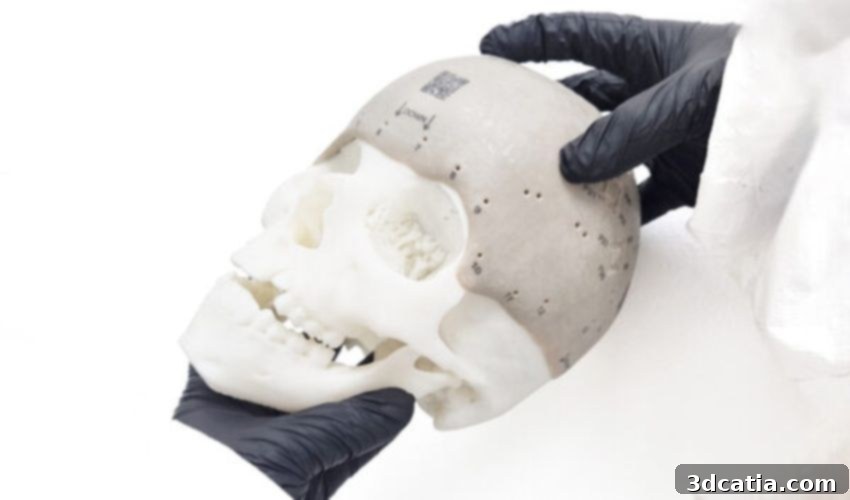
The integration of additive manufacturing, commonly known as 3D printing, into the medical field has ushered in a new era of possibilities, transforming patient care and pushing the boundaries of what’s achievable in healthcare. This groundbreaking technology has become instrumental in numerous projects designed to significantly enhance patients’ daily lives, and in many critical cases, even save them. A prime example of this innovation is the creation of custom implants precisely tailored to each individual’s unique anatomical requirements. Leading this charge is the pioneering startup Arcomedlab, which has recently achieved an extraordinary feat: the development of the world’s largest cranial implant produced using 3D printing. This monumental implant, as reported by the company, offers near-total coverage of the patient’s skull, extending from the supraorbital ridges down to the occipital bone. To delve deeper into Arcomedlab’s impactful work, their strategic utilization of advanced technology, and the far-reaching implications of this achievement for the entire healthcare sector, we had the privilege of engaging in an insightful discussion with their dedicated team.
An Introduction to Arcomedlab: Pioneers in Personalized Medical Implants
“My name is Ilan Rosenberg, and I am the CEO and founder of Arcomedlab,” he began, introducing himself. “My journey into specialized 3D printing, with a dedicated focus on healthcare applications, commenced in Florence, Italy, back in 2011. This extensive background laid the foundation for Arcomedlab, an American startup established in 2018. From our inception, we have positioned ourselves as global pioneers in developing advanced technology specifically for 3D printing custom-made synthetic bone implants. Our core innovation lies in utilizing PEEK (Polyetheretherketone) biopolymer, a material known for its superior biocompatibility and mechanical properties, to create implants that are perfectly adapted for each individual patient. To date, Arcomedlab proudly boasts a track record of more than 600 successfully installed implants across the Latin American region, significantly improving patient outcomes and quality of life.”
Rosenberg further elaborated on the company’s foundational ethos: “Arcomedlab was born from a profound mission: to democratize access to truly personalized medicine for thousands of patients worldwide, thereby enabling them to restore and profoundly improve their lives. Our commitment to excellence and patient safety is underscored by our ISO 13485 certification, a globally recognized standard for medical device quality management systems, and we are currently in the advanced stages of obtaining crucial FDA certification, which will further validate our compliance with the highest regulatory standards. Beyond conventional implants, Arcomedlab has already filed the world’s first patent for a custom-made cranial implant that possesses the revolutionary capability to store and locally release various drugs. This is achieved through an innovative drip mechanism activated solely by gravity, allowing for a precise and controlled interaction with the patient’s body. In essence, we are not merely talking about 3D printing, but advancing into the realm of 4D printing, where implants can dynamically respond and adapt post-implantation, offering unprecedented therapeutic possibilities.”
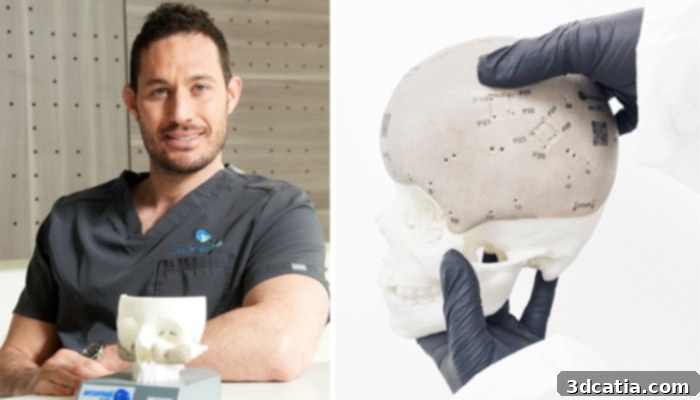
On the left, Ilan Roseberg. On the right, the 3D printed cranial implant.
Advanced 3D Printing Technologies Driving Clinical Success
When discussing the specific additive manufacturing technologies employed at Arcomedlab, Rosenberg clarified, “We primarily utilize FDM (Fused Deposition Modeling) and SLA (Stereolithography) technologies, both rigorously adapted for medical applications. These aren’t theoretical projects; rather, they underpin our extensive portfolio of over 600 successful real clinical cases. FDM is particularly crucial for manufacturing our PEEK-based implants, as it allows for the precise layering of this robust biopolymer to create highly durable and biocompatible structures. SLA, on the other hand, is excellent for producing high-resolution anatomical models and surgical guides, invaluable tools for pre-operative planning.”
He continued, “Our primary focus has been on complex skull reconstructions, also known as cranioplasties, where we provide custom-made implants that perfectly restore the skull’s integrity and aesthetic. We also specialize in intricate facial reconstructions, addressing both functional and cosmetic needs with equally precise custom implants. Beyond the direct fabrication of implants, both FDM and SLA technologies play a vital role in facilitating comprehensive surgical planning. By creating exact replicas of patient anatomy, surgeons can meticulously plan procedures, identify potential challenges, and rehearse complex steps beforehand. This meticulous preparation leads to optimized surgical times, efficient use of resources, and significantly less invasive surgeries for patients, resulting in faster recovery times and better overall outcomes. The ability to visualize and manipulate a patient’s unique anatomy in 3D prior to surgery is a transformative advantage, reducing risks and enhancing precision in every procedure we support.”
The World’s Largest Cranial Implant: A Defining Milestone for Medical Technology
The achievement of creating the world’s largest cranial implant represents far more than just a record for Arcomedlab; it signifies a monumental leap forward for 3D printing technology within the medical sector. “This is an extremely important milestone,” Rosenberg affirmed with conviction, “as it unequivocally opens the doors to an entirely new future for 3D printing technology, particularly when focused on medicine and overall health. Historically, surgeons faced immense challenges in addressing extensive cranial defects, often requiring multiple surgeries or less ideal solutions. This record-breaking implant demonstrates that we now possess the capability to reconstruct almost a complete skull, offering comprehensive solutions for patients of all ages, from infants to the elderly, who suffer from severe trauma, congenital anomalies, or post-oncological resection defects. The precision and coverage offered by such a large, custom-fit implant dramatically improve both functional protection and aesthetic outcomes, significantly enhancing a patient’s quality of life and psychological well-being.”
He further elaborated on the expanding horizons: “Furthermore, this accomplishment underscores our advanced capabilities in reconstructing any complex bone structure of the face, a notoriously challenging area due to its intricate geometry and functional importance. The success with large-scale cranial implants directly informs and accelerates our current initiatives to manufacture custom-made bone implants for various other critical parts of the human body. We are actively developing personalized solutions for areas such as the hip, spine, sternum, and a multitude of extremities. This expansion promises to revolutionize orthopedic and reconstructive surgery by providing perfectly matched implants that reduce surgical complexity, minimize recovery times, and improve long-term functional results for patients facing a diverse range of musculoskeletal conditions. The precision and adaptability of 3D printing ensure that each implant is not just a replacement but a bespoke integration designed for optimal patient health.”
The Transformative Future of 3D Printing in Healthcare
Looking ahead, Ilan Rosenberg articulated a visionary perspective on the role of 3D printing in healthcare: “3D printing is unequivocally the fourth industrial revolution, and nowhere is its transformative potential more evident than in the health field. It is a profound game-changer, unlocking an endless array of possibilities to rehabilitate, restore, reconstruct, plan, and fundamentally improve the millions of surgical interventions performed globally every single day. This paradigm shift is driven by the ability to offer truly personalized solutions, moving away from a one-size-fits-all approach to highly specific, patient-centric treatments. For patients, this translates directly into a better quality of life, often through less invasive procedures, reduced recovery times, and superior long-term functional and aesthetic outcomes. For specialists and doctors, it streamlines complex surgical procedures, enhances precision, and provides invaluable tools for pre-operative planning and intra-operative guidance, ultimately optimizing the entire surgical workflow.”
Rosenberg concluded with an even more futuristic outlook: “I firmly believe that this is merely the beginning of what 3D printing can achieve in medicine. The current advancements, while remarkable, are just scratching the surface. In the near future, we anticipate moving beyond synthetic materials to develop even more personalized and biologically integrated implants. We will soon be printing with living stem cells, for instance, which will enable the creation of implants that are not only perfectly matched to the patient’s anatomy but also capable of achieving ideal bioactivation for specific therapeutic purposes within the patient’s body. This visionary concept of bioprinting and regenerative medicine holds the promise of developing implants that can actively participate in tissue regeneration, release growth factors, or even integrate seamlessly with the body’s natural healing processes, truly pushing the boundaries of what reconstructive and restorative medicine can accomplish. This convergence of advanced manufacturing with biotechnological innovation is set to redefine healthcare entirely, making treatments more effective, less intrusive, and profoundly tailored to each individual’s biological needs.”
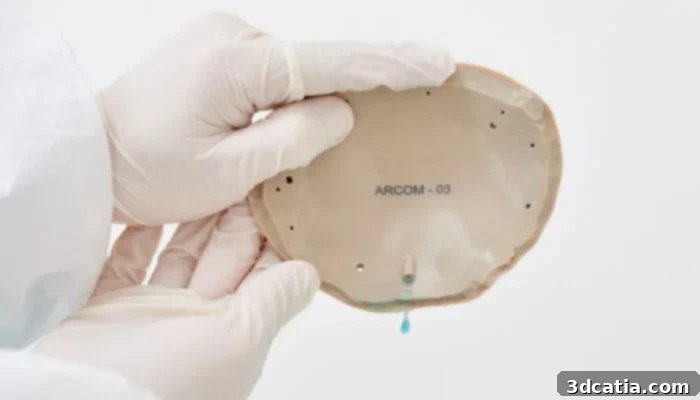
3D printing has great potential in the medical sector.
What are your thoughts on Arcomedlab’s pioneering use of 3D printing and its profound impact on personalized medicine? Share your insights and comments below, or engage with us on our Linkedin, Facebook, and Twitter pages! Don’t miss out on the latest advancements and news in the 3D printing industry – sign up for our free weekly Newsletter here, delivered directly to your inbox. You can also explore all our informative videos on our dedicated YouTube channel for more in-depth content.
*All photo credits: Arcomedlab