
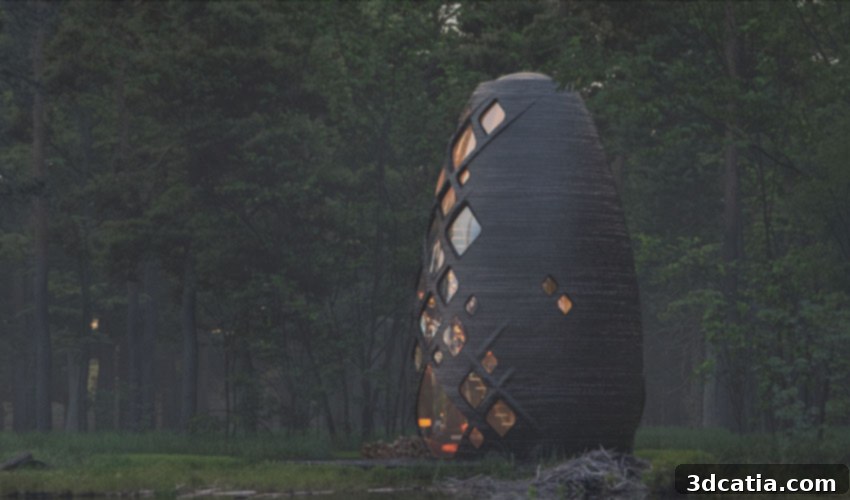
TERA: Pioneering Sustainable 3D Printed Eco-Habitats for Earth and Beyond
The future of sustainable living and construction is being redefined by AI SpaceFactory’s groundbreaking TERA project. Unveiled to the public in May, TERA stands as a visionary eco-habitat, meticulously designed to showcase a radically sustainable approach to building on Earth. What makes TERA truly revolutionary is its lineage: it was engineered using advanced space-driven technology, initially developed and validated for NASA’s ambitious extraterrestrial missions. Furthermore, TERA is entirely 3D printed from recycled materials, specifically chosen for their ability to be composted and reintegrated into the soil at the conclusion of their lifecycle. This complete circularity directly addresses one of the most pressing challenges of our time. AI SpaceFactory’s core mission with TERA is ambitious yet critical: to fundamentally disrupt the conventional building industry’s colossal material waste problem and, in doing so, cultivate a vibrant market for an entirely new paradigm of sustainable construction.
Visitors and eco-enthusiasts alike have been able to experience firsthand what it’s like to inhabit TERA since March 2020. This unique eco-dwelling is strategically situated amidst the serene woods of upstate New York, offering breathtaking views along the majestic Hudson River. It is available for nightly stays, providing an immersive glimpse into a truly sustainable future. The architectural marvel of TERA draws directly from the same innovative design principles and production methodologies that AI SpaceFactory perfected for fostering sustainable life on Mars. Its structure is composed of a proprietary 3D printed biopolymer basalt composite – an advanced material ingeniously derived from renewable agricultural crops like corn and sugar cane. This material isn’t just eco-friendly; it has been rigorously tested and validated by NASA, proving to be an astonishing 50% stronger and significantly more durable than traditional concrete, all while boasting superior thermal performance. This blend of strength, sustainability, and renewable sourcing unequivocally positions it as a far more sustainable alternative to both concrete and steel, the pillars of conventional construction.
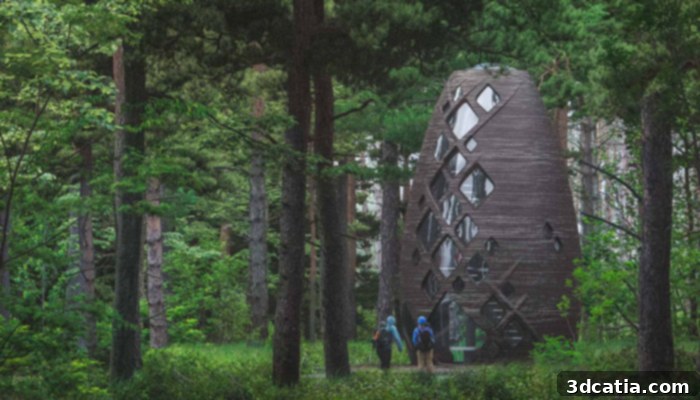
TERA is now located in the woods of upstate New York along the Hudson River and available on a nightly basis from March 2020
TERA: A Blueprint for Sustainable Living and Future Construction
The genesis of TERA, this visionary eco-habitat, is deeply rooted in AI SpaceFactory’s prior groundbreaking achievements. Its conceptualization did not arise in isolation but emerged directly from the triumphant success of MARSHA during the prestigious NASA Centennial Challenge. In this demanding competition, AI SpaceFactory had previously developed MARSHA, a remarkable 15-foot-tall 3D printed Mars habitat prototype. This prototype, constructed from the same innovative recyclable biopolymer and basalt fiber composite, demonstrated an unprecedented level of structural integrity and habitability, ultimately earning the company first place from NASA. The immense potential exhibited by this extraterrestrial technology made it abundantly clear that similar applications could revolutionize construction practices here on Earth. As David Malott, CEO and Chief Architect of AI SpaceFactory, eloquently stated: “In awarding AI SpaceFactory first place, NASA encouraged us to find applications for our technology on Earth, even as we continue to pursue its use in Space.” This endorsement from NASA served as a powerful catalyst, redirecting AI SpaceFactory’s innovative spirit towards addressing global sustainability challenges while simultaneously advancing space exploration. The development of MARSHA laid the essential groundwork, proving the viability and superior performance of their unique 3D printing and material science for creating robust, environmentally conscious structures adaptable to any environment.
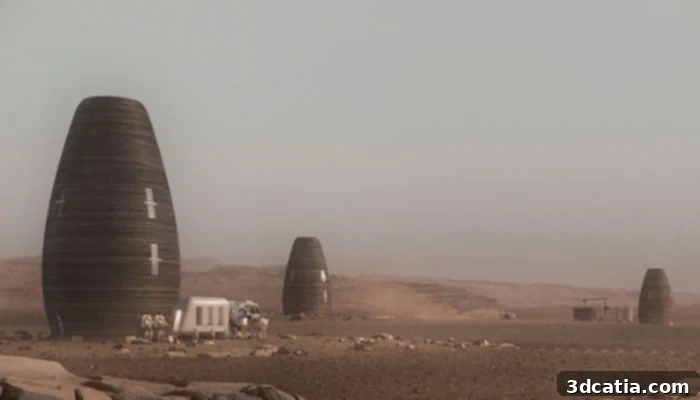
The MARSHA was recycled and reprinted into TERA | Credits: AI BuildFactory
Following its successful demonstration, MARSHA underwent a transformative process: it was meticulously destroyed by NASA and then, remarkably, entirely 3D reprinted into TERA. This act of recycling and repurposing served as a profoundly impactful demonstration, unequivocally proving the feasibility of completely deconstructing and reforming a 3D printed structure into a brand-new one. This circular economy model sends an incredibly vital message to the global construction industry, which currently faces immense environmental pressures. In the context of prevailing construction methods, concrete stands as the world’s second most consumed resource, trailing only water. Its production is notoriously energy-intensive, accounting for a significant percentage of global CO2 emissions – nearly 5% of all human-generated carbon emissions annually. The environmental toll extends beyond production, as a dishearteningly small fraction, approximately 20%, of concrete is ever recycled. The vast majority ends up in landfills, contributing to enormous waste streams and land degradation. With an ever-increasing global population and relentless urbanization, the demand for new construction is projected to accelerate, meaning the environmental challenges associated with conventional building materials will only intensify. TERA, through its innovative material science and circular construction methodology, offers a tangible, scalable solution to this escalating problem, demonstrating that high-performance, durable, and aesthetically pleasing structures can be built with minimal environmental footprint. It champions a future where buildings are not just erected but are sustainably managed from cradle to cradle, fundamentally altering our relationship with the built environment.
The vision of AI SpaceFactory extends far beyond terrestrial applications. As articulated on their official website, there is a clear symbiotic relationship between their Earth-based projects and their extraterrestrial ambitions: “Just like Marsha informed TERA, all the knowledge we gain from TERA will feed back into our extraterrestrial design and construction – ultimately enabling human life on Mars.” This statement encapsulates the company’s holistic approach, wherein advancements in sustainable Earth architecture directly contribute to the intricate challenges of establishing human settlements on other planets. Every lesson learned, every material innovation perfected, and every structural design optimized for TERA provides invaluable insights and refined methodologies that can be scaled and adapted for the harsh and unforgiving environments of Mars. This continuous feedback loop ensures that AI SpaceFactory’s pioneering work on Earth not only addresses urgent environmental needs but also systematically propels humanity closer to its ultimate goal of becoming a multi-planetary species. It’s a testament to how cutting-edge technology, born from the demands of space exploration, can be successfully repatriated to benefit our planet, creating a more sustainable future for all. For those eager to delve deeper into AI SpaceFactory’s innovative projects and their overarching vision, comprehensive information is available HERE.
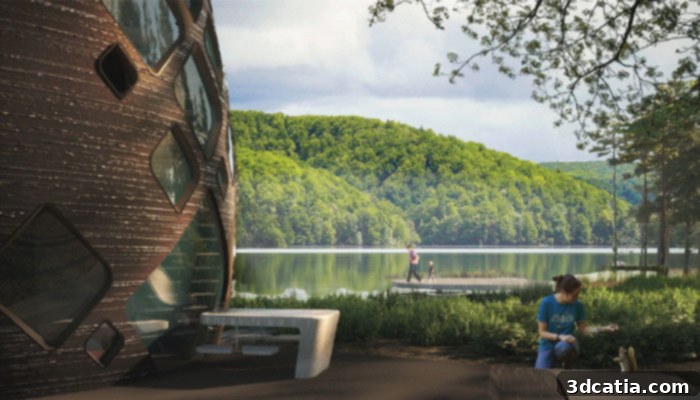
Image via AI SpaceFactory
What are your thoughts on TERA and its potential to revolutionize both sustainable living on Earth and future space exploration? We invite you to share your insights and comments below, or engage with our community on our vibrant Facebook and Twitter pages! Don’t miss out on the latest advancements and news in the world of 3D printing; sign up for our free weekly Newsletter, delivering all the essential updates straight to your inbox!