
Transforming Healthcare: Expert 3D Pioneers Training in AI and Additive Manufacturing for Personalized Patient Care
Additive manufacturing, commonly known as 3D printing, is undeniably playing an increasingly pivotal role across diverse medical fields. From complex surgical procedures and advanced dentistry to custom orthopaedics and prosthetics, its transformative potential is reshaping patient care. This groundbreaking technology offers unparalleled benefits to medical professionals, enabling them to create highly customized devices and solutions that precisely adapt to individual patient anatomies and needs. This leads to treatment plans that are as close as possible to the patient’s unique requirements, significantly improving outcomes and quality of life. A shining example of this successful integration in the medical sector is the private hospital Sant Joan de Déu in Spain. Recognizing the growing importance of these technologies, the hospital has launched an innovative training program called Expert 3D, specifically designed for doctors, engineers, and technicians. This comprehensive program uniquely combines the power of artificial intelligence (AI) with the practical applications of 3D printing. Expert 3D aims to equip healthcare professionals and individuals with technical expertise who are keen on health-related applications, with essential skills in additive manufacturing, cutting-edge medical imaging techniques, and artificial intelligence. The ultimate goal is to empower these professionals to fully leverage the synergistic benefits offered by these advanced technologies, fostering a new era of personalized and precise medicine.
The Expert 3D training curriculum is meticulously structured to offer a robust blend of theoretical knowledge and practical application, ensuring participants gain a holistic understanding of the subject matter. It encompasses several theoretical modules, each dedicated to critical aspects of modern healthcare innovation. These include in-depth studies on innovation in image processing and health, the foundational principles and advanced techniques of medical imaging, comprehensive modules on 3D imaging and printing technologies, the revolutionary field of bioprinting, the intricacies of artificial intelligence in healthcare, and the specialized domain of radiomics. The core objective of this extensive program is to furnish healthcare professionals involved in the post-processing of medical imaging – whether operating within clinical settings, health administration, or engineering disciplines – with the necessary theoretical foundations and practical skills. This empowers them to effectively utilize novel imaging technologies for enhanced diagnostic purposes, treatment planning, and surgical intervention. The genesis of this course stems from a critical observation, as articulated by the Expert 3D development team: “We identified a significant and growing gap between technical knowledge and clinical understanding, and a similar divide between various medical specialties and engineering disciplines. This highlighted an urgent need for new educational programs capable of cultivating mixed profiles – professionals who possess a deep understanding of both sides, who can adeptly analyze complex problems, and who are skilled in developing innovative solutions to existing, and indeed often unmet, needs using these burgeoning technologies. We found that existing solutions did not adequately address this crucial requirement, which ultimately led to the creation of Expert 3D.” This initiative seeks to bridge these knowledge divides, creating a new generation of healthcare innovators.
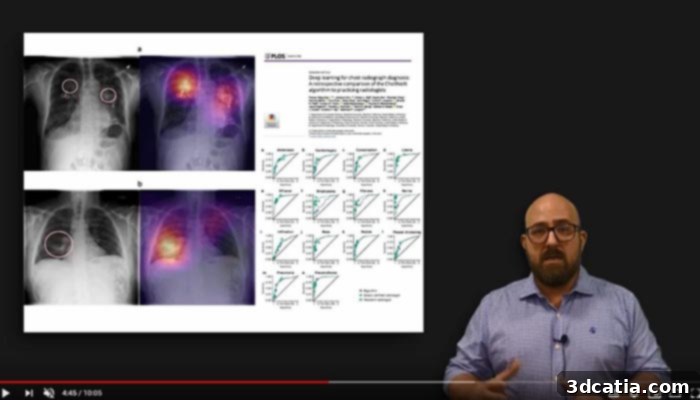
The Expert 3D training program provides comprehensive online resources, making advanced learning accessible to a global audience.
The Indispensable Role of Advanced Technologies in Medical Imaging and Beyond
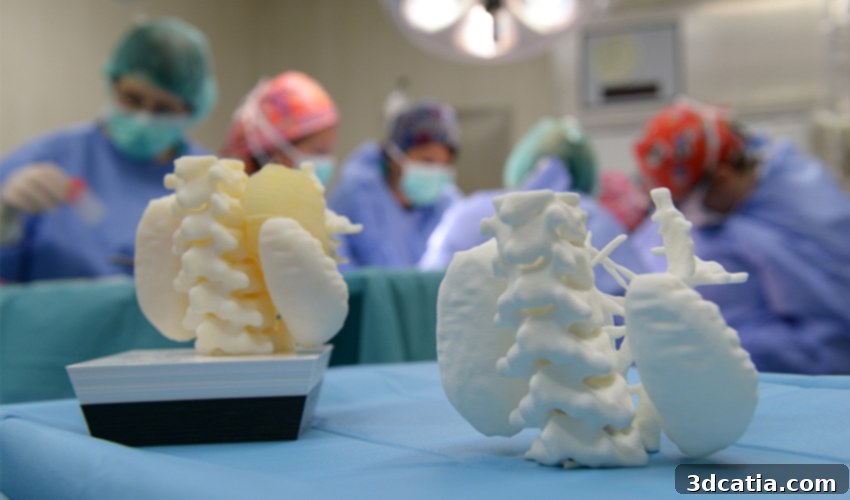
In contemporary medicine, an array of sophisticated medical imaging techniques allows practitioners to visualize a patient’s internal anatomy, metabolic processes, and physiological functions with remarkable detail. These techniques, including MRI, CT, and ultrasound, provide invaluable diagnostic information. However, the advent and rapid rise of additive manufacturing within the medical sector have marked a profound paradigm shift, effectively translating the virtual insights derived from imaging into tangible physical reality. This evolution means that it is now routinely possible to 3D print an exact anatomical model of a patient’s organ or affected area well in advance of entering the operating theatre. This allows surgeons to meticulously plan and rehearse complex procedures, significantly reducing risks and operative times. Furthermore, it’s possible to create a physical, life-size model of a tumor or a congenital defect, providing a tactile understanding that goes beyond what a 2D image can convey. This facilitates better communication with patients and multidisciplinary teams. Beyond planning, 3D printing enables the design and fabrication of patient-specific surgical guides, jigs, and instruments, enhancing precision and safety during interventions. These modern technologies are not only more precise and realistic but also offer a vastly improved three-dimensional visualization of the intricate structures within the human body. The cumulative effect is a reduction in surgery times, an improvement in the overall safety and efficacy of procedures, and a significant enhancement in the learning phase for new medical students, who can practice on highly realistic models before working with actual patients.
Despite these revolutionary advancements, a considerable number of doctors and healthcare professionals have yet to fully grasp or integrate the expansive potential of additive manufacturing into their daily practice. Its impact extends far beyond just improving operating room efficiency and surgery planning. Other groundbreaking innovations are continually being developed, profoundly influencing the broader medical imaging and health ecosystem. The fields of bioprinting and the quantitative analysis of imaging data stand as compelling examples of this ongoing evolution. Bioprinting, for instance, holds the promise of creating functional tissues and organs, thereby addressing critical shortages for transplantation and enabling personalized drug testing. Quantitative imaging involves extracting measurable data from medical images, allowing for objective assessment of disease progression, treatment response, and personalized risk stratification. Arnau Valls, one of the visionary directors of Expert 3D, emphasizes the urgency of skill development in this rapidly changing landscape: “The professionals of the future will undoubtedly require an entirely new set of skills to adapt effectively to the evolving working models within healthcare. Continuous education will not just be beneficial but absolutely essential throughout our careers. This is precisely why it is paramount to understand the vast possibilities that these new technologies offer and, critically, how to proficiently utilize them.” Expert 3D aims to bridge this knowledge gap, preparing the healthcare workforce for the demands and opportunities of tomorrow.
The training curriculum offered by Expert 3D also places a significant emphasis on artificial intelligence, a technology that, while slower to be universally adopted in hospital environments, is proving to be immensely valuable for automating complex processes and enhancing decision-making. AI’s capabilities range from advanced image analysis and anomaly detection to predictive analytics and operational optimization. By strategically combining the analytical power of AI with the fabrication capabilities of 3D printing, medical professionals will unlock unprecedented opportunities. This synergy will enable them to provide superior patient care, rapidly devise and implement highly tailor-made treatment solutions, and significantly improve diagnostic accuracy across a wide spectrum of medical conditions. For example, AI can analyze vast datasets of medical images to identify subtle patterns indicative of disease, then translate these insights into a precise 3D model that can be printed for surgical planning or patient education. This integrated approach not only streamlines workflows but also empowers clinicians with enhanced tools to tackle challenging medical cases, ultimately leading to more effective, efficient, and personalized healthcare delivery.
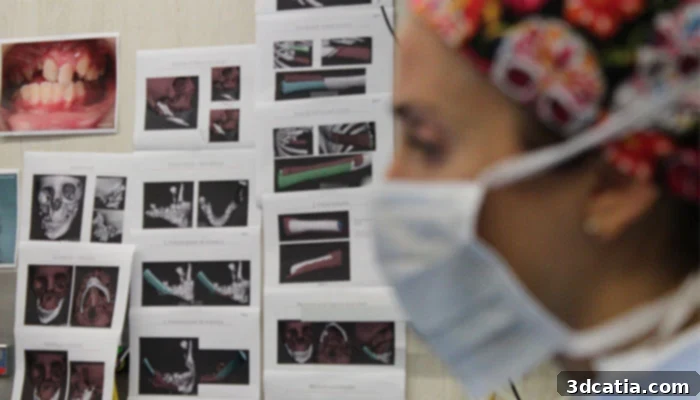
3D printing empowers health professionals by providing tangible models and custom tools, enhancing their day-to-day diagnostic and operational capabilities.
Expert 3D: Paving the Way for Truly Personalized Medicine
Expert 3D is a pioneering initiative that is actively facilitating the crucial transition towards a future dominated by truly personalized medicine. The journey began impressively in 2019, with the inaugural training sessions launched simultaneously in Barcelona, Spain, and Coimbra, Portugal. These initial courses attracted a diverse cohort of 65 students representing 11 different nationalities, predominantly comprising highly skilled engineers, seasoned surgeons, and dedicated imaging professionals. The tangible results from these early cohorts have already been nothing short of remarkable, underscoring the immediate applicability and profound impact of the Expert 3D curriculum. Several of the participating students’ home institutions have swiftly begun to integrate and apply their newly acquired knowledge and skills. A notable success story comes from Coimbra Hospital (CHUC), where former students have successfully planned and executed their first cases of complex 3D oncological surgery, leveraging the power of patient-specific models and guides to achieve superior outcomes. Similarly, in Uruguay, a dedicated 3D unit has been established within the radiology service of a local hospital, directly as a result of the expertise gained through Expert 3D training, enhancing their diagnostic and interventional capabilities. Arnau Valls further elaborates on the program’s inclusive approach: “Our student profile is intentionally transversal; the Expert 3D training is meticulously designed to appeal to and benefit all types of clinical professionals – including radiologists, imaging technicians, surgeons, and general practitioners who have a keen interest in these transformative technologies. Simultaneously, it caters to a wide array of technical specialists such as biomedical engineers, industrial engineers, telecommunications engineers, bioinformaticians, and designers. All are united by their interest in the clinical application of additive manufacturing, artificial intelligence, and radiomics. Our primary objectives are clear: to ensure participants not only understand the profound added value of these advanced technologies but are also able to directly apply this knowledge in the daily operations of hospitals or research centers immediately upon course completion.” This hands-on, impact-driven approach guarantees that Expert 3D graduates are not just knowledgeable but are active agents of change in modern healthcare.
By nurturing a deeper and more integrated understanding of advanced medical imaging, alongside the practical applications of 3D printing and AI, Expert 3D is set to profoundly improve tomorrow’s medicine. This forward-thinking approach propels healthcare towards an era of hyper-customization in both medical treatments and device fabrication, ensuring that every intervention is perfectly tailored to the individual patient. The program’s global reach is expanding, with upcoming courses scheduled to be held in vibrant cities such as Barcelona, Naples, Heidelberg, and Riga. These next sessions are slated to commence in just a few days and will be delivered virtually, maintaining the highly effective format of combining theoretical instruction with intensive practical classes. Through the analysis of real-world clinical cases and hands-on experience with advanced post-processing tools of the image of the future, students will gain invaluable skills directly applicable to their professional environments. For those interested in joining this revolutionary program, comprehensive information regarding all upcoming dates and pricing details can be found by clicking right HERE. Don’t miss the opportunity to be at the forefront of medical innovation.
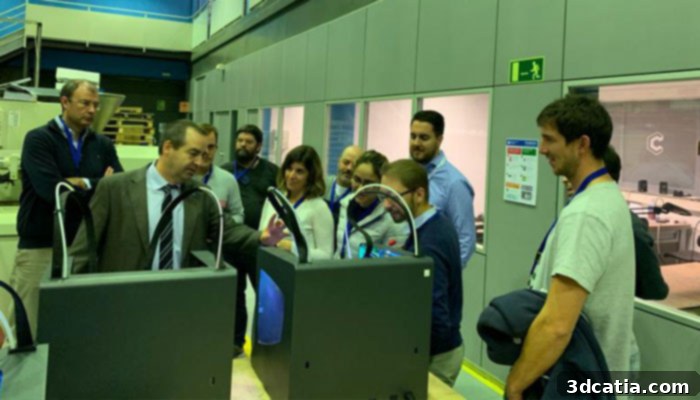
The initial Expert 3D courses successfully brought together 65 students from diverse global backgrounds, fostering a vibrant, international community dedicated to advancing medical technology.
Are you considering signing up for Expert 3D’s transformative online course? We’d love to hear your thoughts! Share your plans or questions in a comment down below or engage with us on our Facebook and Twitter pages. To stay informed about all the latest developments in 3D printing and medical technology, don’t forget to subscribe to our free weekly Newsletter, delivering cutting-edge news directly to your inbox!