
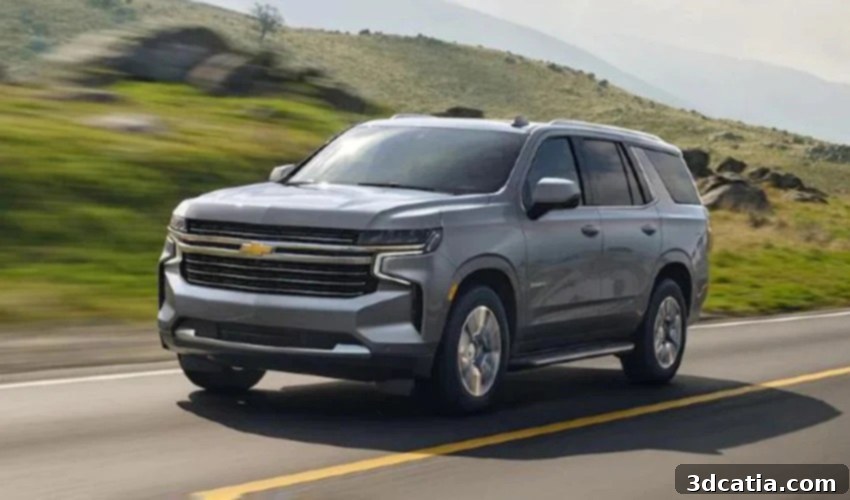
General Motors Drives Innovation: How 3D Printing Revolutionized Chevrolet Tahoe Production Amidst Supply Chain Challenges
In today’s interconnected global economy, industries worldwide are grappling with unprecedented supply chain disruptions. The automotive sector, a colossal engine of manufacturing and logistics, has been particularly vulnerable, experiencing significant setbacks due to delays in crucial component deliveries. These challenges have forced car manufacturers to rethink traditional production paradigms, seeking agile and resilient solutions to maintain output and meet market demands. Among the leading global players, the American automotive giant General Motors (GM) recently navigated a critical juncture during the production and delivery of its highly anticipated 2022 Chevrolet Tahoe. Faced with the urgent need for additional components and stalled conventional production lines due to persistent delivery issues, GM engineers strategically pivoted towards advanced manufacturing technologies, specifically leveraging the power of 3D printing to overcome these formidable production hurdles and prevent a major delay.
General Motors is no stranger to the transformative potential of additive manufacturing. Their strategic vision materialized into a significant investment back in 2020, leading to the establishment of the state-of-the-art Additive Industrialization Center (AIC). Spanning an impressive area of approximately 15,000 square feet, the AIC represents GM’s commitment to integrating advanced manufacturing into its core operations. While the AIC itself has been operational for only about two years, GM’s engagement with additive manufacturing technologies extends much further, demonstrating a reliance on this innovative approach for over a decade within its automotive production processes. This long-standing commitment underscores a proactive strategy to embrace technological advancements, positioning additive manufacturing not merely as a supplementary tool, but as an essential, integral component of their future production ecosystem. The AIC serves as a hub for innovation, enabling rapid prototyping, creating specialized tooling, and increasingly, producing functional end-use parts, showcasing the versatility and strategic importance of 3D printing in modern automotive development.
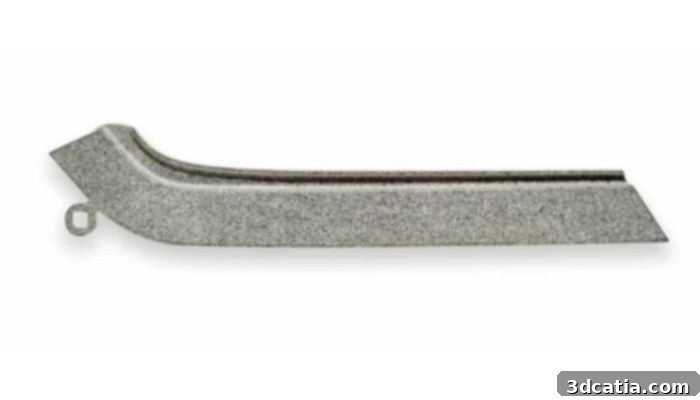
Thanks to additive manufacturing, a significant production delay was prevented (photo credits: General Motors)
Preventing a Massive Delay: The Chevrolet Tahoe’s Critical Component
The specific challenge for General Motors arose during the final stages of the 2022 Chevrolet Tahoe’s production cycle. Engineers identified a need for last-minute design modifications, which, while minor in concept, proved critical in execution. These changes necessitated an entirely new part: a spoiler closeout seal. This seal was designed to precisely close a gap at the rear of the large SUV, a seemingly small detail that is nonetheless vital for aesthetics, aerodynamics, and structural integrity. The conventional manufacturing route for such a component would typically involve injection molding. However, the development and production of the specialized tooling required for injection molding would have consumed an unacceptably long period, directly translating into a delay of approximately 30,000 vehicles. Such a significant postponement would have far-reaching financial implications for GM, impacting sales targets, customer satisfaction, and overall market standing. The urgency of the situation demanded an alternative solution that could deliver high-quality parts with unprecedented speed and precision, bypassing the bottlenecks inherent in traditional manufacturing processes.
To circumvent this looming crisis and avoid the costly delay, General Motors forged a strategic partnership with GKN Additive Forecast 3D, a recognized leader in industrial-scale additive manufacturing. This collaboration brought together GM’s engineering expertise and GKN’s specialized capabilities in rapid, high-volume 3D printing. The chosen technology for this demanding task was HP Multi Jet Fusion (MJF) 3D printing, renowned for its ability to produce functional, high-resolution parts at speed and scale. GKN Additive Forecast 3D was tasked with printing the essential spoiler closeout seals, ensuring that every component met GM’s stringent quality and performance criteria. A crucial requirement was the use of a flexible material, essential for the seal’s function and durability, which HP MJF technology could accommodate effectively. This choice not only addressed the material specifications but also leveraged the inherent design freedom of additive manufacturing to create the precise geometries required for the new seal. Following the printing process, the parts underwent a critical post-processing step: vapor smoothing. This advanced finishing technique significantly enhanced the surface quality of the 3D-printed components, improving their aesthetic appearance, tactile feel, and overall performance by reducing porosity and increasing material density at the surface. This meticulous approach ensured that the additively manufactured seals were indistinguishable from, and in some aspects superior to, traditionally manufactured parts.
The scale of this undertaking was substantial. Each Chevrolet Tahoe vehicle required two of these specialized seals, meaning a total of 60,000 additively manufactured parts were produced and subsequently integrated into the SUVs. This impressive volume, coupled with the critical timeline, truly showcased the power of industrial 3D printing. GKN Additive Forecast 3D successfully delivered all 60,000 components in a remarkable five weeks – an astounding feat considering it was half the time estimated for conventional injection molding, as highlighted in an article by CNET. This dramatic reduction in lead time allowed GM to maintain its production schedule and avoid the costly delay of 30,000 vehicles. While the automotive industry has increasingly adopted additive manufacturing for various applications, this project stands out as one of the largest and most critical deployments of 3D printing for direct vehicle production components to date, setting a new benchmark for what is achievable with the technology.
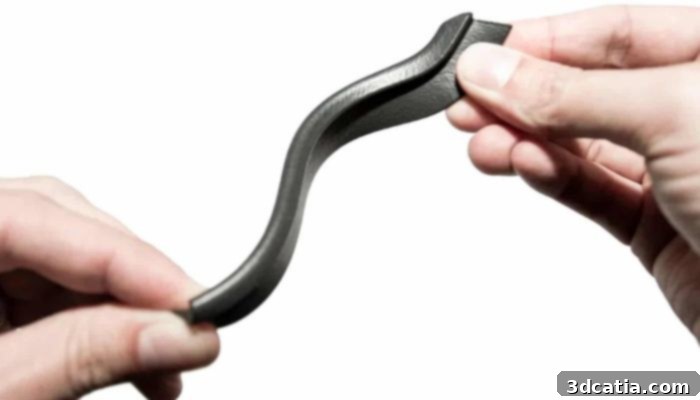
The 3D printed part received advanced vapor smoothing for superior finish and performance (photo credits: General Motors)
Shaping the Future of Automotive Manufacturing: Agility and Resilience
This successful implementation by General Motors represents more than just a quick fix for a supply chain problem; it signifies a pivotal moment in the evolution of automotive manufacturing. The ability of 3D printing to rapidly produce complex, high-quality, end-use parts at scale offers unparalleled agility, allowing manufacturers to respond to design changes, market demands, and unforeseen disruptions with unprecedented speed. This case study with the Chevrolet Tahoe demonstrates how additive manufacturing can transform the entire production lifecycle, from rapid prototyping and tooling creation to on-demand production of critical components. It enables a shift towards more resilient supply chains, reducing reliance on single-source suppliers or complex global logistics that are susceptible to disruptions.
Furthermore, the integration of 3D printing opens doors to significant innovation in vehicle design. Engineers are no longer constrained by the limitations of traditional manufacturing methods, allowing for the creation of lighter, stronger, and more functionally integrated parts. This design freedom can lead to improvements in vehicle performance, fuel efficiency, and overall sustainability. The precision and customization offered by additive manufacturing also pave the way for mass personalization, where components can be tailored to specific vehicle models or even individual customer preferences without incurring prohibitive costs or lead times. As General Motors continues to expand the capabilities of its Additive Industrialization Center, we can anticipate a future where 3D printing becomes even more embedded in every stage of vehicle development and production, from concept to assembly line. This paradigm shift will not only enhance operational efficiency but also foster a culture of continuous innovation within the automotive sector.
What are your thoughts on General Motors’ successful deployment of 3D printing to solve this critical production challenge? We invite you to share your insights and comments below, or connect with us on our LinkedIn, Facebook, and Twitter pages! To stay informed with the very latest in 3D printing news and innovations, don’t forget to sign up for our free weekly Newsletter here, delivered straight to your inbox! You can also explore all our compelling videos on our dedicated YouTube channel for deeper dives into additive manufacturing.