
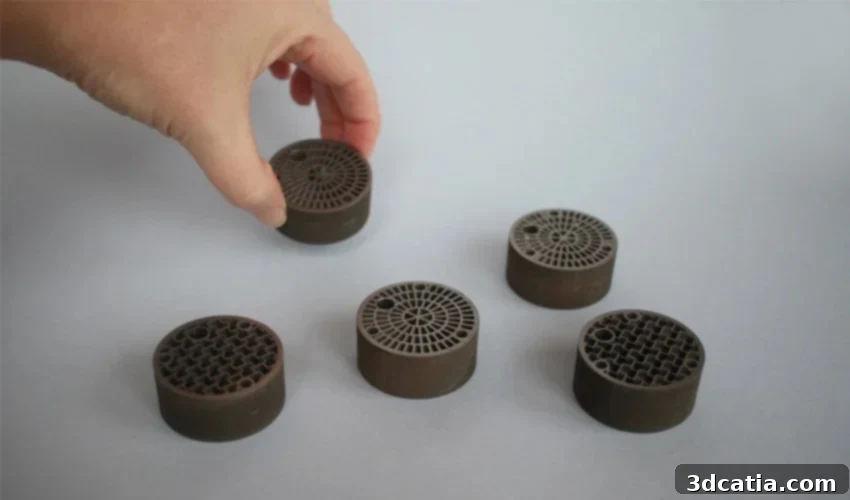
AddCat: Revolutionizing Air Purification with Advanced Metal 3D Printing and Catalytic Oxidation
In a world increasingly concerned with environmental sustainability and industrial impact, Dutch startup AddCat emerges as a frontrunner, ingeniously combining metal additive manufacturing with catalytic oxidation to develop groundbreaking reactors for air purification. This innovative approach aims to significantly reduce harmful industrial emissions and mitigate pervasive unpleasant odors often associated with critical sectors such as biogas plants, agricultural manure processing, and wastewater treatment facilities. By leveraging the unparalleled capabilities of metal 3D printing, AddCat engineers structures that boast exceptional thermal conductivity, vastly increased surface area, and remarkably low pressure drop. These features are crucial for enhancing catalytic reactions, enabling their pioneering reactors to eliminate over 95% of the odorous components from polluted air. We recently had the opportunity to engage with key members of the AddCat team to delve deeper into their transformative use of additive manufacturing and explore the profound benefits it brings to industrial air quality management.
The Genesis of Innovation: Introducing AddCat and Its Connection to 3D Printing
AddCat was formally established in December 2019, building upon a visionary patent conceived by two of its distinguished founders, Marc Evers and John Geus. Marc Evers, a prolific serial entrepreneur with extensive experience in the high-tech engineering, construction, and manufacturing industries, recognized the transformative potential of 3D metal printing early in its development. At the time of AddCat’s conception, he also owned a service company specializing in 3D metal printing, giving him unique insights into the technology’s practical applications. Complementing this expertise was John Geus, a highly respected and seasoned technical leader renowned for his contributions to the development of catalyst technologies.
The synergy between these two distinct backgrounds proved fertile ground for innovation. Their initial exchanges of ideas led Marc to propose the application of 3D printing’s free-form design capabilities to industrial processes. John immediately grasped the immense advantages this could offer for various industrial catalytic applications, particularly in terms of process intensification. This intellectual collaboration quickly blossomed, culminating in the filing of several patents that detailed novel methods for intensifying catalytic processes through advanced manufacturing. In the years that followed, Jacco Hoekstra, then a PhD student under John Geus’s mentorship, dedicated his free time to conducting initial tests and proving the fundamental principles of their concept. Gerald van Santen, who worked alongside Marc as a project manager, was also assigned to a small project where Jacco was involved. This confluence of expertise and dedication ultimately paved the way for the official launch of AddCat, with the clear mission to bring this groundbreaking innovation to the global air purification market. The company’s foundation is a testament to the power of interdisciplinary collaboration, merging cutting-edge additive manufacturing with advanced catalytic science to tackle pressing environmental challenges.
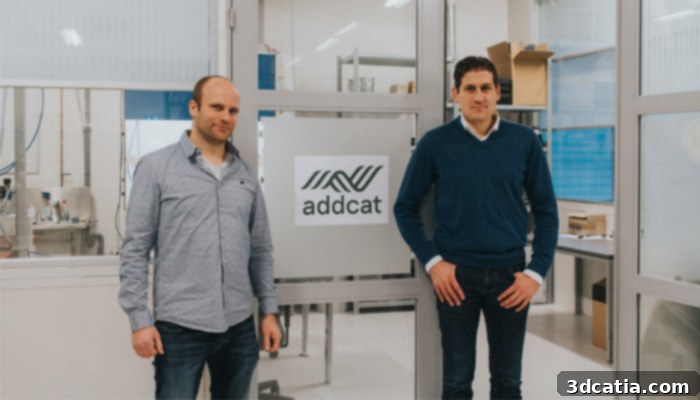
On the left, Jacco Hoekstra, the CTO of AddCat; on the right, Gerald van Santen, CEO of the startup (photo credits: AddCat)
AddCat’s Core Mission: A World Free of Harmful Emissions
AddCat’s driving mission is profoundly impactful: to provide industries grappling with malodorous and harmful emissions a reliable, low-maintenance, and high-performance air purification technology. This commitment is coupled with the promise of low Capital Expenditure (CAPEX) and Operational Expenditure (OPEX), making advanced environmental solutions accessible and economically viable for a broader range of businesses. At its heart, AddCat envisions a future where harmful and unpleasant industrial emissions are a relic of the past, fostering a harmonious coexistence between industrial operations and the surrounding communities.
The company prides itself on its robust in-house scientific expertise and its unwavering commitment to product leadership. Through a smart and sophisticated combination of state-of-the-art 3D metal printing and advanced oxidation catalysis, AddCat continuously strives to deliver tangible and promised benefits to its clients. Their unique reactor technology is a testament to this ethos, offering a highly performant and cost-competitive air purification solution. This innovation is designed not only to meet regulatory requirements but also to unlock the full potential of end-users, such as enhancing efficiency and sustainability in industrial biogas production plants.
AddCat’s primary focus is on the abatement of some of the most challenging and prevalent industrial pollutants: methane, ammonia, and a wide spectrum of malodorous emissions. Methane is a potent greenhouse gas, contributing significantly to climate change. Ammonia, while essential in many industrial processes, can be highly toxic and contribute to air pollution and acidification. Malodorous emissions, often a complex cocktail of volatile organic compounds, directly impact community quality of life and can lead to significant public health concerns and regulatory scrutiny. By targeting these specific pollutants with high efficiency, AddCat is making a substantial contribution to cleaner air, reduced environmental impact, and improved public health, positioning itself as a vital partner for industries seeking to enhance their environmental stewardship and operational sustainability.
The Additive Advantage: Why 3D Printing is Critical for AddCat’s Reactors
AddCat’s strategic decision to embrace metal 3D printing is fundamental to the very existence and superior performance of its catalytic reactors. This advanced manufacturing technique provides capabilities that are simply unattainable through conventional subtractive manufacturing methods. The core advantage lies in the ability to produce catalytic reactors with extraordinarily complex aerodynamic designs. Unlike traditional manufacturing, 3D printing allows for the creation of intricate internal geometries, micro-channels, and lattice structures that are essential for optimizing the catalytic process.
These complex designs are engineered to achieve highly optimized flow patterns within the reactor. This means that polluted air is guided precisely over the catalyst surface, ensuring an intimate and prolonged contact between the pollutants and the active catalytic material. Such precise flow control minimizes dead zones, reduces bypass, and maximizes reaction efficiency, leading to higher purification rates. The finesse required to create these internal structures – with their exact wall thicknesses, intricate pathways, and high surface area-to-volume ratios – cannot be achieved by machining or casting. Traditional methods fail to deliver the intricate details and seamless integration of features necessary for AddCat’s groundbreaking reactor designs. This inherent limitation of conventional techniques highlights 3D printing as not merely an alternative, but an indispensable tool for AddCat’s innovation.
The adoption of metal 3D printing grants AddCat a significant competitive advantage. Firstly, it enables the creation of smaller reactor sizes without compromising, and often enhancing, performance. This reduction in footprint is crucial for industries with limited space or those looking to integrate purification systems more efficiently. Secondly, it offers superior process control, particularly concerning thermal management. Additive manufacturing allows for the precise design of structures that optimize thermal conductivity and heat exchange within the reactor. In catalytic oxidation, maintaining optimal temperatures is vital for reaction efficiency and catalyst longevity. 3D printing facilitates the integration of advanced heat exchange features directly into the reactor walls, ensuring rapid heat transfer and uniform temperature distribution.
Finally, the ability to create highly efficient designs means less expensive catalyst material is required to achieve the desired purification rates. By maximizing the active surface area and optimizing contact, AddCat’s reactors achieve potent catalytic activity with a reduced amount of precious catalyst. This optimization translates directly into lower manufacturing costs and improved economic viability for end-users. In essence, 3D metal printing enables a strong “process intensification,” meaning more output is achieved with less input – a smaller footprint, lower material consumption, enhanced efficiency, and superior control, all contributing to a more sustainable and cost-effective air purification solution.
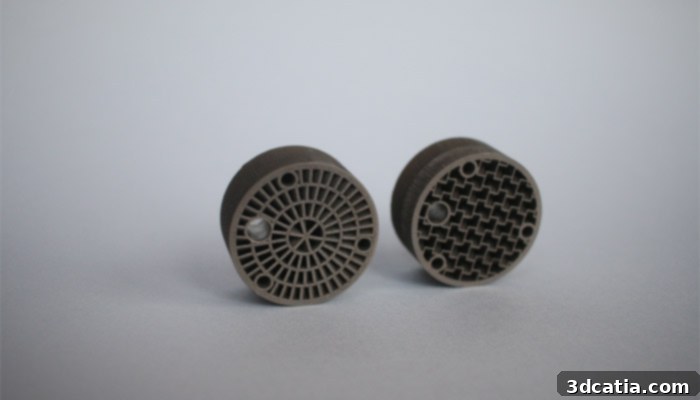
The reactors are 3D printed using different metals (photo credits: AddCat)
Manufacturing Advanced Air Filters: Techniques, Materials, and Performance
The manufacturing of AddCat’s advanced air filters relies on a selection of cutting-edge metal 3D printing techniques, each chosen for its specific advantages. Currently, the company primarily utilizes either Direct Metal Laser Sintering (DMLS) or Fused Filament Fabrication (FFF), applying them based on the specific requirements of the reactor design and material. DMLS, a powder bed fusion technique, excels in producing high-resolution, complex metal parts with excellent mechanical properties, ideal for intricate internal geometries. FFF, on the other hand, often offers greater flexibility in material choice and can be more cost-effective for certain applications, especially as multi-material printing advances. The strategic choice between these techniques allows AddCat to optimize for factors such as complexity, cost, material compatibility, and production volume.
For the reactor materials themselves, AddCat employs robust metals suitable for demanding industrial environments. Their current material portfolio includes stainless steel (316L), titanium (Ti6Al4V), and aluminum (Al10SiMg). The selection of material is highly dependent on the particular air purification case; for instance, 316L stainless steel offers excellent corrosion resistance and strength, making it suitable for a wide range of chemical environments. Ti6Al4V titanium alloy provides superior strength-to-weight ratio and exceptional corrosion resistance in harsh conditions, while Al10SiMg aluminum alloy is chosen for its excellent thermal conductivity and lightweight properties, crucial for certain heat exchange applications. After the parts are precisely 3D printed, they undergo a specialized coating process where the active catalyst material is applied to the intricately structured surfaces.
The performance of these reactors is truly impressive, demonstrating high purification rates consistently at or above 95% across a wide spectrum of challenging conditions. AddCat’s technology can handle volumetric flow rates ranging from 100 to 25,000 m3/h, catering to both smaller and very large industrial operations. They are effective against both low and high levels of contaminants, from 1 to 10,000 ppm, showcasing their adaptability to varying pollution intensities. Furthermore, the reactors maintain their high efficiency even in environments with varying humidities, from 50% to 100%, which is a critical factor in many industrial settings. These robust capabilities make AddCat’s solutions viable for a diverse array of industries, including chemical manufacturing, food processing, waste management, and agricultural facilities. A significant current focus for AddCat is the scaling and industrialization of their 3D printing process. This involves refining manufacturing workflows, optimizing production cycles, and collaborating closely with various partners and suppliers across Europe to achieve enhanced mass production capabilities, ensuring their innovative technology can meet growing market demands efficiently and economically.
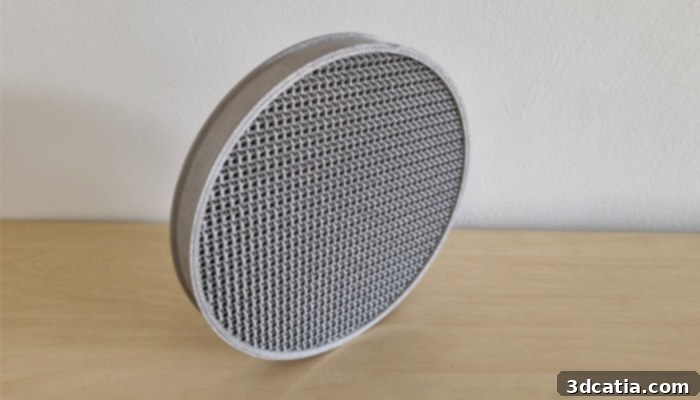
Photo Credits: AddCat
Target Markets and Global Impact
AddCat’s innovative air purification technology is designed to address a broad spectrum of industries that struggle with hazardous and malodorous emissions as an inherent part of their processes. In principle, any industry facing such environmental challenges is a potential target for AddCat’s solutions, offering a path towards greater environmental compliance and sustainability. The company’s initial focus, however, is on sectors where these issues are particularly pronounced and impactful.
Key target markets include manure processing industries, where the decomposition of organic waste generates significant amounts of ammonia, methane, and various foul-smelling compounds. Biogas plants, while producing renewable energy, also emit odorous gases and sometimes unreacted methane, which AddCat’s reactors can efficiently abate. The chemical industry, with its vast array of processes, often releases a complex mix of volatile organic compounds (VOCs) and other harmful substances that require sophisticated purification. Wastewater treatment plants are another critical area, known for producing hydrogen sulfide and other odor-causing gases that significantly impact local communities. Furthermore, asphalt processing factories release particulate matter and various organic compounds that contribute to air pollution. For these industries, AddCat’s high-performance, low-maintenance reactors offer a lifeline, transforming challenging emission profiles into manageable, environmentally responsible operations.
The global potential for AddCat’s technology is immense. As environmental regulations become stricter worldwide and public awareness of air quality issues grows, the demand for effective, sustainable, and cost-efficient emission control solutions is rapidly increasing. AddCat’s ability to offer a robust and adaptable solution, capable of handling diverse contaminant types and operational conditions, positions it uniquely to serve these burgeoning market needs, contributing to cleaner air and healthier environments across the globe.
Future Horizons: Scaling, Innovation, and Multi-Material Printing
Looking ahead, AddCat is deeply committed to a trajectory of continuous growth and innovation. At the present moment, a core focus is on successfully scaling up their existing systems and implementing a robust market introduction strategy. This involves not only increasing production capacity but also expanding their commercial reach, fostering partnerships, and ensuring their advanced air purification technology becomes widely accessible to industries in need. The goal is to move from pioneering prototypes to commercially viable, large-scale deployments.
In terms of 3D printing technology, AddCat remains at the forefront of innovation. The company is actively exploring and developing advanced printing techniques, particularly focusing on multi-material printing approaches. This includes experimenting with multi-material filaments, which promise to revolutionize reactor design by allowing for the integration of different materials with tailored properties into a single, cohesive structure. Imagine a reactor where the structural integrity is provided by one metal, while another material, perhaps with enhanced catalytic activity or superior thermal properties, is directly integrated into specific functional zones. This approach could lead to even greater process intensification, enabling reactors that are more efficient, durable, and perhaps even smarter by integrating sensors directly into the printed matrix.
Beyond material innovation, AddCat’s future projects involve a continuous cycle of research and development. This includes optimizing reactor geometries further, exploring new catalyst formulations, and integrating smart technologies for real-time monitoring and adaptive control of the purification process. The company’s commitment to ongoing R&D ensures that their reactor technology will continue to evolve, pushing the boundaries of what is possible in industrial air purification and maintaining their position as leaders in combining additive manufacturing with catalytic solutions for a cleaner planet.
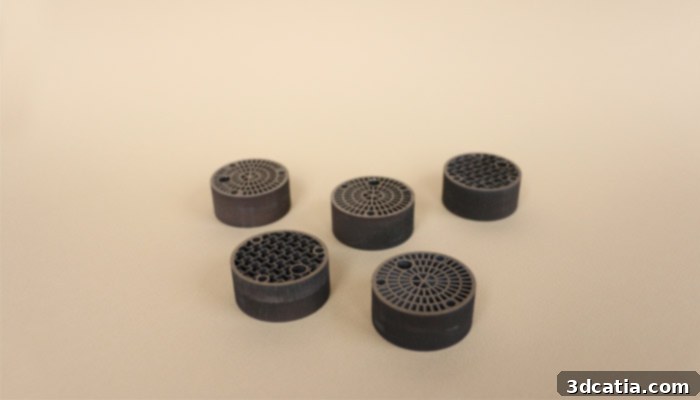
Photo Credits: AddCat
Concluding Thoughts: The Future of 3D Metal Printing and Air Quality
AddCat stands at the precipice of a significant transformation, not just for itself but for the broader industrial landscape and the environment. As we look towards the coming years, there is a strong conviction within the company that 3D metal printing is poised to make a monumental leap from specialized prototyping and niche production to widespread bulk manufacturing. AddCat is not only a witness to this evolution but an active participant, striving to be a core part of this industrial revolution. The continuous innovation in equipment, materials, and processes specifically designed for 3D printing holds immense promise. This ongoing advancement will undoubtedly unlock many more exciting opportunities and breakthroughs in AddCat’s unique reactor technology, and indeed, far beyond the realm of air purification.
We invite our readers to explore more about AddCat’s pioneering work and its vision for a cleaner industrial future by visiting their official website HERE. Your thoughts and perspectives on AddCat, our 3D Startup of the Month for August, are highly valued. Please feel free to share your comments below or engage with us on our social media platforms: LinkedIn, Facebook, and Twitter. Don’t miss out on the latest advancements and insights in the additive manufacturing world; make sure to sign up for our free weekly Newsletter here to receive the most current 3D printing news directly in your inbox. Additionally, you can find a wealth of informative videos on our dedicated YouTube channel, offering visual explorations into the exciting developments shaping the future of 3D printing.