
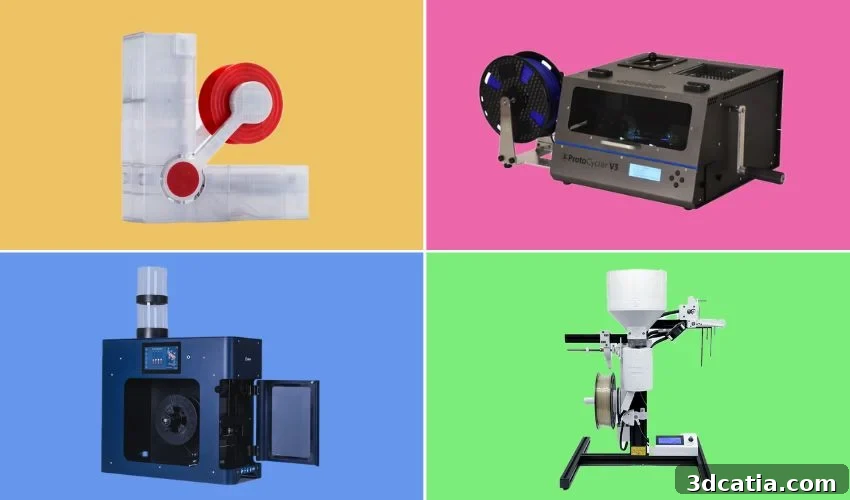
Whether we like it or not, 3D printing produces waste: failed prints, purge lines, support structures, and parts that no longer meet expectations. For years most of that plastic ended up in the bin. The industry, makers and researchers have been looking for more sustainable alternatives—ways to recover, reprocess and reintegrate discarded plastic into the printing workflow as usable filament.
Filament recycling machines answer that need. They come as DIY projects for hobbyists who enjoy building and customizing their equipment as well as turnkey commercial systems for workshops and labs. Below is a selection of notable options across a range of budgets, capabilities and target users. Each machine supports different materials and workflows, so evaluate compatibility, throughput and ease of use before choosing. The list is presented in no particular order.
Polyformer
Created by California-based industrial designer Reiten Cheng, Polyformer is a fully open-source, largely 3D-printed filament recycler that converts PET bottles into 1.75 mm filament for FDM printers. It uses a stacked-bearing slicing tool to turn a bottle into a continuous ribbon and feeds that ribbon into a modified hotend that thermally forms filament. Built from printed parts and readily available hardware, Polyformer is modular and easy to modify, offering an affordable route for makers who want to work with reclaimed PET. Complete build instructions and files are available from the project repository.
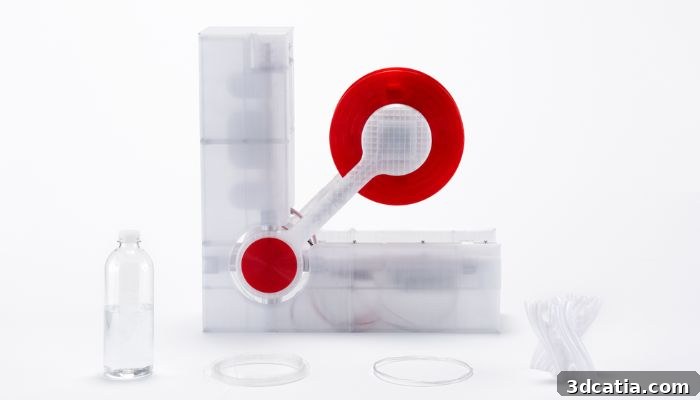
Photo Credits: James Chou
ProtoCycler V3 from ReDeTec
The ProtoCycler V3 from ReDeTec is a desktop filament extrusion system aimed at material experimentation and recycling. It includes dual digital diameter feedback sensors and an AI-informed control system to monitor filament consistency when processing varied polymers and additives. Its patented MixFlow™ hardware melts plastic at lower temperatures than traditional systems, expanding compatible materials while reducing energy use. The V3 integrates a grinder in its currently produced configurations, enabling a single workflow from shredded waste to finished filament—ideal for operations seeking an all-in-one recycling and extrusion solution.
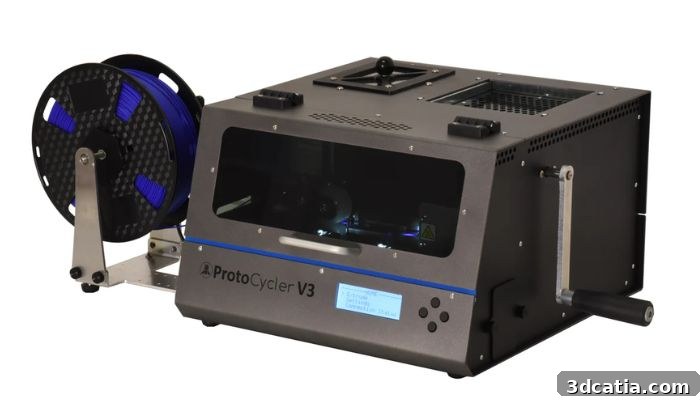
Photo credits: ReDeTec
Creality’s Recycling System
Creality introduced the Filament Maker M1 and Shredder R1 to help desktop users close the material loop. The R1 shreds and dries waste—failed prints, supports and sprues—into particles ≤4 mm. The M1 extrudes those particles into filament with a reported diameter tolerance of ±0.05 mm and a production rate up to 1 kg/h. The system supports up to eight materials including PLA, ABS, PETG, ASA, PA, PC, TPU and PET. Beyond recycling, the platform allows users to blend pellets, masterbatches, fibers or natural additives to produce custom filament formulations for experimentation.
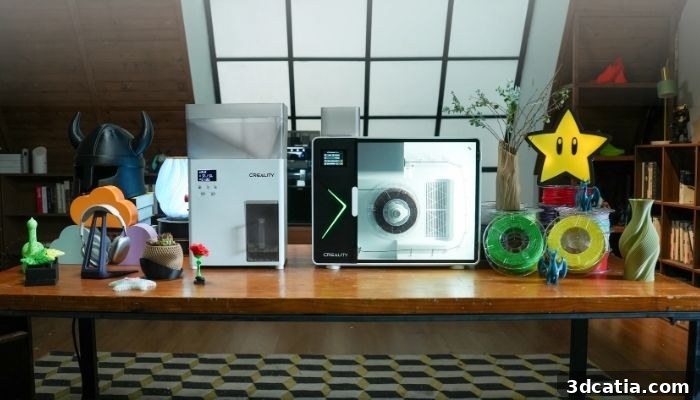
Photo Credits: Creality
Felfil Extrusion System
Felfil offers a modular desktop filament production ecosystem that handles everything from virgin granules to shredded recycled plastics. The Shredder+ prepares failed prints and waste into particles for extrusion. The Felfil Evo extrudes 1.75 mm or 2.85 mm filament via interchangeable nozzles, with manual control of temperature and speed through an Arduino-based interface. The Spooler+ winds filament automatically while a 10-micron sensor measures diameter and dynamically adjusts output. The system supports small-batch material development—down to about 50 g—and each component can be bought separately. Pricing for the complete three-piece bundle and individual units varies depending on configuration.
GP20 Shredder and Filament Maker TWO from 3devo
Dutch company 3devo pairs the GP20 Shredder with the Filament Maker TWO to provide a laboratory-friendly workflow for material testing and development. The GP20 reduces various plastics—packaging, insulation and industrial components—into uniform flakes suitable for extrusion and supports a broad range of polymers including PET, PP, PEEK and PVC. The Filament Maker TWO improves on previous extrusion models with higher throughput and lower energy use, offering automated control over sensing, heating, pulling and spooling to produce consistent filament for testing and small-scale production.
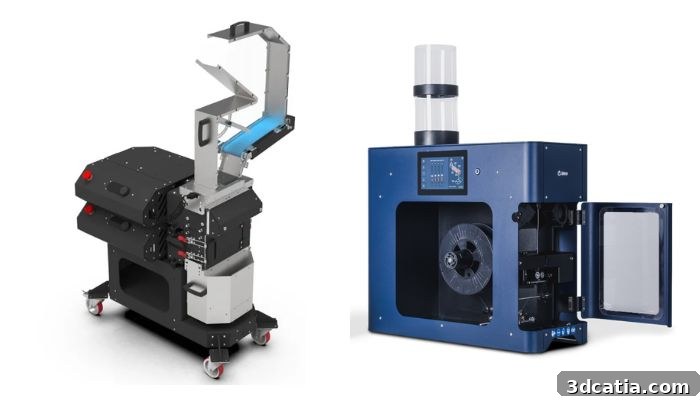
The GP20 Shredder (left) and Filament Maker TWO (right) Credits: 3devo
Noztek Pro Extruder
Noztek, a UK-based company with extensive experience in filament extrusion, offers the Noztek Pro as a robust desktop extruder suited to professional environments. It features a single stainless-steel extrusion barrel with manual temperature control, capable of producing 1.75 mm or 3 mm filament across a typical extrusion temperature range. The Pro can process both pellets and shredded feedstock but does not include a built-in shredder. Its reliability and control make it a common choice for universities, workshops and small manufacturers.
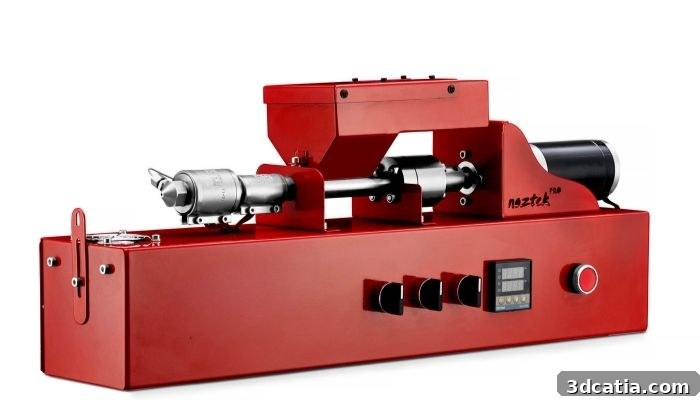
Photo Credits: Noztek
ExtrudeX – DIY Filament Recycling Machine
ExtrudeX, produced by Creative3DP, is an open-source, 3D-printable DIY recycler intended for home use. It converts failed prints, purge lines and scrap into fresh 1.75 mm filament. The recommended workflow combines shredded waste with virgin pellets (for example a 60/40 ratio) before feeding the mix into a heated metal barrel driven by a high-torque DC motor and a controlled puller. A cooling fan stabilizes the filament as it exits and an optional digital diameter gauge can provide live feedback. Structural parts are printable at home, but a sufficiently large printer and durable filament like PETG or ABS are required. The project is distributed as a digital package that includes STL files, wiring diagrams, assembly videos and a bill of materials.
Sustainable Design Studio’s Plastic Bottle Recycler
Sustainable Design Studio’s Filament Maker focuses exclusively on PET bottle-to-filament conversion. It requires no pellets or separate shredder: the machine cuts and feeds bottle material directly, producing 1.75 mm filament. Compact at roughly 34 × 16 cm and powered by a 40 W motor, it can produce a practical output for hobbyist use and is offered as a kit or fully assembled. The company supplies tools and step-by-step guidance for bottle preparation and recommended print settings. While limited to PET, this design provides a straightforward path for recycling household bottles into usable filament.
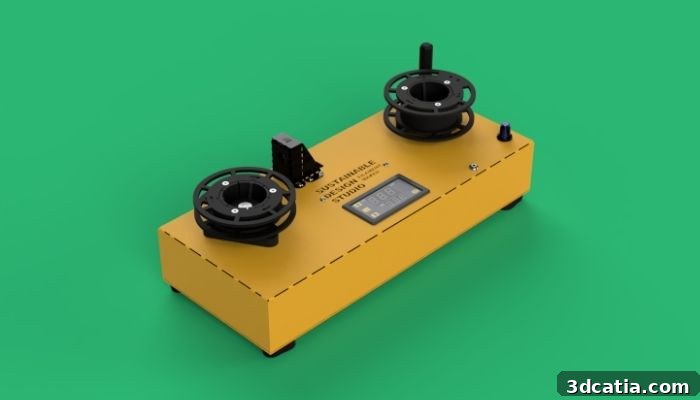
Photo Credits: Sustainable Design
ARTME 3D MK3S Desktop Filament Extruder
The ARTME 3D MK3S is a kit-oriented extruder from a German manufacturer aimed at experienced makers. Sold as a DIY kit that includes tools and starter pellets, the kit requires the builder to 3D-print some parts and assemble the machine, a process that can take several hours depending on skill. The MK3S handles pellets and shredded material for PLA, PETG, ABS, ASA and TPU, supporting throughput up to several hundred grams per hour. It offers interchangeable spindles for pellets or shredded feedstock, automatic winding and configurable stop lengths. For continuous operation, an MK3S+ variant adds a metal planetary gearset for sustained duty.
Have you tried recycling failed prints or other 3D printing waste? Share your experiences and approaches with other makers. If you want to follow more news and updates from the additive manufacturing community, consider subscribing to manufacturer newsletters or following relevant community channels for the latest developments in filament recycling and material innovation.