
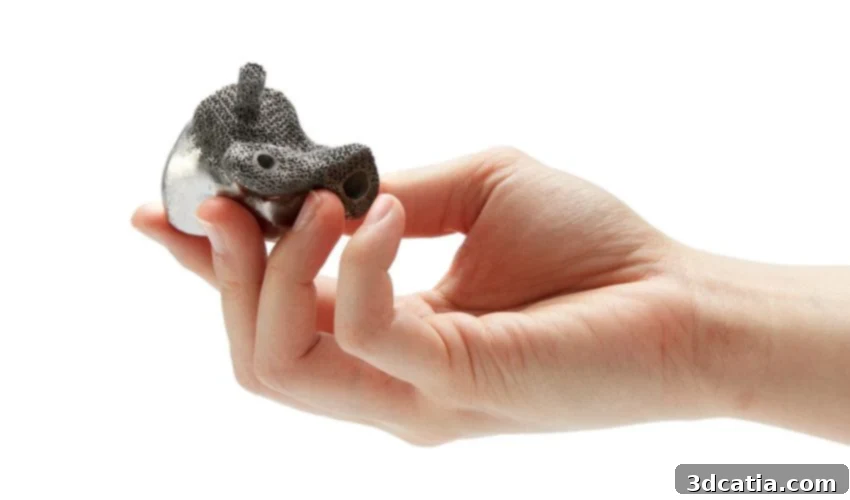
Revolutionizing Surgery with 3D Printed Implants: An Interview with OsseoLabs CEO Vikram Ahuja
3D printed implants have emerged as a transformative force in the surgical landscape, offering customized solutions that reduce operating times, enhance surgical precision, and improve patient outcomes. OsseoLabs, a finalist for the Formnext 2025 Startup Award, is at the forefront of this revolution. With its integrated core technologies – OsseoVision™, an AI-driven surgical intelligence platform, and a proprietary bioresorbable magnesium (Mg) 3D-printing platform – OsseoLabs is poised to reshape the future of surgery. These innovative platforms enable a high degree of personalization, biological performance, and cost efficiency that surpasses conventional implants. We spoke with Vikram Ahuja, co-founder and CEO of OsseoLabs, to gain insights into the company’s groundbreaking technology and its impact on patients’ lives.
The Genesis of OsseoLabs: Bridging the Gap in Surgical Solutions
Vikram Ahuja (Vicky): I am Vikram Ahuja, co-founder and CEO of OsseoLabs. My background encompasses engineering, business economics, and company building across various sectors, including electric vehicles, artificial intelligence, and MedTech. Before OsseoLabs, I co-founded multiple venture-backed startups, including Edison Motors, which was acquired by a Singapore-listed company. This experience provided me with invaluable insights into scaling deep-tech products from research and development through commercialization and exit.

Vikram Ahuja
My interest in 3D printing stemmed from its potential to address structural inefficiencies in healthcare, particularly the mismatch between standardized implants and the unique anatomical variations of individuals. OsseoLabs was co-founded with Patcharapit Promoppatum (Joe), a mechanical engineer and academic specializing in additive manufacturing, biomechanics, and topology optimization. Our partnership combines execution-driven company building with deep technical and clinical engineering expertise.
OsseoLabs was established to address a critical need in maxillofacial and orthopedic surgery, where outcomes are often limited by off-the-shelf devices, lengthy planning cycles, and intraoperative uncertainties. We recognized an opportunity to revolutionize the entire surgical workflow – from imaging and AI-driven surgical planning to patient-specific manufacturing – within a unified, regulatory-compliant platform.
Our mission is to enhance the predictability, speed, and cost-effectiveness of complex surgeries by replacing generic hardware with engineered, patient-specific solutions. We are committed to advancing personalized bioresorbable magnesium implants that provide mechanical support only when clinically necessary and safely resorb as healing progresses.
We are building a comprehensive surgical technology company that integrates software, materials science, biomechanics, and additive manufacturing to redefine how surgery is planned, executed, and scaled globally. Our focus on custom implants allows for better patient outcomes and a more efficient surgical process.
OsseoLabs’ Cutting-Edge Technologies: A Synergistic Approach
OsseoLabs’ technology stack is built upon two tightly integrated core technologies: OsseoVision™, our AI-powered surgical intelligence platform, and our proprietary bioresorbable magnesium (Mg) 3D-printing platform. Together, these technologies enable a level of personalization, biological performance, and cost efficiency that is unattainable with conventional implants.
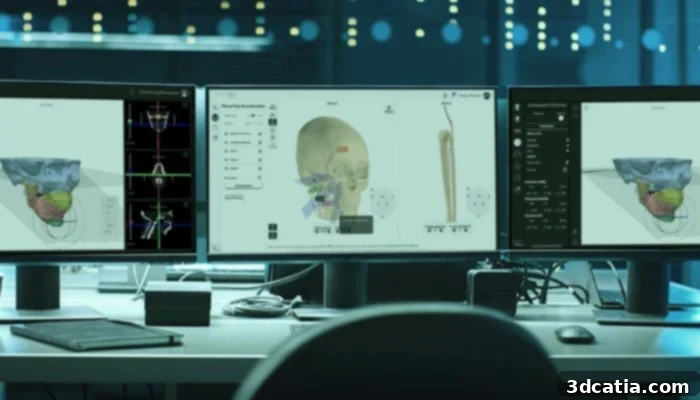
OsseoVision is designed to simplify the workflow of surgical planning.
OsseoVision™ serves as the foundation of our digital workflow. It integrates AI-driven CT segmentation, automated surgical planning, topology optimization, and implant generation into a single, streamlined system. This includes our patented two-step topology optimization framework, which separates external anatomical fit from internal biomechanical performance. It also integrates OsseoMatrix™ – our TPMS porous architecture – for controlled stiffness, permeability, and load transfer. In practice, OsseoVision™ reduces design and planning time by over 90%, improves geometric and biomechanical accuracy, and significantly shortens operating room time. For surgeons, this translates into predictable execution and fewer intraoperative decisions. For hospitals and payers, it results in lower procedure time, fewer complications, and reduced total episode cost. The enhanced surgical planning leads to better outcomes and increased efficiency in the operating room.
The second core technology is our bioresorbable Mg-alloy 3D-printing platform, enabled by a proprietary laser pulsation technique and model-driven degradation control. Magnesium offers bone-like mechanical properties and naturally resorbs after healing, eliminating the need for implant removal. Historically, Mg has been challenging to print due to its low melting point and instability. Our laser pulsation process stabilizes the melt pool, ensures consistent fusion, and allows precise control over microstructure. Combined with OsseoMatrix™ and OsseoOptimized™ degradation modeling, we can tune mechanical support and resorption timelines to match bone healing across various indications. The use of bioresorbable materials represents a significant advancement in implant technology.
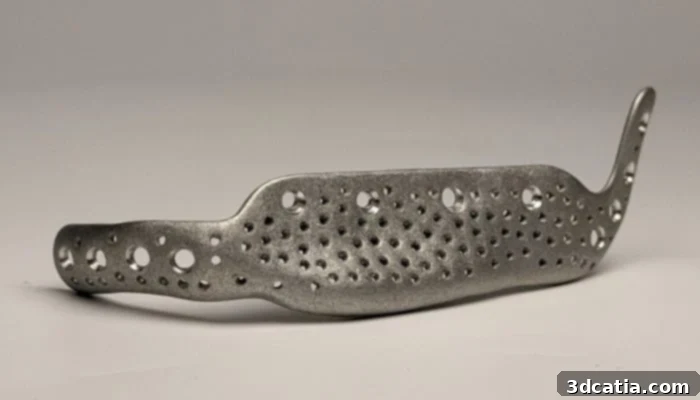
Mandible reconstruction mesh-based plate
For patients, this means better integration and no secondary removal surgery. For surgeons, regenerative fixation with predictable biomechanics. For payers, lower long-term costs driven by fewer revisions and faster recovery. The benefits of this technology extend to all stakeholders in the surgical process.
Improved Patient Outcomes and Surgical Experiences: The Impact of OsseoLabs’ Technology
Our technology delivers measurable improvements across clinical, operational, and economic dimensions by combining AI-led surgical planning with next-generation bioresorbable implants. The advancements are creating positive changes throughout the healthcare system.
At the patient level, personalization improves anatomical fit, load distribution, and biological integration. OsseoMatrix™ TPMS architectures promote superior bone ingrowth and reduce stress shielding, while bioresorbable magnesium implants provide mechanical support only during the critical healing phase and then safely resorb. This eliminates the long-term presence of permanent hardware, reduces implant-related complications, and removes the need for secondary removal surgeries – supporting faster recovery and lower revision risk.
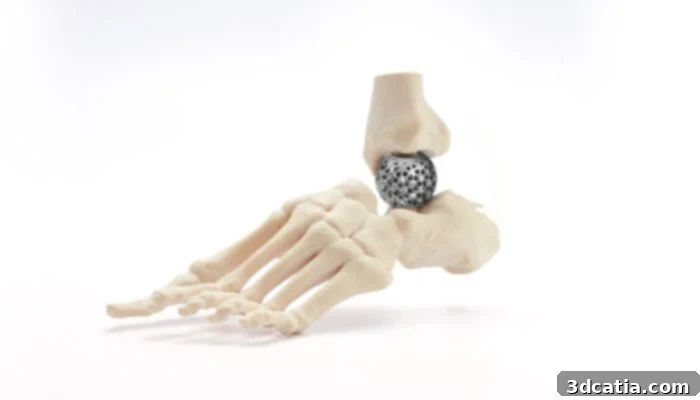
Talus reconstruction
For surgeons, the biggest change is confidence before entering the operating room. OsseoVision™ allows them to plan the procedure digitally, review fixation strategies, and confirm implant positioning ahead of time. As a result, there’s less trial-and-error during surgery, fewer intraoperative adjustments, and shorter operating times – often by 30–50% in complex cases. Just as importantly, it reduces cognitive load, especially in reconstructions where small decisions can have large downstream effects.
At the health system level, these benefits add up. Faster planning, shorter procedures, fewer complications, and fewer revision or removal surgeries all translate into lower total costs per case. For payers and public health systems, this isn’t just about savings – it’s about making advanced reconstructive care scalable and accessible.
Ultimately, we’re not changing how surgeons think about surgery. We’re giving them better tools and better materials, so outcomes depend less on improvisation and more on preparation and engineering. By shifting surgery from artisanal execution to engineered precision and material innovation, we enable outcomes that are more consistent, scalable, and economically sustainable. The transformation is leading to a new era of surgical care.
A Typical Patient Case: The OsseoLabs Workflow
A typical OsseoLabs case runs on a digital-first workflow that tightly integrates AI-driven planning with patient-specific manufacturing. It begins with a high-resolution CT or CBCT scan from the hospital. Once uploaded to OsseoVision™, AI-based segmentation and anatomical reconstruction are completed within an hour, giving surgeons an accurate 3D representation of the patient’s anatomy early in the process.
Surgical planning and device design usually take 1–2 days, depending on complexity. During this stage, OsseoVision™ automates much of the implant and guide generation – including fixation strategy, topology optimization, and porous structure integration – while allowing surgeons and our engineers to collaborate directly on final decisions. The collaboration ensures that the final product meets the specific needs of the patient.
Once the plan is approved, production moves immediately. Polymer guides can be delivered within 24–48 hours. Metal implants, whether titanium or bioresorbable magnesium, typically require 3–7 days for printing, post-processing, and quality assurance. All devices go through dimensional checks and validation under ISO 13485 workflows. The rapid turnaround time is a significant advantage in critical cases.
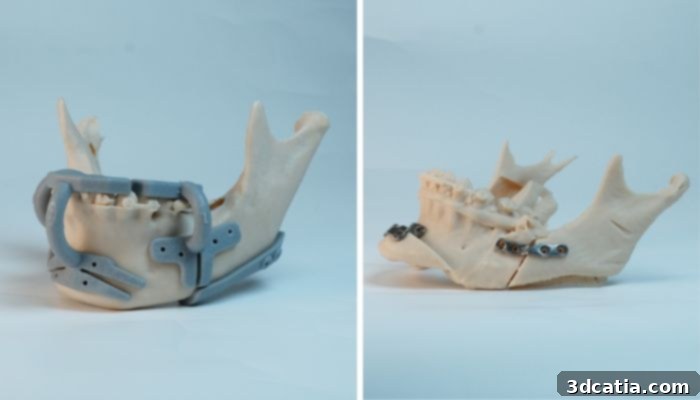
Genioplasty surgical guide (left) and genioplasty fixation plate (right)
End to end, most cases are completed within 5–10 days, significantly faster than traditional custom implant pathways. This speed is especially important in trauma, oncology, and revision surgeries, where delays directly affect clinical outcomes. The streamlined process is crucial for timely intervention and improved patient care.
Challenges in Developing and Producing Patient-Specific Implants
The core challenge in patient-specific surgery is variability – every anatomy, loading condition, and clinical indication is different. That variability makes scale, reproducibility, and regulatory compliance difficult if approached with traditional device logic. Our approach has been to standardize the platform and process, rather than the implant itself, so customization does not come at the expense of control. Overcoming these challenges requires a unique and innovative approach.
On the technical side, producing complex porous structures – especially in bioresorbable magnesium, a material that has historically been considered impractical for additive manufacturing – introduces an additional layer of complexity. Magnesium’s low melting point, high reactivity, and sensitivity to process instability make consistent printing, mechanical integrity, and degradation control non-trivial. We have spent significant effort solving these problems through AI-driven design rules, topology optimization, and tightly controlled additive manufacturing processes, including proprietary laser pulsation techniques and model-based degradation tuning. As a result, we have established a reproducible, ISO-ready technological foundation that can now be extended across multiple anatomical indications and use cases.
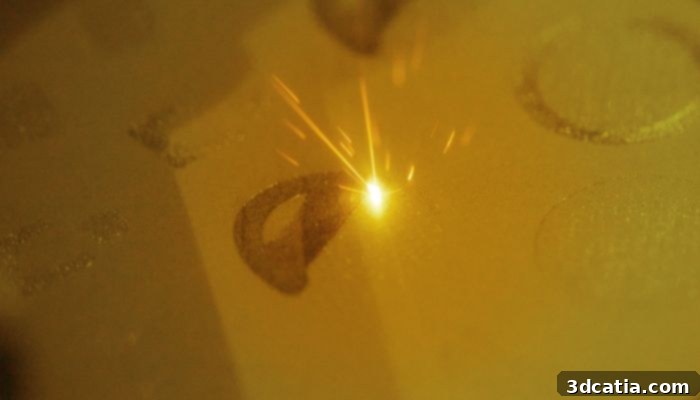
The metal printing process
Regulatory complexity is another major barrier. Personalized devices sit at the intersection of customization and compliance. We’ve embedded ISO 13485 systems, design history documentation, and risk management directly into our workflow so personalization does not introduce regulatory fragility. Maintaining compliance is essential for ensuring patient safety and product efficacy.
Operationally, slow iteration between surgeons and engineers can stall cases. OsseoVision™ removes this bottleneck by centralizing planning, design, communication, and approval in a single environment – delivering speed without sacrificing rigor. The platform’s centralization streamlines communication and accelerates the entire process.
Finally, none of this is done in isolation. We have worked closely with strategic partners, academic institutions, and clinical collaborators worldwide to build and validate this platform, and we continue to actively welcome new partners as we expand magnesium-based solutions into broader clinical indications. Collaboration is key to driving innovation and expanding the reach of our technology.
Long-Term Goals and Areas of Innovation for OsseoLabs
Our long-term goal at OsseoLabs is to make patient-specific, regenerative fixation the default standard of care, rather than an exception reserved for complex cases. We are building a platform that systematically replaces permanent, standardized hardware with AI-designed, biologically aligned, and – where appropriate – bioresorbable implants, across a growing range of cranio-maxillofacial and orthopedic indications. The vision is to transform surgical care with personalized solutions.
One major area of innovation is the expansion of our bioresorbable magnesium implant platform. Today, permanent implants lead to secondary removal surgeries in approximately 25% of routine cases, and in certain CMF, dental and trauma indications, removal is planned in up to 100% of patients. Our goal is to eliminate these secondary procedures by deploying degradation-tuned Mg implants that provide mechanical support only during healing and then safely resorb. Technically, our focus is on expanding degradation control, load-bearing capability, and indication-specific designs so magnesium fixation can be used not just in niche cases, but across mainstream CMF and orthopedic workflows. The focus on bioresorbable materials addresses a significant need in the surgical field.
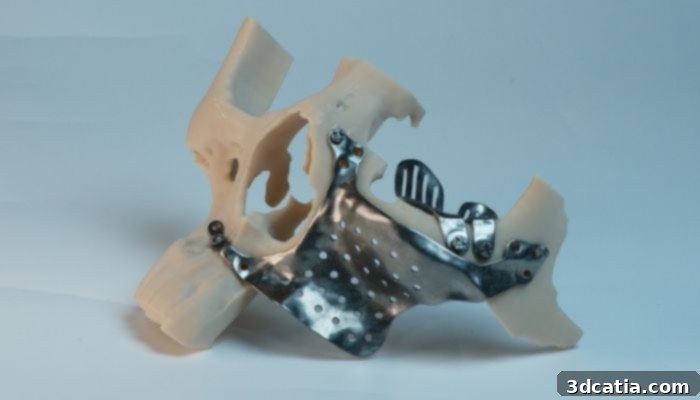
Maxilla reconstruction plate and orbital floor
In parallel, we are advancing OsseoVision™ from a planning tool into a scalable surgical intelligence platform. To date, our AI-led workflow has been validated in 300+ clinical cases, delivering >90% reductions in design time and ~50% lower device costs across four automated surgical indications. Our next goal is to expand automation to a much broader set of CMF and orthopedic procedures, so personalized implants become cost-comparable to standard stock implants, and therefore the first option surgeons consider – not the last.
At the system level, our innovation agenda is tightly linked to economics. Shorter operating times, fewer complications, and avoided removal surgeries reduce total episode cost and free clinical capacity. In the U.S., this supports value-based care and bundled payment models. Globally – especially in Asia, the Middle East, and emerging markets – our goal is to make advanced, personalized reconstruction economically viable at scale, not just technically possible.
Ultimately, we see our AI, magnesium materials, and additive manufacturing platform following a similar trajectory to titanium 3D printing – moving from early adoption to broad clinical acceptance. Our long-term ambition is to help define the next generation of implant care that improves outcomes, lowers cost, and scales globally. The vision is to make personalized surgical solutions accessible worldwide.
Final Thoughts: The Future of Surgery with OsseoLabs
Surgery is still largely performed with standardized tools, even though patients are anything but standard. OsseoLabs exists to close that gap. By combining AI-driven planning with advanced materials such as bioresorbable magnesium, we are shifting surgery away from intraoperative improvisation and toward engineered, pre-validated execution.
For surgeons, this translates into better preparation, clearer decision-making, and fewer surprises in the operating room. For patients, it means implants that fit more precisely, support healing biologically, and do not remain in the body longer than necessary. At the system level, fewer complications and avoided secondary procedures reduce total cost of care and free clinical capacity. The shift towards personalized surgical care benefits everyone involved.
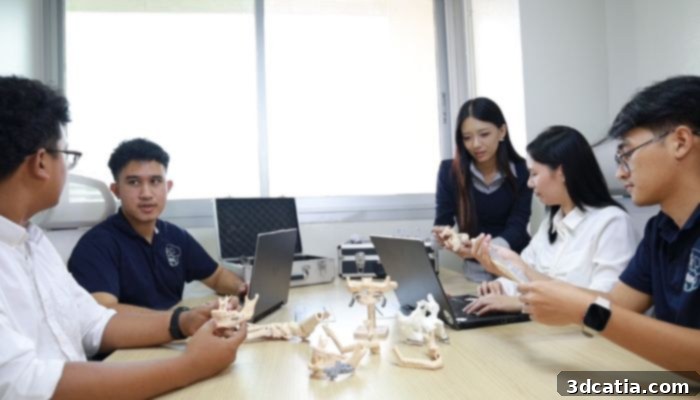
The OsseoLabs team
Importantly, we do not view this as a closed ecosystem. We have intentionally built our AI and magnesium technologies as a platform – one that can be extended into indication-specific devices and workflows. We believe meaningful progress in surgical care requires collaboration, and we actively welcome strategic partners, particularly medical device companies and clinical institutions, that see the value in this approach. By working together, we can accelerate adoption, expand clinical use cases, and ultimately improve patient outcomes at scale. Collaboration is essential for driving innovation and improving patient care globally.