

University of Windsor Pioneers Canada’s First 3D Printed Multi-Story Student Residence
The University of Windsor has embarked on an ambitious project, utilizing 3D printing technology to construct Canada’s first net-zero, multi-story student residence. This groundbreaking initiative represents a significant leap forward in additive construction and sustainable building design within the Canadian housing sector.
Located at 1025 California Avenue, the project has officially entered its printing phase, demonstrating the tangible application of large-scale 3D printing in addressing real-world housing needs. Supported by a substantial two-million-dollar investment from FedDev Ontario, the project is a collaborative effort involving various industry partners, highlighting the importance of synergistic innovation in the construction industry.
The on-site installation of a sophisticated concrete-printing system marks a pivotal transition from the planning stage to active construction. This provides researchers, engineers, and builders with a unique opportunity to showcase the transformative potential of additive manufacturing in reshaping conventional building practices. The university firmly believes that by directly printing structural elements on-site, construction timelines can be significantly shortened, material waste minimized, and overall energy performance substantially improved.
Dr. J.J. McMurtry, President and Vice-Chancellor of the University of Windsor, emphasized the significance of the project in showcasing the power of coordinated innovation. He noted that the collaboration between government, academia, and industry demonstrates the potential of 3D printing to enable faster, more affordable, and more sustainable homebuilding practices. This project is not merely a construction endeavor; it serves as a dynamic learning environment for university researchers, engineering students, and faculty, who are actively studying material performance, optimizing workflow strategies, and assessing the environmental impact of large-scale additive construction.
Upon completion, the residence will offer seven residential units, providing much-needed student housing while simultaneously serving as a long-term research platform for sustainable construction technologies. The project, spearheaded by Dr. Sreekanta Das and his dedicated team within the Faculty of Engineering, aims to cultivate and expand the Canadian talent pool in additive construction. Furthermore, it will generate valuable data on energy performance, structural efficiency, and the overall life-cycle assessment of 3D-printed buildings.
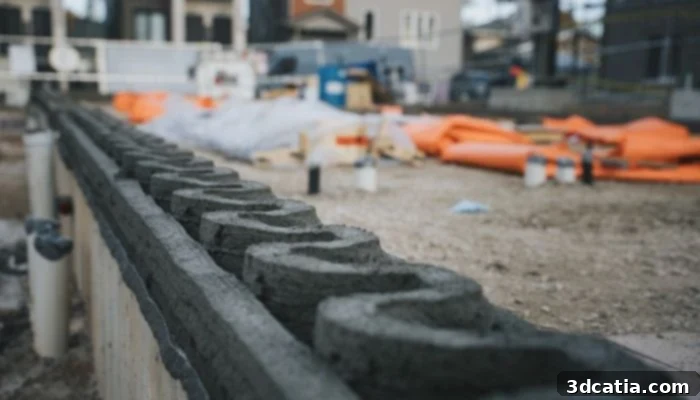
The initial printed layers already demonstrate the impressive capabilities of precision-formed concrete prints. This technology allows for the creation of insulated, curved, and structurally optimized geometries that would be difficult, if not impossible, to achieve with traditional construction methods. The freedom in design and the ability to tailor structures to specific performance requirements represent a major advantage of 3D printing in construction.
Federal support has been instrumental in propelling the project forward, enabling its current progress. The Honourable Evan Solomon, Minister of Artificial Intelligence and Digital Innovation and Minister responsible for FedDev Ontario, extended his congratulations to the University of Windsor on reaching this significant milestone. He emphasized that the project exemplifies how innovation and collaboration can drive advancements in housing solutions and enhance manufacturing efficiency across the region.
The success of this initiative also relies on the invaluable contributions of private and community partners. Desjardins Ontario Credit Union has pledged two hundred and fifty thousand dollars to support the project through its Community Development Fund. This investment underscores their commitment to fostering sustainable construction practices and promoting local development within the region.
Printerra Inc., the additive construction company providing cutting-edge technology and specialized expertise to the project, highlighted the importance of coordinated research and industry knowledge in accelerating the adoption of 3D printed building systems. Leigh Newman, CEO of Printerra Inc., emphasized that the University of Windsor residence serves as a powerful demonstration of what is achievable when innovation is seamlessly integrated into the construction process from its very foundation.
The University of Windsor’s groundbreaking project represents a pivotal moment for Canadian construction technology. As printing progresses, it marks one of the country’s first major steps toward integrating multi-story additive manufacturing into mainstream building practices. This initiative not only addresses the pressing need for affordable and sustainable housing but also positions Canada as a leader in the burgeoning field of 3D-printed construction.
The project’s emphasis on sustainability aligns with growing global concerns about environmental impact and the need for eco-friendly building solutions. By utilizing 3D printing, the University of Windsor aims to minimize waste, reduce reliance on traditional building materials, and create energy-efficient structures that contribute to a greener future. The use of concrete, a readily available and durable material, further enhances the project’s practicality and scalability.
The educational aspect of this project is equally important. By involving students and faculty in every stage of the process, the University of Windsor is nurturing the next generation of construction professionals. These individuals will gain invaluable hands-on experience with cutting-edge technologies, preparing them to lead the industry forward and drive innovation in the years to come.
Beyond the immediate benefits of the student residence, the University of Windsor’s 3D printing project has the potential to revolutionize the construction industry across Canada. The lessons learned from this initiative can be applied to a wide range of building projects, from affordable housing developments to commercial structures. By demonstrating the feasibility and efficiency of 3D printing, the University of Windsor is paving the way for a more sustainable, innovative, and cost-effective future for construction in Canada.
The University of Windsor’s pioneering efforts are attracting significant attention from around the world. Construction experts, policymakers, and academics are closely watching the project’s progress, eager to learn from its successes and challenges. As the first multi-story 3D-printed residence in Canada, this project is setting a new standard for innovation and sustainability in the construction industry.
The success of this project will undoubtedly inspire other institutions and organizations to explore the potential of 3D printing in construction. As the technology continues to evolve and become more accessible, we can expect to see a wider adoption of additive manufacturing techniques across the industry. This will lead to more efficient construction processes, reduced environmental impact, and the creation of innovative and sustainable buildings that meet the growing needs of communities across Canada and beyond.
What are your thoughts on this exciting development? You can learn more about the project on the university’s official press release HERE! Share your opinions in the comments below or connect with us on LinkedIn and Facebook. Stay up-to-date with the latest 3D printing news by subscribing to our free weekly Newsletter. You can also find our comprehensive video library on our YouTube channel.
*All photo credits: University of Windsor