
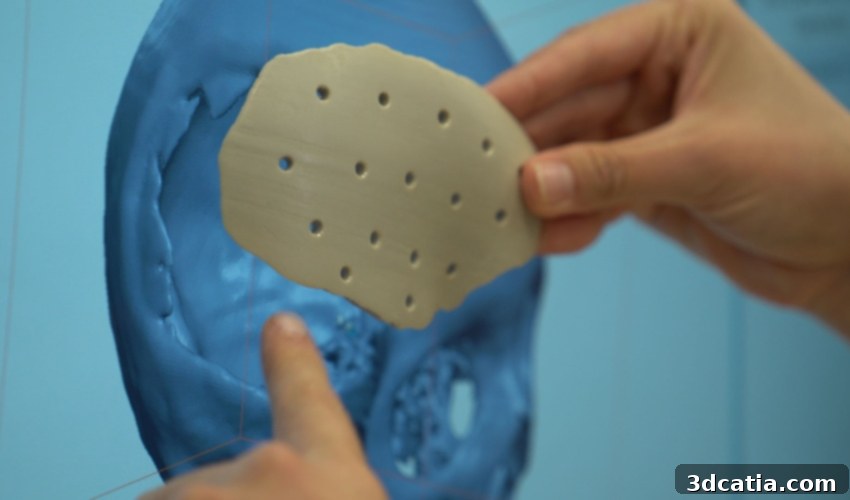
Kumovis R1: Revolutionizing Medical 3D Printing with High-Performance Polymers and Integrated Cleanrooms
For those who have been closely following the dynamic world of additive manufacturing, the name Kumovis undoubtedly resonates. This forward-thinking startup rapidly gained significant acclaim, notably securing a win at the esteemed Formnext Startup Challenge in 2018, an impressive feat achieved just one year after its inception in 2017. Building on this momentum, the innovative Munich-based company proudly unveiled its flagship product a year later: the Kumovis R1. This state-of-the-art 3D printer was meticulously developed and engineered to meet the stringent demands of both industrial and, more critically, medical applications. But what truly sets Kumovis apart in the rapidly evolving landscape of medical technology? What fundamental mission drives their relentless pursuit of innovation, and what significant challenges have they skillfully overcome to reach their current position as a leader in medical 3D printing? To explore these pivotal questions and gain deeper insights into the core of their operations, we recently had the opportunity to speak with Dr. Miriam Haerst, the visionary co-CEO of Kumovis.
3DN: Can you briefly introduce yourself and elaborate on your personal connection to 3D printing, particularly within the medical context?

Dr. Miriam Haerst, Co-CEO and Co-Founder, Kumovis GmbH (photo credits: Kumovis)
Certainly. My name is Miriam Haerst, and I am honored to serve as the co-CEO of Kumovis GmbH. My initial and impactful encounter with 3D printing occurred during a transformative internship while at university. This experience immersed me in the fascinating field of developing patient-specific hearing aids, an application where customization is not just a preference but a necessity for optimal function and comfort. This early exposure vividly demonstrated the immense potential of additive manufacturing for creating truly personalized medical solutions. Following the completion of my doctorate, which focused on advanced plastics processing specifically tailored for medical technology, the compelling idea to co-found Kumovis began to take concrete shape. The overarching goal was to bridge the gap between cutting-edge material science and pressing clinical needs, ultimately elevating individualized patient care.
I strongly believe that 3D printing is not merely a supplementary tool but a truly key technology for the entire healthcare sector. Its unique capability lies in enabling patients to receive the most precise, best possible, and highly individualized care. This level of personalization is critical for addressing complex anatomical variations and specific medical conditions. To effectively meet this growing demand for bespoke medical devices, Kumovis has specialized in the meticulous development of industry-specific 3D printing solutions engineered exclusively for medical applications. Since the successful launch of our proprietary 3D printer, the Kumovis R1, we have been instrumental in empowering medical technology companies and hospitals. We provide them with the advanced capabilities to manufacture intricate medical devices that offer significant added value, not only to their operational efficiency but, most importantly, to the health and well-being of their patients through unparalleled customization and quality.
3DN: Kumovis was founded as a startup in 2017. How did the initial idea for the company come about, and what problem were you aiming to solve?
The journey of Kumovis began with a shared vision among its founding members, myself included, who met while studying at the Technical University of Munich. During the period leading up to the company’s founding, we identified a critical technological void in the market. At that time, there was a noticeable absence of a 3D printer capable of additively manufacturing complex, high-performance medical implants—such as a cranial implant crafted from advanced high-performance plastics like PEEK—in a manner that could consistently withstand the rigorous demands of industry-standard stress tests and ensure long-term biocompatibility and functionality. Conventional 3D printing technologies were simply not robust enough or lacked the necessary features to process these specialized materials to medical-grade standards.
Recognizing this significant limitation, and understanding the immense potential for patient benefit if it could be overcome, myself and four dedicated colleagues made the pivotal decision to take the development of such a sophisticated machine into our own hands. This ambitious undertaking was driven by the clear challenge of creating a printer that could meet the exacting requirements of medical implants. Through intensive research, development, and engineering ingenuity, Kumovis achieved a significant milestone just two years after its founding: we successfully introduced the world’s first 3D printer featuring an integrated cleanroom specifically designed for the medical technology market. This groundbreaking innovation fundamentally transformed the landscape, laying the essential foundation for the decentralized and compliant manufacturing of high-quality, patient-specific medical products directly at the point of care. This revolutionary system was, of course, the Kumovis R1, a testament to our commitment to advancing medical additive manufacturing.
3DN: Your focus is intensely on 3D printing within the medical field. What unique and critical aspects must be rigorously considered and managed in this highly specialized sector?
Operating in the medical field demands an uncompromising commitment to safety, precision, and strict regulatory compliance. The medical devices that users of the Kumovis R1 are currently developing, often through close collaboration with our team, are typically intended for intimate and prolonged contact with the human body. The diverse range of applications is extensive and critical, encompassing everything from intricate patient-specific skull implants and advanced spinal implants to highly precise drilling and sawing templates essential for navigating complicated surgical procedures. Especially with regard to the implementation of 3D printing within hospitals and clinics, several paramount aspects take precedence, requiring meticulous attention to detail.
Firstly, **biocompatibility** is an absolute prerequisite. Every material used must be certified as safe for contact with living tissue, preventing any adverse reactions, inflammation, or toxicity. Secondly, comprehensive and rigorous **documentation** is indispensable. This extends beyond merely recording material choice; it encompasses every parameter of the process, from initial material batch traceability to print settings, environmental conditions, and all subsequent post-processing steps. This thorough documentation ensures full traceability, crucial for quality control, regulatory audits, and, most importantly, patient safety. Thirdly, robust **quality management systems** are paramount, often necessitating adherence to international standards such as ISO 13485. These systems guarantee consistent product quality, reliability, and reproducibility, critical attributes for medical devices.
Beyond these technical and systemic requirements, **regulatory uncertainties** present a significant and evolving challenge, particularly for innovative medical devices and their additive manufacturing processes. The European Union Medical Device Regulation (MDR), which became fully effective on May 26, 2021, has notably reshaped the landscape for placing medical products on the market within Europe, causing considerable upheaval and demanding extensive adjustments across the industry. In contrast, the FDA in the USA has, in certain areas, provided comparatively clearer and more established guidelines regarding additively manufactured medical devices, offering a somewhat more defined pathway for innovators. To effectively drive innovation in this complex environment, and to do so in the most resource-efficient way possible, a comprehensive approach is required—one that goes beyond merely providing an industry-specific 3D printer. This is precisely why Kumovis is dedicated to supporting our customers with a holistic framework: if required, this comprehensive support ranges from initial design optimization for additive manufacturing, ensuring optimal functionality and printability, to expert material selection tailored to specific clinical needs, rigorous process qualification to validate manufacturing consistency, and invaluable guidance on navigating the intricate web of regulatory aspects to ensure successful market entry and compliance.
3DN: In 2019, you were able to launch your first 3D printer, the R1. What are the distinctive product features that truly set it apart?
The Kumovis R1 is an advanced 3D printer based on the Fused Layer Manufacturing (FLM) process, specifically optimized for medical applications. A key differentiating feature is its **open filament system**. This allows users the flexibility to process more than eight different high-performance plastics from various reputable manufacturers, crucially including materials like PEEK, PEKK, and PPSU, which are highly valued in medical applications for their biocompatibility and mechanical strength. This open architecture ensures that medical technology companies and hospitals are not locked into proprietary materials, fostering greater innovation, cost-efficiency, and adaptability. The R1 enables the 3D printing of complex medical products with these high-performance materials, critically ensuring that the familiar and robust mechanical properties achieved through conventional manufacturing methods, such as injection molding, are fully retained in the additively manufactured components.
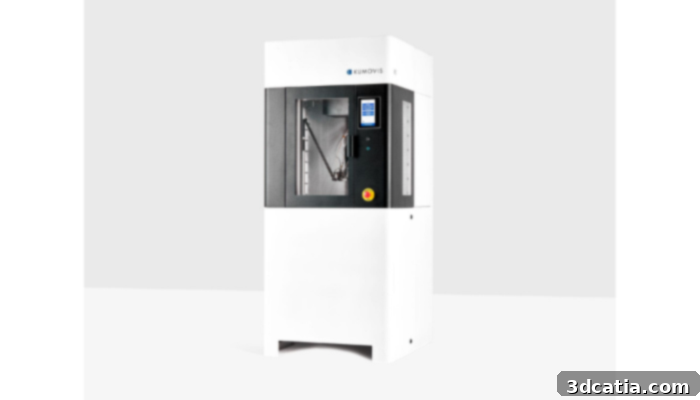
Kumovis R1 Medical 3D Printer (Image credit: Kumovis)
Another defining characteristic of the R1 is its sophisticated thermal management. The 3D printer is equipped with a precisely controlled air flow system that ensures the build space is heated homogeneously to temperatures reaching up to 250 degrees Celsius. This exceptional thermal control is absolutely fundamental for successfully processing high-performance polymers. Without such uniform high temperatures, these advanced plastics are prone to warping and internal stress, making it impossible to achieve the isotropic mechanical properties and dimensional accuracy crucial for implantable medical products. Moreover, the R1 integrates **local temperature management**, a unique capability that allows for individualized influence over the fusion and cooling of specific layers during the printing process. This granular control is vital for optimizing interlayer adhesion, which directly translates to enhanced mechanical strength and improved surface finish. Critically, it also facilitates significantly easier removal of support structures from complex geometries, substantially reducing post-processing time and manual labor, thereby streamlining the overall manufacturing workflow.
Perhaps the most groundbreaking and defining feature of the Kumovis R1 is its distinction as the **only FLM 3D printer on the market with an integrated cleanroom environment**, specifically designed and optimized for medical technology. This means that within the R1’s installation space, a highly efficient, built-in filter system actively creates and maintains an ISO-compliant cleanroom atmosphere. This innovative feature is indispensable for preventing contamination during the 3D printing process, which is paramount when producing sensitive medical implants and devices where sterility and purity are non-negotiable. Such an environment provides ideal conditions for point-of-care applications, enabling hospitals and medical facilities to produce sterile, high-quality, patient-specific devices on-site, directly addressing urgent clinical needs. Furthermore, the R1’s thoughtful design and compact footprint ensure it is exceptionally well-suited for seamless integration into existing certified cleanrooms, augmenting its versatility and utility within highly regulated medical production environments.
3DN: Why did Kumovis decide to focus on high-performance polymers such as PEEK, PPSU, or PLLA in additive manufacturing? What are the advantages and potential disadvantages of these materials?
The decision to extensively utilize high-performance polymers like PEEK, PPSU, and PLLA in our additive manufacturing solutions was informed by several strategic considerations. Initially, the academic backgrounds of our founding team, deeply rooted in both plastics engineering and medical technology, played a significant role. We were keenly aware that high-performance polymers, particularly PEEK (Polyether Ether Ketone), had already established a long and proven track record of success and widespread acceptance in conventional medical applications due to their exceptional properties. However, what truly tipped the scales in favor of these materials were the distinct and compelling advantages they offer over traditional metallic implants, especially when their properties are fully leveraged through advanced additive manufacturing processes.
One of the most profound benefits lies in the **mechanical properties** of these various polymers. Their elastic modulus, or stiffness, is remarkably similar to that of human cortical bone. This physiological matching is critical because it helps to significantly mitigate the phenomenon known as “stress shielding,” a common issue with much stiffer metallic implants. Stress shielding occurs when the implant bears too much of the mechanical load, potentially leading to bone resorption and weakening of the surrounding bone tissue over time. By using polymers whose properties more closely mimic bone, we can promote healthier bone remodeling and more natural load transfer, which is crucial for long-term implant success. Furthermore, with regard to their **radiolucency**, plastics offer substantial advantages in diagnostic imaging. Unlike metallic implants, which often create significant artifacts and obscurities in X-rays, CT scans, and MRIs, polymer implants are radiolucent. This allows clinicians to obtain much clearer images of the surrounding tissues and accurately assess post-operative healing, bone integration, or potential complications without imaging interference. Last but not least, the use of these advanced polymers leads to a significantly lower risk of **allergies** and adverse tissue reactions that can sometimes be associated with certain metal alloys, thereby preventing the need for costly, painful, and often traumatic secondary operations for implant revision or removal.
In addition to these critical clinical advantages, **cost-effectiveness** naturally plays a pivotal role for healthcare providers and manufacturers. By deploying our advanced additive manufacturing technology with materials such as PPSU (Polyphenylsulfone), which offers an excellent balance of properties and processability, the return on investment (ROI) can be substantially increased, potentially by up to 20 percent. This is achieved through optimized material utilization, reduced lead times for custom parts, and the ability to produce highly complex geometries efficiently.
While the advantages are numerous, it’s also important to address areas where traditional materials, particularly titanium, currently hold an advantage. When it comes to the direct **osseointegration** of an implant—its potential to allow direct bone ingrowth onto its surface, thereby improving long-term stability and facilitating nutrient transport—titanium currently remains the material of choice due to its inherent bioactivity. However, Kumovis is actively and extensively working on innovative solutions in this precise area. Our initial developments, specifically with a view to **surface functionalization** of medical plastic products, are demonstrating highly promising results. By chemically or structurally modifying the surface of polymer implants, we aim to enhance their osteoconductive properties, thereby bridging the gap with titanium and expanding the range of clinical applications for high-performance polymer implants in complex load-bearing scenarios traditionally dominated by metals.
3DN: Do you have any final words or insights you’d like to share with our readers regarding the future of medical 3D printing?
Absolutely. Additive manufacturing, particularly within the medical sphere, has fundamentally transformed and matured far beyond its nascent stages of producing simple anatomical models or basic surgical instruments. We are currently witnessing a profound and exciting paradigm shift in healthcare. The future of medical device production, whether executed in specialized industrial manufacturing facilities or directly within hospital settings at the point of care, will increasingly revolve around the creation of highly personalized and intricately functionalized implants. These sophisticated devices, precision-crafted from advanced high-performance polymers such as PEEK and a continuously expanding array of other medical-grade plastics, will emerge directly from 3D printers as standard practice.
This transformative shift signifies a significant move towards more **decentralized and resource-saving production methodologies**. It empowers healthcare providers with unprecedented agility, allowing them to respond to individual patient needs with remarkable speed and precision. The ability to produce bespoke implants that perfectly match unique patient anatomies and specific pathologies, exactly when and where they are needed, is revolutionizing clinical practice. This not only significantly enhances patient outcomes through unparalleled precision and personalization but also optimizes the entire medical device supply chain, dramatically reducing waste, minimizing lead times, and ultimately lowering costs. Kumovis is immensely proud to be at the vanguard of this revolution, actively enabling a future where advanced medical care is more accessible, more precise, more sustainable, and truly tailored to every individual patient’s requirements.
*Cover photo credit: Bayern Innovativ | Kumovis
To delve deeper into the innovative work of Kumovis and their significant contributions to advancing medical 3D printing, we encourage you to visit their official website HERE. We warmly invite you to share your thoughts on Kumovis and the exciting future of additive manufacturing in medicine! Please let us know your insights in a comment below or connect with us on ourFacebook,Twitter andLinkedIn pages! For the very latest 3D printing news delivered directly to your inbox each week, be sure to sign up for our free weeklyNewsletter here.