
Revolutionizing Industries: 3D Printing’s Impact on Extreme Sports, Emergency Services, Military Infrastructure, and Beyond
The world of manufacturing is experiencing an unprecedented transformation, driven largely by the innovative capabilities of 3D printing, also known as additive manufacturing. This week, we delve into a series of groundbreaking applications that underscore the versatility and impact of this technology across diverse sectors. From optimizing performance in extreme sports to enhancing critical emergency response systems and redefining military infrastructure, 3D printing is proving itself to be a pivotal force for progress. Join us as we explore these exciting developments, including custom snowboard bindings tested on Colorado’s snowy slopes, specialized parts for rescue stretchers, and a massive 3D printed barracks accommodating dozens of soldiers. These stories not only highlight current achievements but also offer a glimpse into the boundless potential that 3D printing holds for the future.
Top 1: Pushing Boundaries with 3D Printed Snowboard Bindings
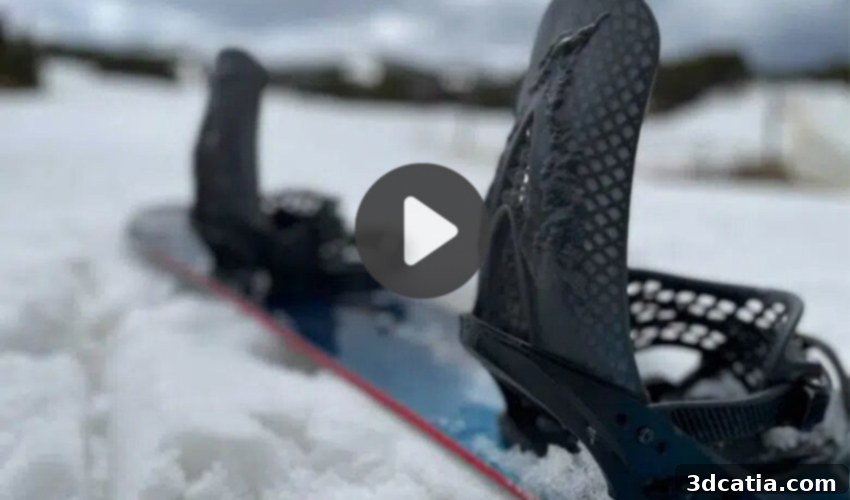
Innovation in sports equipment is constantly seeking an edge, and 3D printing is delivering just that, especially in demanding environments like snowboarding. The American additive manufacturing giant, Stratasys, has recently collaborated with the avant-garde Slicelab design studio to engineer revolutionary 3D printed snowboard bindings. This partnership leveraged Stratasys’s advanced Origin One high-speed 3D printer and Henkel Adhesives’ high-performance Loctite 3172 material, specifically chosen for its exceptional strength and durability under extreme conditions. The objective was to create bindings capable of withstanding the immense loads and stresses inherent in aggressive snowboarding.
Through the application of precise analysis technologies, the team achieved an optimized topology for the bindings. This involved designing complex internal structures that maximize strength where needed while minimizing material usage, resulting in lighter yet incredibly robust components. The true test of this innovative design came recently on the challenging slopes of Breckenridge, Colorado. The 3D printed snowboard, complete with these custom bindings, underwent rigorous testing, and the results were unequivocally positive. This project stands as a testament to how additive manufacturing can facilitate rapid iteration, deliver superior performance characteristics, and usher in an era of personalized and high-performance sports gear. The success of these bindings signals a significant step forward for customization and performance enhancement in extreme sports, promising a future where athletes can benefit from equipment perfectly tailored to their unique needs and challenges.
Top 2: TRUSTTO Leverages 3D Printing for Critical Emergency Services Equipment
In the crucial realm of emergency response, where every second counts and reliability is paramount, innovative solutions are constantly sought to improve patient care and rescuer efficiency. TRUSTTO, an emerging startup, is making significant strides in this area by developing specialized tools for rescue services. The company’s current focus is on addressing the logistical and functional challenges associated with the transport of individuals requiring urgent medical attention. To overcome these hurdles and enhance existing equipment, TRUSTTO has wisely integrated 3D printing into its manufacturing process.
Additive manufacturing provides TRUSTTO with unparalleled flexibility and speed, enabling them to rapidly prototype and produce various components essential for stretchers and other patient transport devices. This capability is critical for iterating designs quickly, adapting to specific needs, and manufacturing on-demand parts that might otherwise be costly or time-consuming to procure through traditional methods. To achieve this efficiency and precision, TRUSTTO utilizes IDEX (Independent Dual Extruder) technology from the Spanish manufacturer BCN3D. This advanced system allows a 3D printer to operate with two printheads simultaneously and independently, dramatically increasing production speed and offering the ability to print two identical parts at once, or even parts from different materials or colors in a single print job. By harnessing the power of 3D printing and IDEX technology, TRUSTTO is not only developing more effective tools for emergency services but also paving the way for a future where rescue operations are supported by highly adaptable, customized, and rapidly deployable equipment, ultimately saving more lives and improving patient outcomes.
Top 3: ICON and the Texas Military Department Construct North America’s Largest 3D-Printed Barracks
The U.S. military has long recognized the strategic advantages of additive manufacturing, integrating 3D printing into various applications for logistics, maintenance, and rapid deployment. From creating specialized vehicle maintenance tools, such as the steering wheel removal device for the Marines, to producing crucial replacement parts on demand in remote locations, 3D printing offers unprecedented flexibility and efficiency. Building on this expanding adoption, a landmark collaboration between ICON, a leader in advanced construction technologies, and the Texas Military Department has resulted in the design and construction of an impressive new training barracks at the Camp Swift Training Center in Bastrop, Texas.
This monumental project stands as a testament to the transformative power of large-scale additive manufacturing. The structure, spanning an impressive 1,158 square feet, now holds the distinction of being the largest 3D-printed building in North America. Designed with military precision and efficiency, the barracks is capable of housing up to 72 soldiers, providing robust and rapidly deployable infrastructure for essential training operations. ICON’s innovative construction methods, utilizing their proprietary Vulcan construction system, drastically reduce construction time, minimize material waste, and enhance structural resilience compared to traditional building techniques. This initiative not only provides a modern and efficient living and training facility for service members but also showcases the immense potential of 3D printed construction for military applications globally, including rapid humanitarian aid efforts, disaster relief, and the creation of sustainable, cost-effective infrastructure in challenging environments. It marks a significant step towards a future where critical infrastructure can be deployed with unprecedented speed and adaptability.
Top 4: The Prague Planetarium Embraces 3D Printing for Immersive Education
Education and scientific outreach are increasingly benefiting from the tactile and visual capabilities offered by 3D printing. A prime example of this synergy can be found at the Prague Planetarium, a beacon of astronomical exploration located just a few steps away from the renowned Prusa factory. This unique proximity has fostered an innovative partnership, as the planetarium’s basement houses a dedicated facility equipped with four Original Prusa 3D printers. These machines are not merely for hobbyists; they are actively utilized to produce a diverse array of objects specifically designed for educational exhibits and interactive displays.
Among the many fascinating pieces created, two objects stand out for their historical significance and intricate detail. One of these is a meticulously crafted replica of the lunar module Eagle, a pivotal component of the Apollo 11 mission – the spacecraft that famously carried the first humans to land on the moon. Such a replica allows visitors, particularly younger audiences, to engage physically with an iconic piece of space history, understanding its scale and complexity in a way that two-dimensional images cannot convey. The ability to print complex celestial bodies, spacecraft models, and topographical maps of planets offers an unparalleled educational experience. By leveraging 3D printing, the Prague Planetarium can continuously refresh and expand its exhibits, providing dynamic and engaging content that makes the wonders of the cosmos more accessible and tangible for all who visit, solidifying its role as a leading center for space education and public engagement.
Top 5: Unlocking Tomorrow: What Does the Future Hold for 3D Printing?
For those who might still question the transformative potential of 3D printing, its trajectory from a niche prototyping tool to a cornerstone of modern industrial production offers compelling evidence. Additive manufacturing is not just a technology; it’s a paradigm shift, fundamentally altering how we conceive, design, and produce goods. The journey of industrial production, from mass assembly lines to today’s highly customizable and automated processes, has found a new frontier in 3D printing, promising unprecedented benefits.
The core advantages of using additive manufacturing processes are multifaceted and profound. Firstly, it offers unparalleled **design freedom**, enabling the creation of complex geometries and intricate internal structures that are impossible with traditional subtractive methods. This leads to lighter, stronger, and more efficient parts. Secondly, **customization and personalization** are inherent to 3D printing, allowing for mass customization of products tailored to individual needs without significant cost penalties. Think custom medical implants, specialized consumer goods, or even personalized sports equipment. Thirdly, **waste reduction and sustainability** are major benefits, as 3D printing builds objects layer by layer, minimizing material waste compared to cutting material away. This, coupled with the potential for localized production, reduces supply chain complexities and environmental impact.
Furthermore, the **speed of prototyping and product development** is dramatically accelerated, allowing businesses to innovate faster and bring products to market quicker. This agility fosters continuous improvement and responsiveness to market demands. The ability for **on-demand manufacturing** also revolutionizes inventory management, reducing the need for large stockpiles and enabling production only when an item is needed. Professionals across various industries emphatically assert that 3D printing is an innovative technology reshaping how humans produce goods. From aerospace and automotive to healthcare and consumer electronics, it’s driving efficiencies, unlocking new possibilities, and fostering innovation that was once considered science fiction. As we continue to refine materials, machines, and processes, the future promises even more radical applications, pushing the boundaries of what’s achievable and cementing 3D printing’s role as a cornerstone of the next industrial revolution. Now, you can see for yourself how this exciting technology is evolving!
What are your thoughts on this week’s inspiring compilation of 3D printing innovations? We love hearing from our readers and value your perspectives on how additive manufacturing is shaping our world. Please share your insights and comments below, or engage with us on our Facebook and Twitter pages. To stay fully informed about all the latest breakthroughs, trends, and news in the dynamic world of 3D printing, don’t forget to sign up for our free weekly newsletter, delivered straight to your inbox! Be part of the conversation and never miss an update!
Cover Photo Credit: Stratasys