
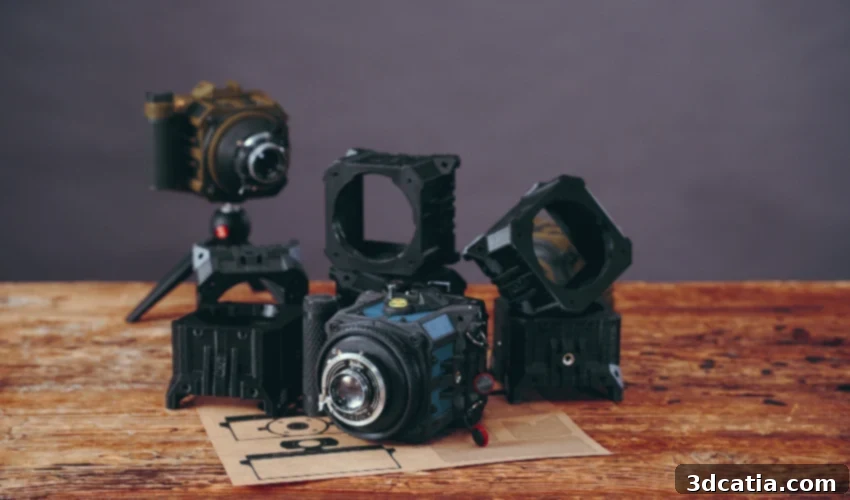
Dora Goodman Cameras: Pioneering Open-Source 3D Printed Cameras for Analog Photography Enthusiasts
In an era dominated by digital photography, Dora Goodman Cameras emerges as a beacon for analog enthusiasts,
reimagining classic photography through the innovative lens of 3D printing. We recently had the privilege of
speaking with Dora Goodman
herself, the visionary founder of the eponymous company. Based in the vibrant city of Budapest, Dora and her
dedicated team are deeply passionate about the art of analog photography. Their unique approach involves
conceptualizing and producing medium format and pinhole cameras using advanced 3D printing technologies,
alongside crafting bespoke, one-of-a-kind custom film cameras based on their distinctive designs.
At the heart of Dora Goodman Cameras lies an environmentally conscious
and collaborative philosophy. This ethos guides every decision, from sourcing the most sustainable materials
possible for camera construction to making all necessary 3D printing files freely accessible to the global public.
This commitment not only fosters a thriving community of makers and photographers but also champions
sustainability and democratizes access to camera design and creation.
The Genesis of Dora Goodman Cameras: From Craft to Innovation
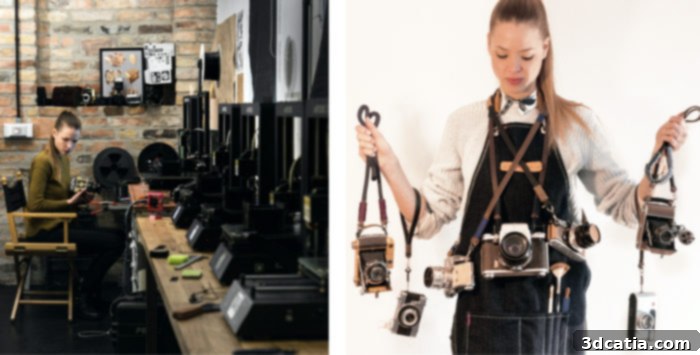
Dora Goodman’s journey into camera manufacturing began in 2016, stemming from a desire to merge her diverse
interests in fashion, handmade designer products, and photography. What started as a nocturnal endeavor in her
home workshop quickly evolved into something extraordinary. She initially focused on redesigning existing film
cameras, meticulously applying wood veneer and handcrafting exquisite leather camera straps. This hands-on,
artisanal approach allowed her to cater to fellow film photographers who sought personalized and unique camera
accessories. The use of premium materials such as fine wood, supple leather, and clear glass opened up
limitless possibilities for creating truly unique, long-lasting, and treasurable items. Each piece was distinct,
a testament to bespoke craftsmanship, ensuring that no two cameras were ever identical. This early period laid
the foundation for her meticulous attention to detail and her commitment to quality, principles that continue
to define Dora Goodman Cameras today.
Innovating with 3D Printing: From Wood Prototypes to Open-Source Designs
The dream of designing and building her own camera from the ground up was a constant driving force for Dora.
Her very first prototype was crafted entirely from wood, a labor-intensive process that soon led her to explore
alternative manufacturing methods. During this time, Dora was already experimenting with 3D printing,
recognizing its potential to offer a more efficient and versatile solution compared to the time-consuming
nature of woodworking. As additive manufacturing (AM) technology rapidly gained popularity, Dora Goodman Cameras
began a gradual but decisive shift towards incorporating 3D printing into their core design and production
processes. This transition culminated in the creation of their inaugural 3D printed camera: the Goodman One.
Following the success of the Goodman One, the team developed the Goodman Axis. While both the Goodman One and
Goodman Axis were made available as open-source projects, they were never fully finalized for commercial sale
by Dora Goodman Cameras themselves. Instead, they were intentionally released to the community, inviting users
to print, develop, improve, and fine-tune these designs. This collaborative approach is a cornerstone of their
philosophy, fostering a vibrant ecosystem where analog photography enthusiasts actively contribute to the
evolution of the cameras.
The third camera, the Goodman Zone, marked a significant milestone. The team believed this model possessed the
potential for commercial viability, leading them to meticulously refine it for market release. The Goodman Zone
was launched in October 2019 as a DIY package, empowering users to assemble their own cameras. This DIY
approach allowed enthusiasts to experience the satisfaction of building their photographic tools. Their latest
creation, the Scura, a sophisticated pinhole camera, was introduced in March 2020, further expanding their
range of unique 3D printed offerings. The continued development and community engagement around these open-source
projects truly embody what Dora Goodman Cameras stands for.
A customized version of Dora Goodman’s third camera, the Goodman Zone.
Advantages and Challenges of 3D Printing in Camera Design
Utilizing 3D printing technology offers Dora Goodman Cameras unparalleled creative freedom, allowing them to
transform their visions into tangible, beautiful, and highly functional cameras and accessories. This technology
is instrumental in meeting the specific needs and desires of their growing community. The inherent flexibility
and endless possibilities offered by 3D printing mean they are not only creating products they always wished
existed but are also continuously improving and refining their designs based directly on community feedback.
When an idea sparks, it’s merely a matter of time and effort before it can be materialized and tested in the
real world. The most compelling advantage is the rapid prototyping capability; concepts can take physical form
within a day or two, accelerating the design cycle significantly. This agility is crucial for innovation and
responsive development in a niche market.
However, 3D printing, especially for developing complex products like cameras, is not without its challenges.
One significant drawback is the considerable time investment required for prototyping. Achieving a truly refined
and functional prototype often takes months of iterative design and testing. This process also demands a
substantial financial investment in materials, as countless versions might need to be printed, evaluated, and
discarded before finding a solution that works perfectly. It’s not uncommon to spend 20 hours printing a design
only to discover it still falls short of expectations, requiring a complete restart. This necessitates a profound
amount of patience and dedication. Furthermore, when working with non-industrial, more accessible machines—which
is central to their open-source philosophy—technical glitches can frequently occur. Imagine starting a print in
the evening, hoping for a finished part by morning, only to wake up and find the machine malfunctioned overnight,
requiring the entire process to begin anew. These setbacks are part and parcel of the 3D printing development
journey.
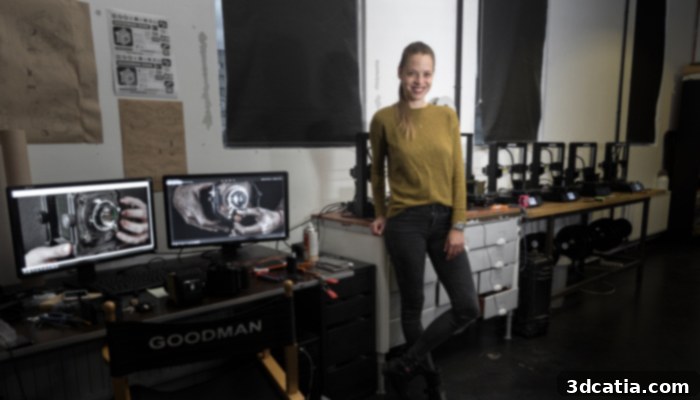
Dora Goodman alongside Anycubic i3 Mega printers in her workshop.
Choosing the Right Tools: FDM Printers and Sustainable Filaments
The world of 3D printing encompasses a variety of techniques, each with its own specific materials and applications.
While several advanced and often expensive methods exist, Dora Goodman Cameras deliberately chose to focus on
Fused Deposition Modeling (FDM), the most common and accessible technique. This decision aligns perfectly with
their core principle of open-source availability. By opting for FDM, they ensure that anyone interested in 3D
printed cameras can affordably access a basic 3D printer and experiment with their designs, rather than being
limited by high-cost, high-performance industrial machines. The goal was to democratize camera creation, making
it an inclusive pursuit for enthusiasts worldwide.
Had they chosen more professional and exclusive techniques, the very essence of their open-source model would
be compromised, as few would have the opportunity to participate. Currently, their workshop is equipped with
Anycubic i3 Mega printers, which they find perfectly satisfactory for their needs, balancing performance with
affordability and reliability for continuous production.
The market for filament materials is constantly expanding, offering a vast array of options from numerous brands.
Among the most common and versatile filaments are PLA (Polylactic Acid), PET (Polyethylene Terephthalate),
and ABS (Acrylonitrile Butadiene Styrene). Beyond these staples, the market also features an exciting selection
of exotic filaments, including blends mixed with wood, steel, carbon fibers, and an endless palette of colors
and finishes. This rapid evolution means new innovations and materials are introduced almost weekly. For their
production, Dora Goodman Cameras primarily utilizes Colorfabb Ngen filament, chosen for its excellent balance
of affordability, quality, and wide availability, further supporting their commitment to accessibility for the
DIY community.
GoodLAB: Fostering an Open-Source Photography Community
From its very inception, Dora Goodman Cameras has operated on a robust open-source model. The cornerstone of this
approach is the GoodLAB platform, where all open-source files are freely available to registered members. This
platform empowers individuals to experiment with building and printing their own cameras, fostering a global
community of makers and photographers.
However, shortly after launching the open-source model, Dora Goodman Cameras began receiving numerous requests
from individuals who wished to purchase their cameras directly. Many enthusiasts lacked access to a 3D printer
or were unfamiliar with its operation. Recognizing this demand, the company strategically introduced DIY camera
packages. This initiative maintained the spirit of hands-on involvement, allowing customers to experience the
profound joy of assembling their own cameras. The team firmly believes that this building process creates a unique
and special bond between the photographer and their device, reminiscent of the satisfaction derived from crafting
objects in childhood.
Acknowledging that the DIY approach isn’t for everyone, Dora Goodman Cameras expanded its offerings in December
of last year by introducing the option to purchase pre-assembled cameras. This decision was a direct response
to community feedback, ensuring that even those without the time or inclination for DIY could still access
their meticulously designed cameras. Presently, a significant focus is also placed on creating full custom
cameras. These exquisite, one-of-a-kind pieces are tailored to individual preferences, coming complete with
matching lenses, backs, special accessories, and personalized aesthetics, embodying the ultimate in bespoke
analog photography.
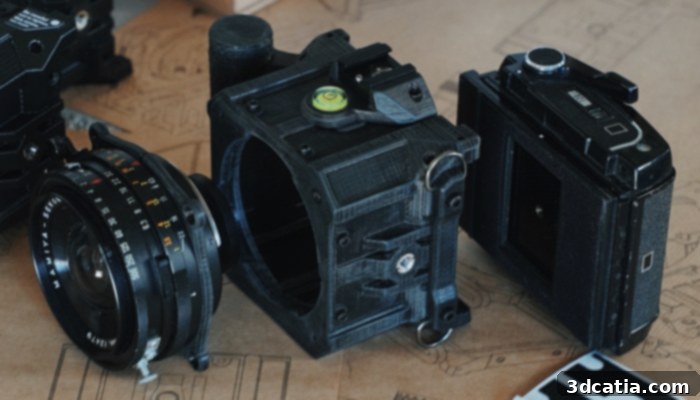
Dora Goodman offers DIY kits for those unable to 3D print camera parts themselves.
The Philosophy Behind Open-Source Camera Design
The fundamental essence of Dora Goodman Cameras is deeply rooted in its open-source philosophy. All camera designs
are freely available to everyone, a principle that Dora Goodman states will never change. This commitment fosters
a dynamic and collaborative environment where the community actively participates in the evolution of these cameras.
The team thrives on observing their community members improving, modifying, and transforming the camera designs,
often adding innovative ideas or functions. This collaborative spirit extends to sharing; community members
frequently share their modified files with Dora Goodman Cameras, which are then, in turn, re-shared with the
broader community. This creates a vibrant, cyclical process of collective creation and improvement, uniting
analog photography enthusiasts in a shared journey of building and innovating together.
Beyond the practical benefits, there’s a profound satisfaction in the entire process of creating a 3D printed
camera. It begins with initiating a new print, and for the initial half-hour, one can simply sit and observe,
mesmerized as layers slowly accumulate, meticulously building the camera tenths of a millimeter at a time. This
moment of watching a digital design materialize into a physical object is incredibly rewarding. Once the printing
is complete, the next exciting stage begins: assembling your very own camera. This journey, from digital concept
to tangible photographic instrument, offers a unique and deeply personal experience for any photographer. It’s
a special kind of creative flow, a bond formed through creation, and it’s this unique feeling that Dora Goodman
Cameras passionately seeks to share with the entire analog photography community.
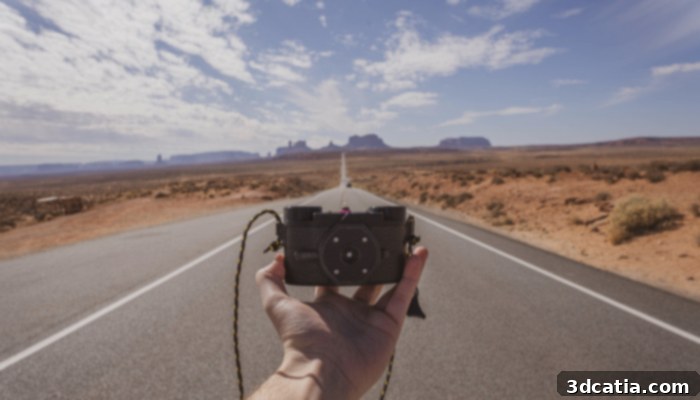
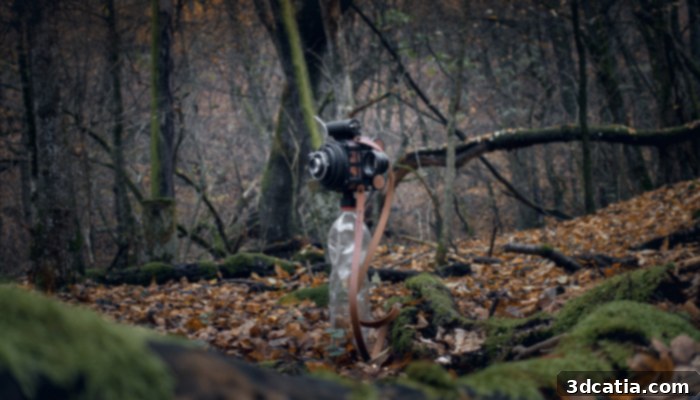
The latest Dora Goodman Camera, the Scura, is a pinhole camera.
A Message to Aspiring Photographers and Makers
For any true photography enthusiast, Dora Goodman offers a compelling invitation: you owe it to yourself to
experience the profound joy of building your own camera at least once in your lifetime. This hands-on process
forges an unparalleled bond between you and your photographic device, transforming it from a mere tool into a
personal extension of your creative vision. You will develop an intimate understanding of its mechanics and
design, making every shot, every moment captured, a truly special and memorable part of your photographic
journey. Embrace the making, embrace the connection, and elevate your passion for analog photography!
*All photos courtesy of Dora Goodman Cameras
What are your thoughts on the innovative GoodLAB platform and the unique philosophy of Dora Goodman Cameras?
We encourage you to explore more about Dora Goodman Cameras HERE.
Share your insights and opinions in a comment below or connect with us on our
Linkedin,
Facebook, and
Twitter pages!
Don’t miss out on the latest 3D printing news and innovations – sign up for our free weekly
Newsletter here, delivered straight to your inbox!