
The Future is Now: A Deep Dive into This Week’s Top 3D Printing Innovations
Welcome to an exclusive exploration of the most groundbreaking advancements shaping the world of additive manufacturing. This week, we bring you an inspiring collection of five transformative stories, each highlighting the immense potential and real-world impact of 3D printing technology. From revolutionizing medical prosthetics and optimizing industrial manufacturing processes to pioneering sustainable practices and reimagining residential construction, these developments are not just incremental changes – they are paradigm shifts. Join us as we uncover how 3D printing is making artificial eyes more accessible and personalized, enabling leading CAD/CAM companies to embrace hybrid manufacturing, creating advanced spinal implants for better patient outcomes, building entire communities of innovative homes, and fostering eco-friendly habits in resin 3D printing. Get ready to witness the cutting edge of innovation and understand how these breakthroughs are poised to redefine industries and improve lives.
Revolutionizing Ocular Prosthetics: The Power of 3D Printed Artificial Eyes
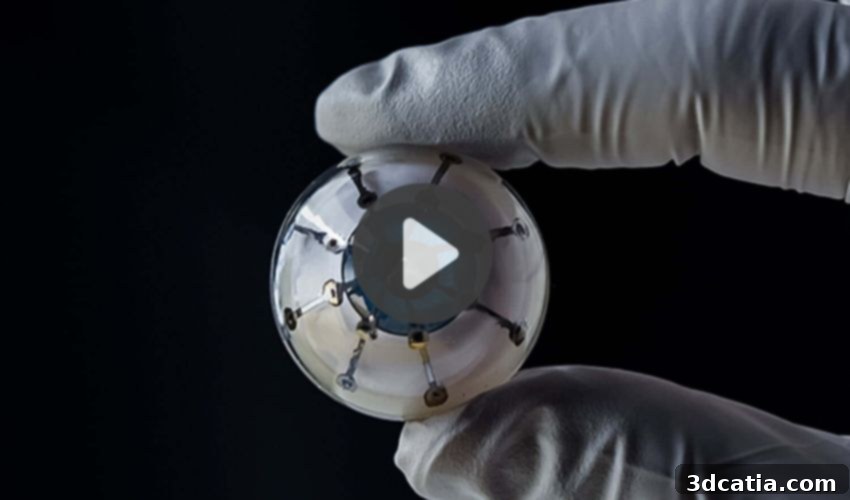
The field of ocular prosthetics, dedicated to restoring appearance and confidence for individuals who have lost an eye, is experiencing a profound transformation thanks to the integration of 3D printing technology. Traditionally, the creation of a prosthetic eye has been an intricate and time-consuming craft, relying heavily on the meticulous skills of ocularists like Nicholas Puls. These highly trained specialists painstakingly sculpt, paint, and fit each prosthesis by hand, aiming to perfectly match the patient’s existing eye in terms of color, iris detail, and overall form. This bespoke process, while yielding truly individualized results, can be lengthy, costly, and geographically restrictive for patients requiring these life-changing devices. The challenges include long waiting lists, multiple fitting appointments, and the difficulty of exact reproduction if a replacement is needed.
However, institutions like the Herston Biofabrication Institute are pioneering a new frontier. They are currently conducting critical trials to rigorously evaluate the effectiveness and superiority of 3D printed eyes compared to their handmade counterparts. This innovative approach begins with advanced 3D scanning techniques and high-resolution digital photography of the patient’s orbital area and remaining eye. This data is then used to create a precise digital model, allowing for unparalleled accuracy and customization. The 3D printing process can then rapidly produce a prosthetic eye that is a perfect anatomical fit and aesthetically matched. This technology not only dramatically reduces the production time – from weeks or months to potentially just hours or days – but also significantly lowers manufacturing costs. Furthermore, digital designs allow for easy reproduction and global distribution of prostheses to patients in remote areas or those with limited access to specialized ocularists.
While machine-printed eyes offer undeniable advantages in speed, cost, and reproducibility, many ocularists, including those involved in these trials, believe that the optimal solution lies in a hybrid approach. This strategy leverages the strengths of both human craftsmanship and additive manufacturing. For instance, 3D printing can create the precise base shape and underlying structure, ensuring a perfect anatomical fit. Then, human ocularists can apply their artistic expertise for the final painting and detailing, adding the subtle nuances and lifelike qualities that are often difficult for machines to replicate perfectly. This collaborative model ensures that patients receive the best possible outcome: a prosthesis that is both functionally superior and aesthetically indistinguishable from a natural eye. This advancement holds immense promise for improving the quality of life for countless individuals, making personalized ocular prosthetics more accessible and affordable worldwide, truly embodying the humanitarian potential of 3D printing in medical applications.
Inside SolidCAM: A Glimpse into Hybrid Manufacturing and 3D Printing Innovation
Our team recently had the privilege of an exclusive visit to SolidCAM’s Center of Operations in Israel, a global leader in advanced CAD/CAM software solutions. This visit provided an invaluable opportunity to go behind the scenes and understand the strategic direction of a company renowned for its innovations in subtractive manufacturing. We were warmly welcomed by Dr. Emil Somekh, the visionary Founder and CEO of SolidCAM, who offered profound insights into the brand’s expansive vision, particularly its proactive venture into the rapidly evolving field of 3D printing. This move signifies SolidCAM’s recognition of the growing convergence between traditional and additive manufacturing processes, moving towards a more integrated, hybrid manufacturing future.
The tour commenced with an exploration of SolidCAM’s state-of-the-art milling area, guided by Michael Vinetski, the Vice President of Product Management. Here, we witnessed firsthand the precision and complexity involved in modern subtractive manufacturing, a cornerstone of SolidCAM’s expertise. The company’s iMachining technology, for example, is celebrated for its ability to significantly reduce machining times and extend tool life, showcasing their commitment to efficiency and innovation in conventional methods. Following this, under the expert guidance of Alexander Miasnikov, the Additive Technical Manager, we delved into their burgeoning 3D printing facilities. This segment of the tour was particularly enlightening, as it offered a clear perspective on how a company deeply rooted in traditional CNC machining is strategically integrating additive manufacturing into its portfolio. We observed various 3D printers in operation, hinting at SolidCAM’s exploration of diverse additive technologies to complement their existing strengths.
Through our ongoing “Inside 3D Tour” series, we are committed to offering our audience an unprecedented glimpse into the inner workings of leading companies within the additive manufacturing sector. These tours are designed to demystify complex technologies and showcase the innovative spirit driving the industry forward. SolidCAM’s strategic entry into 3D printing is a testament to the industry’s shift towards hybrid manufacturing workflows, where the benefits of both subtractive and additive techniques are combined to achieve superior product performance, design freedom, and manufacturing efficiency. This integration allows for the creation of components that are impossible to produce with traditional methods alone, such as parts with internal lattice structures or intricate cooling channels. Companies like SolidCAM are not just adapting to change; they are actively shaping the future of industrial production by embracing a comprehensive approach to manufacturing. Watch the video below to experience this journey:
Advancing Spinal Surgery: The Impact of 3D Printed Interbody Spacers by HEDRON
In a significant leap forward for orthopedic medicine, Globus Medical recently announced the successful completion of the first procedure utilizing the Hedron IA implant. This pioneering device is a 3D printed integrated ALIF (anterior lumbar interbody fusion) spacer, meticulously engineered for vertebral body fixation. The outpatient procedure, a testament to the evolving capabilities of modern surgery, was skillfully performed at Englewood Health in New Jersey by the esteemed Joshua S. Rovner, MD. This breakthrough underscores the profound impact of additive manufacturing on medical device innovation, particularly in spinal care.
The Hedron IA spacer is specifically designed to address the needs of patients suffering from degenerative disc disease, a common condition characterized by the breakdown of spinal discs, leading to pain, instability, and neurological symptoms. Traditional treatment often involves spinal fusion, where damaged discs are removed and replaced with a spacer to maintain disc height and facilitate bone growth across vertebrae. The Hedron IA offers several compelling advantages over conventional implants. Its design facilitates minimally invasive surgery, which can lead to reduced patient discomfort, smaller incisions, less blood loss, and faster recovery times. The implant’s unique geometry ensures easy insertion and, once in place, provides a sturdy construct, offering immediate stability to the compromised spinal segment.
What truly sets the Hedron IA apart is its sophisticated biomimetic porous scaffold. This innovative structure, made possible only through advanced 3D printing techniques, is designed to mimic the trabecular bone naturally found in the human body. The precise porosity and interconnected pore network promote osteoconduction and osteointegration, meaning it actively encourages bone formation and allows bone cells to grow into and through the implant. This balance of strength and porosity is critical for long-term success, fostering robust fusion and leading to significantly improved patient outcomes compared to traditional, solid implants. The ability of 3D printing to create such complex, customizable geometries with optimal biomechanical properties is revolutionizing the development of spinal implants, offering new hope and enhanced quality of life for individuals with debilitating spinal conditions. This successful outpatient procedure marks a new era in spinal surgical interventions, showcasing the transformative potential of additive manufacturing in precision medicine. Check out the video for more details!
Building the Future: Georgetown’s Groundbreaking 3D Printed Home Community
Georgetown, Texas, currently recognized as the fastest-growing city in America, is setting a new benchmark for urban development with its ambitious and groundbreaking project: the construction of 100 3D-printed houses. This visionary initiative represents a significant leap forward for the construction industry, signaling a decisive shift towards more efficient, sustainable, and innovative building practices. The project is a monumental collaboration between two industry titans: Lennar, one of the nation’s largest homebuilders, and Austin-based ICON, a pioneering company at the forefront of construction 3D printing technology. Together, they are not just building houses; they are creating the world’s first large-scale 3D-printed community, poised to redefine how we think about housing development.
The first phase of this futuristic community has already seen significant progress, with an initial release of six of these cutting-edge homes made available for sale. These homes, nestled within the burgeoning Wolf Ranch community, offer a compelling blend of innovation and practicality, with prices ranging between $475,000 and $565,000. Potential homeowners can choose from diverse floorplans, extending from approximately 1,574 to 2,112 square feet, featuring three to four bedrooms and two to three bathrooms. Each home is built using ICON’s proprietary Vulcan construction system, which employs a robotic gantry printer to extrude Lavacrete, a high-strength concrete material, layer by layer. This method allows for rapid wall construction, often completing the structural shell in a matter of days.
The benefits of this revolutionary construction method are multi-faceted and address some of the most pressing challenges facing the housing market today. Firstly, it substantially reduces construction costs by minimizing labor requirements and material waste, as the printer uses only the necessary amount of material. Secondly, the speed of construction is dramatically increased, allowing homes to be delivered at an unprecedented pace, which is crucial in high-demand markets like Georgetown. Furthermore, the resilience of the 3D-printed structures, built with durable concrete, offers enhanced protection against environmental factors. This project is not merely a local success story; it serves as a significant milestone for Central Texas, solidifying the region’s reputation as a hotbed for technological innovation and forward-thinking solutions. While the Wolf Ranch community is still under active development, with only a quarter of the ambitious project completed thus far, its early success clearly indicates the immense potential for 3D printing to provide sustainable, affordable, and high-quality housing solutions on a global scale.
Sustainable 3D Printing: Mastering IPA Recycling for Resin-Based Processes
In the fascinating and rapidly expanding world of resin 3D printing, a significant challenge often arises in the form of waste management, particularly concerning isopropyl alcohol (IPA). IPA is an indispensable solvent used for post-processing, primarily to clean uncured resin from printed parts. However, after repeated use, this IPA becomes saturated with dissolved resin, rendering it ineffective and requiring disposal. This generates a substantial amount of hazardous waste, posing environmental concerns and contributing to operational costs due to the need for fresh IPA and compliant disposal methods. This intriguing video addresses this critical issue by exploring the innovative and practical possibility of recycling resin-saturated IPA, transforming it back into its crystal-clear, usable form.
Join us as we delve into a highly effective and surprisingly accessible method of reclaiming IPA: using a common water distiller. The principle behind this technique is straightforward yet powerful. IPA has a lower boiling point than resin. When heated in a distiller, the IPA evaporates, leaving the non-volatile resin behind. The IPA vapor is then cooled and condensed back into liquid form, resulting in purified, clean IPA ready for reuse. This process significantly extends the lifespan of your IPA supply, drastically reducing both material costs and environmental impact. The video meticulously demonstrates each step of this distillation process, making it easy for any resin 3D printing enthusiast or professional to understand and implement.
Crucially, alongside the practical demonstration, the video shares invaluable safety tips designed to minimize any potential fire risk associated with the distillation process. IPA is highly flammable, and working with heated solvents requires careful attention to safety protocols, including ensuring proper ventilation, using explosion-proof equipment where necessary, and understanding safe handling procedures. Furthermore, a thorough analysis is provided regarding the recovery efficiency of this technique, detailing what percentage of IPA can typically be reclaimed and factors that might influence this efficiency, such as the initial saturation level of the IPA and the distiller’s capabilities. A comprehensive cost analysis also sheds light on the economic viability of IPA reclamation, showcasing the significant savings on purchasing new IPA and avoiding hazardous waste disposal fees, which can lead to a rapid return on investment for the distiller. Don’t miss this insightful exploration of recycling resin-saturated IPA, uncovering the immense potential for sustainable and cost-effective practices that can transform your 3D printing workflow and contribute to a more environmentally responsible additive manufacturing industry.
These five highlights from the world of 3D printing underscore the technology’s incredible versatility and its capacity to drive innovation across diverse sectors. From personalized healthcare solutions and integrated manufacturing workflows to sustainable resource management and groundbreaking architectural projects, additive manufacturing is not just a tool; it’s a catalyst for progress. We hope this deep dive has provided valuable insights into how 3D printing is shaping our future. What are your thoughts on these revolutionary applications, particularly the new 3D printing technology revolutionizing artificial eyes for patients? Let us know your perspective in a comment below or join the conversation on our LinkedIn, Facebook, and Twitter pages! Don’t forget to sign up for our free weekly Newsletter here to get the latest 3D printing news delivered straight to your inbox. You can also find all our compelling videos on our YouTube channel for more engaging content.
*Cover photo credits: ABC News