
Filaret’s Green Revolution: Transforming Baltic Sea Cigarette Waste into Sustainable 3D Printing Filament
In a groundbreaking move towards environmental sustainability, Filaret, an innovative Estonian startup specializing in eco-friendly 3D printing materials, has partnered with the Estonian government. Their ambitious project aims to tackle a significant ecological challenge: the vast quantities of cigarette butts littering the country’s picturesque beaches and polluting the Baltic Sea. This pioneering collaboration seeks to convert this pervasive waste into high-quality, sustainable filament for 3D printing, thereby transforming a hazardous pollutant into a valuable resource.
Local authorities in Tallinn, the capital of Estonia, have long highlighted cigarette butts as one of the most prevalent and damaging forms of waste found within the Baltic Sea ecosystem. The environmental repercussions of this seemingly small item are immense and far-reaching. A single cigarette butt, for instance, possesses the alarming capacity to contaminate up to 1,000 liters of water, releasing a cocktail of toxic chemicals into the marine environment. Furthermore, these filters are primarily composed of cellulose acetate, a type of plastic that is not biodegradable, meaning it persists in the environment for decades, slowly breaking down into harmful microplastics. Compounding the problem, the toxins embedded within cigarette filters can endure for up to ten years, posing an even greater, long-term threat to the delicate balance of marine biodiversity and overall ecosystem health. This persistent pollution impacts everything from plankton to larger marine animals, disrupting food chains and potentially affecting human health through seafood consumption.
Combating Marine Pollution: Tallinn’s Innovative Collection Initiative
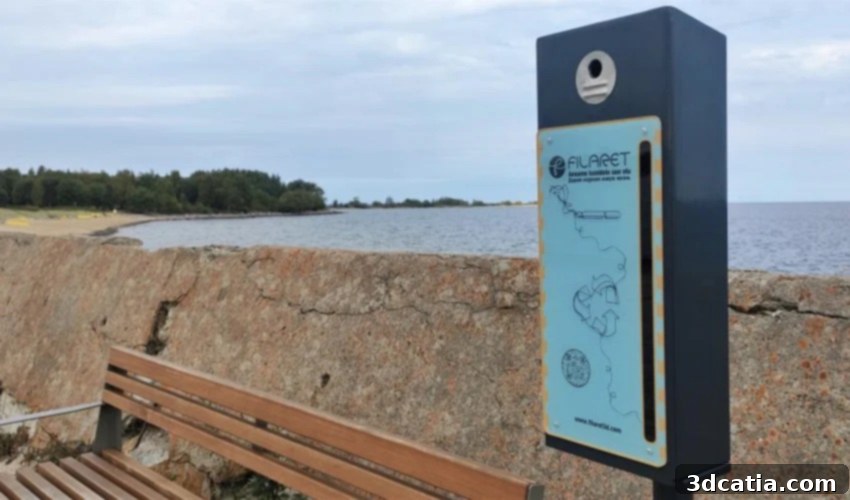
To directly confront this environmental menace and safeguard marine biodiversity, a targeted initiative has been launched in Tallinn. Specially designed garbage cans, dedicated solely to the collection of cigarette butts, are being strategically installed along some of the city’s most popular beaches. This proactive measure provides a convenient and visible solution for the public to responsibly dispose of their cigarette waste, thereby preventing it from reaching the sea. This month, approximately twenty of these specialized bins are being deployed across three key locations: the popular beaches of Stroomi and Pikakari, as well as the bustling quay of Katariina. These sites were chosen due to their high foot traffic and proximity to water, maximizing the potential for collecting a substantial volume of waste.
The authorities are actively engaging with the public, encouraging residents and visitors alike to utilize these new receptacles and play an active role in preventing further beach and sea pollution. This two-month pilot project is designed not only to gather data on collection efficiency but also to raise awareness about the severe impact of cigarette litter. At the culmination of this two-month period, Filaret will undertake the crucial task of emptying these specialized garbage cans. The collected cigarette waste will then be transported to Filaret’s facilities, where it will undergo an innovative transformation process. The ultimate goal is to convert all the collected waste into a novel, compostable, and environmentally friendly 3D printing material. This closed-loop system exemplifies a circular economy approach, where waste is not merely disposed of but reimagined as a valuable feedstock for new products.
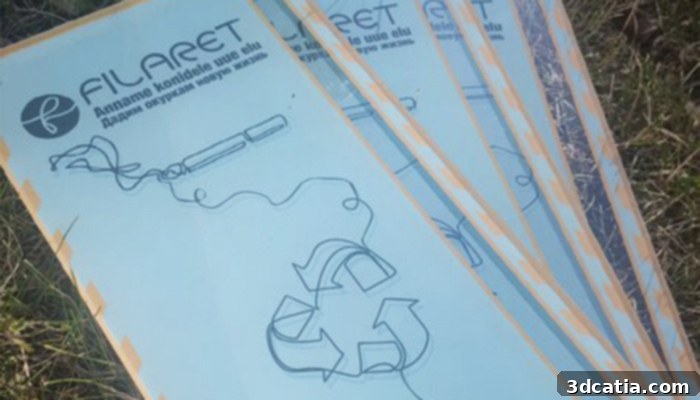
These specially designed bins will be placed across several beaches in Tallinn, contributing to cleaner shores and seas (photo credits: Filaret)
Filaret’s Ambitious Vision: Disrupting the 3D Printing Material Industry
While the precise details regarding the manufacturing process for converting cigarette butts into filament remain undisclosed at this early stage, Filaret has made bold assertions about its aspirations. The company states that it is setting an exceptionally high standard, aiming for its new material to fundamentally revolutionize the additive manufacturing sector. Filaret claims that this innovative filament will represent a “new standard of innovative material,” capable of “disrupting the 3D printing industry.” This disruption is expected not only in terms of material composition and sustainability but potentially in performance and application as well. Although it is not yet clear whether the final material will be optimized for prototyping, functional parts, or large-scale production, the company’s confidence points towards a versatile and high-performance product.
Filaret’s ambitious endeavors are not pursued in isolation; the startup benefits from significant backing from several key organizations within Estonia’s robust innovation ecosystem. Notably, it receives crucial support from the prestigious Tallinn University of Technology, which likely contributes valuable research, scientific expertise, and access to advanced testing facilities. Additionally, the startup incubator Tehnopol has demonstrated its unwavering commitment, providing substantial financial assistance of up to €10,000. Beyond monetary aid, Tehnopol offers invaluable mentorship and strategic guidance, helping Filaret refine its business model, overcome technical challenges, and transform innovative concepts aimed at improving “the health of the planet” into tangible, market-ready realities. This comprehensive support network is vital for a deep-tech startup tackling such a complex environmental and industrial challenge, enabling Filaret to push the boundaries of sustainable material science. For more detailed information on Filaret’s mission and technology, interested parties are encouraged to visit their official website HERE.
The Growing Trend: Additive Manufacturing and Waste Valorization
Filaret’s initiative, while unique in its specific focus and government collaboration, is part of a broader, rapidly expanding trend within the 3D printing industry: the recovery and repurposing of waste materials to create new, sustainable filaments. The drive towards a circular economy and reduced environmental footprint is inspiring innovators worldwide to look at discarded items not as trash, but as untapped resources. This paradigm shift is critical for addressing global waste management challenges and for making 3D printing a truly sustainable technology.
Indeed, Filaret is not the sole pioneer in this domain. Other forward-thinking companies are also actively engaged in similar endeavors. The Basque company 3DKala, for example, has launched its own comprehensive project aimed at mitigating the environmental impact of cigarette butts. Their vision extends beyond just recycling; 3DKala is diligently working to develop a scalable and efficient process for transforming collected cigarette butts into either functional 3D printing filaments or robust insulation materials for the construction industry. This dual-purpose approach highlights the versatility of repurposed waste and the potential for creating multiple value streams from a single waste product. By addressing both the environmental issue of cigarette litter and the demand for sustainable building materials, 3DKala exemplifies comprehensive waste valorization.
On another notable front, the innovation in waste-based 3D printing materials gained significant recognition last March when UBQ Materials received a prestigious South Award at the Southwest 2022 conference. UBQ Materials distinguishes itself by producing a proprietary, bio-based thermoplastic substitute made entirely from unsorted municipal solid waste. This breakthrough material has demonstrated immense potential for various applications, including consumer goods, automotive parts, and, crucially, high-performance 3D printing filament. Their award underscores the growing acknowledgment and acceptance of waste-derived materials as viable, even superior, alternatives to traditional plastics in advanced manufacturing processes. The ability to transform diverse, unsorted waste into a standardized, usable material represents a monumental step towards true circularity and waste reduction on a global scale. This movement also includes initiatives exploring everything from recycled plastics (PET, HDPE, ABS from post-consumer waste) to more unusual sources like coffee grounds, wood waste, and even agricultural byproducts, all being researched and developed into innovative 3D printing filaments.
The Future of Eco-Friendly Additive Manufacturing
The efforts of companies like Filaret, 3DKala, and UBQ Materials are pivotal in shaping the future of both the 3D printing industry and environmental conservation. By pioneering methods to convert problematic waste streams into valuable materials, they are not only reducing pollution but also creating new supply chains that are less reliant on virgin resources. This move towards a circular economy within additive manufacturing offers numerous benefits: it lowers the carbon footprint of production, reduces landfill waste, and potentially makes 3D printing more accessible and affordable by utilizing readily available “waste” as a raw material. Furthermore, these innovations challenge traditional manufacturing paradigms, fostering a culture of creativity and problem-solving that views environmental challenges as opportunities for innovation.
The potential for additive manufacturing to transform waste into new products is immense, offering solutions to some of the planet’s most pressing environmental issues. As technology advances and more research is conducted, we can expect to see an even wider array of waste materials being repurposed for 3D printing, further cementing its role as a key technology in the global sustainability movement. This shift promises a future where everyday waste, from plastic bottles to organic byproducts, could become the building blocks for new innovations, driving both economic growth and ecological recovery.
What are your thoughts on utilizing additive manufacturing to convert various waste streams into valuable 3D printing materials? Do you believe such initiatives will truly disrupt the industry and significantly impact environmental health? We invite you to share your insights and opinions in a comment below, or engage with us on our LinkedIn,Facebook, andTwitter pages! Don’t miss out on the latest advancements and news in the world of 3D printing—sign up for our free weeklyNewsletter here, delivered straight to your inbox! You can also explore all our engaging videos and interviews on our dedicatedYouTube channel for more in-depth content.