
Innovators and Visionaries: The Top 10 Influential 3D Printing Personalities of 2017
While much of the excitement in the additive manufacturing industry often centers around groundbreaking 3D printers and advanced 3D scanners, it’s the brilliant minds behind these innovations that truly drive progress. The unsung heroes and strategic leaders whose vision transforms mere concepts into tangible realities sometimes remain out of the spotlight. To shine a light on these pivotal figures, we’ve compiled our exclusive list of the Top 10 3D printing personalities of 2017. These individuals, hailing from global giants like HP, Markforged, and GE Additive, as well as pioneering startups and creative fields, have been instrumental in pushing the boundaries of what’s possible. From significant breakthroughs in metal 3D printing to captivating 3D printed art and revolutionary construction methods, their contributions have left an indelible mark on the additive manufacturing landscape and set the stage for future growth.
1. Dion Weisler, HP Inc.
If there was one manufacturing giant that consistently captured headlines in 2017 for its aggressive push into additive manufacturing, it was HP. At the helm of this ambitious endeavor was CEO Dion Weisler, whose bold declaration to “revolutionize” the colossal $12 trillion industrial production market resonated throughout the industry. Weisler, who assumed the CEO position in 2015, has strategically steered HP into a leadership role within 3D printing, leveraging the company’s deep expertise in digital printing and global distribution.
Under Weisler’s leadership, 2017 was a year of significant milestones for HP’s 3D printing division. The company unveiled its new HP Jet Fusion 4210 3D printer, a system designed to elevate production speeds and lower operating costs for industrial users, signaling a clear intent to move beyond prototyping into full-scale manufacturing. Furthermore, HP made waves with the highly anticipated announcement of full-color 3D printing capabilities, promising unprecedented design freedom. Perhaps even more impactful was the revelation of an estimated 2019 launch for their metal 3D printers, signaling HP’s commitment to expanding its Multi Jet Fusion technology into a critical segment of the market. Weisler’s vision effectively positioned HP as a formidable force, challenging established players and driving the industrial adoption of additive manufacturing with cutting-edge technology and a clear strategic roadmap.
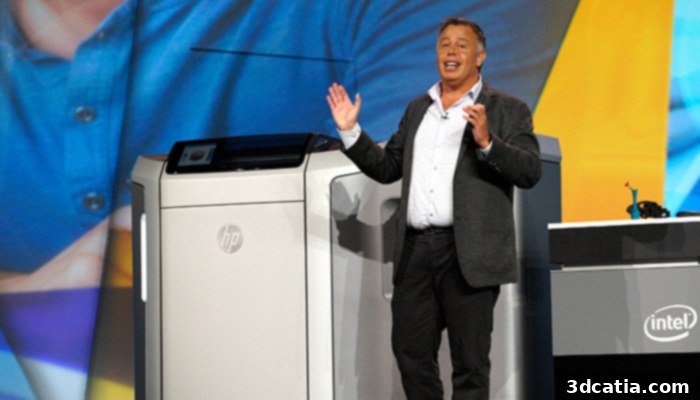
Dion Weisler, CEO of HP Inc.
2. Ric Fulop, Desktop Metal
Ric Fulop, a name synonymous with innovation in the 3D printing sphere, leveraged a distinguished career in finance and venture capital to found Desktop Metal in 2015. His prior experiences, which included interactions with industry leaders like Dassault Systèmes, Protolabs, and Markforged, provided him with unique insights into the unmet needs of the additive manufacturing market. Fulop recognized a significant gap: the prohibitive cost of existing metal 3D printing solutions prevented widespread industrial adoption. After two years of intensive development, his Boston-based firm officially announced its groundbreaking entry into the metal 3D printing market in 2017, dramatically lowering the barrier to entry with its Studio System solution, priced at an astonishingly reasonable $68,000.
This pricing strategy was nothing short of revolutionary in a market where industrial metal 3D printers typically started at over $300,000. Under Fulop’s leadership, Desktop Metal not only introduced an accessible metal 3D printing system but also successfully attracted an incredible roster of investors, accumulating over $210 million in funding from major players such as Stratasys, General Electric, Google, and BMW. This unprecedented level of investment underscored the industry’s confidence in Fulop’s vision and Desktop Metal’s technology. The firm’s rapid ascent led to it being featured as a startup of the month, a testament to its transformative potential. Fulop’s strategic brilliance and commitment to making metal additive manufacturing a practical reality for a broader range of businesses cemented his position as a key influencer in shaping the future of industrial production.
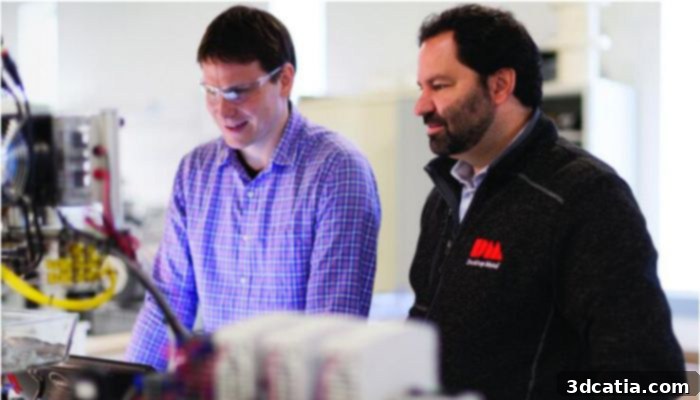
Ric Fulop, CEO of Desktop Metal (right)
3. Mohammad Ehteshami, GE Additive
Mohammad Ehteshami, a seasoned veteran of General Electric and former head of its prestigious aviation branch, took on a pivotal role in 2017 as the leader of GE Additive, the conglomerate’s newly established additive manufacturing division. Ehteshami’s extensive background in aerospace, a sector that has been at the forefront of adopting 3D printing, positioned him perfectly to spearhead GE’s ambitious strategy. Notably, during his tenure in aviation, he was instrumental in establishing a dedicated General Electric 3D printing center for aeronautics in Auburn, USA, backed by a substantial $50 million investment. This prior experience provided him with deep insights into the challenges and vast potential of industrial-scale additive manufacturing.
Upon assuming leadership of GE Additive, Ehteshami’s first major assignments involved seamlessly integrating two key acquisitions: Arcam, a pioneer in electron beam melting (EBM) technology, and Concept Laser, a leader in direct metal laser melting (DMLM) systems. These strategic moves were critical to GE’s overarching goal: to forge a formidable giant in the metal additive manufacturing industry. Under Ehteshami’s guidance, GE Additive aimed to meet the demanding production needs across critical sectors such as aeronautics, energy, and general industrial manufacturing. His leadership was crucial in accelerating the industrialization of additive processes, transforming GE from a user of 3D printing into a major provider of advanced additive manufacturing solutions, thereby solidifying its position as a dominant force in the global manufacturing landscape.
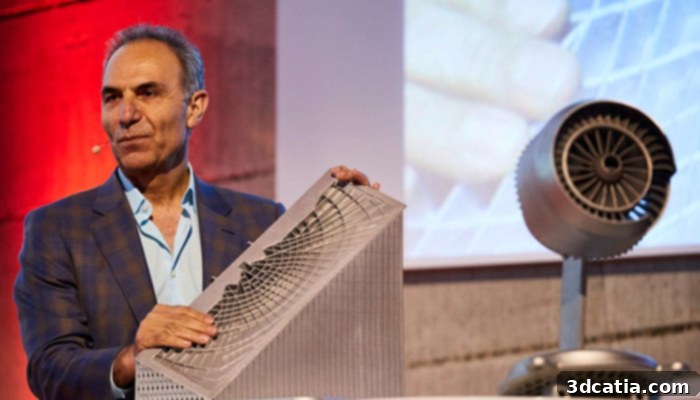
Mohammad Ehteshami, CEO of the new entity GE Additive
4. Greg Mark, Markforged
Markforged, an American firm originally recognized for its groundbreaking work in 3D printing polymers reinforced with carbon fibers, made a significant and strategic pivot in 2017. Under the visionary leadership of its founder, Greg Mark, the company became one of the first to enter the highly competitive market of low-cost metal additive manufacturing, offering solutions well below the $100,000 price point. This evolution was not merely an expansion of product lines but a bold reimagining of what affordable, accessible industrial 3D printing could achieve.
Greg Mark, a former aeronautical engineer with a background from MIT, introduced the game-changing Metal X system. This innovative machine, utilizing Markforged’s proprietary Atomic Diffusion Additive Manufacturing (ADAM) technology, promised to simplify metal 3D printing by making it safer and more cost-effective for a broader range of industrial applications. The launch of the Metal X quickly attracted significant interest from high-profile investors, including Siemens, Microsoft, and Porsche, who collectively invested more than $30 million. This substantial backing underscored the industry’s confidence in Markforged’s technology and Mark’s leadership. Markforged rapidly emerged as a fast-growing manufacturer, poised to disrupt traditional manufacturing processes by offering a compelling alternative for producing strong, functional metal parts at an unprecedented price point. Greg Mark’s strategic foresight cemented Markforged’s status as a company to watch closely in the future of additive manufacturing.
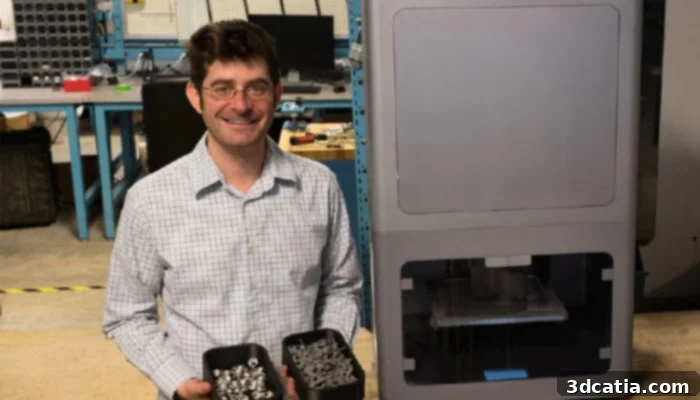
Greg Mark, CEO and founder of Markforged.
5. Dinara Kasko
In 2017, Dinara Kasko transcended traditional culinary boundaries to become a social media sensation and a true innovator in the world of gastronomy, amassing over 535,000 fans on Instagram. This 28-year-old Ukrainian pastry chef, with a degree in Architecture and Design from Kharkov University, captivated a global audience with her truly unique and visually stunning dessert creations. Kasko’s distinctive approach blends her architectural acumen with culinary artistry, resulting in pastries that are not just delicious but also intricate sculptures, pushing the boundaries of edible design.
Dinara’s pioneering method involves leveraging 3D printing technology to initially create highly precise, complex models of her desired pastry shapes. Once these digital designs are materialized as physical 3D prints, they serve as master patterns to produce silicone molds. These custom-made molds are then used to form her ingredients, allowing her to achieve geometric precision and sculptural forms previously impossible with traditional pastry techniques. Her work offers a tantalizing glimpse into the future of desserts, where art, science, and technology converge to redefine culinary aesthetics. Dinara Kasko’s innovative spirit was further explored in an in-depth interview, cementing her status as a leading personality influencing the creative applications of 3D printing beyond industrial realms.
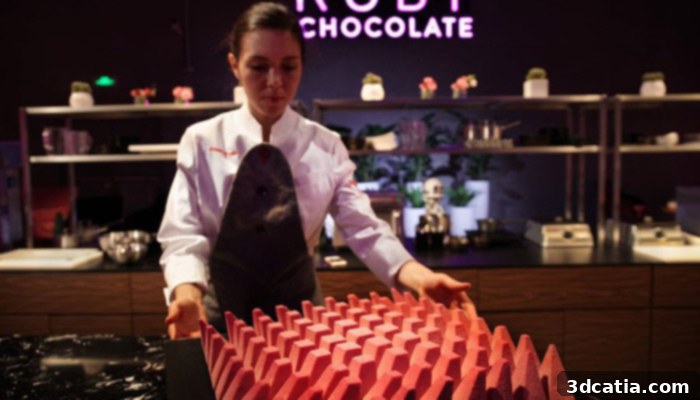
Dinara Kasko uses 3D printing for unique pastries
6. Nikita Chen-yun-tai, Apis Cor
While the name Nikita Chen-yun-tai might not be immediately recognizable to everyone, his groundbreaking work as the founder of Apis Cor positioned him as a revolutionary force in the construction sector in 2017. Chen-yun-tai and his company made international headlines by demonstrating the immense potential of 3D printing for rapid, affordable housing. In a remarkable feat last March, the visionary Russian entrepreneur utilized his innovative 3D printer to construct a functional 38-square-meter building in less than 24 hours, at an astonishingly low cost of just over $10,000.
The Apis Cor 3D printer itself is a marvel of engineering, designed for portability and efficiency. It can be set up on-site in under 30 minutes, featuring a robotic mechanical arm that precisely deposits successive layers of concrete to form walls and structural elements. Chen-yun-tai’s ambition extends far beyond single-house projects; he envisions Apis Cor’s technology being used to build sustainable and affordable structures globally, addressing housing shortages and transforming construction practices. His forward-thinking vision even includes audacious plans for creating habitats on Mars, showcasing the truly expansive scope of 3D printing in construction. The full story of this architectural breakthrough was detailed in this article, highlighting Chen-yun-tai’s profound impact on redefining how we build the future, both on Earth and potentially beyond.
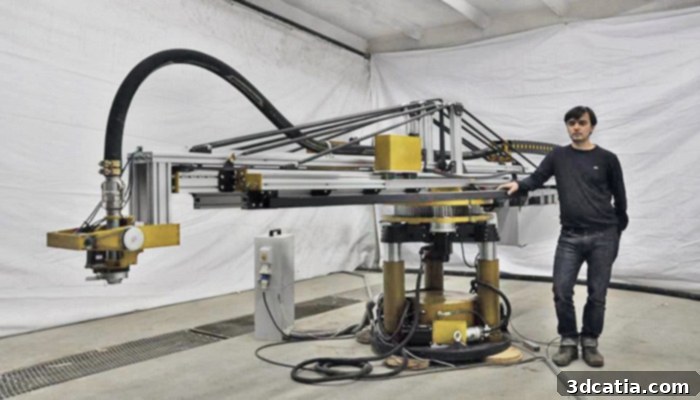
Nikita Chen-yun-tai, creator of Apis Cor
7. Daniele Cevola and Francesco Belvisi, Livrea Yacht
Daniele Cevola and Francesco Belvisi, the entrepreneurial duo behind Livrea Yacht, are pioneering a revolutionary approach to marine vessel manufacturing by harnessing the power of 3D printing. Their innovative spirit is transforming how sailboats are designed and produced, moving beyond traditional methods into the realm of additive manufacturing. In October, Livrea was recognized as a “Startup of the Month” in an exclusive interview, highlighting their visionary work. Following initial successful tests unveiled throughout the year, the company vigorously embarked on its most ambitious project yet: the creation of a sailboat designed and constructed almost entirely through additive manufacturing processes.
To bring their monumental vision to fruition, Daniele and Francesco forged strategic collaborations with industry leaders. They partnered with the 3D software powerhouse Autodesk to develop sophisticated design tools tailored for large-scale additive manufacturing. Furthermore, they collaborated with the German company Lehmann & Voss to engineer a specialized mechanical arm equipped with an advanced extruder, capable of depositing high-performance materials with precision and speed. This groundbreaking approach promises not only to reduce manufacturing time and costs but also to enable unprecedented design complexities and customization for marine applications. The culmination of their efforts is a 3D printed sailboat anticipated to participate in a challenging 6400km race from France to South America, a true testament to the structural integrity and performance capabilities of additive manufacturing in extreme environments. Cevola and Belvisi are not just building boats; they are charting a new course for the future of maritime engineering.
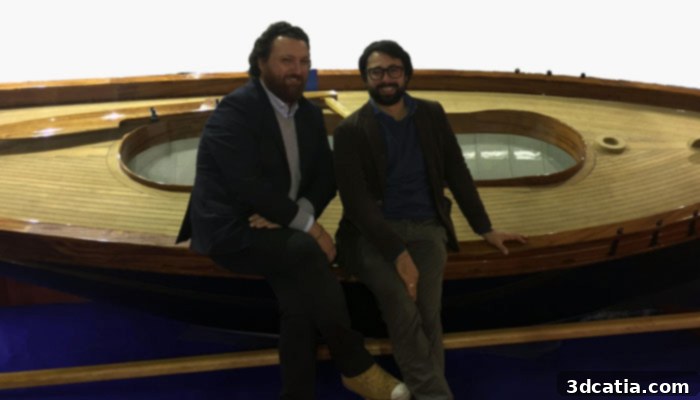
Daniele Cevola and Francesco Belvisi, founders of Livrea Yacht
8. Nneile Nkholise, iMedTech Group
From South Africa, Nneile Nkholise emerged as a beacon of hope and innovation, dedicating her entrepreneurial efforts to leveraging 3D printing in the fight against breast cancer. Through her pioneering company, iMedTech Group, Nkholise addresses a critical need for custom, comfortable, and aesthetically sensitive prostheses for patients who have undergone a mastectomy. Her work beautifully illustrates how advanced manufacturing technologies can deliver deeply personal and impactful solutions in the healthcare sector, improving the quality of life for countless individuals. By integrating state-of-the-art 3D scanners and 3D printers, iMedTech Group is able to design and produce bespoke breast prostheses that are perfectly tailored to each patient’s unique anatomy and preferences, offering a superior alternative to mass-produced, ill-fitting options.
In a powerful initiative launched last October, coinciding with breast cancer awareness month, iMedTech Group undertook the ambitious challenge of creating 1000 3D printed breast prostheses. This endeavor not only showcased the scalability of Nkholise’s solution but also brought much-needed attention to the importance of customized care in post-mastectomy recovery. Her impactful work and innovative application of 3D printing in medical prosthetics garnered significant recognition, leading to Nneile Nkholise being selected among the most influential African innovators at the prestigious World Economic Forum. Her leadership at iMedTech Group exemplifies the profound humanitarian potential of additive manufacturing, positioning her as an inspiring figure whose dedication is transforming patient care and empowering women through technology.
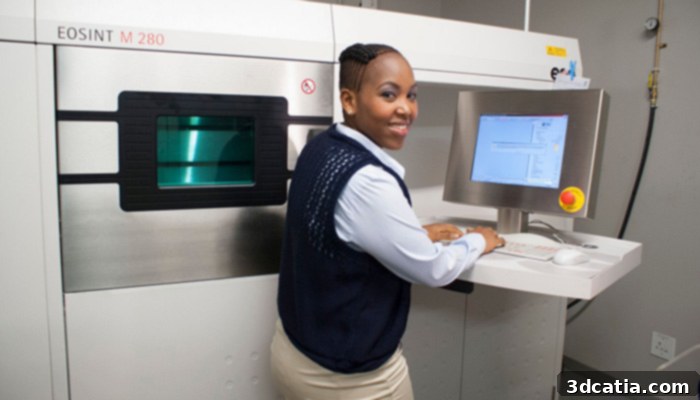
The founder of iMedTech Group, Nneile Nkholise
The year 2017 was undoubtedly a landmark period for 3D printing, marked by incredible advancements and the emergence of truly impactful individuals. From revolutionizing industrial production and making metal 3D printing accessible, to transforming culinary arts, constructing homes in record time, pioneering eco-friendly yacht manufacturing, and providing compassionate medical solutions, the personalities on this list have demonstrated the vast and diverse potential of additive manufacturing. Their vision, leadership, and innovative spirit have not only pushed technological boundaries but have also inspired new applications and fostered a growing ecosystem of creativity and problem-solving. As we look back, their contributions underscore the human ingenuity at the heart of this transformative technology. Who do you think was the most influential person in 3D printing this year? We invite you to share your thoughts and perspectives in a comment below or engage with us on our Facebook and Twitter pages! For the latest 3D printing news and insights delivered straight to your inbox, don’t forget to sign up for our free weekly Newsletter here.