
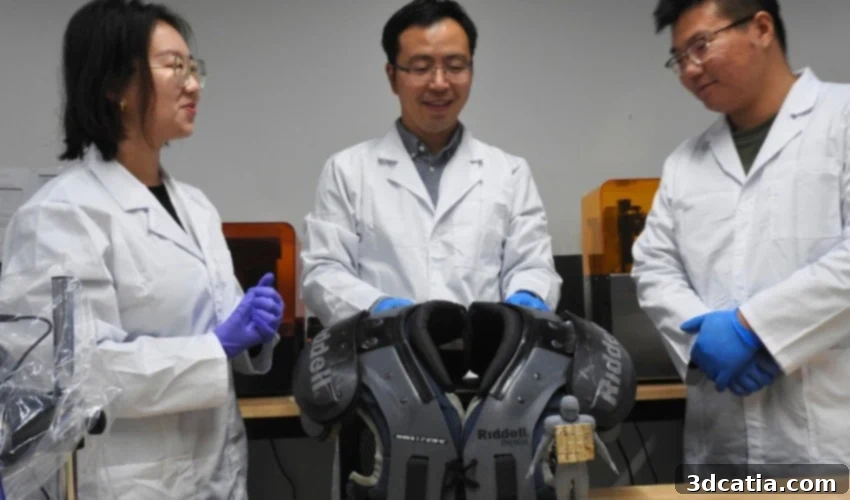
Revolutionizing Protective Gear: Cuttlefish-Inspired 3D Printed Smart Body Armor by SDSU
In a groundbreaking advancement set to redefine safety across numerous sectors, researchers at San Diego State University (SDSU) are revolutionizing body armor design. Led by the visionary Professor Yang Yang and his dedicated research team, this transformative approach integrates cutting-edge sensing capabilities into protective gear. This innovative armor is developed from a stiff yet remarkably durable composite material, and its creation has been made possible through the precision and versatility of advanced 3D printing technologies. Drawing profound inspiration from the unparalleled resilience and adaptability of marine life, particularly the humble cuttlefish, this project represents a significant leap forward in biomimicry and material science, promising enhanced protection and smart functionality.
While the vast and diverse world of marine life has long served as a wellspring of inspiration for developing protective equipment and advanced materials, the SDSU researchers have honed their focus specifically on the extraordinary durability and unique structural properties of the cuttlefish. Renowned for its lightweight nature combined with incredibly resilient properties, the cuttlefish presents an ideal model for developing next-generation protective composites. Professor Yang and his colleagues embarked on a mission to meticulously emulate its unique structural makeup. Certain species of cuttlefish possess an astonishing ability to thrive under the immense hydrostatic pressure found at depths of up to 2,000 feet below the ocean’s surface. This incredible feat is attributed to their evolution of a rigid, yet remarkably lightweight microstructure within their shells. This complex microstructure, scientifically known as wall-septa, is the key to their survival, enabling cuttlefish to effectively absorb and dissipate vast amounts of energy. This inherent design allows them to navigate and withstand such intense physical pressure without succumbing to damage, offering a perfect blueprint for high-performance impact absorption.
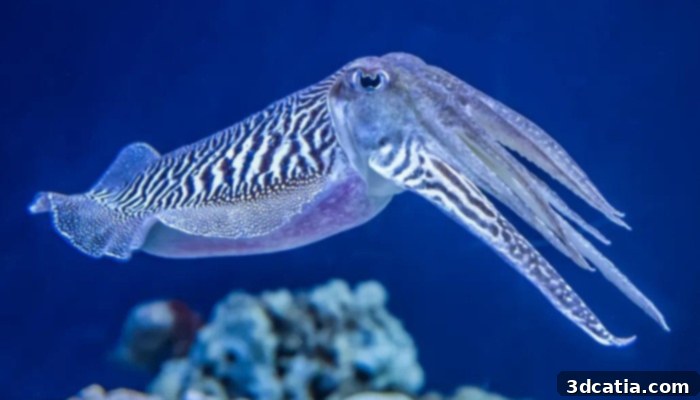
Photo Credits: BBC Wildlife
Recognizing the immense potential of this natural capability for superior impact resistance, the SDSU researchers identified a significant application in developing materials for impact reduction in various protective gear. To precisely mimic the structural efficiency and energy-dissipating properties of the cuttlefish’s wall-septa, Professor Yang and his team embarked on a pioneering material science journey. They successfully cultivated piezoelectric Rochelle salt crystals and ingeniously integrated them with natural cuttlefish bone. Piezoelectric materials possess the unique ability to generate an electric charge in response to mechanical stress, making them ideal for sensing and energy dissipation. By combining these unique crystals with the biomimetic architecture of cuttlefish bone, they have developed a novel composite material that not only dramatically absorbs impact force but also possesses inherent sensing capabilities. This smart composite can convert mechanical energy from an impact into electrical signals, providing real-time data on the force and location of the impact, a feature that distinguishes it from conventional protective materials.
Diverse Practical Applications of SDSU’s 3D Printed Smart Body Armor
The versatility and advanced properties of this novel, cuttlefish-inspired composite material extend its potential across an exceptionally wide array of critical industries. From enhancing safety in high-stakes sports to bolstering protection in defense, optimizing structures in aerospace, and improving patient care in healthcare, the implications are profound. One of the most immediate and impactful primary applications of this cutting-edge composite is in the development of helmets. This innovation has the potential to fundamentally revolutionize safety standards in both competitive sports and demanding construction environments. These next-generation helmets not only offer superior impact protection, significantly reducing the risk of concussions and severe head injuries, but also feature integrated real-time monitoring capabilities. These sensors can immediately alert medical personnel to any signs of distress or significant impact experienced by the wearer, enabling rapid response and potentially life-saving interventions. This fusion of protection and immediate data feedback marks a significant paradigm shift in personal protective equipment.
Beyond helmets, the potential for this smart composite is vast. In the defense and military sectors, this technology could lead to lighter, yet more effective ballistic and blast-resistant body armor for soldiers, police, and first responders, improving both protection and mobility. For aerospace, the material’s lightweight and durable nature could be crucial for developing impact-resistant components for aircraft and spacecraft, contributing to enhanced safety and fuel efficiency. Furthermore, in healthcare, the bespoke nature of 3D printing allows for the creation of customized exoskeletons, braces, and kneepads. These devices could feature integrated sensors that not only detect falls in vulnerable populations, such as the elderly, but also provide in-depth data regarding the impact’s force, direction, and location. Such data is invaluable for enhancing safety protocols, optimizing rehabilitation strategies, and providing insights for preventative care, thereby greatly enhancing the safety and quality of life for users.
Beyond the immediate safety enhancements, this innovative approach also brings significant sustainability benefits to the forefront. The inherent nature of 3D printed components enables easy, efficient, and affordable maintenance and repair, a stark contrast to traditional manufacturing methods. Unlike conventional materials, which often lead to discarding entire products when a single part is damaged, damaged sections of this 3D printed body armor can be swiftly and precisely replaced or restored. This is achieved by applying droplets of the composite material directly to the broken areas, effectively allowing for localized repair. This capability dramatically extends the product lifespan and substantially reduces manufacturing waste, moving away from the linear “take-make-dispose” model prevalent with conventional materials that frequently end up in landfills, contributing to environmental degradation. The localized repair mechanism ensures that the overall lifecycle cost is lower, and the ecological footprint is significantly diminished, aligning with modern principles of circular economy and sustainable engineering.
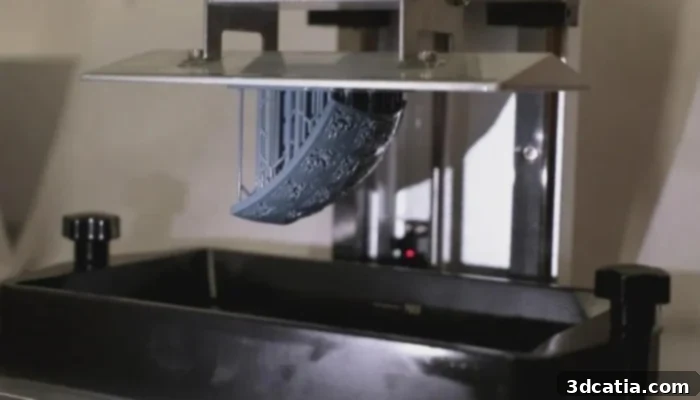
Cuttlefish-inspired composite. (Photo Credits: San Diego State University)
Elaborating on the revolutionary nature of this repair process, Professor Yang stated, “When traditional ceramics break, it’s practically impossible to heal them in this way, leading to a considerable amount of waste and replacement costs. Our method, on the other hand, is inherently reusable and repairable, fostering a more sustainable product lifecycle. Furthermore, the manufacturing process itself, leveraging advanced 3D printing, uses significantly less energy compared to conventional methods. This efficiency, combined with the material’s longevity and repairability, results in a lower overall price point for the end product, making advanced protection more accessible and environmentally friendly.” This emphasis on reusability, reduced energy consumption during production, and affordability underscores the holistic and forward-thinking approach of the SDSU team.
As Professor Yang’s team continues their meticulous work to refine and optimize their groundbreaking body armor, strategic collaborations with key industry partners are already well underway. Since the initial development of their innovative body armor, they have forged a significant partnership with 3D Systems, a global leader in additive manufacturing solutions, and an entity closely affiliated with the NFL. This collaboration is crucial for advancing research into how this cutting-edge composite and the resulting protective armor can be further improved upon, scaled for production, and practically implemented into professional sports leagues like the NFL. The aim is to leverage this technology to mitigate the severity of sports-related injuries, particularly concussions, thereby enhancing player safety and welfare. This synergy between academic research and industrial application is vital for bringing such transformative technologies from the laboratory to widespread use, marking a new era for advanced protective equipment. To delve deeper into this fascinating research and its implications, click here to visit the official San Diego State University news page.
What are your thoughts on this innovative cuttlefish-inspired 3D printed smart body armor? Do you envision its widespread adoption in sports, military, or healthcare? We invite you to share your insights and opinions in a comment below, or connect with us on our LinkedIn, Facebook, and Twitter pages! Don’t miss out on the latest advancements and news in the additive manufacturing world – be sure to sign up for our free weekly newsletter here, delivered straight to your inbox! You can also find an extensive collection of our videos and exclusive content on our YouTube channel for more in-depth exploration.
*Cover Photo Credits: San Diego State University