
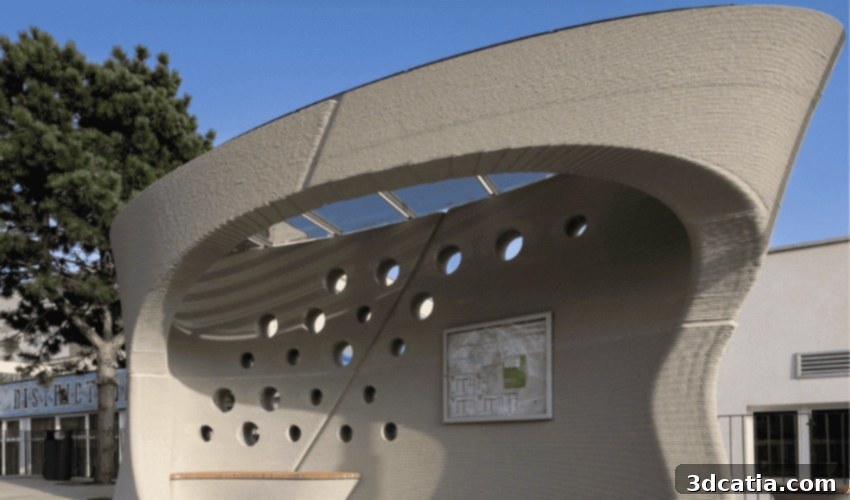
Redefining Public Infrastructure: How 3D Printing is Shaping the Future of Urban Design with the ‘Lipského’ Bus Shelter
The architectural world continues to be transformed by the incredible capabilities of additive manufacturing, pushing the boundaries of what is possible in construction. Following the notable emergence of the world’s first 3D printed Starbucks café and a pioneering train station, these revolutionary technologies have once again delivered an architectural marvel. This time, the spotlight shines on a more accessible yet equally innovative structure: a 3D printed bus shelter. The year 2025 has truly become a landmark year for creative effervescence in architecture, fueled by the rapid advancements in additive manufacturing and sophisticated design methodologies. This innovative spirit is vividly demonstrated in Slovakia, where the collaborative efforts of COLLARCH, Architekti Šebo Lichý, and ICE Industrial Services recently unveiled an extraordinary urban addition – the ‘Lipského’ bus stop.
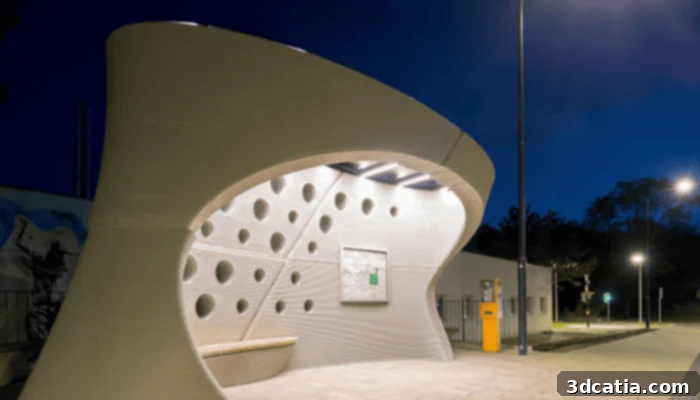
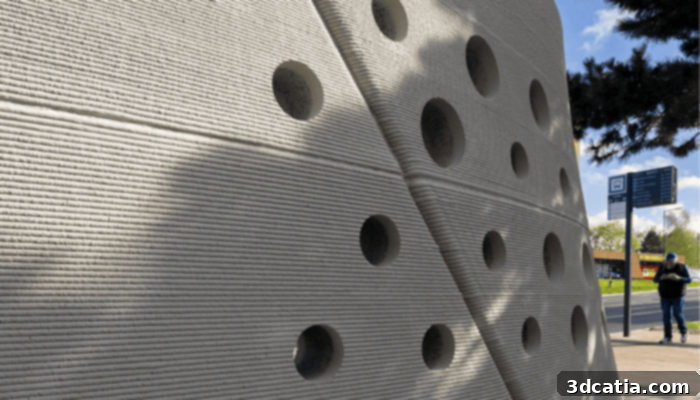
This unique bus shelter represents a harmonious fusion of cutting-edge 3D printed concrete technology with an advanced parametric design approach. The result is not merely a functional structure but a veritable work of art that elevates the concept of public infrastructure. Named “Lipského,” the shelter immediately captivates observers with its distinctive oval shape and artfully exposed layers, which draw an organic parallel to the natural stratification found in rock formations. This thoughtful design signifies an original and profound rethinking of public urban spaces, brilliantly illustrating how even the most mundane everyday urban objects can transcend their utilitarian purpose to become both highly practical and aesthetically compelling, all thanks to the transformative power of new manufacturing technologies.
The implementation of 3D printing in projects like the ‘Lipského’ bus shelter offers a myriad of advantages beyond aesthetics. Traditional construction methods often involve complex formwork, extensive labor, and significant material waste. In contrast, concrete 3D printing allows for rapid, precise, and highly customizable construction directly from a digital model. This process not only accelerates project timelines but also dramatically reduces material consumption by depositing concrete only where structurally necessary. Furthermore, the inherent flexibility of 3D printing enables the creation of intricate geometries and organic forms that would be prohibitively expensive or impossible to achieve with conventional techniques. This unlocks unprecedented creative freedom for architects and urban planners, fostering an environment where innovative designs can flourish and be brought to life with remarkable efficiency.
3D Printing and the Evolution of Urban Design
The installation of this pioneering 3D printed bus shelter was an integral component of a broader street extension initiative, meticulously planned to enhance connectivity and facilitate travel within a rapidly expanding urban neighborhood. The design philosophy underpinning this bus shelter is a testament to an approach that is both technologically forward-thinking and deeply sensitive to its immediate environment. The entire structure was meticulously modeled using a sophisticated parametric design system, which allowed for the generation of its fluid, organic form. This design choice ensures that the shelter not only serves its function but also seamlessly integrates into the surrounding urban fabric, appearing as a natural, almost sculpted element of the streetscape rather than a stark, intrusive addition.
Moreover, the exterior of the bus shelter, masterfully 3D printed using durable concrete, is far more than just aesthetically pleasing; its design cleverly addresses specific climatic challenges inherent to its location. Its subtle westerly orientation is a critical passive design feature, expertly engineered to mitigate direct exposure to the sun’s harsh rays during the hottest hours of the afternoon, thereby maintaining a cooler, more comfortable interior. Simultaneously, this orientation provides essential protection against prevailing winds, ensuring a more pleasant waiting experience for commuters. Strategically placed, discreet openings on the south-east side of the shelter are dual-purpose: they promote optimal air circulation, preventing the interior from becoming stagnant, and enhance visibility, significantly contributing to a heightened sense of safety and awareness for all users. This thoughtful integration of form and function exemplifies sustainable urban design principles at their best.
To complete this exceptional ensemble, an elegant and minimalist roof, crafted from a combination of glass and steel, introduces a touch of lightness and sophistication to the overall structure. The roof of the 3D printed bus shelter incorporates Stopsol reflective glass, a high-performance material specifically chosen for its ability to effectively control solar heat gain. This advanced glass allows ample natural light to filter through, illuminating the interior without causing excessive heat build-up, thus guaranteeing year-round comfort regardless of external weather conditions. Furthermore, meticulous attention has been dedicated to the bus shelter’s interior environment. Integrated lighting systems provide a welcoming ambiance both day and night, ensuring visibility and security. The seating, also innovatively 3D printed, is thoughtfully finished with larch wood, adding an element of natural warmth, robust durability, and a comfortable tactile experience for users.
The ‘Lipského’ bus shelter stands as a powerful symbol of how 3D printing is not just a tool for novelty but a practical solution for creating smarter, more resilient, and more beautiful urban spaces. By leveraging parametric design, architects can optimize structures for environmental performance, material efficiency, and user experience, resulting in public infrastructure that is truly responsive to contemporary needs. This project demonstrates that complex, curvilinear designs, once difficult and expensive to realize, are now achievable with unprecedented precision and speed, making them viable options for everyday urban applications. This shift heralds a new era for urban planning, where bespoke, environmentally conscious, and user-centric designs can become the norm rather than the exception.
Beyond bus shelters, the potential applications of concrete 3D printing in urban development are vast and exciting. Imagine custom street furniture, intricate public art installations, modular housing solutions, or even entire public parks with integrated infrastructure – all capable of being rapidly fabricated and deployed. The ability to print on-site, reduce construction waste, and utilize innovative material mixes opens doors to more sustainable and localized construction practices. This also supports the concept of ‘smart cities,’ where technology is harnessed to improve the quality of life for residents, enhance urban efficiency, and foster environmental stewardship. The ‘Lipského’ bus shelter is a clear indicator that we are moving towards a future where our urban landscapes are not only functional but also dynamically designed, aesthetically enriching, and sustainably built, thanks to the continuous innovation in additive manufacturing technologies.
What are your thoughts on this inspiring 3D printed bus shelter? Which architectural marvels, realized through the innovative power of additive manufacturing, do you anticipate gracing our urban landscapes next? We invite you to share your insights and predictions in the comments section below or engage with us on our LinkedIn, Facebook, and Twitter pages! Don’t miss out on the latest advancements in the world of 3D printing – be sure to sign up for our free weekly Newsletter here, delivering the most current 3D printing news directly to your inbox. You can also explore all our fascinating videos on our dedicated YouTube channel. If your interest lies in further 3D printing news specifically within the automotive and transportation sector, we encourage you to visit our specialized page HERE for more in-depth coverage and updates.
*All Photo Credits: designboom