
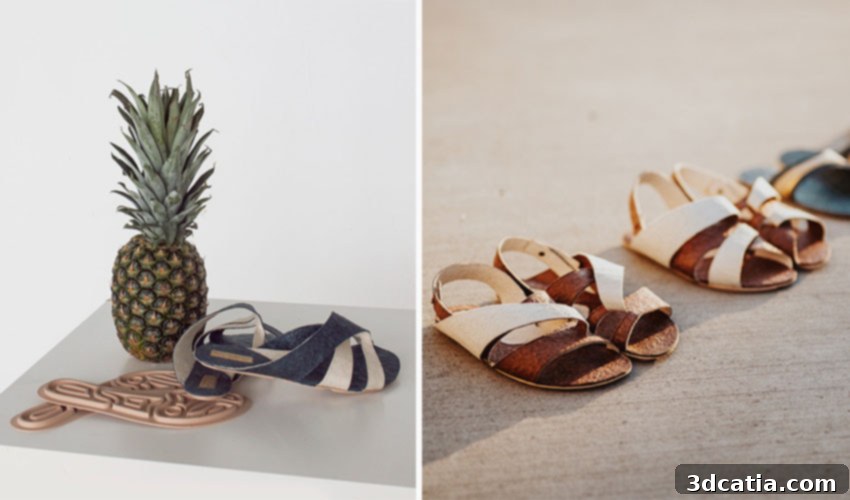
The ORGANIC Collection: Pioneering Sustainable 3D Printed Footwear with Recyclable and Compostable Materials
In an era where environmental consciousness is paramount, the fashion industry faces increasing pressure to adopt more sustainable practices. Leading this charge in footwear innovation is the groundbreaking ORGANIC shoe collection, a remarkable collaboration that marries cutting-edge 3D printing technology with eco-friendly materials. This visionary project is the brainchild of Lucie Trejtnarová, a talented postgraduate student from Tomas Bata University in Zlin, Czech Republic, in partnership with innovative materials manufacturer Fillamentum and the forward-thinking design studio Malai Design & Materials. True to its name, this collection stands as a testament to sustainable design, offering shoes that are not only stylish and functional but also either fully recyclable or compostable at the end of their lifecycle, setting a new benchmark for eco-conscious manufacturing.
The ORGANIC collection represents a significant leap forward in addressing the environmental impact of footwear production. Traditional shoe manufacturing often involves complex materials that are difficult to separate and recycle, leading to vast amounts of waste. This collection directly tackles this challenge by designing shoes with their end-of-life in mind from the very beginning. By consciously choosing materials and manufacturing methods that allow for easy disassembly and responsible disposal, the collaborators have created a product that aligns seamlessly with the principles of a circular economy, minimizing waste and maximizing resource utility.
Revolutionizing Soles with Recyclable 3D Printing Technology
A cornerstone of the ORGANIC collection’s sustainability lies in its innovative approach to shoe outsoles. The sandals feature robust, 3D printed outsoles crafted from Flexfill 98A, a high-performance TPU-based filament developed by Fillamentum. This material was meticulously chosen for its exceptional properties and its compatibility with additive manufacturing processes. The outsoles are precisely printed on an Ultimaker 3 3D printer, demonstrating the potential of desktop additive manufacturing in producing consumer-ready, sustainable products.
Flexfill 98A is part of Fillamentum’s specialized Flexfill range, which includes two distinct grades: 98A and 92A. For the ORGANIC shoe collection, the 98A variant was specifically selected due to its superior hardness and mechanical strength, making it ideally suited for the demands of a durable shoe outsole. This material ensures the sandals offer excellent wear resistance, flexibility, and comfort, crucial attributes for everyday footwear. Beyond its performance characteristics, a key advantage of Flexfill 98A is its outstanding processability, which not only facilitates smooth 3D printing but also ensures that this component of the shoe is completely recyclable. This focus on recyclability was a critical factor for Lucie Trejtnarová in her material selection process, aligning perfectly with the collection’s overarching sustainable mission.
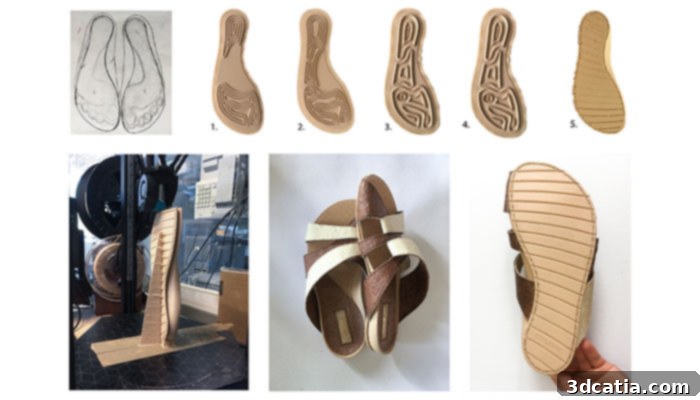
The process behind designing and 3D printing the shoe | Credits: Lucie Trejtnarová
The integration of 3D printing for the outsole offers several environmental benefits beyond just material recyclability. Additive manufacturing inherently reduces waste during production by only using the necessary amount of material, unlike traditional subtractive methods that generate significant scrap. Furthermore, 3D printing allows for rapid prototyping and design iterations, enabling designers to optimize comfort and fit while minimizing resource consumption during the development phase. This precision manufacturing capability also opens doors for mass customization, potentially leading to shoes that are perfectly tailored for individual users, further enhancing their longevity and reducing the likelihood of premature disposal.
Compostable Uppers: The Beauty of Bio-Based Materials
Complementing the recyclable outsole, the upper part of the ORGANIC shoes embraces natural biodegradability, utilizing innovative bio-based materials that offer both aesthetic appeal and environmental responsibility. The primary materials used are Malai, famously known as coconut leather, and Piñatex, derived from pineapple leaves. These choices highlight a commitment to moving away from traditional, environmentally intensive materials like animal leather or synthetic fabrics that often pose significant disposal challenges.
Malai, the coconut leather, stands out for its remarkable qualities, mirroring many of the desirable characteristics of traditional leather. It is flexible, durable, and inherently water-resistant, making it an excellent choice for footwear uppers. What makes Malai truly revolutionary is its production method: it is grown from entirely organic and sustainable bacterial cellulose, which is cultivated on architectural waste sourced directly from the thriving coconut industry in Southern India. This ingenious process transforms what would otherwise be a waste product into a valuable, high-performance material, exemplifying circular economy principles and significantly reducing the ecological footprint associated with material acquisition.
Piñatex, the other key material for the shoe uppers, is equally impressive. Created from the cellulose fibers extracted from pineapple leaves, a byproduct of pineapple harvesting, Piñatex provides another powerful example of sustainable material innovation. Instead of burning or discarding these leaves, they are transformed into a durable, flexible, and breathable fabric that is perfect for footwear. Both Malai and Piñatex contribute to the shoe’s compostable nature, ensuring that once the upper reaches the end of its functional life, it can naturally return to the earth, enriching the soil rather than accumulating in landfills. This dual-material approach for the upper demonstrates a deep commitment to exploring and utilizing the best bio-alternatives available.
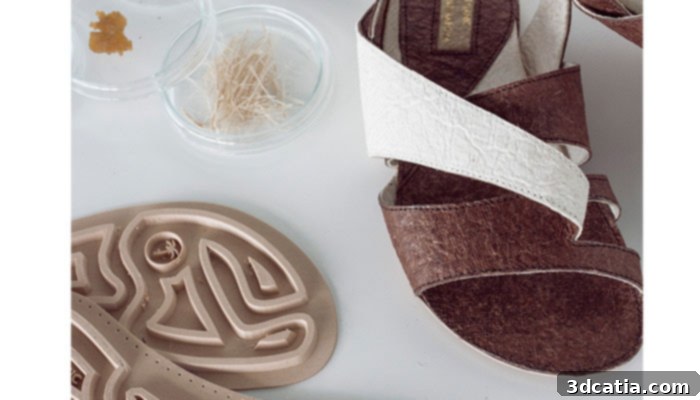
The 3D printed outsole using Flexfill 98A material | Credits: Silvia Leitmannova
The Core Philosophy: Designed for Disassembly and Circularity
At the heart of the ORGANIC collection lies a profoundly simple yet powerful principle: designing for responsible end-of-life. Lucie Trejtnarová articulates this vision clearly: “We are responsible for each of our steps. Shoes from the Organic collection are based on a simple principle: At the end of their life, you can divide both parts, the upper in a compost and the sole you can recycle, to use it again.” This statement encapsulates the entire philosophy behind the collection – a commitment to minimizing environmental impact through thoughtful design and material selection.
This “designed for disassembly” approach directly challenges the linear “take-make-dispose” model prevalent in much of the consumer goods industry. By making it easy for users to separate the compostable upper from the recyclable sole, the collection empowers consumers to participate actively in the circular economy. This not only diverts waste from landfills but also ensures that valuable resources – both bio-based and synthetic – are either returned to nature or reintegrated into new production cycles. It’s a holistic view of product responsibility, extending beyond the point of sale to encompass the entire life cycle of the shoe.
The implementation of this philosophy required meticulous planning and innovative engineering. The connection points between the upper and the sole must be secure enough for daily wear yet intuitive enough for easy separation at the product’s end of life. This balance ensures both functionality and sustainability are met, demonstrating that eco-friendly design does not necessitate compromising on quality or user experience. The ORGANIC collection serves as a powerful example of how designers and manufacturers can rethink product lifecycles to create a more sustainable future for fashion.
The Genesis of Innovation: Lucie Trejtnarová’s Journey
The inspiration and development of the ORGANIC collection are deeply rooted in Lucie Trejtnarová’s academic journey and her growing fascination with additive manufacturing. The concept for the collection began to take shape during her postgraduate thesis research on ‘3D Extravagance’ at Tomas Bata University. It was during this period that Lucie first encountered the transformative power of 3D modeling and 3D printing, a challenge she readily embraced.
Lucie explains her initial experience: “I first got in touch with 3D model making and using 3D printers at the University, [which] was a completely new challenge for me.” This initial exposure sparked a deep interest, compelling her to further hone her skills in this rapidly evolving field. To solidify her expertise in digital design, she continued her education at the Bezalel Academy of Arts and Design in Jerusalem, undertaking a specialized SOLIDWORKS course. This rigorous training equipped her with the advanced 3D modeling capabilities necessary to translate her innovative concepts into tangible, printable designs, laying the technical foundation for the ORGANIC collection.
Her journey reflects the growing trend of multidisciplinary design, where traditional fashion and product design merge with advanced manufacturing technologies. By combining her understanding of aesthetics and functionality with the precision and possibilities of 3D printing, Lucie was able to push the boundaries of conventional footwear design. Her academic exploration into the “extravagance” of 3D forms laid the groundwork for a collection that is not only visually distinctive but also deeply rooted in environmental responsibility, showcasing how innovation can be a catalyst for sustainability.
To truly appreciate the intricate design process and the journey behind bringing this remarkable collection to life, you can view the following video, which provides a deeper insight into the collaboration and the manufacturing techniques employed:
The Future of Sustainable Footwear: A Call to Innovation
The ORGANIC shoe collection, with its blend of 3D printing, recyclable TPU outsoles, and compostable bio-based uppers, serves as a powerful beacon for the future of sustainable footwear. It demonstrates that eco-conscious design does not have to be a compromise on style, comfort, or performance. Instead, it can be a catalyst for innovation, driving the development of new materials, manufacturing processes, and design philosophies that benefit both consumers and the planet.
This project underscores the critical role that interdisciplinary collaboration plays in addressing complex global challenges. The synergy between academia (Tomas Bata University), material science (Fillamentum), and creative design (Malai Design & Materials) highlights how diverse expertise can converge to create solutions that are both technically sophisticated and environmentally sound. Such collaborations are essential for fostering a new generation of products that are responsibly made, thoughtfully designed, and contribute positively to a circular economy.
As consumers become increasingly aware of their purchasing power and demand more ethical and sustainable products, initiatives like the ORGANIC collection will become not just niche offerings but the standard. It encourages other designers and manufacturers in the fashion and footwear industries to rethink their entire supply chains, from material sourcing to end-of-life solutions. By embracing additive manufacturing and bio-based materials, the industry has an unprecedented opportunity to reduce its environmental footprint and move towards a more sustainable and regenerative future.
What are your thoughts on this pioneering organic 3D printed shoe collection? Do you believe these innovations will reshape the footwear industry? We invite you to share your insights and comments on our Facebook and Twitter pages! Don’t miss out on the latest advancements in additive manufacturing – be sure to sign up for our free weekly Newsletter, delivering all the essential news in 3D printing directly to your inbox!