
Driving Decarbonization: How 3D Scanning Revolutionizes Oil & Gas Operations and Sustainability
The global oil and gas industry is currently navigating an era of unprecedented change and formidable challenges. Foremost among these is the escalating global imperative to significantly reduce carbon emissions and transition towards more sustainable energy practices. Companies across the sector are committing to ambitious decarbonization targets, with many striving to achieve crucial milestones as early as 2025. This push is fueled by growing environmental concerns, evolving regulatory landscapes, and increasing stakeholder pressure for corporate social responsibility. In this demanding environment, the industry is increasingly turning to innovative, cutting-edge technologies to meet these objectives. Among these technological advancements, 3D scanning is rapidly emerging as a powerful, transformative solution that promises to redefine operational efficiency, enhance safety, and accelerate the journey towards a greener future.
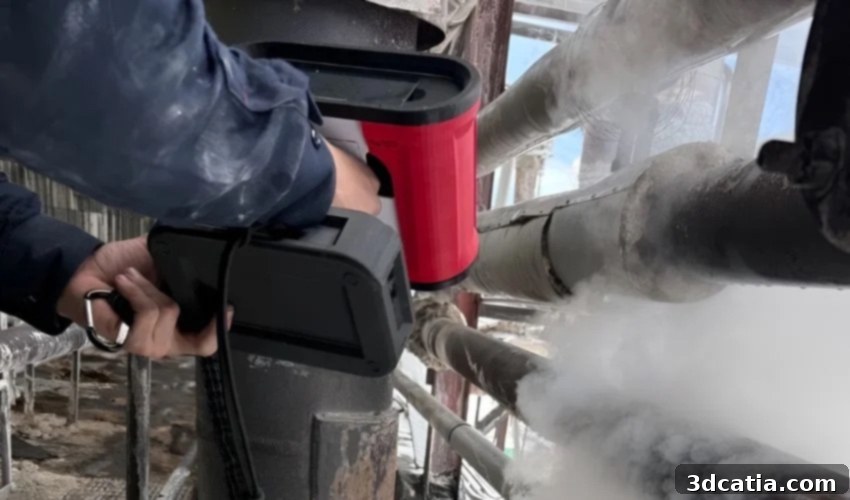
A compelling example of this adoption can be seen in the Colt Group, a prominent industrial services provider. This forward-thinking company has made strategic investments in advanced 3D scanning solutions, driven by a clear vision: to respond with unparalleled speed to critical leakage problems, dramatically improve on-site operational performance and worker safety, and diligently fulfill its environmental commitments. At the heart of their technological arsenal is the Artec Leo 3D scanner. This state-of-the-art device empowers Colt Group to accelerate repair planning by an astonishing factor of up to 18 times. Furthermore, it allows their teams to capture precise 3D data of complex pipe geometries in less than 20 minutes, irrespective of challenging working environments or intricate infrastructure. This remarkable real-world application vividly illustrates the profound added value and competitive advantage that high-precision 3D scanning brings to critical industrial maintenance within the oil and gas sector.
To contextualize the urgency behind these technological adoptions, it’s beneficial to consider the broader industry perspective. A recent, insightful study published by Rystad Energy meticulously analyzed the CO2 emissions reduction strategies of 120 key companies operating within the oil and gas sector. The findings underscore the scale of the challenge: the collective activities of these companies were responsible for emitting over 630 million tonnes of carbon dioxide in 2024. This staggering figure highlights the critical need for effective, scalable, and rapidly deployable solutions to mitigate environmental impact and achieve meaningful emissions reductions across the industry.
For many of these oil and gas enterprises, the year 2025 is not just an arbitrary date, but a pivotal benchmark. It represents the self-imposed deadline for achieving their critical emissions reduction targets, a commitment that reflects mounting internal and external pressures. While certain companies have demonstrated commendable progress in lowering their carbon intensity and advancing towards their sustainability goals, a significant number still face considerable obstacles in realizing the desired environmental outcomes. Decarbonization has unequivocally transitioned from a peripheral concern to a central, non-negotiable strategic imperative across the oil and gas sector. The environmental, economic, and reputational ramifications of ignoring these pressing concerns have made it exceedingly difficult for any organization in this industry to overlook the profound importance of sustainable operations.
Enhancing Operational Excellence and Safety with Advanced 3D Scanning
It is within this challenging and rapidly evolving operational environment that Colt Group’s strategic investment in 3D scanning technology gains particular relevance. Specializing in crucial leak repair services, this American company provides a comprehensive suite of design, manufacturing, and mechanical services. Their core mission is to ensure the continuous, smooth, and safe operation of their clients’ industrial equipment, thereby minimizing costly downtime and maximizing productivity. By integrating advanced 3D scanning, Colt Group is not merely adopting new tools but fundamentally reshaping its service delivery model to be more responsive, precise, and environmentally responsible.
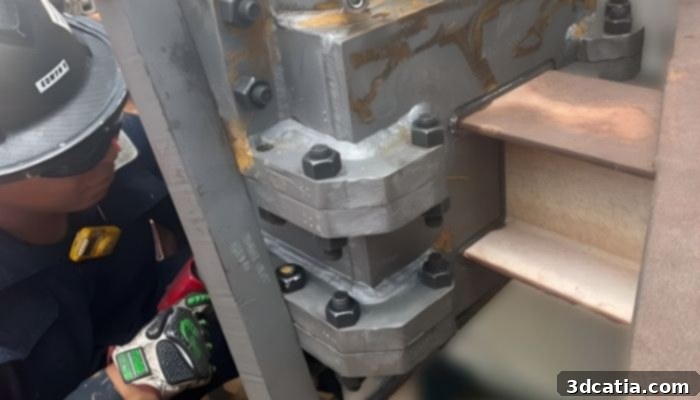
With the Artec Leo 3D scanner, teams can accurately scan complex pipelines in under 20 minutes, streamlining critical repairs and maintenance planning.
Operationally, the deployment of the Artec Leo 3D scanner signifies a dramatic leap forward for Colt Group’s field teams. Historically, the process of identifying defects and planning repairs for critical pipelines relied heavily on conventional methods, which included often outdated or inaccurate 2D drawings and laborious manual sketches. These traditional approaches were inherently time-consuming, susceptible to human error, and lacked the granular precision essential for optimal repair solutions. The Artec Leo scanner entirely transforms this workflow by enabling the direct, on-site digital capture of precise pipe geometries. This capability yields highly accurate, detailed 3D models of even the most complex components, irrespective of their irregular shapes, material properties, or challenging environmental conditions. The contrast with manual measurement techniques is stark: digital scans are not only exponentially faster to acquire but also deliver unparalleled accuracy, drastically reducing the potential for costly rework and ensuring a perfect fit for replacement parts or custom-designed repair solutions.
According to insights shared by the Colt Group, their skilled field crews are now capable of completing a comprehensive 3D scan of a critical component in a remarkably brief timeframe – typically between just 15 and 20 minutes. Immediately following data acquisition, this highly precise 3D information can be wirelessly transmitted in real-time directly to engineers and designers for immediate analysis, repair planning, and the fabrication of bespoke components. This seamless, end-to-end digital workflow represents an immense time saving, with the entire repair process reportedly being completed up to 18 times faster than antiquated conventional methods. Such speed is not merely an operational luxury; it is a critical factor in minimizing disruptive downtime, preventing further material leakage, mitigating environmental hazards, and ensuring the continuous, safe, and profitable operation of vital industrial facilities.
Wally Whitley, CIO of the American company, provides a clear strategic perspective on the paramount importance of this rapid response capability: “We specialize in ‘online’ leak repair, which means we address and fix leaks while our customers’ systems remain operational. The faster we can execute this critical job, the faster we can effectively seal a leak for a customer, thereby significantly reducing the likelihood of a forced operational shutdown. This directly translates into substantial financial savings for our clients by minimizing lost product, preventing costly environmental spills, and maintaining peak operational productivity. Our ability to keep their processes running without interruption makes us an invaluable partner. The quicker and more efficiently we can complete each individual step of our repair process, the greater our value proposition to the customer becomes.” This statement underscores how 3D scanning functions not merely as a measurement tool but as a strategic enabler, significantly enhancing customer value, bolstering operational resilience, and directly contributing to the client’s bottom line.
Broadening Impact: From Predictive Maintenance to Digital Twins
The transformational benefits of 3D scanning extend far beyond just emergency leak repair, permeating and optimizing various critical aspects of industrial asset management and maintenance throughout the oil and gas industry. With the reported capability to digitize tens of thousands of parts annually, as demonstrated by the Colt Group, the technology’s profound impact on work processes is both pervasive and far-reaching. Teams gain unprecedented levels of flexibility and agility in their operations, empowering them to respond dynamically and effectively to unforeseen challenges while simultaneously optimizing planned maintenance schedules. Customers, in turn, receive highly effective, rapid, and precise solutions, ensuring their mission-critical equipment operates with enhanced reliability, improved performance, and a significantly extended operational lifespan. This proactive and data-driven approach to maintenance, powered by highly accurate 3D data, translates directly into fewer unexpected failures, dramatically reduced operational risks, and superior asset integrity management.
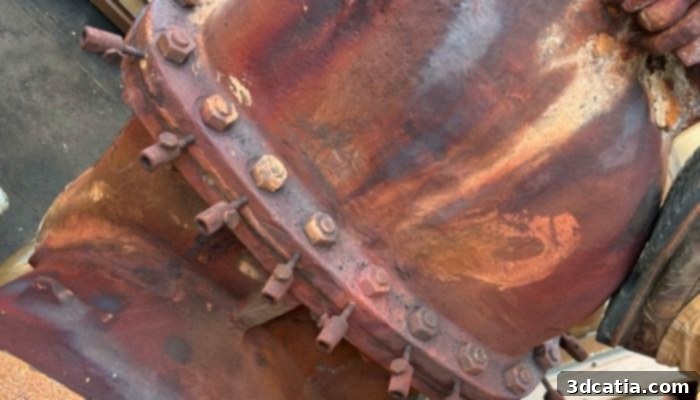
3D scanning delivers rapid, highly accurate results for complex infrastructure inspection and predictive maintenance, irrespective of intricate geometry or challenging environmental conditions.
The strategic integration of 3D scanning into oil and gas operations also provides a substantial boost to critical safety protocols. By capturing meticulous digital replicas of complex components and hazardous environments, engineers can conduct detailed virtual inspections and meticulously plan interventions without unnecessarily exposing personnel to dangerous zones. This significantly mitigates human exposure to hazardous chemicals, high-pressure systems, extreme temperatures, and confined spaces. Moreover, the inherent accuracy of 3D models ensures that replacement parts or custom repair components fit with absolute precision, thereby minimizing the risk of errors during installation that could compromise structural integrity, lead to future operational failures, or even catastrophic incidents. This unparalleled level of precision is fundamentally critical in an industry where safety breaches can have devastating environmental, financial, and human consequences.
Furthermore, 3D scanning plays a pivotal role in facilitating the creation and maintenance of comprehensive digital twins – dynamic virtual replicas of physical assets. These digital twins can be utilized for continuous monitoring, advanced simulation, and highly accurate predictive maintenance. This cutting-edge capability empowers companies to meticulously track the wear and tear of components over extended periods, proactively identify potential points of failure long before they manifest, and schedule maintenance interventions based on real-time data rather than reactive responses. Such a forward-thinking approach not only significantly extends the operational life of valuable assets but also optimizes resource allocation, minimizes material waste, and profoundly enhances overall operational sustainability. The digital twin concept, robustly supported and continuously updated by precise 3D scan data, is a cornerstone of the broader digital transformation sweeping through the oil and gas sector, paving the way for smarter, more resilient, and truly agile infrastructure management.
The Environmental Dividend: Decarbonization Through Precision and Efficiency
The environmental benefits derived from employing 3D scanning technology in the oil and gas sector are multi-faceted and directly contribute to vital decarbonization efforts. Firstly, by drastically accelerating the detection and precise repair of leaks, 3D scanning minimizes the release of valuable hydrocarbons and potent greenhouse gases into the atmosphere. Even seemingly minor leaks, when aggregated across vast networks, can account for substantial emissions and significant product loss. Rapid, highly precise intervention, made possible by 3D scanning, directly curbs these fugitive emissions, playing a crucial role in meeting urgent environmental targets and regulatory compliance.
Secondly, the marked improvements in operational efficiency and the significant reduction in unplanned downtime directly translate into lower overall energy consumption. When industrial systems operate optimally, and maintenance tasks are performed swiftly, accurately, and effectively, there is a reduced need for energy-intensive workarounds, emergency power generation, or inefficient operational modes. This contributes directly to a smaller overall carbon footprint for industrial facilities. Furthermore, the ability to extend the operational lifespan of existing critical infrastructure through precise repairs and proactive, data-driven maintenance reduces the demand for new component manufacturing, a process which often involves substantial energy and raw material expenditure. This approach actively supports a more circular and resource-efficient economy within the industry.
Finally, the rich, data-driven insights provided by 3D scanning empower more informed decision-making regarding asset replacement, upgrades, and optimization strategies. By possessing exact digital models of components and entire systems, companies can procure or manufacture parts with unparalleled accuracy, thereby reducing material waste from incorrect orders or ill-fitting components, and ensuring that repairs are both durable and highly effective. This comprehensive focus on precision across the entire asset lifecycle is a subtle yet profoundly powerful driver for sustainability, propelling the industry towards more responsible resource management and significantly aiding in its critical journey towards achieving ambitious decarbonization targets.
Shaping the Future of Industrial Maintenance and Energy Sustainability
The compelling examples set by pioneering companies like Colt Group vividly underscore a broader, accelerating trend across heavy industries: the increasing strategic reliance on advanced digital technologies to effectively overcome persistent traditional industrial challenges. 3D scanning is not merely an incremental technological improvement; it represents a fundamental paradigm shift in how maintenance, inspection, and repair activities are conceptualized and executed within complex, high-stakes industrial environments. Its seamless integration into daily operations transforms historically reactive maintenance practices into a proactive, predictive, and data-driven discipline, leading directly to unparalleled improvements in safety records, enhanced environmental performance, and significant, measurable economic advantages.
As the oil and gas industry continues its crucial and challenging journey towards achieving greater sustainability, heightened operational excellence, and enhanced environmental stewardship, technologies such as 3D scanning are poised to play an increasingly central and indispensable role. They empower companies with the tools and insights necessary to meet stringent emissions targets, optimize their vast and complex asset portfolios, and rigorously ensure the safety and well-being of their dedicated workforce, all while reliably maintaining the critical global energy supply. This ongoing digital transformation is not just beneficial but absolutely essential for the sector to thrive and adapt successfully in a world that is increasingly focused on environmental responsibility, technological innovation, and sustainable development. For more detailed information on Colt Group’s pioneering initiatives and comprehensive industrial services, we encourage you to explore their work further by clicking HERE.
What are your perspectives on the transformative role of 3D scanning in the oil and gas sector and its immense potential for fostering long-term sustainability and operational innovation? We highly encourage you to share your valuable insights in a comment below or engage in discussion with us on our dedicated LinkedIn, Facebook, and Twitter pages! To stay abreast of the very latest advancements and news in the additive manufacturing space, don’t forget to sign up for our free weekly Newsletter here, delivering the most current 3D printing news directly to your inbox. You can also explore our comprehensive library of insightful videos and demonstrations on our official YouTube channel.
*All Photo Credits: Artec 3D/Colt Group