
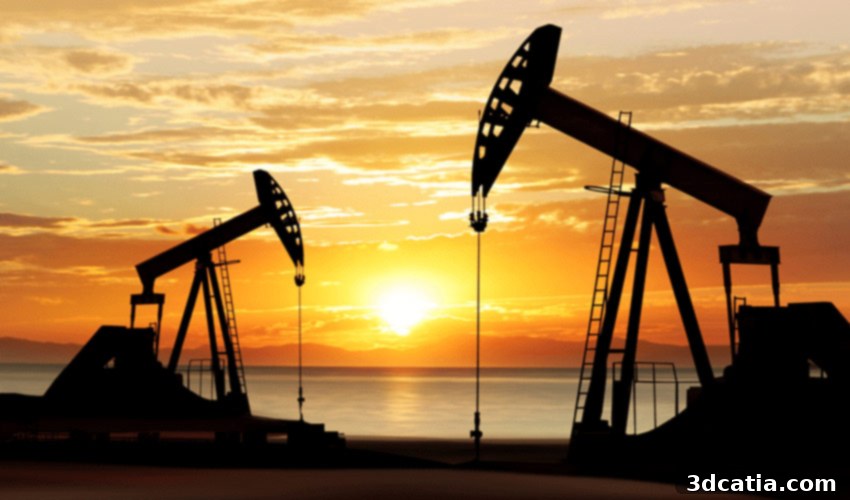
Additive Manufacturing in Oil & Gas: A $60 Billion Opportunity by 2030
The energy sector, particularly the Oil & Gas industry, stands on the cusp of a technological revolution, with additive manufacturing (AM) – widely known as 3D printing – emerging as a pivotal driver of innovation and efficiency. A recent comprehensive study published by the consulting firm GlobalData sheds light on this transformative trend, projecting an exponential growth for additive manufacturing within the Oil & Gas market. According to their findings, the sector’s expenditure on AM technologies is expected to skyrocket to an impressive $32 billion worldwide by 2025, further accelerating to an astounding figure exceeding $60 billion by 2030. These forecasts paint a highly encouraging picture for an industry that, despite being an early adopter of 3D printing technologies, experienced a somewhat gradual initial adoption rate. The report particularly highlights the burgeoning development of metal 3D printing as a primary catalyst for fostering innovation among market players, a significant shift given that the sector has historically been largely dominated by the use of polymers for various applications.
The Oil & Gas industry is characterized by its vast scope and intricate operations, encompassing a broad spectrum of activities from initial exploration and geological surveying to energy storage, complex drilling operations, extraction, efficient distribution networks, and sophisticated refining processes. Each of these stages presents unique challenges and stringent requirements, particularly concerning safety, environmental protection, and operational hygiene. These demanding conditions compel industry players to continuously seek and implement advanced, appropriate solutions to ensure compliance, mitigate risks, and optimize performance. Additive manufacturing offers a compelling part of this answer, providing unparalleled capabilities to address these multifaceted needs. Ravindra Puranik, a leading Oil & Gas analyst at GlobalData, underscores this sentiment, stating: “In the face of increasingly stringent environmental standards, coupled with volatile oil prices and relentless competition, companies are demonstrating a growing interest in designing highly complex equipment specifically engineered to achieve superior operational efficiency. The inherent ability of 3D printing to produce intricate components that would be virtually impossible to manufacture using conventional processes renders it an absolutely essential technology for the modern Oil & Gas landscape.” This statement encapsulates the strategic importance of AM in driving the industry forward.
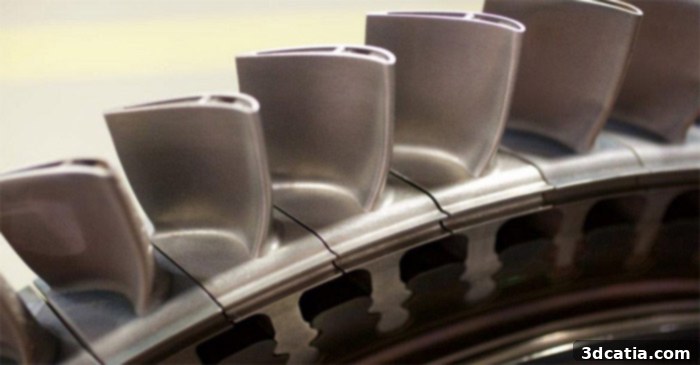
3D printed turbine blades | Credits: Siemens
Why the Oil & Gas Industry is Embracing Additive Manufacturing
The reasons behind the Oil & Gas industry’s accelerating adoption of additive manufacturing are numerous and compelling, directly addressing many of the sector’s long-standing challenges. The technology’s capacity for innovation, cost reduction, and efficiency gains positions it as a vital tool for future operations.
Rapid Prototyping and Design Iteration
One of the most immediate and significant benefits of 3D printing, as highlighted by the GlobalData report, is its unparalleled ability to drastically reduce the time required to produce complex prototypes. In an industry where equipment failures can lead to catastrophic consequences and massive financial losses, thorough design verification is paramount. 3D printing was swiftly integrated into the prototyping phase within the Oil & Gas sector, initially primarily utilizing polymers. This rapid prototyping capability allows engineers to quickly visualize, test, and refine designs for intricate components, sub-assemblies, and entire systems, accelerating the product development cycle. The ability to iterate on designs multiple times in a compressed timeframe not only saves significant development costs but also ensures that the final product is optimized for performance, safety, and reliability before expensive large-scale manufacturing commences. For critical applications in harsh environments, this iterative design process is invaluable for mitigating risks and ensuring operational integrity.
Advanced Materials for Extreme Environments
The development of high-performance thermoplastics has been particularly well-received by this market. These materials are highly valued for their exceptional properties, including high chemical resistance, crucial for exposure to corrosive crude oil, natural gas, and various processing chemicals. Furthermore, their superior heat resistance allows components to withstand the extreme temperatures encountered in drilling, extraction, and refining processes. Their great strength and mechanical integrity ensure durability under immense pressures and stresses characteristic of deep-sea or high-pressure well applications. Beyond polymers, the continuous advancements in metal additive manufacturing have profoundly contributed to market growth. For certain highly demanding applications, metal AM has proven to be an even more relevant and indispensable technology.
Innovating Functional Components with Metal Additive Manufacturing
Metal 3D printing is increasingly being utilized to design and produce functional products, often as critical components of complex machinery. The technology enables the creation of innovative shapes and intricate geometries that are simply unachievable with traditional manufacturing methods such as casting or machining. This design freedom facilitates part consolidation, where multiple traditionally manufactured parts can be combined into a single, complex 3D-printed component. This significantly reduces the total number of parts in an assembly, thereby minimizing assembly time, reducing potential points of failure, and streamlining the supply chain for spare parts. Moreover, optimizing component geometries through AM can lead to improved performance, such as enhanced fluid flow in nozzles or impellers, reduced weight for moving parts, and overall greater operational efficiency. These improvements directly translate to reduced energy consumption and, consequently, lower emissions, aligning with the industry’s growing focus on sustainability and environmental stewardship.
Addressing Spare Parts Logistics and Inventory Management
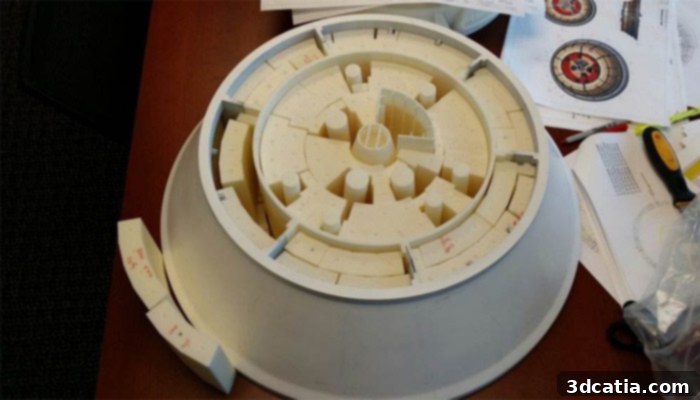
3D printed prototype containing hundreds of solid foam blocks that keep it floating in the water | Credits Shell Global
The study also highlights another critical advantage of additive manufacturing: its particular utility in the creation of spare parts. This capability offers a transformative solution to perennial challenges in logistics, inventory management, and reducing operational downtime. Ravindra Puranik further elaborates: “The notoriously lengthy and often complex spare parts procurement processes frequently necessitate that oil and gas companies maintain extraordinarily high inventory levels. This practice, while aimed at ensuring operational continuity, invariably results in substantial storage costs, logistical complexities, and the risk of obsolescence. 3D printing technology offers a direct and elegant solution to this persistent problem by empowering companies to manufacture parts precisely as needed, on-demand.” This “just-in-time” manufacturing model fundamentally alters the supply chain paradigm. Instead of warehousing vast quantities of infrequently used parts, companies can store digital designs and print components only when they are required, thereby dramatically reducing inventory levels, associated carrying costs, and the carbon footprint related to excessive transportation and warehousing.
This benefit is not unique to the Oil & Gas sector; it is a profound advantage observed across various industries, such as the rapidly evolving automotive industry, where car models and their components are constantly updated. For the Oil & Gas industry, with its geographically dispersed operations, often in remote and challenging environments, the ability to print critical spare parts on-site or at regional hubs can significantly cut down lead times, minimize equipment downtime, and enhance operational resilience. This translates directly to improved efficiency and reduced operational expenditure, cementing AM’s role as a strategic asset.
Enhancing Safety and Regulatory Compliance: The Shell Stones Project
A compelling real-world example of additive manufacturing’s impact on critical Oil & Gas projects is the Shell Stones project. This undertaking represents Shell’s deepest Oil and Gas project globally, situated in the challenging environment of the Gulf of Mexico at an astounding depth of 2,900 metres. During the crucial design phase, the project team leveraged 3D printing technology to develop intricate prototypes of the detachable system required to connect a Floating Production, Storage, and Offloading (FPSO) vessel to the elaborate network of pipelines on the seabed. This highly complex system demanded absolute precision and reliability. The use of 3D-printed prototypes allowed engineers to meticulously test and validate the design, ensuring the highest standards of safety and preventing costly planning delays that could arise from design flaws or unforeseen integration issues. Crucially, this advanced prototyping enabled Shell to demonstrate the system’s viability and safety to the American authorities, who were required to provide regulatory approval for its unprecedented use in the region. The ability to present a tangible, fully representative prototype was instrumental in securing this vital approval, showcasing how AM directly contributes to de-risking complex projects and facilitating regulatory compliance.
Customization and Performance Optimization
Beyond standard parts, additive manufacturing unlocks unprecedented levels of customization and performance optimization. Engineers can design components specifically tailored to unique geological conditions, fluid characteristics, or operational parameters of a particular well or processing plant. This includes creating complex internal lattice structures for lightweighting without compromising strength, or optimizing internal channels for improved fluid dynamics in pumps, valves, and heat exchangers. Such tailored designs lead to parts that are not only more efficient but also more durable and better suited to their specific functions, ultimately extending equipment lifespan and reducing maintenance frequency. This level of bespoke engineering is simply unattainable with conventional manufacturing techniques, offering the Oil & Gas industry a significant competitive edge.
Sustainability through Additive Manufacturing
As the Oil & Gas industry faces increasing pressure to reduce its environmental footprint, additive manufacturing presents a powerful tool for achieving sustainability goals. By enabling the production of lighter components, AM contributes to reduced energy consumption during transport and operation of equipment. The ability to consolidate parts minimizes material waste in manufacturing, as materials are added layer by layer only where needed, rather than subtractively removing material from a larger block. Furthermore, local, on-demand production of spare parts reduces the need for global shipping, cutting down on carbon emissions associated with logistics. These environmental benefits, combined with economic advantages, make additive manufacturing a key technology for a more sustainable future in the energy sector.
The Road Ahead for Additive Manufacturing in Oil & Gas
While the benefits are clear and the growth forecasts are robust, the continued integration of additive manufacturing into the Oil & Gas industry will also involve addressing certain challenges. These include the rigorous qualification and certification of AM-produced parts for critical applications, which requires comprehensive testing and standardized procedures. The initial investment in AM equipment and materials can be substantial, necessitating a strong business case and long-term strategic planning. Furthermore, developing a skilled workforce proficient in additive design, manufacturing, and maintenance is crucial for maximizing the technology’s potential. Despite these hurdles, the overwhelming advantages in terms of design freedom, operational efficiency, supply chain resilience, and sustainability are positioning additive manufacturing as an indispensable technology for the modern and future Oil & Gas landscape. It is not merely a manufacturing technique but a strategic enabler for innovation, cost reduction, and environmental responsibility within the energy sector.
For more in-depth analysis and detailed research on this topic, you can find further information HERE.
What are your thoughts on the immense opportunities that additive manufacturing offers for the Oil & Gas industry? We invite you to share your insights and opinions in a comment below or join the conversation on our Facebook and Twitter pages! To stay abreast of all the latest developments and news in the world of 3D printing, remember to sign up for our free weekly Newsletter and have it delivered directly to your inbox!