
Revolutionizing Urban Spaces: R3direct’s 3D Printed Benches from Recycled Tetra Pak
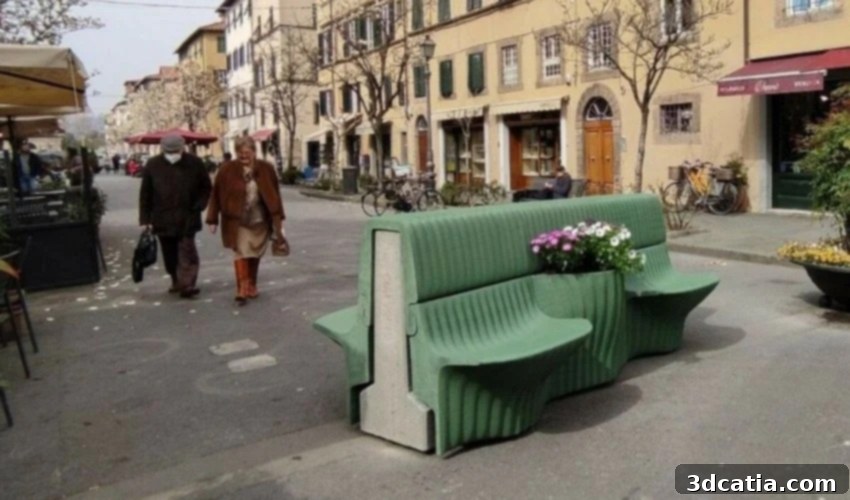
In recent years, the global landscape has witnessed a significant surge in the development of environmentally friendly projects across numerous countries. This growing emphasis on sustainability reflects a collective effort to combat environmental degradation and foster a more circular economy. Building upon the success of pioneering initiatives, such as the Netherlands-based Print your City project, Italy’s R3direct is now spearheading its own innovative approach by leveraging additive manufacturing to create sustainable street furniture. This visionary company is transforming plastic waste, specifically recycled Tetra Pak cartons, into functional and aesthetically pleasing 3D printed benches, marking a tangible step towards greener urban environments. The inaugural installation of these remarkable benches, dubbed USE (Urban Safety Everyday), has already graced the historic heart of Lucca, Italy, serving as a powerful testament to technology’s capacity to significantly diminish plastic waste through creative material reuse.
R3direct’s mission extends beyond simply creating street furniture; it aims to demonstrate a scalable and impactful solution for waste reduction and material valorization. By embracing additive manufacturing, the company not only gives new life to discarded plastics but also champions a production method that inherently minimizes waste and offers unparalleled design flexibility. The USE benches are more than just seating; they are symbols of innovation, environmental responsibility, and the potential for a truly circular economy within urban infrastructure. Their presence in public spaces encourages dialogue about sustainability and inspires communities to reconsider their relationship with waste.
From Carton to Community: The Journey of Recycled Tetra Pak
The primary material painstakingly selected and processed for the production of these groundbreaking benches originates from used and recycled Tetra Pak cartons. While the term “Tetra Pak” might not be immediately familiar to everyone, their iconic presence as containers for everyday staples like milk, juice, and other beverages makes them universally recognizable. These multi-layered cartons, though excellent for preserving contents, often pose a challenge in conventional recycling streams due to their composite nature (paperboard, plastic, and aluminum). R3direct’s innovative process tackles this challenge head-on, transforming what was once a complex waste product into a valuable resource for urban development.
Each USE bench serves as an educational tool, featuring an embedded QR code. Scanning this code allows curious citizens to embark on a digital journey, tracing the precise lifecycle of the plastic utilized in that specific bench. This unprecedented level of transparency provides valuable insights into the recycling process, fostering a deeper understanding of circular economy principles and encouraging greater public engagement in sustainable practices. It connects the user directly to the environmental impact of their choices and the transformative power of recycling. This traceability not only builds trust but also empowers individuals to see the tangible results of waste diversion efforts.
Beyond their sustainable core, the USE benches captivate with their “interesting and unusual design.” This distinctive aesthetic is the creative brainchild of Stefano Giovacchini, the co-founder of R3direct. Giovacchini’s vision was to transcend conventional furniture design, pushing the boundaries of what is possible with recycled materials and additive manufacturing. His designs are not merely functional; they are artistic expressions that blend seamlessly into urban landscapes while simultaneously drawing attention to their innovative origins. The forms are often organic, ergonomic, and invite interaction, making the benches focal points rather than mere utilitarian objects. This fusion of art and sustainability underscores R3direct’s holistic approach to urban renewal.
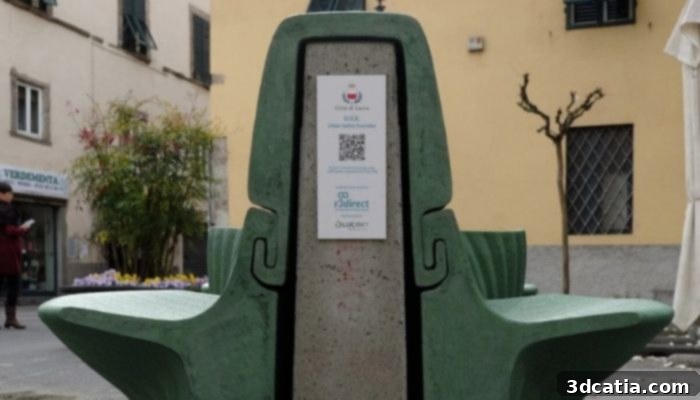
Photo Credits: R3direct
The Engineering Marvel: Recycled Plastic Benches & Additive Manufacturing
The USE bench is a standout not just for its commendable sustainable properties but also for its remarkably original and structurally complex shape. This unique form factor is a direct outcome of harnessing the full potential of additive manufacturing, commonly known as 3D printing. This advanced technology allows for the creation of intricate geometries and custom designs that would be difficult, if not impossible, to achieve with traditional manufacturing methods. While R3direct has maintained a degree of secrecy regarding the exact 3D printing technology employed for production, they have openly shared the impressive statistic that each USE bench requires no fewer than 3,300 recycled Tetra Pak packages to come to fruition. This staggering number highlights the significant volume of waste diverted from landfills and incineration, transforming it into valuable public infrastructure.
The choice of additive manufacturing is strategic. It enables R3direct to produce components on demand, reducing material waste during fabrication. Unlike subtractive manufacturing, where material is cut away, 3D printing builds objects layer by layer, ensuring that almost all the processed recycled plastic is utilized in the final product. This precision not only optimizes material usage but also allows for designs that prioritize structural integrity while minimizing overall material volume, a crucial aspect of sustainable design. Furthermore, the localized nature of 3D printing can reduce transportation costs and carbon footprint associated with manufacturing and distribution, making it an ideal choice for urban furniture projects.
R3direct emphasizes that, despite their unconventional and perhaps avant-garde aesthetic—which might not universally appeal to all tastes—the USE benches are designed for broad applicability. Their robust construction and innovative material composition make them suitable for installation in a diverse array of public and private environments. Imagine them enhancing the tranquil beauty of urban parks, providing stylish and durable seating in community gardens, or adding a touch of modern, eco-conscious design to bustling city squares and streets. Their versatility underscores their potential to become a ubiquitous feature in future sustainable urban planning, offering both functional utility and a strong statement about environmental stewardship. The ability to customize dimensions and forms further enhances their adaptability to various spatial requirements.
Additive Manufacturing: A Catalyst for a Circular Economy
As more projects successfully merge recycling and additive manufacturing, the indispensable role that 3D technologies will play in global environmental preservation becomes increasingly evident. This powerful combination represents a paradigm shift in how we approach waste, production, and resource management. 3D printing offers an unprecedented ability to transform waste streams into valuable, functional products, thereby closing material loops and promoting a truly circular economy. From designing bespoke furniture pieces like the USE benches to creating intricate decorative items or even everyday objects from previously discarded materials, 3D printing has repeatedly proven its remarkable efficiency and adaptability. It signifies immense potential for a myriad of future environmentally friendly initiatives, promising a future where waste is not an end but a new beginning.
The impact of this technological synergy is multifaceted. Firstly, it offers a tangible solution to the escalating global plastic waste crisis, transforming pollutants into practical assets. Secondly, it fosters local production capabilities, reducing reliance on distant supply chains and mitigating associated carbon emissions. Thirdly, it inspires innovation in material science, driving research into new ways to process and utilize recycled content. Companies like R3direct are at the forefront of this revolution, demonstrating that sustainable practices can also be economically viable and aesthetically appealing. This intersection of ecological responsibility and technological advancement is paving the way for a more sustainable future for manufacturing and urban development.
Furthermore, the integration of 3D printing into recycling efforts extends beyond just plastic. Research and development are actively exploring the use of various other waste materials, including construction debris, food waste byproducts, and even textile scraps, as feedstocks for additive manufacturing processes. This broadens the scope of impact, suggesting a future where a significant proportion of urban waste can be repurposed and reintegrated into the production cycle, rather than ending up in landfills. The scalability of 3D printing also means that once successful prototypes like the USE bench are developed, production can be ramped up efficiently to meet widespread demand, accelerating the transition to sustainable urban infrastructure worldwide.
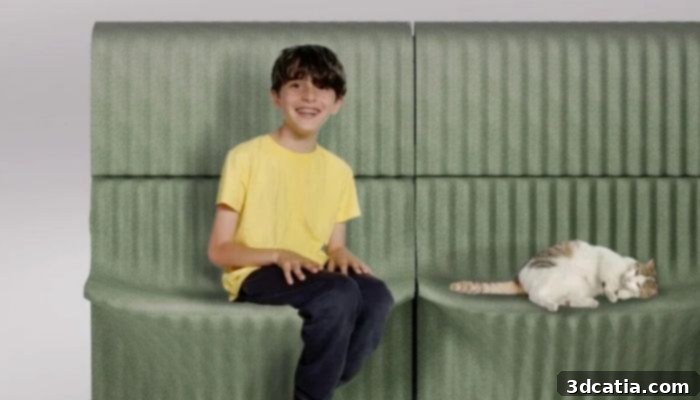
Photo credits : R3direct
R3direct’s Vision: Cultivating Sustainable Cities
R3direct’s initiative with the USE benches is a clear manifestation of a broader vision: to cultivate sustainable, resilient, and aesthetically pleasing cities through innovative technology and responsible resource management. Their work addresses critical urban challenges, including waste overflow, the need for durable and low-maintenance public furniture, and the imperative to create engaging public spaces. By turning waste into valuable urban assets, R3direct is not just offering a product but a blueprint for urban regeneration that respects ecological boundaries. They envision a future where cities actively participate in a closed-loop system, where the materials consumed are continuously reused, minimizing environmental impact and maximizing resource efficiency.
The company’s commitment to using recycled Tetra Pak is particularly impactful because it tackles a challenging waste stream. Tetra Pak cartons are composite materials designed for longevity, making them difficult to recycle through conventional methods and often destined for landfills. R3direct’s solution provides a high-value outlet for this material, demonstrating that even complex waste can be transformed into robust, long-lasting products. This serves as an inspiring example for other industries and municipalities looking to tackle similar waste challenges.
Moreover, the integration of design with sustainability is central to R3direct’s philosophy. The USE benches are designed to be visually appealing, prompting appreciation and care from the community. A well-designed object made from recycled materials can shift public perception about “waste,” elevating it from something disposable to something valuable and beautiful. This educational aspect, combined with the transparency offered by the QR code, empowers citizens to become active participants in the circular economy, understanding the journey of their waste and its eventual transformation into urban amenities. R3direct is essentially building a narrative of sustainability, bench by bench, across the urban landscape.
Join the Conversation on Sustainable Innovation
What are your thoughts on the USE benches and the inspiring initiative developed by R3direct? Do you believe projects like this are crucial for the future of urban design and waste management? We invite you to share your perspectives in a comment below or join the discussion on our social media channels: LinkedIn, Facebook, and Twitter! Stay informed about the latest breakthroughs in 3D printing and sustainable technologies by signing up for our free weekly Newsletter here, delivered straight to your inbox. You can also explore our extensive library of videos and insights on our dedicated YouTube channel. Let’s collectively champion innovation that drives positive environmental change.
*Cover Photo Credits: R3direct