
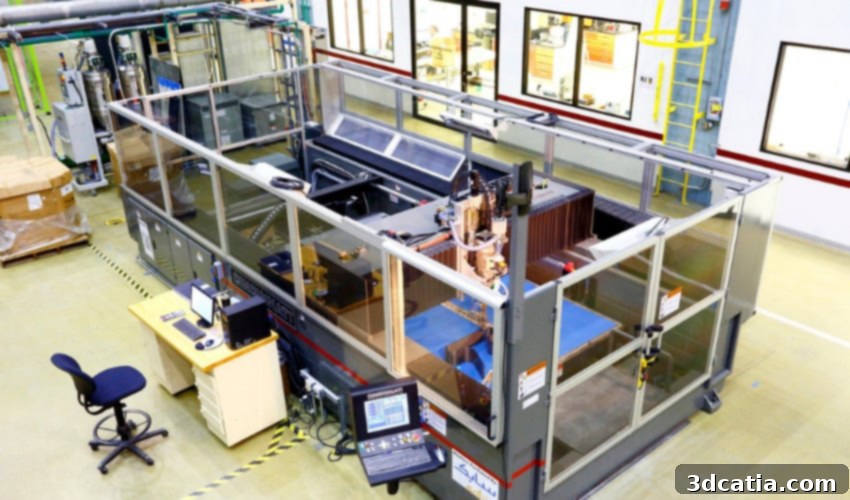
Revolutionizing Large-Format Additive Manufacturing: SABIC & Local Motors’ Breakthrough in Sustainable Recycling
The landscape of advanced manufacturing is continually evolving, with sustainability emerging as a critical driver for innovation. In a significant stride towards a more circular economy, SABIC, a global leader in the chemical industry, and Local Motors, a pioneer in next-generation vehicle manufacturing, have concluded a groundbreaking joint study. This collaboration investigated the viability of recycling thermoplastic parts produced via Large Format Additive Manufacturing (LFAM) into new materials, ultimately destined for new applications. The research specifically focused on the feasibility of reclaiming scrap thermoplastic parts generated during the 3D printing process and the potential cost savings associated with such a practice. To thoroughly assess this, researchers meticulously tracked the printability and mechanical properties of components fabricated using SABIC’s advanced LNP™ THERMOCOMP™ AM reinforced compound, specifically after it had undergone recycling. The initial findings from this comprehensive study are exceptionally promising, signaling a significant step forward, although researchers emphasize the need for further development to achieve a fully effective and scalable solution.
As industries worldwide increasingly prioritize environmental responsibility, the additive manufacturing sector, particularly Large-Format 3D Printing, faces mounting pressure to address waste management and embrace more sustainable practices. Manufacturers are actively seeking innovative strategies to reduce their ecological footprint and, simultaneously, optimize operational costs. A pivotal approach gaining traction is the transition towards a circular manufacturing process, a fundamental component of the broader circular economy model. This paradigm shift encourages manufacturers to recycle previously produced parts, transforming them back into raw materials that can be reintegrated into the production cycle for future components. This core principle served as the very foundation and driving philosophy behind the joint research initiative undertaken by SABIC and Local Motors, aiming to close the loop on LFAM material usage.
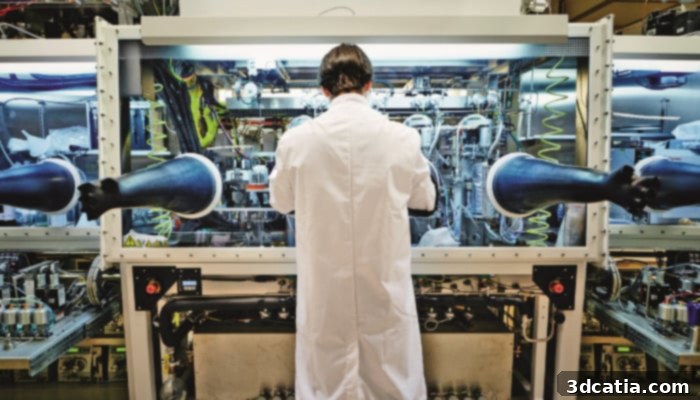
The SABIC research laboratory in the Netherlands where they perform studies like this one (photo credits: SABIC)
The Growing Imperative for Sustainability in Large-Format 3D Printing
Large-Format Additive Manufacturing (LFAM) has revolutionized various sectors, enabling the rapid production of substantial, complex parts for applications ranging from automotive and aerospace to construction and consumer goods. Its advantages in design freedom, rapid prototyping, and on-demand manufacturing are undeniable. However, like any advanced manufacturing process, LFAM generates waste. This waste can come from several sources: support structures, failed prints, post-production trimming, and, ultimately, end-of-life components. Given the sheer size of LFAM parts, the volume of material involved means that waste generation can be considerable. Traditional disposal methods, such as landfilling, are not only environmentally detrimental but also represent a significant loss of valuable resources and economic potential. The absence of a well-established value chain for reclaiming and reusing post-production LFAM parts and scraps has historically presented a barrier to the wider adoption of sustainable practices within this rapidly growing segment of the 3D printing industry. Prior recycling efforts in additive manufacturing often focused on smaller parts and materials like PLA, which is inherently biodegradable, making the recycling of large, complex, and high-performance thermoplastic parts a much more challenging and critical endeavor.
SABIC and Local Motors: A Collaborative Vision for a Circular Future
The collaboration between SABIC and Local Motors brings together distinct but complementary expertise crucial for tackling this challenge. SABIC stands as a global diversified chemicals company, renowned for its extensive portfolio of high-performance thermoplastics and innovative material solutions. Their deep understanding of polymer science and material engineering makes them an ideal partner for developing and testing advanced recycling methodologies. Local Motors, on the other hand, is at the forefront of vehicle manufacturing, leveraging cutting-edge technologies like direct digital manufacturing and LFAM to produce innovative products, such as their Olli autonomous shuttle. Their practical experience in implementing LFAM on an industrial scale provides invaluable insights into the real-world challenges and opportunities for recycling in a production environment. This synergistic partnership underscores a shared commitment to pioneering sustainable solutions that can drive the additive manufacturing industry towards a more environmentally responsible future. Their joint study, therefore, wasn’t just about material science; it was about laying the groundwork for a new, sustainable paradigm in industrial production.
The Groundbreaking Feasibility Study: Methodology and Promising Results
The primary objective of this detailed feasibility study was to identify and explore viable, sustainable alternatives to the current practice of landfilling large, printed parts, thereby facilitating the broader adoption of LFAM. As mentioned, a key hurdle has been the absence of an established value chain for the reclamation of post-production LFAM waste, unlike more mature recycling streams for conventional manufacturing. The study meticulously investigated the printability and mechanical properties of SABIC’s specialized LNP™ THERMOCOMP™ AM reinforced compound. This material is particularly well-suited for LFAM applications due to its excellent strength-to-weight ratio and processing characteristics, making its recyclability a crucial factor for sustainable LFAM growth. The material underwent a rigorous experimental process: after initial printing, parts were reclaimed, mechanically ground down, and then reprocessed back into pellet form, simulating a realistic industrial recycling loop. This multi-stage process allowed researchers to assess the material’s behavior through multiple heat cycles and mechanical treatments, which are common challenges in thermoplastic recycling.
To comprehensively evaluate the impact of reprocessing on material performance, six distinct material samples of the LNP™ THERMOCOMP™ AM compound were carefully prepared. These samples contained varying percentages of reprocessed content: 0% (virgin material as a control), 15%, 25%, 50%, 75%, and a challenging 100% reprocessed content. This gradient allowed for a precise understanding of how increasing levels of recycled material affect both printability and mechanical integrity. Each prepared sample was then used to print a single-wall hexagon structure on SABIC’s state-of-the-art Big Area Additive Manufacturing (BAAM) machine. The choice of a BAAM machine underscored the relevance of the study to actual large-format industrial applications, ensuring the results were applicable to real-world scenarios.
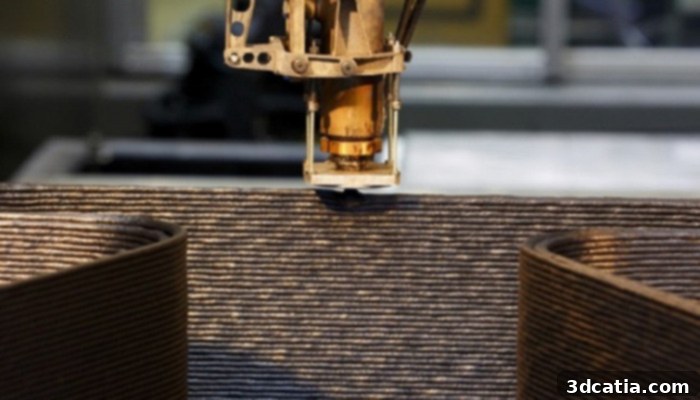
SABIC’s LNP™ THERMOCOMP™ AM reinforced compound (photo credits: SABIC)
The outcomes of the printability tests were highly encouraging across all samples. Each hexagon printed successfully, exhibiting a consistently smooth and shiny surface finish. Furthermore, the prints displayed straight, even layers with no discernible issues related to material flow during the deposition process. This consistent print quality, even with high percentages of reprocessed content, indicates that the recycled material retains excellent processing characteristics, which is a critical factor for successful integration into LFAM workflows.
Beyond visual print quality, comprehensive mechanical property tests were conducted, focusing primarily on tensile properties—a key indicator of material strength and durability. The results revealed excellent tensile properties for samples containing smaller percentages of regrind material. As the percentage of reprocessed content increased, the study observed “incremental declines” in tensile properties. Specifically, the 100% regrind sample showed a 20% reduction in tensile properties on the x-axis and a 15% reduction on the z-axis. While any reduction might initially seem concerning, it is crucial to contextualize these findings. According to the official press release, this observed degradation behavior is entirely typical and comparable to that seen when regrind is incorporated into other well-established thermoplastic processes, such as injection molding. This comparability is a significant positive, suggesting that the material degradation in LFAM recycling is not an anomalous or insurmountable issue but rather a known characteristic that can be managed and designed for, much like in conventional manufacturing recycling. This robust performance of the recycled material, especially when considered against industry benchmarks, underscores the strong potential for integrating recycled LNP™ THERMOCOMP™ AM into various LFAM applications.
Expert Insights and the Path Forward
Commenting on these significant findings, Walter Thompson, a senior applications development engineer at SABIC, emphasized the broader implications of the study: “As adoption of large format additive manufacturing accelerates, it is essential to find sustainable alternatives to landfilling large, printed parts. SABIC and Local Motors have investigated the practicality of using mechanically ground scrap material and end of life parts generated from LFAM. Our study showed great potential for reusing these materials and marks a first step in supporting reuse within the value chain.” Thompson’s statement highlights the strategic importance of this research not just for material science but for the entire LFAM ecosystem. It’s a foundational step towards creating a robust, circular value chain for advanced additive manufacturing, transforming what was once waste into a valuable resource. You can find out more in the press release HERE.
The success of this feasibility study opens numerous avenues for future research and development. While the results are highly encouraging, further work is necessary to optimize the recycling process, thoroughly characterize the long-term stability and performance of multi-recycled materials, and establish robust industry standards for LFAM material reuse. Economic analyses will also be crucial to determine the scalability and cost-effectiveness of large-scale recycling operations. This pioneering effort by SABIC and Local Motors sets a precedent, demonstrating that high-performance LFAM materials can indeed be integrated into a circular economy model, significantly reducing environmental impact and enhancing the overall sustainability profile of additive manufacturing.
Conclusion: Paving the Way for a Sustainable LFAM Industry
The joint study by SABIC and Local Motors represents a pivotal moment for the Large-Format Additive Manufacturing industry. By validating the potential for recycling advanced thermoplastic materials used in LFAM, they are actively addressing one of the most pressing environmental challenges facing the sector: waste management. This research not only offers a tangible solution for reducing landfill waste but also underscores the economic benefits of resource conservation and material reuse. As the world moves towards more sustainable industrial practices, initiatives like this will be crucial in fostering a true circular economy, where every material is valued and waste is minimized. The promising results from this study signal a brighter, greener future for 3D printing, where innovation and environmental stewardship go hand-in-hand.
What are your thoughts on the groundbreaking results of this feasibility study? We invite you to share your insights and comments below, or engage with us on ourFacebook,Twitter andLinkedIn pages! Don’t miss out on the latest advancements in 3D printing; sign up for our free weeklyNewsletter here, delivered straight to your inbox!