
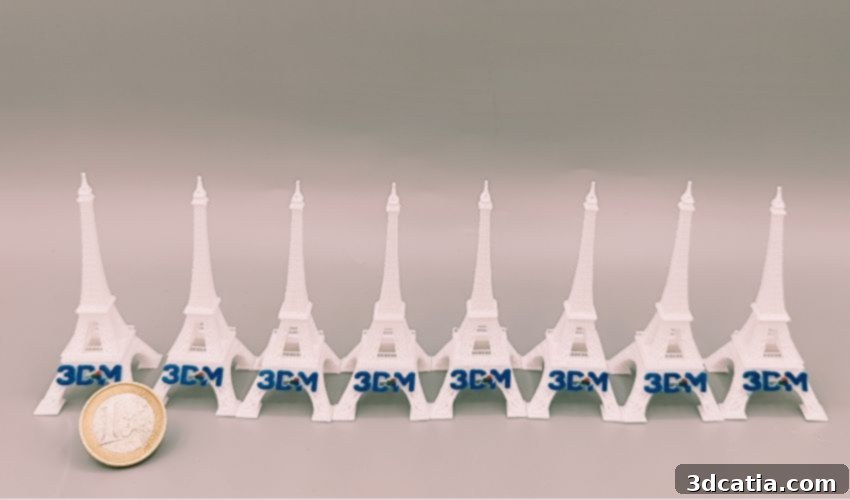
Revolutionizing Industrial 3D Printing: Unveiling 3DM’s Breakthrough SLS Technology with Quantum Cascade Lasers
As the landscape of additive manufacturing continues its march towards widespread industrialization, the demand for scalable, high-volume production solutions has never been more pressing. While this ambition is often challenging to realize, the focus intensifies on promising technologies like Selective Laser Sintering (SLS). This established polymer 3D printing process is renowned for its inherent suitability for industrial production, primarily due to its ability to create numerous complex parts simultaneously within a single powder bed without requiring support structures. However, even with its significant advantages, traditional SLS technology faces limitations, particularly concerning optimal sintering performance across a diverse range of powder materials. Addressing these critical challenges head-on is the mission of the innovative startup 3DM, which has engineered a proprietary technology designed to push the boundaries of SLS. Their solution promises to resolve current bottlenecks while meticulously preserving the core benefits of SLS, including exceptional resolution, intricate detail capabilities, and, most importantly, the capacity for high-volume manufacturing. Anticipating a significant leap forward, 3DM is preparing to launch the initial batch of its revolutionary new 3D printers for extensive testing in early 2024, signaling a new era for polymer additive manufacturing.
The popularity of SLS has surged dramatically in recent years, a testament to its broad industrial capabilities and versatility. Its widespread adoption is reflected in the market’s robust growth projections; according to a comprehensive study by Research and Markets, the SLS 3D printer market is forecast to expand from approximately $343.6 million in 2020 to an impressive $1.438 billion by 2027. This upward trend underscores SLS’s pivotal role in the ongoing evolution of additive manufacturing. Yet, to truly challenge conventional manufacturing processes and further propel the overall growth of AM, continuous innovation is indispensable. This is precisely where 3DM’s groundbreaking process comes into play. The successful rollout and adoption of their novel solution hold the potential to be a transformative moment for the entire additive manufacturing ecosystem. Therefore, the engagement of early users in adopting and rigorously testing these new printers is not merely beneficial but absolutely critical for validating the technology’s potential and accelerating its market penetration. We delve deeper into what early adopters and the industry at large can anticipate from this exciting development.
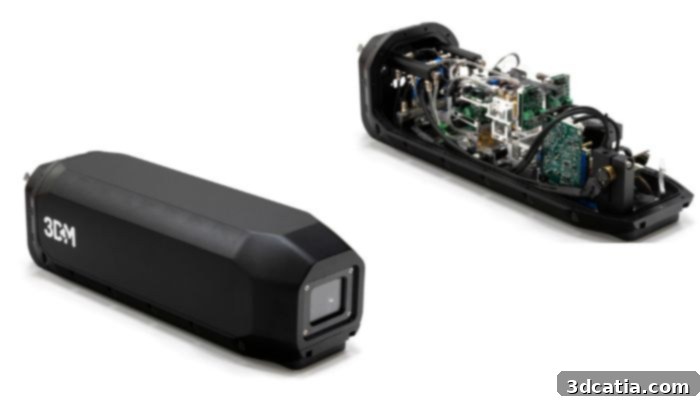
The core of 3DM’s technology is its innovative beam head (seen here in both closed and open forms)
What Can You Expect from 3DM’s New SLS 3D Printer?
While the official rollout and widespread availability of 3DM’s printers are slated for early 2024, meaning final specifications are still subject to refinement, we already possess substantial insights into what promises to be a game-changing technology. During an in-depth interview with 3DM earlier this year, we explored the intricacies of their innovative approach, which they confidently predict will revolutionize selective laser sintering. The foundation of this transformation lies primarily in their advanced laser system.
The cornerstone of 3DM’s SLS technology is its proprietary, novel Quantum Cascade Laser (QCL). Unlike traditional CO2 lasers typically employed in SLS, which emit at a fixed wavelength, these semiconductor lasers have been meticulously developed by 3DM specifically for additive manufacturing applications. Their most significant innovation is the ability to precisely tune the emitted wavelength. This tunability allows the laser to match the optimal energy absorption and melting behavior of any given thermoplastic material. In practical terms, this means that 3DM’s technology is theoretically unconstrained by material limitations or specific application requirements. By fine-tuning the laser to the material’s ideal sintering characteristics, it can unlock the full potential of virtually any polymer powder, enabling superior part quality and broader material compatibility. Furthermore, 3DM has demonstrated a strong commitment to expanding its material production capabilities and encourages users to submit new potential materials for analysis, particularly those suitable for demanding, high-volume production environments.
Beyond the revolutionary QCL, 3DM’s printers boast several other unique and advantageous features. Each printer is equipped with four powerful 8W (or superior) beam heads that can be strategically combined. This advanced configuration enables the simultaneous targeting of two different wavelengths within the printing chamber. This multi-wavelength capability could open doors to processing multi-material parts or optimizing the sintering of complex blends, leading to enhanced material properties and design freedom. Moreover, to ensure consistent and high-quality prints, the system incorporates a continuous powder feed option, significantly improving process reliability and reducing operator intervention during long print jobs. Four dedicated infrared (IR) heating elements meticulously maintain the build chamber temperature, which can reach a maximum of 220°C. This precise thermal control is crucial for managing the powder bed environment, preventing warping, and ensuring optimal part consolidation. The build volume is also noteworthy, measuring 220 x 200 x 350 mm, providing ample space for both large components and batches of smaller parts. Users will also benefit from a flexible layer thickness range, adjustable between 40µ and 120µ, allowing for a balance between fine detail resolution and faster build times. While these specifications are still in the pre-launch phase and may be refined, they undeniably showcase the impressive capabilities and the transformative potential that 3DM’s forthcoming 3D printer promises to deliver to the additive manufacturing industry.
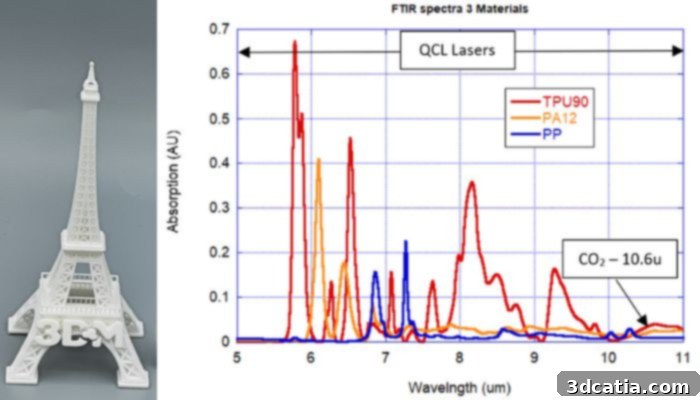
With 3DM’s patented lasers, it is possible to optimize the wavelengths to different materials’ optimal melting temperature unlike with traditional lasers, shown in the graph on the right above. This allows for the creation of detailed and fully optimized parts such as the one shown on the left.
Who Will Benefit from 3DM’s Advanced SLS Technology?
Currently, 3DM is actively collaborating with a select group of early adopters, gathering invaluable feedback and insights as they refine their technology. But the scope of potential beneficiaries extends far beyond this initial cohort. Similar to the broad applicability of conventional SLS technology, 3DM’s advanced system is poised to make a significant impact across numerous industrial sectors. For instance, industries such as consumer goods and medical devices, where customization, personalization, and intricate designs are highly prized, will find immense value in the enhanced capabilities of 3DM’s printers. The ability to produce highly detailed, patient-specific implants or bespoke consumer products with superior material properties offers a clear competitive advantage. Furthermore, the transportation sector, encompassing automotive and aerospace, along with various service-oriented industries, stands to benefit immensely. These fields are characterized by their diverse and demanding material requirements, coupled with a constant need for printing flexibility to produce complex geometries, lightweight components, and on-demand replacement parts.
Considering the inherent advantages offered by 3DM’s innovative approach, including the promise of superior material properties, significantly smoother surface finishes, and an expanded material palette, we anticipate an explosion of new applications across a multitude of industries. The ability to fine-tune laser wavelengths to individual material characteristics means that parts produced will likely exhibit enhanced mechanical performance, greater dimensional accuracy, and reduced porosity compared to traditional SLS methods. This leap in quality, combined with the process efficiency improvements, will enable manufacturers to confidently transition from prototyping to end-use part production with greater reliability and cost-effectiveness. Whether it’s for advanced functional prototypes, low-to-medium volume production of complex components, or even mass customization initiatives, 3DM’s technology is set to empower engineers and designers to overcome previous limitations. If you are interested in learning more about the upcoming printer rollout or wish to explore the possibility of becoming an early adopter and gaining a competitive edge, we encourage you to get in touch directly with 3DM by visiting their official website HERE.
What are your thoughts on 3DM’s anticipated printer rollout in early 2024? Do you foresee yourself becoming an early tester of this exciting new technology and contributing to the evolution of additive manufacturing? We would love to hear your perspective! Share your comments below or engage with us on our LinkedIn, Facebook, and Twitter pages! Don’t miss out on the latest advancements in 3D printing; remember to sign up for our free weekly Newsletter here to receive curated news straight to your inbox. You can also explore all our insightful videos and interviews on our YouTube channel.
*All Photo Credits: 3DM